

Executive Overview
For generations, the name Whaley has stood as an indelible pillar of Southern horticulture, synonymous with the meticulously curated, formal green spaces of historic Charleston, South Carolina. Yet, horticultural legacies are rarely static; they grow, adapt, and migrate alongside the families who tend them. In the scenic highlands of Flat Rock, North Carolina, artist and preservationist Marty Whaley Adams Cornwell has spent decades realizing a profound transformation: trading the strict geometry and urban intimacy of her family’s legendary Lowcountry footprint for an expansive, deeply personal floral utopia.
Set against the backdrop of an 1876 Victorian lakeside cottage, this 12-acre mountain sanctuary serves as a living bridge between two distinct Southern landscapes. Blending the generational wisdom of her mother—the late, celebrated author and gardener Emily Whaley—with her own artistic vision, Marty has forged a sanctuary of vibrant color, ecological resilience, and creative renewal. This detailed chronicle examines the evolution of this botanical haven, tracing its roots from the historic cobblestones of 58 Church Street to the pine-scented shores of Highland Lake, and exploring how a storied lineage of Southern women continues to shape the landscape of American gardening.
Detailed Chronology: From Lowcountry Roots to Mountain Heights
1. The Genesis on Highland Lake (1984)
The story of the Flat Rock sanctuary began not with a master plan, but with a profound sense of return. Marty Whaley Adams Cornwell spent her childhood summers across the water from the current property, at an Arts and Crafts-style house constructed by her great-grandfather. Her father had taught her to swim in the cool, clear expanse of Highland Lake, embedding the landscape deeply into her emotional landscape.
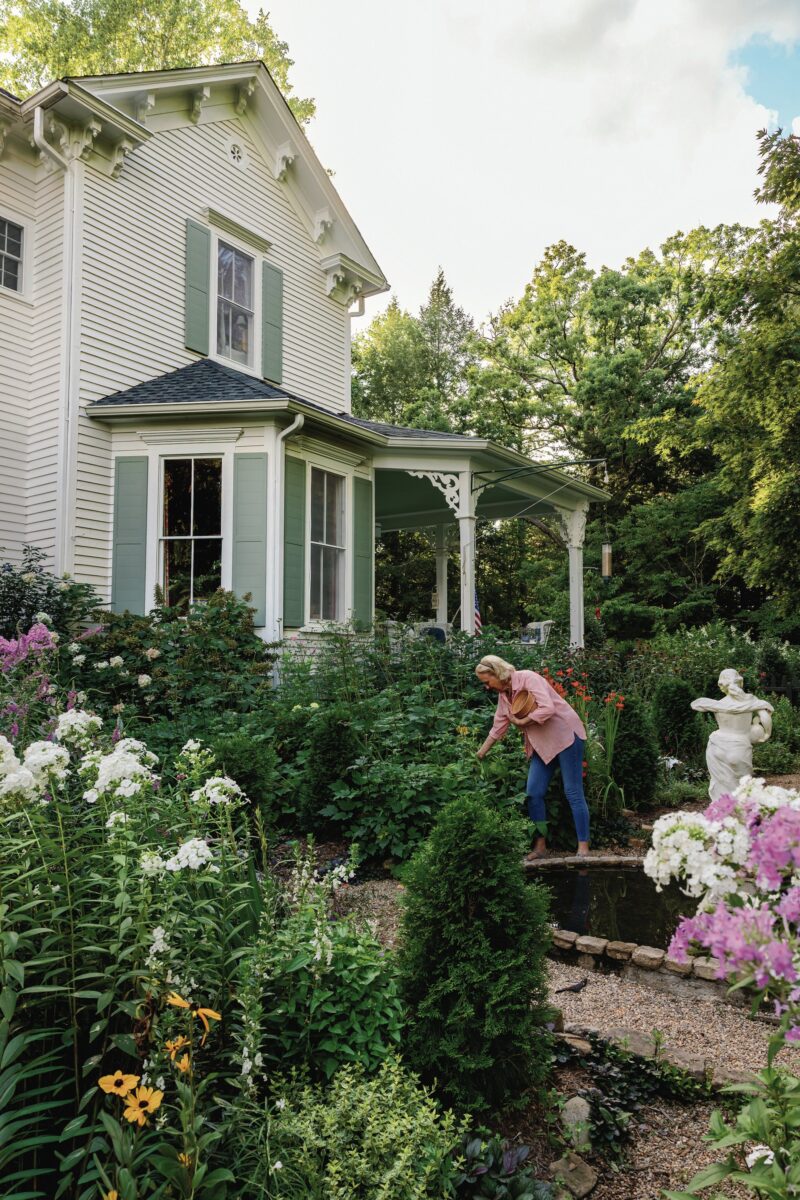
When the 1876 white clapboard Victorian cottage and its surrounding twelve acres came on the market in 1984, Marty—seeking an escape from the blistering Lowcountry summers—recognized the opportunity instantly. Purchasing the property felt less like an acquisition and more like a reclamation of her youth.
2. A Collaborative Era with "Mrs. Whaley" (1988–1998)
Following a divorce in 1988, Marty found herself sharing the property with the ideal co-conspirator: her mother, Emily Whaley, universally known simply as "Mrs. Whaley." Author of the classic memoir Mrs. Whaley and Her Charleston Garden, Emily was an arbiter of Southern style who had spent decades mastering the formal, Loutrel Briggs-designed green space at 58 Church Street in downtown Charleston.
For a decade, until Emily’s passing in 1998, the mother-daughter duo transformed the Flat Rock retreat into a dual-purpose haven of art and horticulture. While Emily painted and wrote on the back porch, Marty set up her easel on the front porch. During these years, the landscape absorbed the family’s deep-seated botanical traditions. Emily, well into her seventies, dug up volunteer shoots of a century-old maple tree on the property and replanted them along the lawn’s edges toward the lake. Those saplings now stand shoulder-to-shoulder with blue hydrangeas successfully propagated from the wedding bouquet Marty’s older sister carried in the 1950s.
3. Shaping the Modern Utopia (1998–2022)
Following her mother’s passing, Marty took sole stewardship of the garden, embarking on a thirty-year labor of love that would radically reshape the landscape. Nature itself catalyzed one of the property’s most dramatic redesigns when a bolt of lightning struck down two massive, century-old pines framing the house.
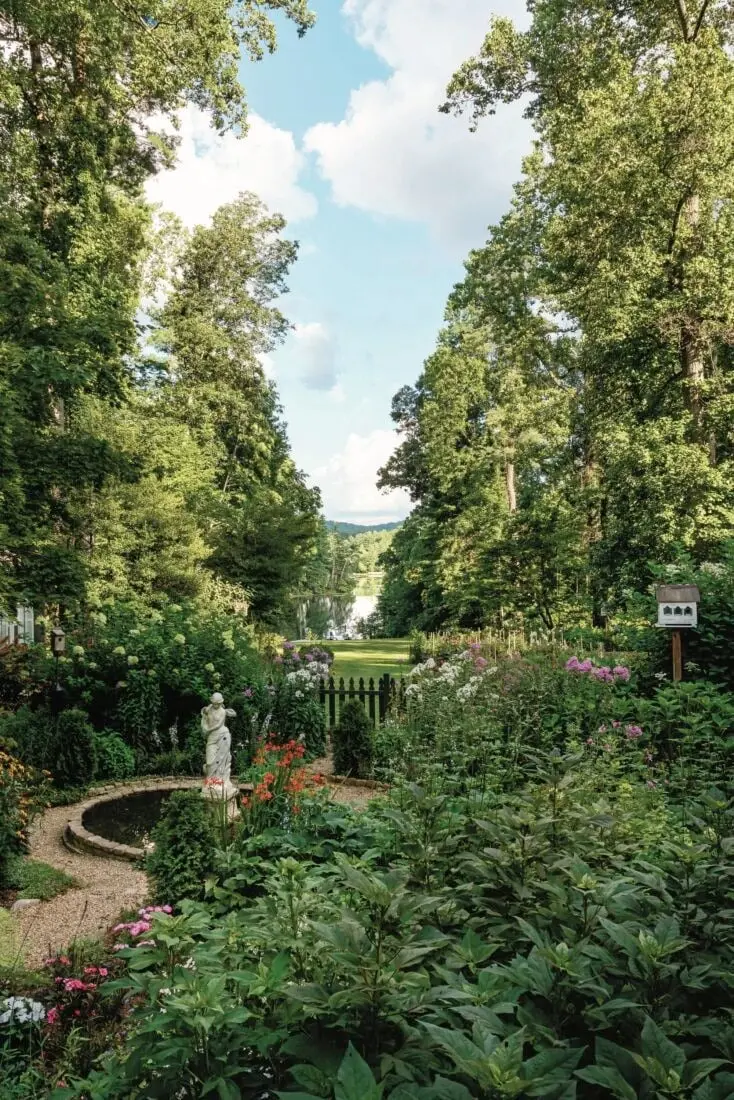
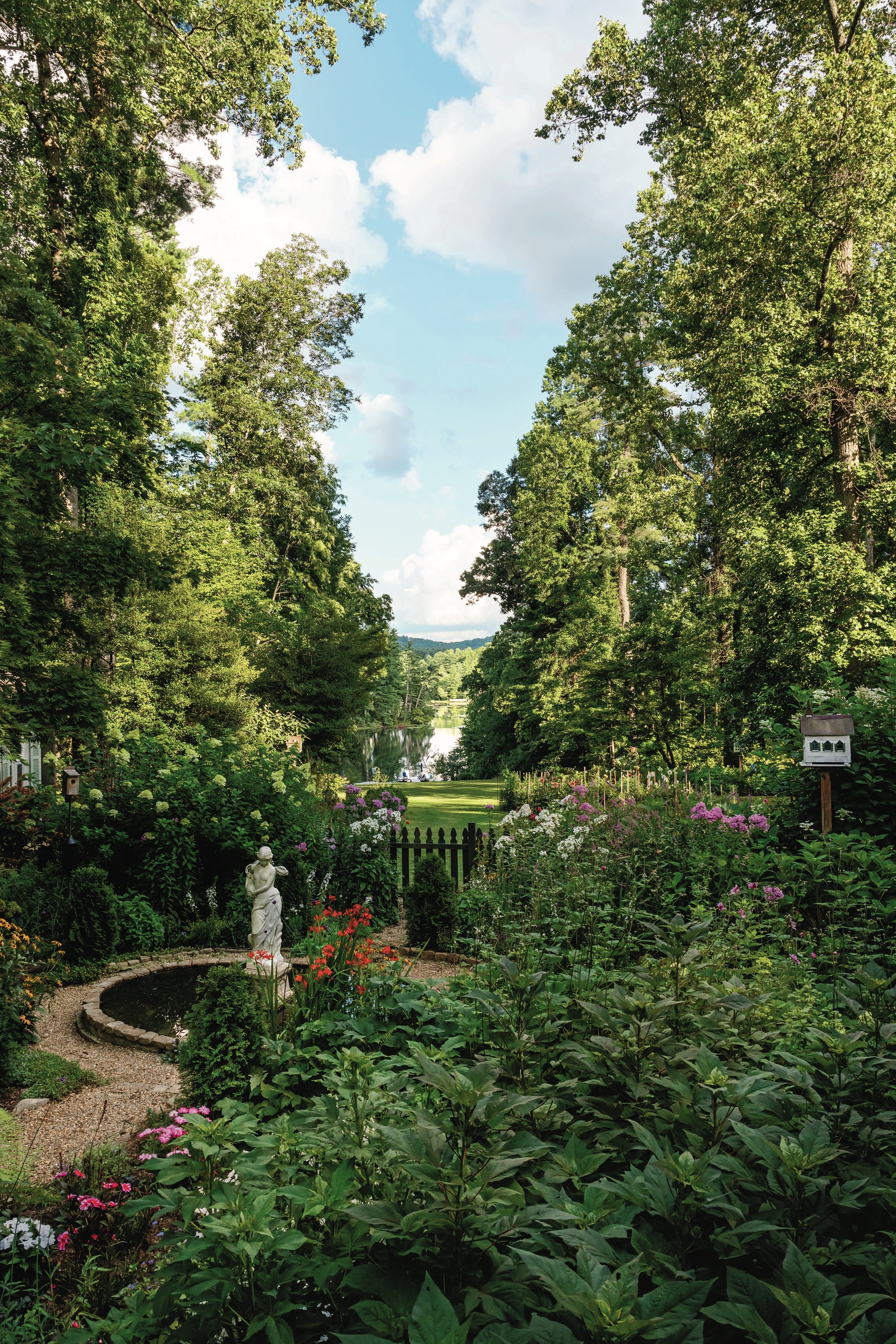
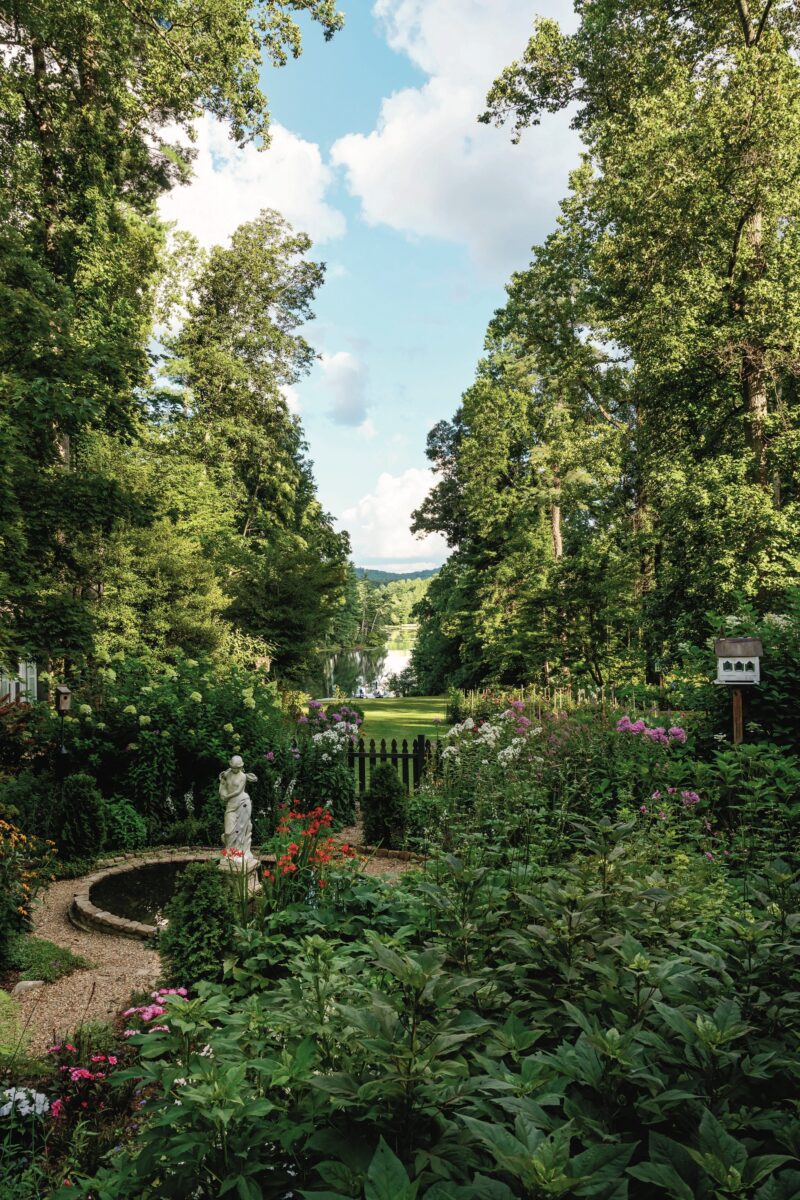
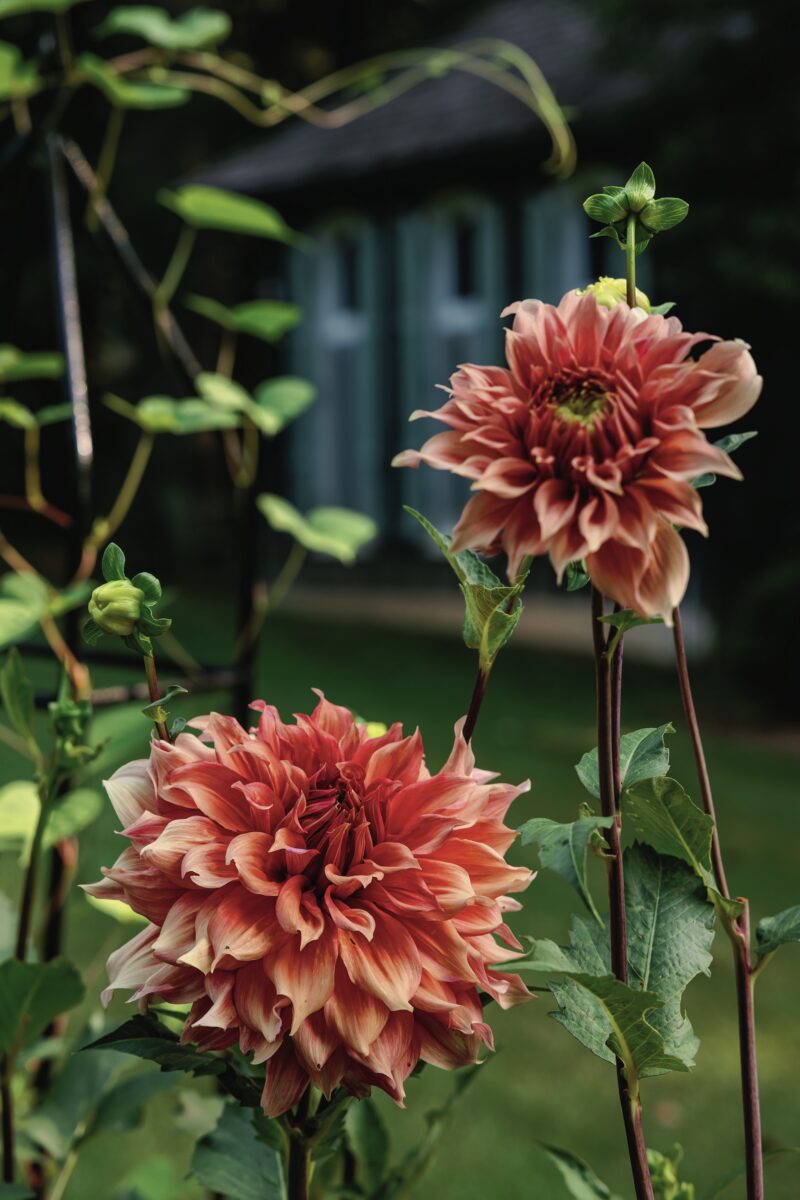
Rather than mourning the loss, Marty seized the canvas. She designed a centerpiece oval pond framed by elegant statuary salvaged from her great-aunt’s historic garden near Charleston. The water feature serves as a direct, mountain-hewn homage to the serene pool at 58 Church Street—a landmark immortalized by author Pat Conroy on the inaugural cover of Garden & Gun magazine in 2007. Over the decades, Marty filled the surrounding acreage with David phlox, Angelonia, Strawberry Sundae hydrangeas, blooming Sierra Glow dahlias, and vibrant patches of monarda that draw clouds of bees and pollinators.
4. Full-Time Migration and Finalizing the Transition (2022–Present)
By 2022, Marty made the permanent transition to living in Flat Rock full-time, leaving behind the stifling heat of Charleston. The move preceded a deeply emotional milestone: in 2023, after two years of grappling with the decision, she sold the legendary Charleston home and garden on Church Street.
The sale coincided with a period of personal trial, as her second husband, Charles Cornwell, fell ill. Flat Rock became the necessary sanctuary for their final chapters together before Charles passed away the following year. Yet, true to the cycles of nature, the historic Church Street property found new owners dedicated to restoring both the eighteenth-century house and its formal gardens—a development that brought Marty immense solace.
Today, in her sixth decade as a prolific painter, Marty utilizes her mountain sanctuary as both a muse and a workshop. She constructed a dedicated framing studio just beyond the old maple tree, incorporating salvaged antique windows found at a local store. Surrounded by the floral magic cultivated by her son’s partner, florist Kylie Ammerman, Marty preps for major solo art exhibitions, proving that the creative spirit of the Whaley dynasty remains as fertile as ever.
Supporting Context & Metrics: The Architecture of a Mountain Garden
To understand the scope of Marty Whaley Adams Cornwell’s achievement in Flat Rock, one must examine the distinct horticultural variables that separate Lowcountry gardening from mountain horticulture:
- Acreage and Scale: While 58 Church Street in Charleston is celebrated for its masterful utilization of tight, urban, walled-in square footage, the Flat Rock property spans a generous 12 acres of diverse terrain, including lakefront access, wooded approaches, and sprawling sunlit lawns.
- Microclimate Adaptation: Transitioning from USDA Hardiness Zone 9a (Charleston) to Zone 7b/8a (Flat Rock, Henderson County) required a shift from sub-tropical plantings to mountain-hardy perennials, cold-tolerant hydrangeas, and alpine-friendly flora.
- Generational Artifacts Integrated:
- The Maple Succession: Seedlings from a century-old maple transplanted by Emily Whaley in her seventies.
- Bridal Propagation: Blue hydrangeas originating from a 1950 family wedding bouquet.
- Architectural Salvage: Statuary transported from historic Lowcountry estates to anchor the central mountain water feature.
- Artistic Convergence: The integration of a custom-built framing studio utilizing 19th-century salvage windows, serving as the production hub for Marty’s floral still-life paintings and upcoming exhibitions at Flat Rock’s Marsha Hammel Studio.
Official Statements and Reflections
The philosophy guiding the Whaley family’s horticultural journey is deeply rooted in acceptance, resilience, and an innate reverence for the natural world. Reflecting on her transition from the urban confines of Charleston to the sweeping vistas of Highland Lake, Marty Cornwell emphasizes the therapeutic power of her surroundings:
"When I sit on this porch and look out at the lilies, at the bees drunk on the monarda, it soothes about any problem," Marty notes, her cadence carrying the unhurried warmth of the South. "Just listen to that woodlark; it’s like church."
Addressing the poignant chapter of parting with the family’s ancestral home on Church Street, Marty draws a direct parallel between the rhythms of gardening and the unpredictable storms of human existence:
"Gardening reminds you that everything has a season. As Mama would say, ‘A storm blowing through makes room for something new.’"
On the organic, effortless synergy of her current mountain landscape compared to the rigorous discipline of formal Lowcountry design, Marty observes:
"A garden is like a painting: Stir a little here, mix a little color there. Things practically grow themselves here. They just take off. It’s just so miraculous, to plant moonflowers from seed and watch them come up. I mean, how could I not be a gardener?"
Future Outlook
As the Whaley-Cornwell property in Flat Rock enters its fifth decade under family stewardship, its trajectory points toward a harmonious fusion of ecological preservation, fine art, and educational legacy. The estate no longer operates merely as a seasonal summer escape, but as a year-round creative ecosystem where three distinct threads—horticulture, painting, and floral design—converge.
With the next generation actively involved—exemplified by florist Kylie Ammerman’s mastery over the dahlia beds—the property is poised to remain a vibrant nexus for Southern artistic and botanical expression. Furthermore, Marty’s ongoing series of floral still lifes, developed within her lakeside studio, ensures that the transient beauty of the Flat Rock landscape will be permanently captured on canvas for national audiences.
Ultimately, while the physical gates of 58 Church Street in Charleston have passed to new hands, the horticultural soul of Mrs. Whaley has found an enduring, expansive second act in the Blue Ridge Mountains. In Flat Rock, the invitation to rest the soul requires no posted sign; it is whispered by the wind through the hemlocks, echoed by the songs of woodlarks, and painted in endless strokes of seasonal color.

0 Comments