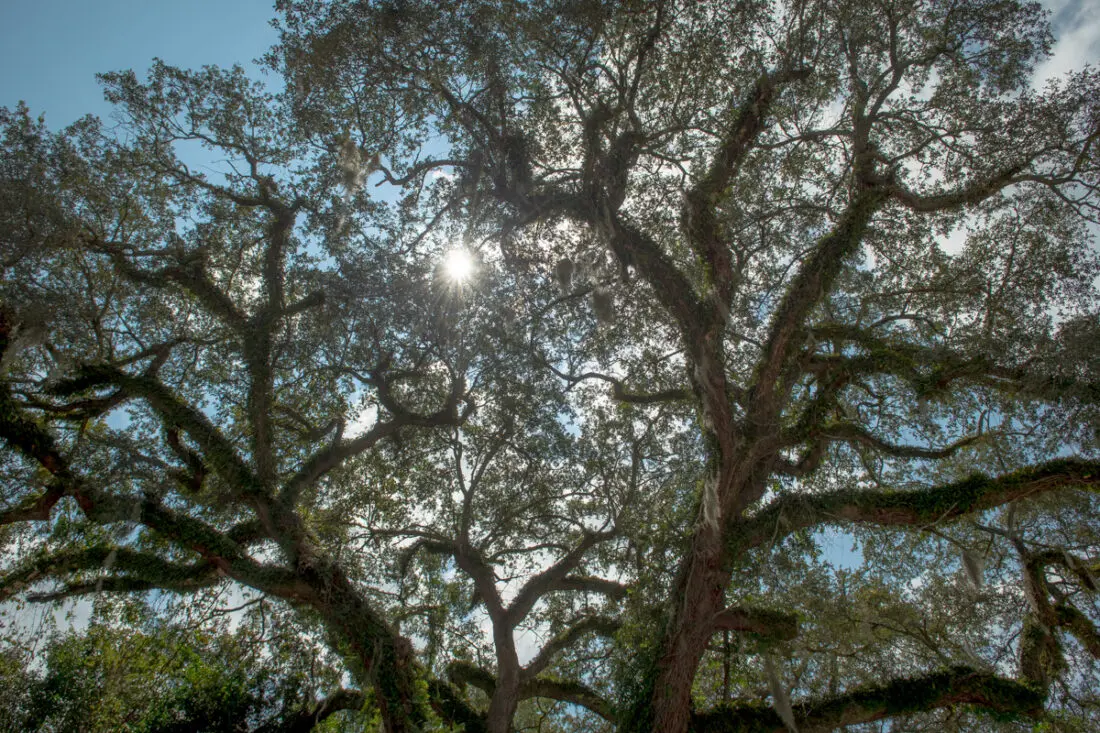
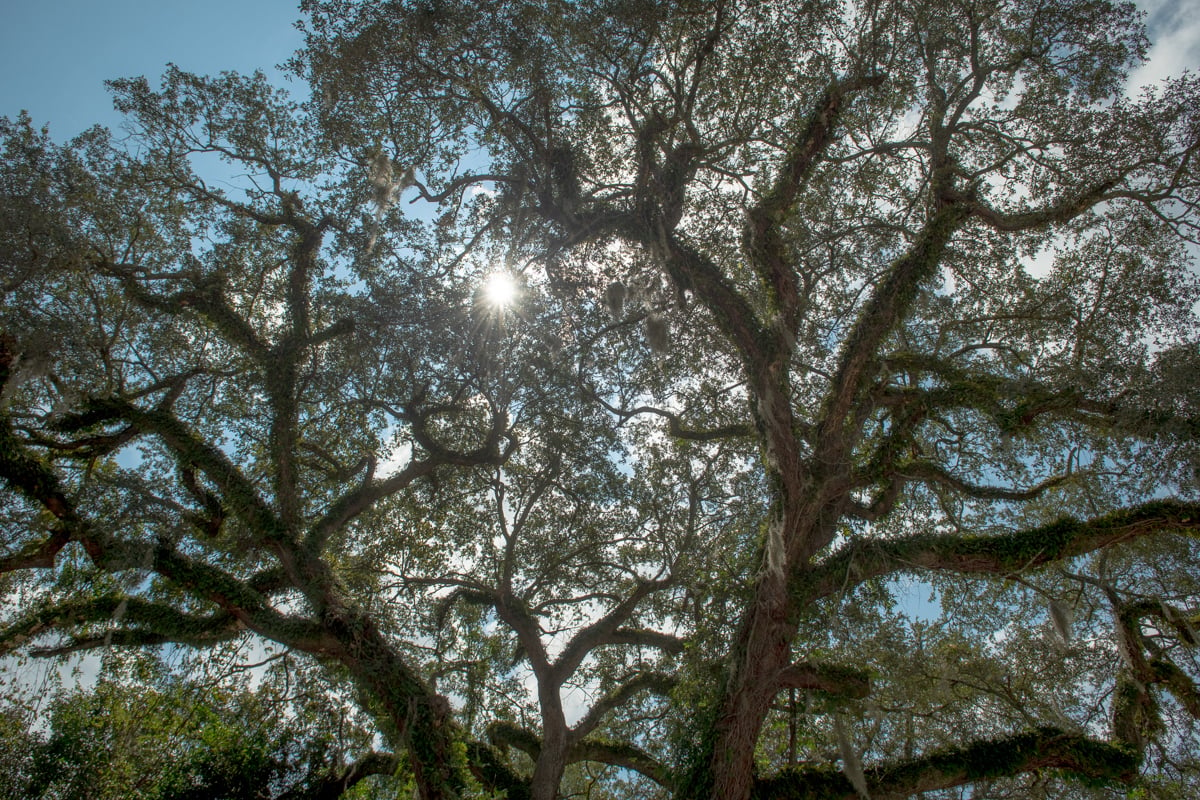
Deep in the heart of Orangeburg County, South Carolina, across the historic expanse from Eutaw Springs Battleground Park, stands a living monument that predates the United States itself. Estimated to be between two and three centuries old, a magnificent live oak presides over the landscape with a trunk measuring a staggering six feet in diameter and a sprawling canopy covering an area half the size of a football field. Known reverently as the "Witness Tree," this botanical titan was a silent spectator to the Battle of Eutaw Springs on September 8, 1781—the final major clash of the Revolutionary War in the Carolinas.
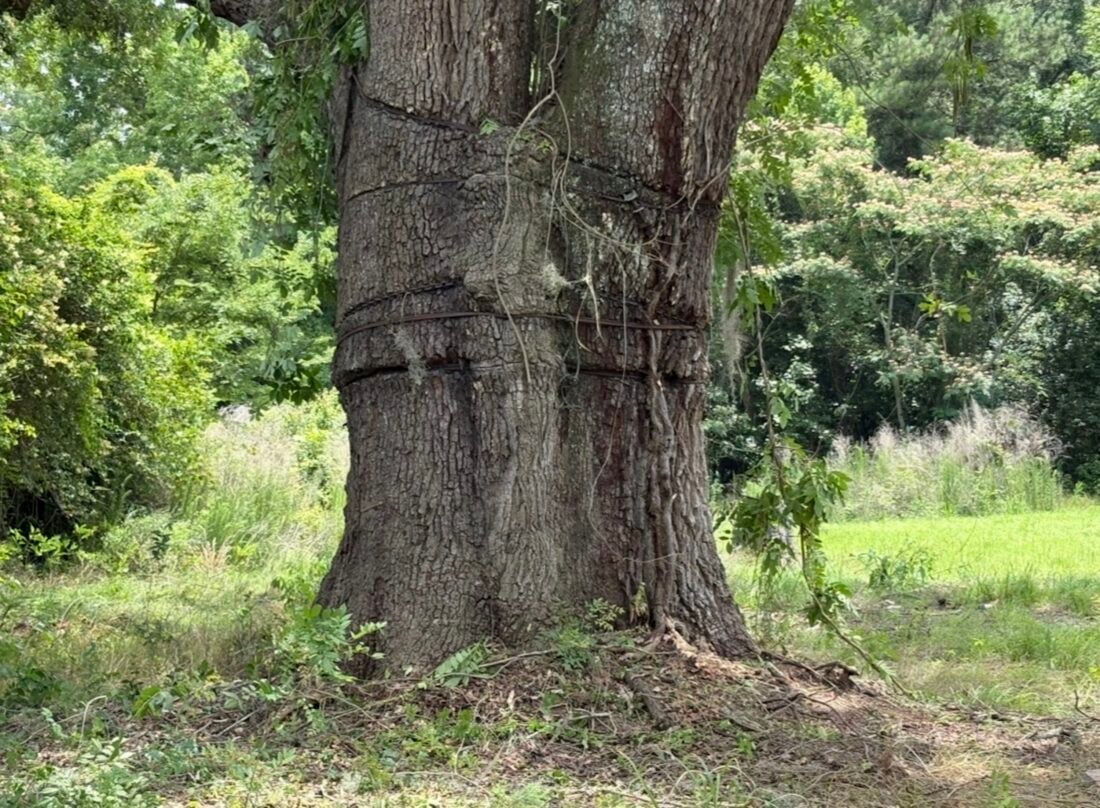
Yet, the very measures taken decades ago to preserve this historic sentinel are now actively killing it. Following a devastating lightning strike fifty years ago that split the ancient oak down its center, emergency responders wrapped heavy steel chains and cables around its trunk and limbs to hold its massive frame together. While these makeshift braces successfully saved the tree from immediate collapse, time has turned them into instruments of slow strangulation. The oak has grown around the metal, choking off its vital internal vascular system and preventing the free flow of water and essential nutrients from the soil.
Now, a team of elite arborists, commissioned by the nonprofit American Battlefield Trust, has embarked on a delicate, high-stakes surgical rescue mission. This week-long intervention aims to remove the decades-old chains before they cause fatal damage, install an advanced and flexible structural support system, and implement state-of-the-art lightning protection. As South Carolina approaches the 250th anniversary of the American Revolution in 2031, conservationists and historians alike are racing against the clock to ensure that this irreplaceable biological artifact survives to tell its story for another century.
Detailed Chronology: From Revolutionary Witness to Modern Crisis
September 8, 1781: The Battle of Eutaw Springs
To understand the profound historical significance of the Orangeburg County live oak, one must look back to the final months of the Revolutionary War in the Southern theater. Continental forces, led by General Nathanael Greene, engaged British troops in a fierce and bloody battle at Eutaw Springs. Though tactically inconclusive, the engagement effectively crippled British operational capacity in South Carolina, forcing them back toward Charleston. Standing tall amidst the smoke and musket fire was the young live oak—already a formidable feature of the Lowcountry landscape, destined to bear witness to the birth of a nation.
Circa 1976: The Lightning Strike and Emergency Fix
For nearly two centuries, the oak grew unhindered, weathering the agricultural changes and environmental shifts of the American South. However, tragedy struck roughly fifty years ago when a violent lightning bolt struck the tree, splitting its massive primary trunk straight down the middle. Threatened with catastrophic failure, local stewards implemented an emergency stabilization method common for the era: wrapping industrial steel chains and heavy-duty cables tightly around the trunk and major structural limbs to bind the splitting halves together. While this mechanical intervention prevented the tree from tearing itself apart, it inadvertently set the stage for a secondary, decades-long crisis.
2023: Incorporation into the Liberty Trail
Recognizing the land’s immense historical value, the American Battlefield Trust officially incorporated the four-acre parcel surrounding the Witness Tree into the Liberty Trail—an ambitious, multi-site network designed to interpret and connect South Carolina’s Revolutionary War history. As planners began envisioning a larger, more accessible park centered around the battlefield, they quickly realized that the property’s crowning jewel was in dire physical distress. The chains, once celebrated as a quick-fix savior, were now visibly biting deep into the living bark, causing localized dieback and signaling an urgent need for professional arboricultural intervention.
August 2026: The Comprehensive Rescue Operation
By the summer of 2026, the situation reached a critical tipping point. Catherine F. Noyes, deputy director of land preservation for the American Battlefield Trust, contracted the renowned arborist firm SavATree to conduct a comprehensive health assessment. Led by expert arborist Aron Landsaw, the assessment revealed that the tree’s structural integrity was severely compromised by the embedded hardware.
Preliminary ground-level restorative work commenced immediately, including the removal of dead and damaged wood, radical soil de-compaction around the root zone, and a regimen of deep-root nutrient injections. Finally, in August 2026, a specialized team of seven master arborists initiated the most dangerous and delicate phase of the project: ascending hundreds of feet into the canopy to surgically excise the tension-loaded chains and install a modernized, living-friendly support ecosystem.
Supporting Context & Metrics: Anatomy of an Ancient Oak
To grasp the magnitude of the rescue operation, one must examine the physical dimensions and ecological challenges facing the Eutaw Springs Witness Tree.
Estimated Age: 200 to 300 years old, placing its germination firmly in the mid-to-late 18th century.
Trunk Diameter: 6 feet of dense, historic hardwood.
Canopy Spread: Encompassing an area equal to half the size of a professional football field, providing massive shade and wind resistance.
The Choking Mechanism: Trees grow outward by adding annual rings of xylem and phloem beneath the bark. As the live oak expanded over the past fifty years, it essentially swallowed the unyielding steel chains. Because the tree lacked the localized vigor to completely compartmentalize and cover the metal, sections of the chain remained exposed and tightly embedded, severing the cambium layer responsible for transporting water and carbohydrates between the roots and the canopy.
The Danger of Stored Energy: When metal cables and chains are left under heavy tension for decades, they store immense mechanical energy. Cutting these embedded restraints carries a severe risk of violent "snapback," presenting a mortal hazard to the climbing arborists working within arm’s reach of the tensioned steel.
Official Statements and Expert Perspectives
The preservation of the Witness Tree represents a unique intersection of arboricultural science, structural engineering, and historic preservation. Key leaders involved in the project emphasize the profound stakes of the operation:
Catherine F. Noyes, Deputy Director of Land Preservation, American Battlefield Trust: "If we lost this tree, we’d lose a direct physical link to the events at Eutaw Springs and a powerful connection to the people who fought and died on this land. The Witness Tree is a living connection to this history. In the future, we hope it will become the centerpiece of an expanded battlefield park, with additional protected acreage arriving ahead of the battle’s 250th anniversary in 2031."
Aron Landsaw, Lead Arborist, SavATree: "The chains are basically cutting off its circulation where it can’t draw water and nutrients up from the soil. Working on something like this isn’t an opportunity that comes around very often. I’ll do anything I can to save this tree."
Detailing the technical scope of the replacement system, Landsaw explained that the team is executing a multi-tiered stabilization and protection protocol:
Surgical Chain Extraction: Seven arborists scaling the high canopy to meticulously cut and remove the embedded steel without tearing the fragile, living wood surrounding the wounds.
Dynamic Cabling and Rodding: Replacing the rigid, choking chains with high-strength steel rods drilled cleanly through the limbs, connected to a flexible cabling system anchored to a central hub. This allows the massive limbs to sway naturally in high winds rather than fighting against a rigid constraint, drastically reducing structural stress.
Lightning Mitigation Integration: Because trees embedded with foreign metal or standing as solitary canopy giants are prime targets for lightning strikes, the team is installing an advanced network of heavy-gauge copper cables. This system safely intercepts electrical charges and channels them harmlessly into the deep earth, safeguarding the oak from future atmospheric trauma.
Future Outlook: Safeguarding History Toward the 250th Anniversary
As the restoration dust settles in Orangeburg County, the long-term outlook for the Eutaw Springs Witness Tree is cautiously optimistic. The removal of the restrictive chains, combined with aggressive soil rehabilitation and advanced structural bracing, provides the ancient oak with the physiological breathing room it needs to recover its vigor.
The timing of this intervention is far from coincidental. With the United States Semiquincentennial (America’s 250th anniversary) fast approaching in 2031, historic tourism initiatives like the Liberty Trail are experiencing a massive surge in public interest and infrastructural investment. The American Battlefield Trust envisions the rehabilitated Witness Tree serving as the literal and figurative anchor of an expanded, immersive battlefield park.
By healing the physical scars of the past, conservationists are ensuring that this silent sentinel will remain standing for generations to come—a breathing, growing monument to the soldiers who clashed beneath its boughs nearly two and a half centuries ago.



0 Comments