
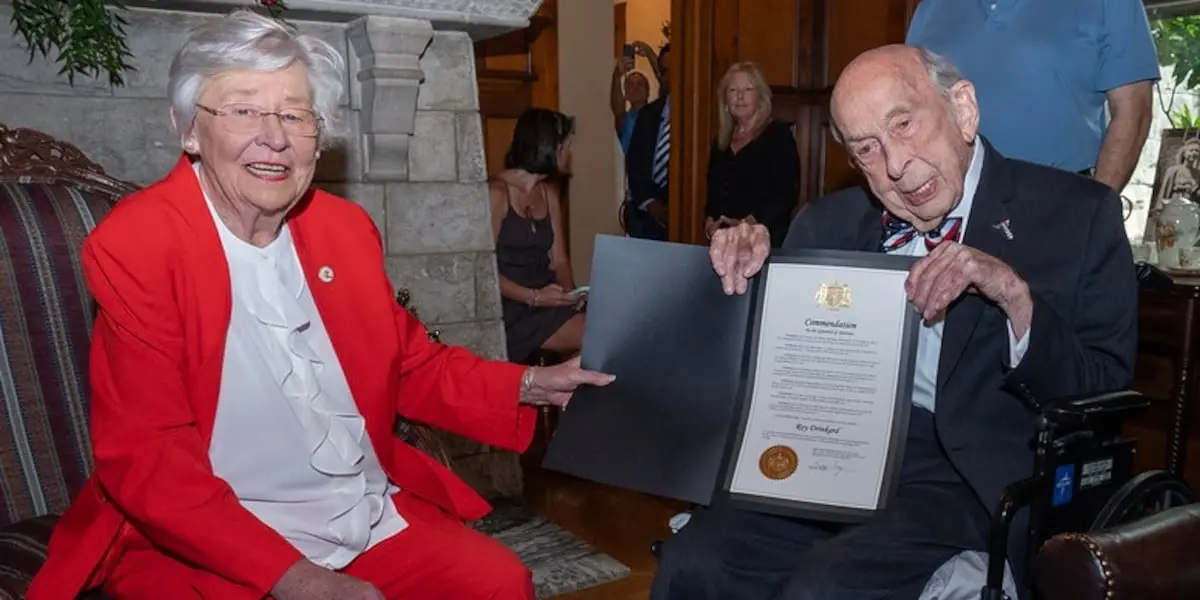

Executive Overview
On August 24, 2026, the United States lost a singular link to its military and civic past. Roy Drinkard, recognized officially as the nation’s oldest living United States Marine, passed away in Cullman County, Alabama, at the extraordinary age of 106. A veteran of World War II, a visionary business leader, and a dedicated public servant, Drinkard’s life spanned more than a century of profound global and local transformation. From the agrarian landscapes of Depression-era Alabama to the battlegrounds of the mid-20th century, and finally to the boardrooms of higher education and regional commerce, his trajectory epitomized the resilience, humility, and duty associated with the "Greatest Generation."
Drinkard’s passing marks not only the loss of a military treasure but also the departure of a foundational architect of modern Cullman County. Following his military service, Drinkard returned to Alabama, where he pioneered economic development initiatives that transitioned his community from a quiet agricultural enclave into a thriving industrial and commercial hub. His decades of service on the Board of Trustees at Troy University further cemented his legacy as a champion of educational access and institutional growth.
This investigative and biographical retrospective examines the multi-faceted life of Roy Drinkard. Through historical context, economic metrics, and personal testimonies, we analyze how a young man born in rural Alabama in 1920 grew to become a national symbol of the United States Marine Corps’ enduring ethos: Semper Fidelis—Always Faithful.
Detailed Chronology
[July 20, 1920] Born in Falkville, AL
       │
[1941–1945] Enlists in USMC; serves during World War II
       │
[Post-1945] Returns to Alabama; co-founds/joins "Flying 50s" economic initiative
       │
[Late 20th C.] Inducted into Cullman Veterans Hall of Fame; appointed to Troy University Board of Trustees
       │
[August 2026] Passes away at age 106 as the nation's oldest living Marine
1920–1941: Formative Years in the Deep South
Roy Drinkard was born on July 20, 1920, in Falkville, a small town in Morgan County, Alabama. Coming of age during the Great Depression, Drinkard’s early years were shaped by the economic hardships that gripped the American South. The agrarian economy of northern Alabama demanded rigorous manual labor and fostered a culture of community interdependence—values that would define Drinkard’s later philanthropic and business philosophies.
1941–1945: World War II and the Marine Corps Crucible
Following the United States’ entry into World War II after the attack on Pearl Harbor, Drinkard answered the call to service by enlisting in the United States Marine Corps. The Marine Corps of the 1940s was undergoing rapid expansion, transforming from a small amphibious strike force into a massive military machine capable of prosecuting a multi-front war, primarily in the Pacific Theater.
Drinkard’s tenure in the Marines instilled in him a rigorous discipline and a profound sense of organizational leadership. Though he rarely boasted of his wartime exploits, contemporaries noted that his military training served as the bedrock for his subsequent business endeavors. He emerged from the war with a global perspective that he brought back to the local communities of North Alabama.
1946–1970: The "Flying 50s" and Cullman’s Industrial Renaissance
Upon returning to civilian life, Drinkard settled in Cullman County, Alabama. Recognizing that the local economy was overly dependent on volatile agricultural markets, Drinkard joined forces with a group of forward-thinking local business leaders known as the "Flying 50s."
This civic action group was revolutionary for its time. Composed of local business owners, pilots, and municipal boosters, the Flying 50s literally took to the skies, flying across the United States to pitch Cullman to major manufacturing and industrial firms. Drinkard’s business acumen and persuasive charisma were vital to these recruitment efforts. Under his influence, the group successfully diversified Cullman’s economy, attracting manufacturing plants, distribution centers, and commercial enterprises that provided stable, high-paying jobs to thousands of local families.
1970–2026: Educational Stewardship and Civic Leadership
In his later decades, Drinkard shifted much of his focus toward higher education and veteran advocacy. His relationship with Troy University became one of the defining chapters of his post-military life. Appointed to the university’s Board of Trustees, Drinkard served for decades, steering the institution through periods of unprecedented physical and academic expansion.
His commitment to his fellow service members was recognized formally when he was inducted into the Cullman Veterans Hall of Fame, an honor reserved for those who demonstrated exceptional service both in uniform and within their civilian communities. Drinkard remained active in civic affairs well into his centenarian years, continuing to advise local business leaders and participate in community events until his passing in August 2026.
Supporting Context & Metrics
The Demographic Transition of World War II Veterans
Drinkard’s death at 106 highlights a critical demographic milestone for the United States. According to data from the National World War II Museum and the Department of Veterans Affairs, of the 16 million Americans who served in World War II, only a small fraction remain alive today.
| Metric | Detail / Value |
|---|---|
| Total US WWII Enlistments | ~16,112,566 |
| Estimated Surviving WWII Veterans (2026) | < 0.5% of original force |
| Roy Drinkard’s Age at Passing | 106 years, 1 month, 4 days |
| Rank Held at Passing | Nation’s Oldest Living U.S. Marine |
The rapid loss of these living witnesses to history underscores the importance of preserving the oral histories, archival records, and civic lessons of veterans like Drinkard.
Economic Impact of the "Flying 50s"
To understand Drinkard’s impact on Cullman County, one must examine the economic trajectory of the region during the mid-to-late 20th century.
- Agricultural Transition: In 1940, over 60% of Cullman County’s workforce was engaged in agriculture. By 1980, that number had dropped to under 15%, replaced by manufacturing, retail, and service industries.
- Infrastructure Growth: The recruitment efforts of the Flying 50s directly influenced the expansion of transportation infrastructure in Cullman, including access to Interstate 65, which became a vital economic artery for the state of Alabama.
- Job Creation: The initiatives championed by Drinkard and his contemporaries brought major employers to the area, insulating Cullman from the economic downturns that devastated other single-industry towns in the Rust Belt and the deep South.
Official Statements and Tributes
The announcement of Drinkard’s passing prompted an outpouring of grief, respect, and celebration of his life from military officials, academic leaders, and state executives.
State Executive Tribute
Alabama Governor Kay Ivey issued a solemn tribute reflecting on Drinkard’s service to both state and country, drawing directly from military tradition:
"In the words of The Marines’ Hymn, Mr. Drinkard is now guarding the streets of Heaven. Join me in praying for his family and the many who loved him."
— Governor Kay Ivey, State of Alabama
Governor Ivey’s reference to the iconic lyric—"If the Army and the Navy / Ever look on Heaven’s scenes; / They will find the streets are guarded / By United States Marines"—resonated deeply with veteran organizations nationwide, emphasizing the eternal bond between the Marine Corps and its members.
Academic and Leadership Tributes
At Troy University, where Drinkard’s governance left an indelible mark, leadership recalled a man whose commercial success was secondary to his love for humanity. Dr. Jack Hawkins Jr., Chancellor of Troy University, spoke of Drinkard’s unique approach to leadership:
"Even though he was very successful in business, it was always about people and relationships."
— Dr. Jack Hawkins Jr., Chancellor, Troy University
Family Recollections and Personal Humility
While state leaders focused on his public achievements, Drinkard’s family remembered his profound humility and connection to the working-class roots of Alabama. His grandson, Julius Boggus, shared an anecdote that captured Drinkard’s character:
"He had me go to the farmers’ market one morning, fill up the car with produce from Cullman County, and we just went all over and were delivering it to different people, most of whom had never met him, and he’d never met them."
— Julius Boggus, Grandson of Roy Drinkard
This quiet philanthropy, away from the cameras and corporate boards, illustrated a man who viewed wealth not as a measure of personal status, but as a tool for community enrichment.
Future Outlook: Preserving a Centenary Legacy
As Alabama and the nation transition into an era without the living presence of Roy Drinkard, concrete steps are being taken to ensure his contributions are permanently memorialized for future generations.
The Roy Drinkard Building at Troy University
In recognition of his decades of service as a trustee and benefactor, Troy University officials announced plans to name a prominent campus building in Drinkard’s honor. This dedication will serve as a permanent monument to his vision for higher education in Alabama. The facility is expected to house programs focused on leadership, public service, or business administration—disciplines that Drinkard championed throughout his life.
Veteran Advocacy and Historical Archiving
Local historical societies in Cullman and Falkville, in partnership with veteran organizations, are working to digitize Drinkard’s personal papers, photographs, and recorded interviews. These materials will be contributed to national repositories, including the Library of Congress Veterans History Project, ensuring that historians studying the 20th-century American South and the World War II homefront have access to his invaluable perspective.
Conclusion: The Enduring March of Semper Fidelis
Roy Drinkard’s 106-year journey represents the best of the American spirit. He defended his nation during its darkest hours, built up his community’s economy when it was desperately needed, guided young minds through his support of higher education, and remained a humble neighbor until his final days. Though the nation’s oldest Marine has completed his earthly watch, the legacy of his service, citizenship, and character will continue to guide Cullman County, the state of Alabama, and the United States Marine Corps for generations to come.

0 Comments