

Executive Overview
The tight-knit community of Sweet Home, Oregon, has been thrust into deep mourning following a catastrophic injury during a high school football game that has claimed the life of 15-year-old student-athlete Mason Flores. During a home game at Sweet Home High School, Flores suffered a severe traumatic brain injury (TBI) characterized by a sudden seizure and an acute intracranial hemorrhage. Despite rapid emergency medical response, an airlift to a specialized trauma center in Portland, and immediate neurosurgical intervention, medical professionals were unable to reverse the damage.
As his family prepares to say their final goodbyes, they have made the profound decision to authorize organ donation, transforming an unspeakable family tragedy into a lifesaving gift for others. Remarkably, the transition of Flores to an organ donor protocol coincides with what would have been his 16th birthday.
This tragedy has sent shockwaves through Linn County and the broader Oregon high school sports community, reigniting critical discussions surrounding the inherent risks of youth collision sports, the efficacy of emergency action plans, and the vital role of pediatric organ donation. In accordance with the explicit wishes of the Flores family, Sweet Home School District has chosen to proceed with its scheduled homecoming festivities, framing the events not as a detraction from their grief, but as a collective celebration of Mason’s life, humor, and community spirit.
Detailed Chronology
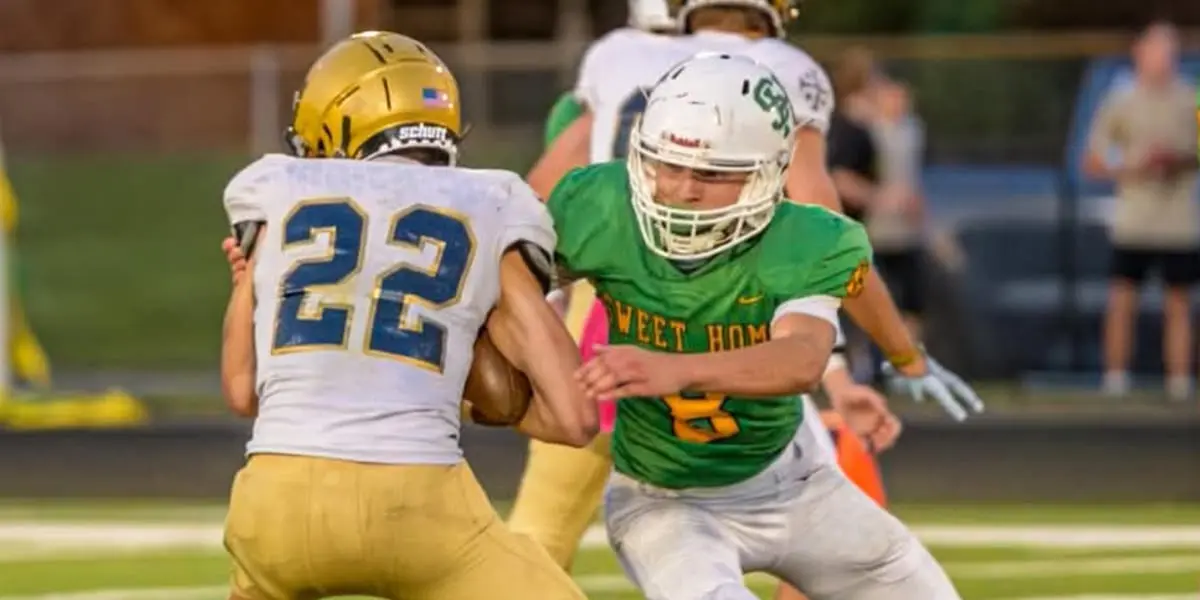
The sequence of events that led to this tragedy began on the evening of Monday, October 5, 2026, during a high school football game hosted at Sweet Home High School.
[Monday, Oct 5: On-Field Injury] ──> [Emergency Airlift to Portland] ──> [Emergency Neurosurgery] ──> [Prognosis Declines / Brain Death Protocol] ──> [Transition to Organ Donation (Oct 12)]The On-Field Incident and Immediate Response
During play, 15-year-old Mason Flores sustained a severe, blunt-force impact. While the specific mechanics of the collision remain under review, the immediate physiological response was catastrophic. Flores collapsed on the field, exhibiting seizure activity—a clinical indicator of severe neurological distress, often triggered by a rapid increase in intracranial pressure or direct trauma to the brain’s cortical tissue.
On-site medical personnel, including athletic training staff and emergency medical services (EMS), immediately initiated emergency protocols. Recognizing the symptoms of an acute brain bleed (subdural or epidural hematoma), first responders stabilized Flores and requested emergency air transport.
Medical Evacuation and Surgical Intervention
Due to the critical nature of the injury and the geographical location of Sweet Home—a rural community situated approximately 100 miles south of Portland—time was of the essence. A medical helicopter evacuated Flores directly from the area to a state-of-the-art pediatric trauma center in Portland.
Upon arrival, diagnostic imaging confirmed a severe brain bleed. Neurosurgeons performed emergency surgery to perform a craniectomy or craniotomy, aiming to alleviate pressure on the brain stem caused by the accumulating blood.
The Post-Surgical Decline
Following surgery, Flores was monitored closely in the pediatric intensive care unit (PICU). Over the subsequent days, clinical teams worked to manage cerebral edema (brain swelling) and maintain systemic stability. However, despite aggressive therapeutic interventions, the neurological damage proved irreversible.
By the weekend, clinical evaluations indicated that Flores’s brain function had ceased. Facing the ultimate tragedy, the Flores family began the process of saying goodbye, while simultaneously coordinating with regional organ procurement organizations to facilitate organ donation.
A Birthday Marked by Selflessness
In a poignant twist of timing, the transition to the organ donation process was scheduled around Monday, October 12, 2026—the day Mason would have celebrated his 16th birthday. Rather than marking a traditional milestone of adolescence, his family chose to honor his legacy by giving the gift of life to critically ill patients awaiting organ transplants.
Supporting Context & Metrics
The tragic death of Mason Flores does not occur in a vacuum; it highlights broader systemic issues regarding youth sports safety, traumatic brain injuries in adolescents, and the critical need for pediatric organ donors.
Catastrophic Injuries in High School Football
While concussions are widely discussed in youth sports, catastrophic brain injuries—defined as those resulting in permanent severe neurological impairment or death—are rare but persistent risks in tackle football.
According to data compiled by the National Center for Catastrophic Sport Injury Research (NCCSIR):
- Subdural Hematomas: Acute subdural hematomas remain the leading cause of death directly related to sports trauma in high school football. These injuries typically occur when rapid acceleration or deceleration forces tear the bridging veins between the brain and the dural sinuses.
- Incidence Rates: Although the overall rate of direct catastrophic injuries in high school football is low (approximately 0.5 to 1.0 per 100,000 participants), the absolute numbers represent devastating losses for communities annually.
- Second Impact Syndrome (SIS): Though not confirmed in this specific case, sports medicine researchers emphasize the extreme danger of Second Impact Syndrome, which occurs when an athlete sustains a second head injury before symptoms of a previous injury have fully resolved, causing rapid, often fatal brain swelling.
| Injury Metric | High School Football Context |
|---|---|
| Primary Cause of TBI Death | Acute Subdural Hematoma |
| Annual Est. Catastrophic Rate | ~0.5 – 1.0 per 100,000 players |
| Critical Window for Intervention | Within 1-2 hours of symptom onset (the "Golden Hour") |
| Primary Prevention Tool | Impact-reducing equipment (e.g., Guardian Caps), strict contact limits |
Oregon’s Legislative and Safety Framework
Oregon has historically been at the forefront of sports concussion legislation. In 2009, the state legislature passed Max’s Law (ORS 336.485), named after Max Conradt, a high school football player who suffered debilitating brain injuries. Max’s Law mandates that:
- All coaches of school athletic teams receive annual training on recognizing the symptoms of concussions.
- Any athlete exhibiting signs of a concussion must be immediately removed from play.
- The athlete cannot return to play without medical clearance from a qualified healthcare professional.
In 2013, this was expanded to non-school youth sports via Jenna’s Law. Despite these robust frameworks, acute, high-velocity impacts can still cause immediate, severe intracranial bleeding that bypasses the gradual onset of standard concussion symptoms, highlighting the limits of observational protocols alone.
The Critical Role of Organ Donation
The decision by the Flores family to donate Mason’s organs highlights a vital area of public health.
- The Waiting List: Nationally, more than 100,000 individuals are on the active organ transplant waiting list, with thousands of pediatric and young adult patients requiring age- and size-matched organs.
- The Impact of a Single Donor: A single organ donor can save up to eight lives through the donation of the heart, lungs, liver, kidneys, pancreas, and intestines, and can enhance the lives of up to 75 more through tissue, cornea, and bone donations.
- Pediatric and Teen Donors: Organ procurement organizations (OPOs) emphasize that teen donors are uniquely valuable, as their organs are generally healthy and highly viable, offering pediatric recipients a significantly higher chance of long-term transplant survival.
Official Statements
The tragedy has prompted deeply emotional responses from school officials, the local community, and those close to the Flores family.
Sweet Home School District Leadership
Superintendent Terry Martin issued a comprehensive address to the community, emphasizing the resilience of the town and the explicit wishes of the Flores family regarding the continuation of school activities:
"With the full blessing of Mason’s family, our school district will proceed with our scheduled homecoming ceremonies and events. Continuing with homecoming is a direct reflection of the family’s request to celebrate life, joy and community. Mason was a young man who brought light to everyone he met, and his family wants us to remember that light, even in our deepest grief."
Martin also detailed the district’s immediate mental health mobilization:
"We recognize the profound impact this loss has on our student body, faculty, and the broader Sweet Home community. Counselors, regional crisis response teams, and support staff will remain available at Sweet Home High School and throughout our district offices for as long as necessary to assist students and employees in processing this tragedy."
Family and Community Tributes
In a public update shared via a GoFundMe campaign established to alleviate the family’s mounting medical and airlift expenses, loved ones expressed their gratitude for the outpouring of local support and shared their vision for Mason’s legacy:
"Mason was a boy who loved the game of football, but more than that, he loved his friends, his family, and making people laugh. As we prepare to say our final goodbyes on what should have been his 16th birthday, we find comfort in knowing that through his selflessness, other families will not have to feel the pain we are feeling today. Mason’s heart, his strength, and his spirit will live on."
Future Outlook
As the Sweet Home community navigates the painful process of grieving and celebrating Mason Flores, his passing is poised to influence regional and national discussions on sports safety and community support systems.
                  [Tragic Loss of Mason Flores]
                                │
         ┌──────────────────────┴──────────────────────┐
         ▼                                             ▼
[Athletic Safety Reform]                      [Organ Donor Advocacy]
 • Implementation of Guardian Caps             • Regional awareness campaigns
 • Enhanced on-field medical staffing          • "Mason's Legacy" donor drives
 • Stricter limits on full-contact drills      • High school curriculum integration
Safety Innovations and Policy Re-evaluation
This incident will likely accelerate discussions within the Oregon School Activities Association (OSAA) regarding safety equipment and practice protocols.
- Mandating Guardian Caps: There is growing pressure on high school athletic associations to mandate the use of Guardian Caps—padded shells that fit over traditional football helmets—during all practices. Studies indicate these caps can reduce impact forces by up to 10% when worn by one player, and up to 20% when worn by all players involved in a collision.
- Standardizing On-Field Medical Presence: Advocates are pushing for legislation that would require a Certified Athletic Trainer (ATC) to be physically present at all high school contact sports events, including sub-varsity and junior varsity games, where medical staffing can sometimes be less robust than at varsity levels.
The Long-Term Impact of Mason’s Gift
By choosing organ donation, the Flores family has ensured that Mason’s legacy will be measured in decades of life granted to others. Regionally, local organ procurement organizations (such as Cascade Life Alliance) often work with donor families to share their stories, raising awareness in high schools and driver’s education programs about the importance of registering as a donor.
In Sweet Home, the decision to proceed with homecoming serves as an initial step toward healing. The intersection of a tragedy, a 16th birthday, and a lifesaving donation ensures that Mason Flores will be remembered not only for how he died, but for the profound, lasting impact he made in his final act of generosity.

0 Comments