

Executive Overview
In the realm of modern neonatal medicine, milestones are frequently measured in grams, weeks, and days. Yet, every so often, a case emerges that redefines the absolute boundaries of survival. Such is the extraordinary story of Raelynn Kubiske, a Wisconsin baby who entered the world on July 18, 2025, weighing a mere 12.5 ounces at just 23 weeks and six days of gestation. Born nearly four months premature, Raelynn faced overwhelming odds that would have daunted even the most seasoned medical professionals.
Following a grueling, historic 375-day stay in the Newborn Intensive Care Unit (NICU) at UW Health in Madison, Wisconsin, Raelynn was finally discharged on July 28, 2026. Medical personnel have confirmed that Raelynn stands as the smallest surviving baby by weight ever to graduate from the institution’s specialized neonatal unit.
However, this phenomenal milestone in pediatric survival is inextricably bound to a narrative of profound personal sacrifice and immense medical adversity. Aubree Winnekens, Raelynn’s mother, confronted life-threatening health complications throughout her pregnancy due to a long-standing battle with lupus and subsequent organ failure. Today, while their family celebrates Raelynn’s triumphant return home at 13 months old and a healthy 18 pounds, they simultaneously navigate a grueling new reality: around-the-clock specialized care for their daughter and an impending kidney transplant for Aubree. This in-depth report chronicles their inspiring, heartbreaking, and ultimately resilient journey.
Detailed Chronology: From a High-Risk Pregnancy to a Historic Homecoming
The path that led to Raelynn’s historic NICU graduation was paved with uncertainty from the very beginning. Aubree Winnekens was diagnosed with lupus at the tender age of 11. An autoimmune disease wherein the body’s immune system mistakenly attacks its own tissues and organs, lupus brought persistent health struggles throughout Aubree’s youth and young adulthood. By the time she reached 22 years of age, her compromised immune system had already subjected her to sepsis—a life-threatening reaction to infection—twice within a single calendar year.
When Aubree and her partner, Aaron Kubiske, unexpectedly discovered they were expecting a child, the news was met with a complex mix of joy and profound medical apprehension. Given Aubree’s extensive history with lupus and severe systemic infections, pregnancy presented a monumental, potentially fatal risk to her own vital organs.
"I wouldn’t say there was really anything going through my mind to have her," Aubree reflected candidly when discussing the decision to carry the pregnancy forward. "We kind of agreed it was the best option to try. We knew the risks."
As the pregnancy progressed, those known risks rapidly materialized. Aubree was admitted to the hospital approximately three weeks prior to delivery as her body began to buckle under the strain. The situation deteriorated precipitously when her heart and kidneys began to shut down, forcing medical teams to place her on dialysis to sustain her life.
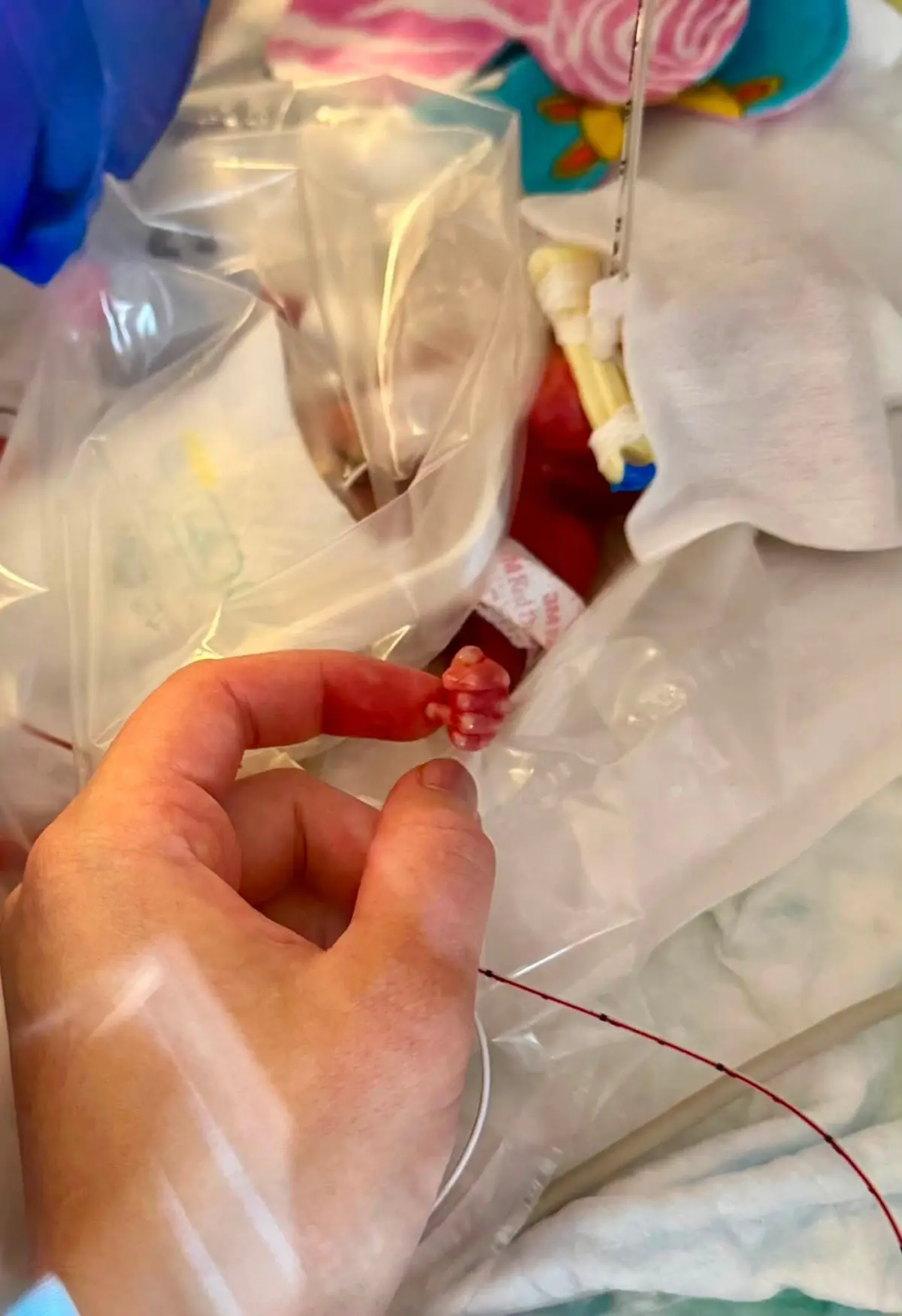
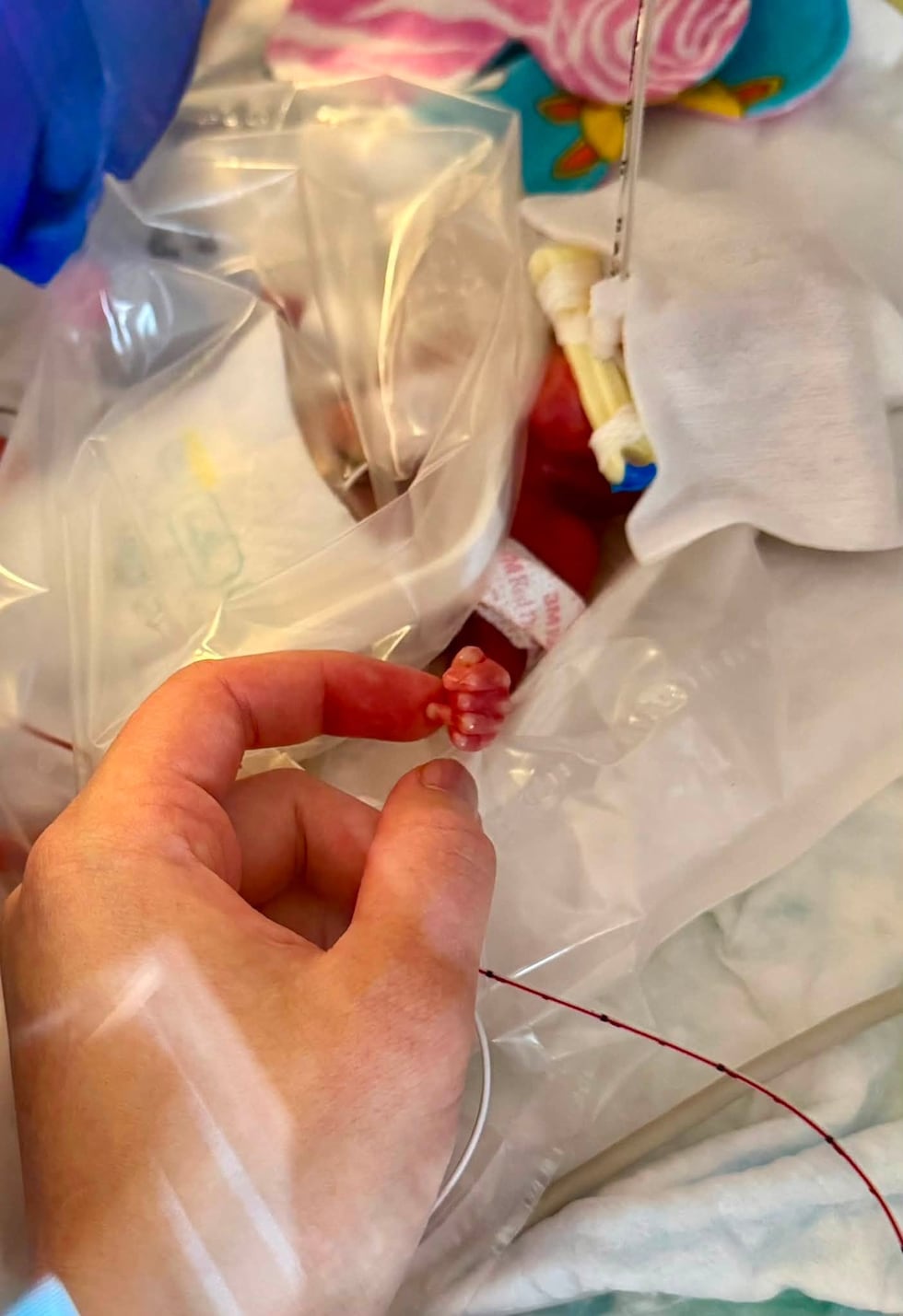
Despite the compounding crises, the pregnancy reached 23 weeks and six days on July 18, 2025, when Raelynn made her precipitous entrance into the world. Weighing an infinitesimal 12.5 ounces—roughly equivalent to a single can of soda—Raelynn was thrust into a high-stakes battle for survival.
Reflecting on those harrowing first moments, Aaron Kubiske shared the surreal nature of seeing his daughter for the very first time. "It was very unreal," Aaron said. "Even though you know what’s going on and you know the situation, it still doesn’t feel like something you’re supposed to see."
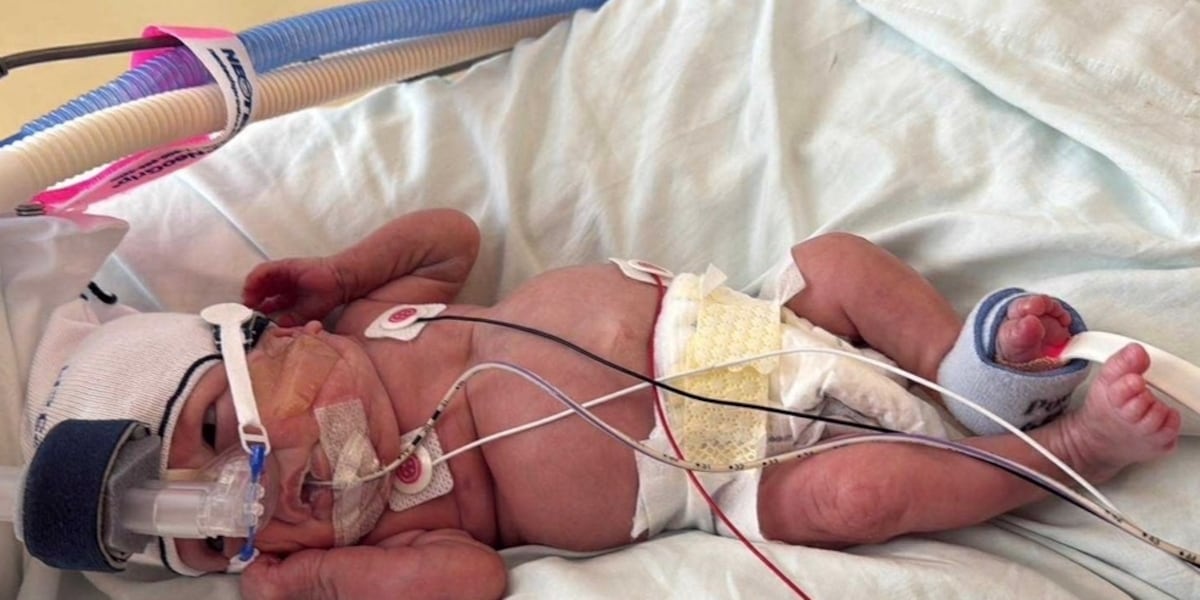
Because she was born nearly four months premature, Raelynn’s physical development was severely arrested. Her parents recall that her eyes were still permanently fused shut, and her skin was so translucent that her internal organs were visible beneath the surface.
Miraculously, the birth of her daughter appeared to provide a temporary, albeit fragile, stabilization for Aubree’s failing body. The day before Raelynn was born marked Aubree’s final dose of dialysis, offering a fleeting window of recovery as she transitioned into the exhausting, dual roles of a recovering mother and a permanent fixture in the hospital corridors.
For the next 375 days, UW Health in Madison became the family’s second home. While Raelynn fought through innumerable respiratory challenges, infections, and developmental hurdles, her parents maintained a steadfast vigil. Finally, on July 28, 2026—more than a full year after her birth—Raelynn was cleared for discharge, trading the sterile beeps of hospital monitors for the warmth of a family home, albeit one heavily modified for continuous medical intervention.
Supporting Context & Metrics: Pushing the Frontiers of Neonatology
To fully comprehend the magnitude of Raelynn Kubiske’s survival, one must examine the baseline metrics of modern neonatology. A full-term pregnancy typically spans between 38 and 42 weeks. A baby born at 23 weeks and six days rests precariously close to the threshold of viability—the point at which a fetus has a realistic chance of surviving outside the womb with intensive medical support.
Understanding Extreme Prematurity
- Gestational Age: At 23 weeks and six days, a fetus’s lungs are structurally immature, lacking sufficient surfactant—a substance critical for preventing the tiny air sacs in the lungs from collapsing.
- Birth Weight: At 12.5 ounces (approximately 354 grams), Raelynn fell well below the standard classification of "extremely low birth weight" (ELBW), which is typically defined as any infant born weighing less than 1,000 grams (2.2 pounds).
- The UW Health Benchmark: Medical practitioners at UW Health in Madison, a leading academic medical center renowned for its advanced neonatal intensive care capabilities, verified that Raelynn is the smallest surviving infant by weight to ever graduate from their NICU program.
The Toll of Chronic Autoimmune Complications
While Raelynn’s milestones dominated the pediatric charts, her mother’s medical journey offers a sobering look at the collateral impact of chronic illness on maternal health. Lupus affects millions worldwide, predominantly women of childbearing age. When pregnancy is introduced into the equation for a patient with a history of lupus nephritis (kidney inflammation caused by the disease), the physiological stress can trigger acute renal failure, necessitating aggressive interventions such as dialysis and, ultimately, organ transplantation.
Aubree’s resilience during the pregnancy—enduring three weeks of intensive hospital monitoring, heart distress, and kidney failure—highlights the often-unspoken physical toll borne by high-risk mothers. Today, Aubree’s kidney function is operating at a mere 8%, placing her directly on the precipice of returning to dialysis while simultaneously evaluating options for a life-saving kidney transplant.
Official Statements and Parental Reflections
The emotional landscape of navigating a year-long NICU stay while managing intersecting health crises is a burden few families are equipped to bear. Yet, the Kubiske-Winnekens family has approached their ordeal with a quiet, resolute bravery that has drawn admiration from their community and medical team alike.
In interviews following Raelynn’s discharge, Aaron and Aubree spoke candidly about the surreal trauma of the experience and the stark realities of their current daily existence.
"Even though you know what’s going on and you know the situation, it still doesn’t feel like something you’re supposed to see," Aaron reiterated, capturing the psychological dissonance experienced by parents of micro-preemies, who must bond with their infants through the plastic ports of an incubator rather than holding them in their arms immediately after birth.
For Aubree, the juxtaposition of celebrating her daughter’s hard-won survival while confronting her own failing health is a daily exercise in fortitude. Having narrowly escaped total organ failure during pregnancy, she now faces the stark reality of chronic disease consequences.
"Now I’m facing those consequences of now needing a transplant," Aubree stated, acknowledging that her current kidney function of 8% means her medical journey is far from over. Despite her own deteriorating health, her primary focus remains anchored on managing Raelynn’s complex, around-the-clock care regimen—a task that currently requires the constant, simultaneous attention of both parents.
Future Outlook: Milestones on the Horizon
As of August 2026, Raelynn Kubiske is officially 13 months old and has achieved a monumental developmental milestone by growing to a healthy 18 pounds. However, transitioning from a hospital environment to a home setting has not meant an end to medical oversight.
Current Care Regimen and Family Logistics
Because of the severe, prolonged impact of extreme prematurity on her respiratory and digestive systems, Raelynn requires continuous, round-the-clock care. Her parents emphasize that managing her daily needs is a two-person job, leaving little room for error or rest.
Currently, the family remains temporarily relocated to Madison to ensure rapid access to the specialized UW Health medical teams that managed Raelynn’s care from day one. However, their long-term plans are firmly rooted in returning to their home region in northern Wisconsin. That relocation is contingent upon a critical medical milestone: Raelynn’s medical team plans to remove her breathing tube once she reaches two years of age, providing her respiratory system has matured sufficiently to sustain independent breathing.
The Road Ahead for Aubree
Concurrently, Aubree’s medical team is actively monitoring her declining renal function. With her kidneys operating at just 8% capacity, the transition back to dialysis is imminent as she awaits placement on the regional transplant list for a donor kidney.
Recognizing the staggering financial and logistical hurdles of managing simultaneous, complex medical treatments for both mother and child, the family has established a verified GoFundMe campaign. The funds are earmarked to offset mounting medical expenses, specialized equipment costs, and the extended cost-of-living adjustments required while maintaining a temporary residence away from their northern Wisconsin home. Community members and supporters wishing to aid the family can access their fundraising portal online.
As Raelynn continues to grow—transforming from a transparent, 12.5-ounce fighter into an active, 18-pound toddler—she stands as a testament to the miraculous convergence of advanced neonatal science, unwavering parental devotion, and the indomitable human spirit.

0 Comments