
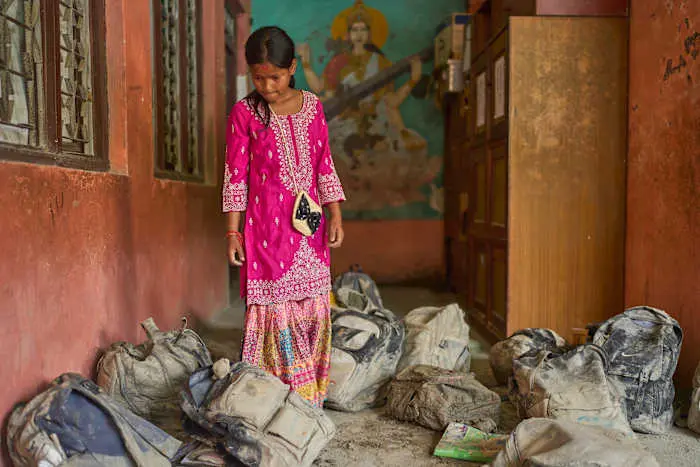

DHADING, NEPAL — On Wednesday, August 26, 2026, a catastrophic deluge swept through the steep valleys of central Nepal, triggering some of the most destructive flash floods and landslides the region has seen in decades. Amidst the widespread devastation, a harrowing yet miraculous story of survival emerged from the Shree Bagheswori Madhyamik School in Galchhi, located in the hard-hit Dhading district.
As raging torrents of mud and water pulverized the surrounding landscape, hundreds of schoolchildren managed to escape certain death by mere minutes. Today, the school grounds lie buried under a thick mantle of gray-brown sediment, its classrooms choked with debris, and its courtyard transformed into a desolate mudflat. Yet, as parents and children returned to the site on Sunday, August 30, to salvage what remained of their belongings, the overwhelming sentiment was not despair, but profound relief.
Executive Overview
The late-August floods of 2026 have pushed Nepal and its surrounding border regions into a state of acute humanitarian crisis. Driven by relentless, concentrated monsoon rains, the disaster has claimed hundreds of lives, left thousands missing, and paralyzed critical infrastructure across several districts.
At the Shree Bagheswori Madhyamik School, the sudden onslaught of water threatened the lives of hundreds of young students. The disaster was averted only through a combination of fortuitous timing—one group of students was outdoors for a lunch break—and the rapid, decisive actions of teachers who ordered an immediate evacuation, instructing children to abandon their personal belongings and run for higher ground.
While this particular community celebrated the survival of its children, the broader regional picture remains grim. The disaster has severely impacted the country’s education system, with dozens of schools destroyed or damaged, leaving tens of thousands of children without access to classrooms. Concurrently, a massive, multi-national search-and-rescue operation is underway to locate thousands of missing persons, including hundreds of foreign pilgrims and mountaineers who were caught in the deluge near the Tibetan border.
Detailed Chronology: The Day the Waters Rose
The morning of Wednesday, August 26, began like any other monsoon day in the Dhading district. Students at the Shree Bagheswori Madhyamik School sat at their wooden desks, copying lessons into their notebooks. Outside, the rain was heavy, but in a region accustomed to the annual monsoon, there was initially little alarm.
However, upstream in the catchment areas feeding the local river systems, unprecedented volumes of water were accumulating. The steep topography of the Dhading district, characterized by highly weathered soils and deforested slopes, acted as a funnel. By midday, the saturated earth could no longer hold. A massive wall of water, saturated with logs, rocks, and thick topsoil, surged down the valley toward Galchhi.
[12:00 PM] Intense upstream precipitation saturates mountain slopes.
   │
[12:30 PM] Runoff funnels into local river channels, causing rapid swell.
   │
[01:00 PM] Shree Bagheswori Madhyamik School lunch break begins; some students step outside.
   │
[01:15 PM] Teachers detect rumbling sounds and rising water; order immediate evacuation.
   │
[01:20 PM] Flash flood breaches school walls, filling classrooms with mud up to shoulder height.
The Evacuation
The timing of the flood coincided with the school’s scheduled lunch break. This scheduling quirk proved lifesaving for a significant portion of the student body, who were already outside the primary structures when the waters began to swell.
For those still inside, the danger was imminent. Teachers, hearing the terrifying roar of the approaching mudslide and noticing the rapid rise of water in the schoolyard, bypassed standard safety protocols and initiated an emergency evacuation.
"The teachers said, ‘There is a flood and you should leave bags and tiffins,’" recalled Lakshmi Shrestha, the mother of one of the surviving students. "That’s how they managed to survive."
Students scrambled out of the low-lying classrooms, leaving behind their backpacks, lunchboxes, and textbooks. Within minutes of their exit, the floodwaters breached the school perimeter, pouring into the classrooms and filling them with heavy, viscous mud that rose several feet high, as evidenced by the dark watermarks left on the classroom walls.
The Aftermath and Retrieval
By Sunday, August 30, the floodwaters had receded, leaving behind a silent, mud-caked ruins. Mothers and children returned to the school, wading through thick sediment to search for any salvageable items.
The physical state of the school was a stark testament to the force of the deluge:
- Sediment Accumulation: Thick brown and gray mud coated the surfaces of school benches, desks, and walls.
- Lost Belongings: A pile of mud-caked backpacks, some adorned with colorful keychains, lay scattered on the floor, extracted from the mud by volunteers and teachers.
- Classroom Damage: Watermarks high on the walls indicated that the water had risen rapidly to heights that would have easily submerged a young child.
Despite the loss of educational materials and personal belongings, the mood among the returning families was defined by gratitude. Kopila Mizar, a mother searching through the pile of recovered items, was unable to find her son’s backpack, yet she remained resilient.
"My son is alive, that is my biggest happiness," Mizar said.
Supporting Context & Metrics
The survival story at Shree Bagheswori Madhyamik School stands as a rare beacon of hope in what is otherwise a catastrophic regional disaster. The scale of the damage across Nepal and the neighboring Tibet Autonomous Region of China is immense, with casualties and missing persons reaching historic highs for a single monsoon event.
Human Toll and Displacements
According to official figures released by Nepal’s disaster management agency on Sunday, August 30, the domestic death toll has climbed to 788, with 2,502 people officially registered as missing. Across the northern border, Chinese authorities reported 16 deaths and 546 missing on the Tibetan side.
| Region | Confirmed Deaths | Missing Persons | Key Impact Areas |
|---|---|---|---|
| Nepal | 788 | 2,502 | Dhading, Kathmandu Valley, Sindhupalchok, Gorkha |
| China (Tibet) | 16 | 546 | Nyalam County, Zhangmu, Mount Kailash region |
| Total | 804 | 3,048 | — |
The Transnational Crisis: Missing Foreigners
The disaster has also assumed a significant international dimension. The affected border regions are highly popular destinations for adventure tourists, mountaineers, and spiritual pilgrims. At the time of the floods, thousands of foreigners were in the region, many embarking on the sacred pilgrimage to Mount Kailash in Tibet.
On Sunday, Chinese state media confirmed that 261 foreigners are currently missing in Tibet. This cohort includes more than one hundred Nepalese guides and porters, alongside pilgrims and trekkers from over a dozen countries worldwide. Search and rescue operations in these high-altitude zones are severely complicated by blocked mountain passes, severed communication lines, and extreme weather.
The Educational Emergency
The damage to educational infrastructure threatens to leave a lasting scar on the region’s youth. The international non-profit organization Save the Children released a preliminary assessment highlighting the severe impact on schools:
- Schools Damaged or Destroyed: At least 69 schools in Nepal’s worst-affected districts have been confirmed as severely damaged or completely destroyed.
- Affected Children: Approximately 19,000 children have had their education abruptly halted due to the destruction of their school buildings.
- Expected Rise in Metrics: Humanitarian workers warn that these figures are likely to rise significantly as rescue teams and assessment officers gain access to remote, currently cut-off mountainous areas.
Official Statements & Humanitarian Response
In the immediate aftermath of the disaster, the Government of Nepal enacted emergency measures to preserve public safety and assess the damage.
Government Directives
The Ministry of Education, Science, and Technology ordered all schools and universities across the affected districts to shut down for an initial period of three days. This preventative measure was designed to keep children off vulnerable roads and out of structurally compromised buildings. Furthermore, all ongoing university examinations were suspended indefinitely, throwing the academic calendar into disarray.
With local authorities continuing to issue urgent flood warnings advising residents to move to higher, safer ground, government officials have acknowledged that the timeline for resuming regular classes remains highly uncertain.
Humanitarian Agency Warnings
Spokespersons from Save the Children and other international non-governmental organizations (INGOs) have emphasized that the destruction of schools extends far beyond immediate physical damage.
"When a school is destroyed in a disaster of this magnitude, children lose more than just a place to learn," said a regional representative for the organization. "They lose a safe space that protects them from exploitation, child labor, and gender-based violence. The longer these children remain out of school, the less likely they are to ever return to formal education."
Humanitarian teams are currently working to distribute emergency educational kits, set up temporary learning centers (TLCs), and provide psychosocial support to children traumatized by the sudden evacuation and loss of their homes.
Future Outlook: Climate Vulnerability and the Road to Recovery
The catastrophic events of August 2026 underscore a broader, more systemic crisis facing the Hindu Kush-Himalaya region. Climate scientists have long warned that global warming is destabilizing the delicate meteorological balance of the Himalayas, leading to more erratic, high-intensity precipitation events.
       Climate Change / Warming Temperatures
                         │
        ┌────────────────┴────────────────┐
        ▼                                 ▼
Glacial Melt & Lake Swelling     Erratic, High-Intensity Monsoons
        │                                 │
        └────────────────┬────────────────┘
                         ▼
           Extreme Runoff & Soil Saturation
                         │
                         ▼
        Catastrophic Flash Floods & Landslides
                         │
                         ▼
         Destruction of Vulnerable Infrastructure
              (Schools, Roads, Communities)
The Climate Connection
As temperatures rise, the atmosphere’s capacity to hold moisture increases, resulting in sudden, torrential downpours rather than sustained, gentle rains. This moisture, combined with accelerated glacial melt and the presence of unstable glacial lakes, creates a highly volatile environment. Infrastructure built along riverbanks, including schools like Shree Bagheswori Madhyamik, is increasingly vulnerable to these sudden surges.
The Challenge of Reconstruction
Rebuilding the destroyed educational infrastructure will require substantial financial resources and a fundamental shift in engineering standards. Future schools must be constructed away from active floodplains and designed to withstand mudslides and high-velocity water flows. However, in Nepal’s rugged terrain, flat, safe land is a scarce commodity, forcing communities to make difficult decisions regarding resettlement and relocation.
For the families of Galchhi, the immediate focus is on survival and basic recovery. While the physical structure of the Shree Bagheswori Madhyamik School may take months or even years to fully rebuild, the community’s resilience remains unshaken. The survival of their children has provided a foundation of hope from which they plan to rebuild.
As the search for the thousands of missing continues across the mud-slicked valleys of Nepal and Tibet, the story of the children who dropped their lunchboxes and ran will remain a powerful reminder of the life-saving importance of community vigilance, rapid teacher intervention, and the urgent need for robust early warning systems in an era of accelerating climate change.

0 Comments