

Executive Overview
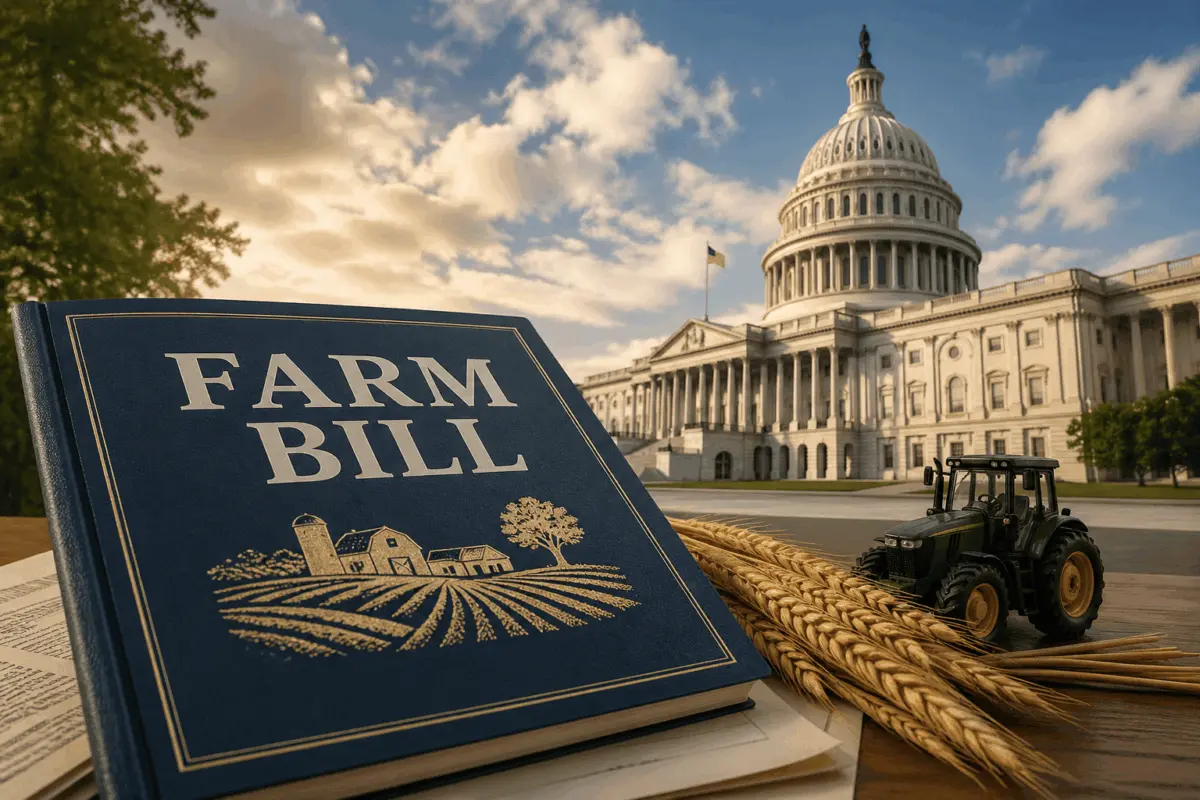
In a long-awaited legislative milestone that could finally put an end to years of agricultural policy limbo, the Senate Committee on Agriculture, Nutrition, and Forestry has officially advanced the Agricultural Act of 2026 out of committee. This comprehensive legislation—frequently referred to by industry stakeholders as "Farm Bill 2.0"—arrives as a critical companion to earlier legislative efforts, notably the Farm, Food, and National Security Act and the Big Beautiful Bill.
For nearly a decade, American agriculture has operated under repeated extensions of a five-year framework originally enacted in 2018. The advancement of this new legislative package represents a vital push to modernize agricultural safety nets, fortify vital export markets, and address pressing food security needs across the United States. Spearheaded by key congressional leaders such as House Agriculture Committee Chairman G.T. Thompson and Senate agricultural leaders including Senator John Boozman, the Agricultural Act of 2026 is designed to inject much-needed financial stability and operational certainty into an industry grappling with volatile global markets, shifting trade dynamics, and domestic economic pressures.
As the bill clears its latest committee hurdle and sets its sights on the Senate floor and ultimately the President’s desk, agricultural groups, producers, and commodity organizations are mobilizing significant resources to ensure its swift and unhindered passage. This report provides an in-depth look at the contents of Farm Bill 2.0, the arduous chronology that led to its creation, the economic metrics driving its urgency, and what its potential enactment means for the future of American farming.
Detailed Chronology: The Eight-Year Path to the 2026 Act
To fully understand the significance of the Agricultural Act of 2026, one must examine the protracted timeline that brought American agricultural policy to this juncture. Traditionally, the United States Congress reauthorizes federal agricultural and nutrition policies every five years, ensuring that programs remain responsive to contemporary economic realities, technological advancements, and shifting nutritional science. However, the legislative process governing the nation’s food and farm policies has faced unprecedented friction over the past decade.
The 2018 Foundation and the Era of Extensions
The previous comprehensive farm bill—the Agriculture Improvement Act of 2018—was signed into law in December 2018. Under its original structure, its provisions were designed to expire in 2023. As the expiration window approached, deep ideological divisions in Congress, debates over nutrition assistance funding (specifically the Supplemental Nutrition Assistance Program, or SNAP), and disagreements over climate-smart agriculture provisions created deep legislative gridlock.
Rather than passing a comprehensive new five-year bill in 2023, lawmakers resorted to passing a one-year extension, rolling the 2018 provisions forward through the end of 2024. As agricultural inflation surged, supply chain vulnerabilities multiplied, and farm input costs—such as fertilizer, fuel, and equipment—remained at historic highs, producers repeatedly warned that relying on temporary extensions left them dangerously exposed to market shocks.
The Phased Legislative Approach: "Farm Bill 2.0"
Recognizing that an all-or-nothing omnibus approach was repeatedly stalling out in a polarized Congress, agricultural lawmakers shifted strategies ahead of the 2026 legislative cycle. The strategy involved breaking the massive legislative undertaking into more digestible, targeted components.
- Phase One (The Initial Measures): Earlier legislative vehicles, including the Farm, Food, and National Security Act and the Big Beautiful Bill, successfully moved through initial legislative channels. These packages focused heavily on core commodity support, crop insurance enhancements, and baseline operational funding for producers.
- Phase Two ("Farm Bill 2.0" – The Agricultural Act of 2026): The newly advanced Agricultural Act of 2026 captures the remaining, highly contentious, and equally vital components that were deferred or stripped from the earlier bills. This includes robust funding and structural reforms for agricultural export market development, specialized livestock protections, research grants, and critical adjustments to domestic nutrition and emergency food assistance programs.
By advancing this secondary package out of the Senate Committee on Agriculture, Nutrition, and Forestry, lawmakers have effectively knitted together the fractured pieces of modern agricultural policy, paving a clear, albeit narrow, road toward final bicameral approval.
Supporting Context & Metrics: Why Action Can No Longer Wait
The push to finalize the Agricultural Act of 2026 is driven by an alarming convergence of economic pressures facing rural America. While the headline numbers of general economic growth often paint a picture of national prosperity, the microeconomic reality for America’s family farms, ranches, and agribusinesses tells a vastly different story.
Input Costs and Margin Compression
According to data from the United States Department of Agriculture (USDA) Economic Research Service, agricultural production expenses have risen dramatically since 2020. Even as prices for certain commodities have experienced downward corrections from their post-pandemic peaks, input costs—including wholesale fertilizer prices, chemical treatments, precision agriculture technology, and agricultural labor—have remained stubbornly high.
This margin compression has left many producers operating on razor-thin profitability margins. Without the modern safety nets, updated reference prices, and strengthened crop insurance options contained within the Agricultural Act of 2026, thousands of mid-sized and independent family operations face severe financial vulnerability in the event of localized weather disasters, droughts, or sudden international trade disruptions.
The Imperative of Export Market Reinforcement
One of the cornerstone priorities highlighted by G.T. Thompson, Senator Boozman, and supporting agricultural coalitions is the reinvigoration of U.S. agricultural export markets. American agriculture relies heavily on international trade, exporting roughly 20% of its total production by volume and value.
However, U.S. producers have faced stiff international competition in recent years. Currency fluctuations, aggressive market expansion by foreign competitors (such as Brazil in the global soybean and corn markets), and geopolitical trade tensions have threatened traditional U.S. market shares in Asia, Latin America, and Europe.
The Agricultural Act of 2026 incorporates specific provisions designed to supercharge agricultural trade promotion programs—such as the Market Access Program (MAP) and the Foreign Market Development (FMD) program. Industry analysts emphasize that every dollar invested in these export promotion programs yields a significant return in export value, making their inclusion in Farm Bill 2.0 an absolute economic imperative for grain farmers, dairy producers, meat exporters, and specialty crop growers alike.
Nutrition and Emergency Food Assistance
Beyond production agriculture, the legislation addresses the critical safety net of domestic nutrition programs. In an economy where food price inflation has strained household budgets for millions of low-income Americans, the intersection of agriculture and nutrition policy remains deeply intertwined.
The Agricultural Act of 2026 includes targeted provisions supporting nutrition programs and emergency food assistance initiatives. These measures aim to streamline food bank supply chains—often sourcing surplus commodities directly from domestic farmers—thereby supporting local agricultural prices while simultaneously addressing food insecurity in urban and rural communities alike.
Official Statements and Industry Reactions
The advancement of the Agricultural Act of 2026 has drawn widespread praise from agricultural leaders, commodity associations, and lawmakers who have worked tirelessly to shepherd the package through a gridlocked legislative ecosystem.
Congressional Leadership Applauds Committee Action
Speaking on the strategic importance of the legislation, proponents pointed to the tireless efforts of congressional leadership in breaking the eight-year logjam.
"With the current state of the U.S. economy, we appreciate Chairman Boozman’s leadership and focus on the remainder of the Farm Bill which is ready to move to the President’s desk," remarked a senior agricultural policy spokesperson following the committee vote. "This legislation will provide much-needed certainty to American producers and includes provisions that will benefit the entire spectrum of the agricultural industry."
Lawmakers have emphasized that the bill is not merely a bureaucratic reauthorization, but a national security imperative. By ensuring a stable, secure, and domestically anchored food supply chain, the United States insulates itself against foreign supply shocks and maintains its standing as an agricultural superpower.
Grassroots and Industry Endorsements
National and regional agricultural groups—including organizations representing corn, soybean, cotton, wheat, specialty crops, and livestock producers—have mobilized their membership bases to advocate for immediate floor votes in both the Senate and the House.
Agricultural advocacy groups released a joint statement underscoring the exhaustion felt across the sector:
"This is eight years now that we’ve been working on what is fundamentally supposed to be a five-year Farm Bill. Our producers cannot continue to plan multi-year investments, crop rotations, and capital expenditures under a cloud of perpetual temporary extensions. We urge the Senate to swiftly support this important provision, pass the Agricultural Act of 2026, and let’s finally move forward with a permanent, comprehensive agricultural policy."
Industry stakeholders have pointed out that certainty is the single most valuable commodity a farmer can possess when making planting decisions months in advance. The structural updates embedded in Farm Bill 2.0 give producers the confidence to invest in sustainable farming practices, adopt cutting-edge ag-tech innovations, and manage risk effectively.
Future Outlook: The Road to Enactment
While advancing out of the Senate Committee on Agriculture, Nutrition, and Forestry is a monumental triumph, the legislative journey of the Agricultural Act of 2026 is not yet complete.
Next Steps in the Legislative Process
- Senate Floor Debate and Amendments: The bill now transitions to the full Senate calendar. While committee passage signals broad bipartisan consensus among agricultural policy specialists, the broader chamber may attempt to introduce floor amendments concerning funding levels, environmental mandates, or nutrition program structures. Leadership will need to tightly manage these debates to prevent the package from unraveling.
- Bicamera Reconciliation (If Necessary): Depending on the nature of any Senate modifications, the bill will need to be aligned with its House counterparts to ensure a unified text can pass both chambers cleanly before being transmitted to the executive branch.
- Presidential Signature: Once passed by both the Senate and the House of Representatives, the Agricultural Act of 2026 will land directly on the President’s desk for final signature, officially closing the book on the era of endless extensions and ushering in a modernized framework for American agriculture.
Conclusion
The advancement of the Agricultural Act of 2026 marks a turning point for American agriculture. By bridging the gaps left by previous legislative vehicles, addressing critical export market needs, shoring up domestic nutrition programs, and restoring long-term economic certainty to producers, Farm Bill 2.0 delivers on the promises made to rural America. As the bill moves toward final consideration, the united message from the agricultural community is clear: after eight years of waiting, the time to pass the 2026 Farm Bill is now.

0 Comments