

Executive Overview
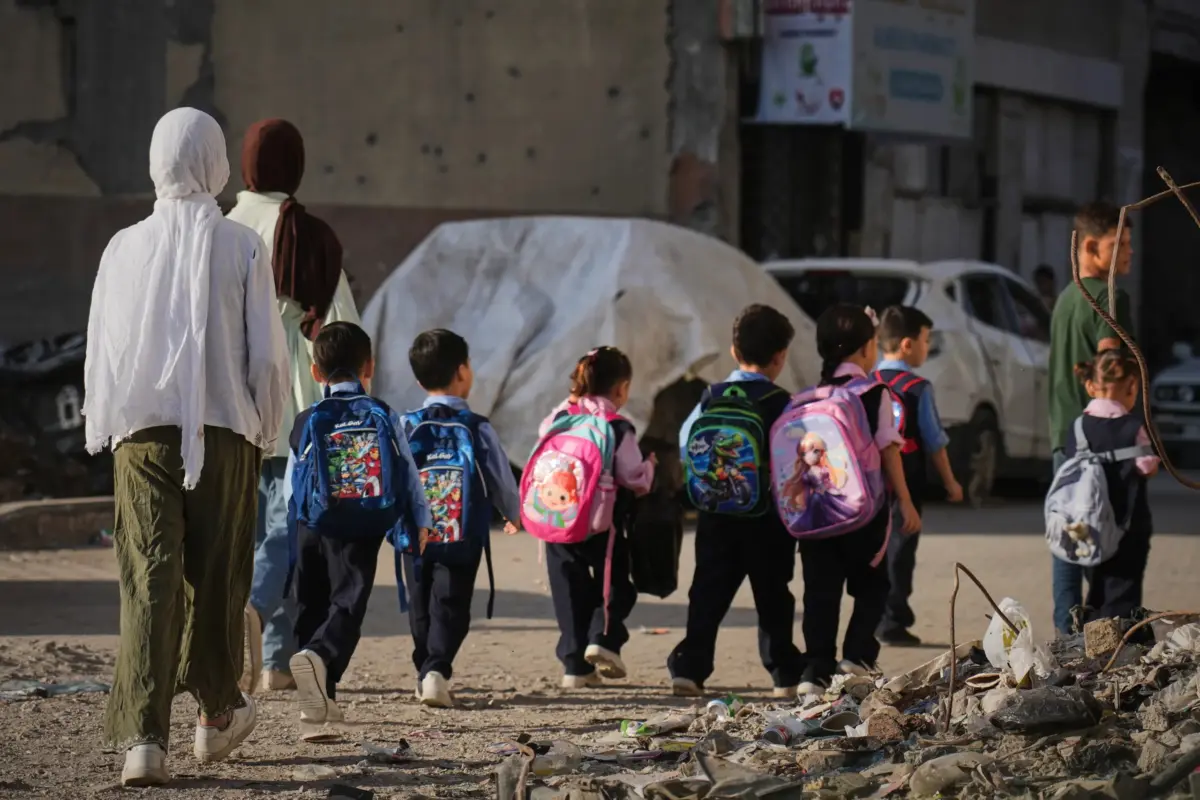
A U.S.-based humanitarian charity operating educational facilities in the Gaza Strip has ignited a fierce international controversy after announcing plans to deploy artificial intelligence-powered audio surveillance in classrooms. The organization, known as the Gaza Children Village, aims to record classroom interactions and use automated speech-recognition software to screen for language deemed "hateful," "antisemitic," or "inciting." Founded by Dr. David Hasan, a U.S.-based neurosurgeon, the charity runs "Academies of Hope" designed to provide localized schooling, meals, and psychological support to children traumatized by years of intense conflict.
While leadership defends the measure as a vital mechanism to enforce a modified, peace-oriented curriculum and ensure the "de-radicalization" of young Palestinians, the initiative has drawn severe backlash. Palestinian advocacy groups, international human rights monitors, board members, and allied aid organizations have raised deep concerns regarding privacy, psychological safety, and the chilling effect of continuous surveillance. Critics argue that utilizing automated monitoring in a post-conflict territory already hyper-sensitized to high-tech digital tracking opens a dangerous precedent—effectively importing corporate and military-grade surveillance tactics directly into vulnerable educational spaces. This development exposes a widening ideological fault line over postwar governance, the autonomy of Palestinian education, and the ethical limits of humanitarian intervention.
Detailed Chronology and Development of the Initiative
The origins of the Gaza Children Village trace back to the height of the recent multi-year conflict, during which Dr. David Hasan volunteered as a medical professional in Gaza’s overburdened hospitals. Witnessing firsthand the generational trauma inflicted on civilians, Hasan conceived of a private educational initiative aimed at breaking cycles of violence. Born in Kuwait to Palestinian parents and now teaching at Duke University’s medical school in North Carolina, Hasan envisioned schools that would cultivate critical thinking, pluralism, and alternative perspectives.
The charity opened its first school last summer, relying heavily on individual philanthropic donations—including contributions from American Jewish donors—alongside partnerships with North American, European, and Israeli medical and humanitarian organizations. Operating primarily in central and southern Gaza, the Academies of Hope utilize educational frameworks largely adapted from the Palestinian Authority (PA) curriculum. However, Hasan has publicly stated that sections perceived as glorifying violence, promoting anti-Israel sentiments, or endorsing antisemitism were systematically expunged.
The controversy intensified last month when Hasan outlined the charity’s monitoring ambitions during a private webinar with humanitarian stakeholders. Recognizing the deep-seated resistance a modified curriculum might face from local educators or community factions, Hasan revealed that the charity intends to record classroom dialogue and route the audio through an automated system designed to flag problematic phrasing.
According to internal communications reviewed by independent journalists, the system was initially tested in collaboration with PollyLabs, a New York-based nonprofit focused on crisis-zone technology (though PollyLabs has disputed any direct role in deploying the classroom tool). Under the proposed workflow, if the AI system detects flagged terms, automated alerts are transmitted directly to Hasan, who reviews the contextual recordings—stored for a temporary window of 72 hours—to counsel the instructor.
Despite these safeguards, the initiative has caught key stakeholders off guard. Board members, including prominent Palestinian-American political activist Bishara Bahbah, stated they were entirely unaware of the surveillance plan prior to public disclosures, underscoring a communication gap within the charity’s governance structure.
Supporting Context & Metrics: Education and Surveillance in Gaza
To fully understand the gravity of the Gaza Children Village’s initiative, the project must be viewed against the backdrop of catastrophic infrastructure loss and the pervasive trauma of modern digital warfare.
The Scale of Educational Devastation
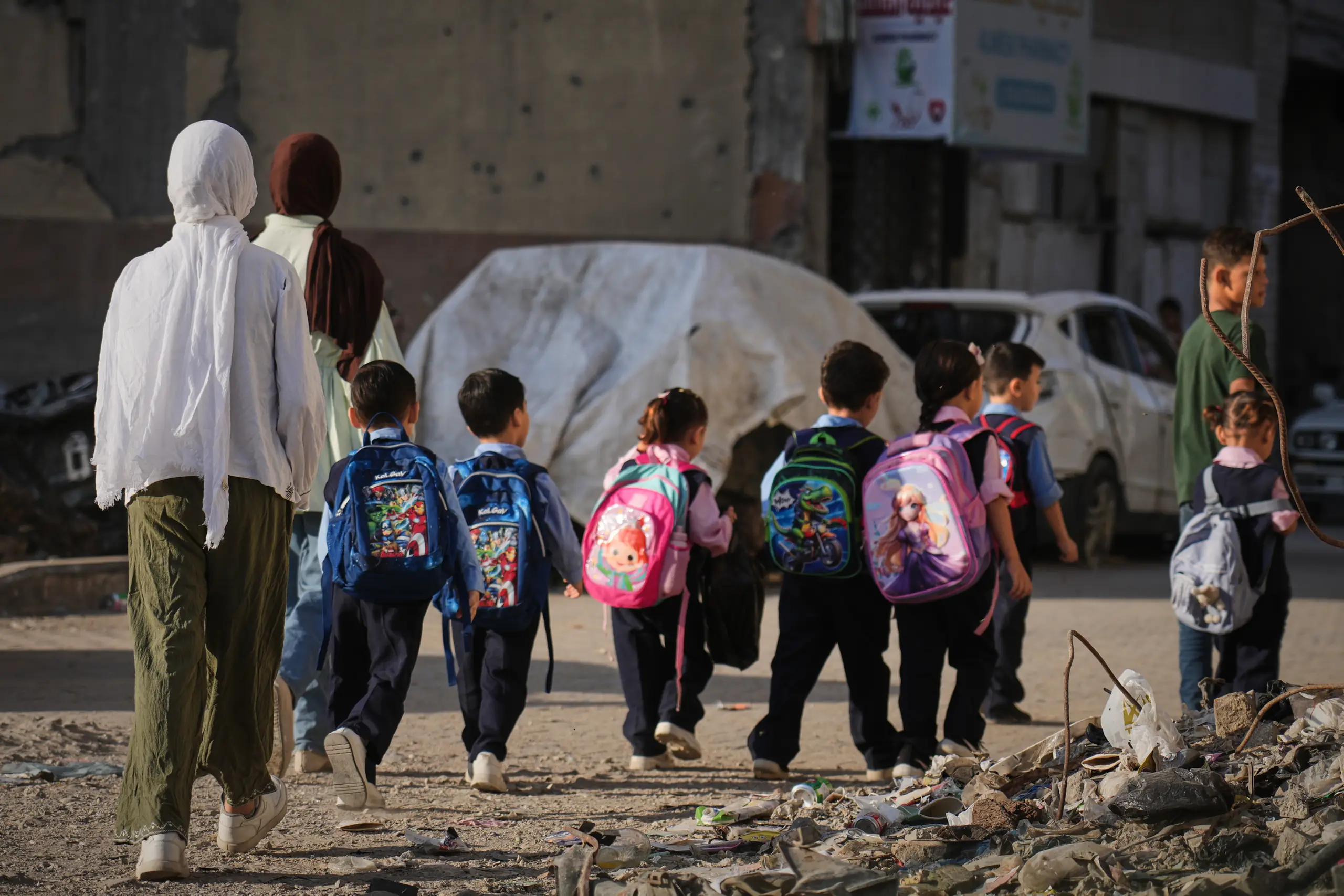
- Mass Displacement and Closures: According to estimates by the United Nations Children’s Fund (UNICEF), hundreds of thousands of school-aged children in Gaza remain entirely out of the classroom.
- Infrastructure Collapse: The vast majority of educational facilities across the Strip were either completely destroyed or structurally compromised during three years of intensive military operations.
- Vulnerable Demographics: The Academies of Hope serve thousands of children, many of whom are orphans or have suffered severe familial loss, making stable, supportive educational environments an acute humanitarian priority.
The Shadow of High-Tech Warfare
The introduction of AI listening tools does not occur in a vacuum. Over years of active conflict, Palestinians in Gaza have lived under the constant shadow of advanced, algorithm-driven surveillance architectures.
- Military AI Integration: Human rights reports have documented how military forces utilized AI systems to rapidly parse intercepted communications and identify targets, embedding a profound sense of digital vulnerability into daily life.
- The "Panopticon" Effect: Analysts note that decades of exposure to high-tech surveillance have conditioned the population to treat digital monitoring not as an abstract data-privacy issue, but as a direct existential threat. As described by Amjad Iraqi of the International Crisis Group, information has been weaponized to such a dystopian degree that many citizens fear expressing thoughts or words due to potential repercussions.
Official Statements and Stakeholder Perspectives
The rollout of AI monitoring has created acute friction between the charity’s central administration, its field workers, its board members, and external partner organizations.
Leadership Defense
Dr. Hasan has steadfastly defended the initiative as an uncomfortable yet necessary safeguard for the survival and integrity of the project. During his briefing with humanitarian groups, he acknowledged the contentious nature of the policy, remarking:
"I know it’s controversial, but trust me, it’s the only way we feel for us to survive and deliver this curriculum."
Hasan maintains that the ultimate objective is constructive pedagogical feedback—helping teachers navigate sensitive topics without falling back on historical grievances or inflammatory rhetoric.
Internal Dissent and Governance Friction
Internal reactions reflect deep divisions. Bishara Bahbah, a member of the charity’s board, drew a sharp line between physical security and ideological censorship:
"Cameras to monitor the performance of students and teachers is acceptable. But cameras to silence students and teachers from being able to have a free exchange in a classroom are not acceptable."
Bahbah emphasized that with educational access at an all-time low, the board’s primary focus should remain on expanding classroom capacity rather than implementing controversial policing mechanisms. Meanwhile, anonymous staff members on the ground reported that local teachers are gripped by anxiety—fearing potential reprisals from local factions like Hamas for working with an organization backed by foreign and Israeli aid entities, while simultaneously dreading constant automated oversight.
International and Partner Apprehensions
An official representing an international aid organization partnering with the Gaza Children Village warned that the adoption of AI classroom surveillance could force a total reassessment of their collaboration. Labeling automated speech monitoring as the opening of a "Pandora’s box," the official spoke on condition of anonymity to protect ongoing field operations.
Civil society groups have been equally scathing. Ines Abdel Razek, co-director of the Palestine Institute for Public Diplomacy, criticized the initiative as an external assault on local self-determination:
"It is very concerning, they’re trying to control the minds of new generations."
Similarly, Palestinian Authority government spokesperson Mohammad AbuAlrob stated that while the official PA curriculum prioritizes universal values of tolerance and justice, introducing continuous surveillance into educational spaces crosses "an important line" regarding civil liberties and personal autonomy.
Future Outlook: Postwar Governance and Educational Autonomy
As Gaza looks toward an uncertain postwar future, the controversy surrounding the Academies of Hope highlights profound dilemmas regarding who will control, fund, and shape the education of the enclave’s youth.
- The Question of Legitimacy: Traditional educational oversight in Gaza has historically been managed by local institutions, the Palestinian Authority, and specialized international bodies like the United Nations Relief and Works Agency (UNRWA). Independent, donor-funded charities attempting to bypass these frameworks often face severe questions regarding local accountability and political legitimacy.
- The Limits of Intervention: The experiment at the Academies of Hope serves as a case study in the perils of importing western-engineered technological solutions into deeply fractured, post-conflict societies. While the desire to foster peace and eliminate incitement is widely shared by international donors, imposing algorithmic surveillance risks alienating the very communities the charities aim to heal.
- The Precedent for EdTech: As artificial intelligence tools become cheaper and more portable, the temptation to deploy automated compliance monitoring in sensitive geopolitical environments will likely grow. However, the Gaza experiment demonstrates that balancing ideological moderation with foundational human rights—such as privacy, free expression, and cultural dignity—remains an unresolved ethical frontier.
Ultimately, whether the Gaza Children Village can successfully balance its mission of de-radicalization with the fundamental trust of students, parents, and educators will depend on its willingness to navigate local sensitivities—or risk alienating the community it was founded to serve.

0 Comments