
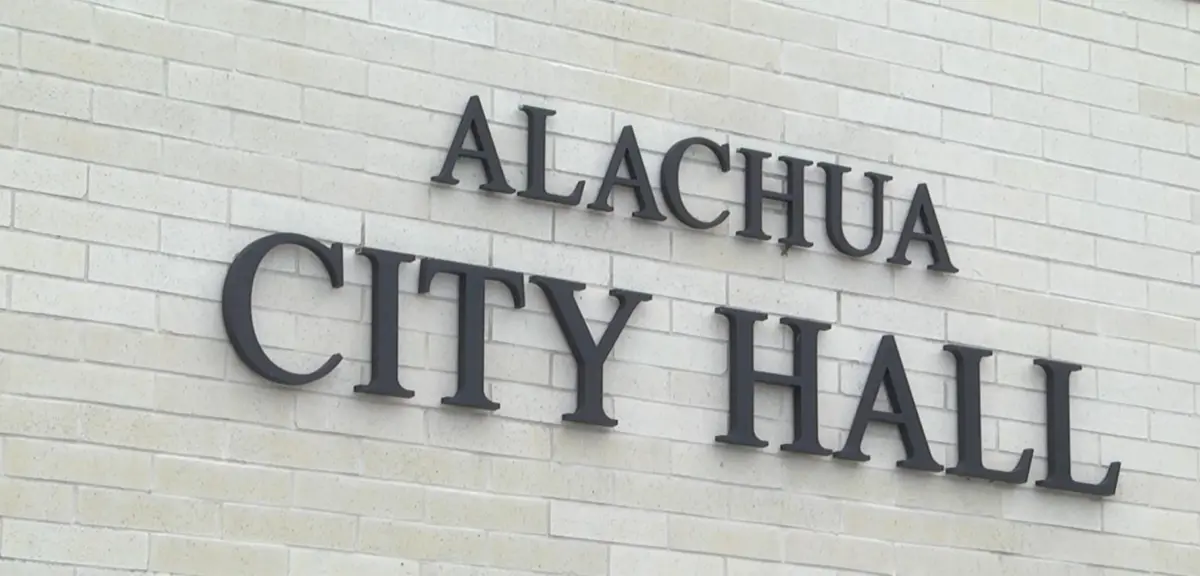

ALACHUA, Fla. — In a late-night legislative maneuver that underscores the escalating friction between municipal planning and the rapid expansion of digital infrastructure, the Alachua City Commission has officially approved the first reading of a proposed 12-month moratorium on artificial intelligence (AI) data centers.
The measure, which cleared the commission dais by a 4-to-1 margin late Monday evening following a grueling four-hour public session, aims to freeze the potential development of high-density computing facilities within city limits. City leaders contend that the temporary halt is necessary to buy time for comprehensive zoning reviews, utility capacity assessments, and environmental impact studies. However, the path to approval was fraught with procedural delays, dissent over statutory terminology, and palpable frustration from a weary community that waited until the final item of the agenda to have its collective voice heard.
Executive Overview
The debate surrounding AI data centers has rapidly evolved from a niche technical concern into one of the most contentious local planning issues across the United States. Alachua—a historically agricultural and light-industrial hub in North-Central Florida—is now grappling with the same existential questions facing municipalities nationwide: how to balance the massive, power-hungry demands of the tech sector with local quality of life, grid stability, and sustainable municipal growth.
Monday night’s vote represents the first formal legislative step toward putting the brakes on this specific wave of industrial expansion. While city officials have repeatedly emphasized that no formal applications, site plans, or non-disclosure agreements (NDAs) involving AI data centers currently exist within municipal boundaries, the commission’s action is inherently preemptive. Commissioners and urban planners alike recognize that the window between speculative interest and formal land acquisition is alarmingly narrow.
Yet, the execution of Monday’s vote exposed deep fractures regarding how the city approaches regulatory safeguards. While the majority of the commission viewed the 12-month pause as a vital protective shield, dissenting voices warned that vague statutory definitions could invite legal vulnerabilities or unintended economic consequences. Furthermore, the decision to push the highly anticipated discussion to the very end of a protracted agenda drew sharp criticism from residents and community advocates, highlighting a growing disconnect between civic procedure and public engagement.
Detailed Chronology of the Monday Night Session
The drama unfolded inside the Alachua City Commission chambers on Monday, where a packed room of residents, local business owners, and tech-watchers gathered for what was originally anticipated to be a straightforward legislative review.
A Marathon Agenda and Rising Tensions
The moratorium discussion was positioned as the final item on the evening’s agenda. As routine municipal business, zoning adjustments, and budget reviews dragged on, the clock ticked past the three-hour mark. For the dozens of residents who had turned out specifically to voice their opinions on the AI data center issue, the delay was more than an inconvenience—it was perceived as a barrier to meaningful participation.
Tensions in the chamber were palpable by the time the item was formally introduced by city staff. The debate had originally been slated for the commission’s previous regular meeting, but time constraints and competing priorities forced a deferral, leaving local stakeholders in suspense for weeks. When the floor was finally opened, the fatigue in the room was balanced only by the intensity of the arguments presented by both the public and the dais.
The Vote and the Dissenting Voice
Following extensive deliberations that dissected the potential environmental, infrastructural, and economic ramifications of large-scale server farms, the commission moved toward a vote.
The draft ordinance passed on a 4-to-1 vote, securing the necessary majority to advance through its first reading. However, the unanimity of the board was broken by Commissioner Jackson Youmas, who cast the lone dissenting vote.
Commissioner Youmas’s opposition was not rooted in a rejection of caution, but rather in a critique of the ordinance’s legal architecture. During the debate, Youmas argued strenuously for more specific, rigorous language within the draft. He expressed concern that a broad or ambiguous moratorium could leave the city legally exposed or fail to clearly define what constitutes an "AI data center" versus other forms of standard commercial computing infrastructure. Without precise definitions, Youmas warned, the city risks arbitrary enforcement or protracted legal challenges from prospective developers down the line.
Despite his concerns, the majority of the commission determined that a broad preliminary ban was preferable to an immediate regulatory vacuum, setting the stage for a second reading and final adoption process in the coming weeks.
Supporting Context & Metrics: The Alachua Dilemma in a National Landscape
To understand why a small Florida city is enacting a preemptive 12-month freeze on facilities that do not yet officially exist on any local desk, one must examine the staggering macroeconomic realities driving the modern data center boom.
The Anatomy of an AI Data Center
Artificial intelligence models—particularly large language models (LLMs) and deep learning networks—require computational power on a scale previously reserved for national laboratories and supercomputing centers. Unlike traditional enterprise data centers that handle basic corporate cloud storage, email hosting, or website traffic, AI data centers are hyper-scale facilities packed with tens of thousands of specialized graphics processing units (GPUs).
These facilities are characterized by three critical infrastructure footprints:
- Astronomic Power Consumption: A single modern AI data center can consume as much electricity as a small-to-medium-sized city (ranging from 100 megawatts to over 1 gigawatt). This places immense strain on regional electrical grids, often necessitating the construction of dedicated substations or the continued operation of fossil-fuel power plants that might otherwise be retired.
- Intense Thermal Output and Water Usage: The massive heat generated by high-density server racks requires relentless cooling systems. While closed-loop systems are becoming more common, many facilities rely on millions of gallons of water daily for evaporative cooling, raising serious environmental and watershed concerns in drought-prone or sensitive ecological regions.
- Low Employment Density: Despite their multi-million-dollar construction footprints, operational AI data centers typically employ relatively few people once construction is completed. Unlike manufacturing plants or corporate headquarters, they offer limited direct job creation relative to their immense physical and environmental scale.
The Regulatory Domino Effect Across the U.S.
Alachua is far from alone in seeking a legislative timeout. Municipalities across the United States—from Northern Virginia (the global capital of data center infrastructure) to secondary markets in Georgia, Texas, and the Pacific Northwest—are scrambling to rewrite their zoning codes.
Communities are discovering that decades-old zoning ordinances written for light industrial parks or commercial office buildings are utterly inadequate for evaluating the unique impacts of hyper-scale digital infrastructure. By enacting temporary moratoriums, local governments aim to stop the clock, allowing urban planners time to draft targeted performance standards governing noise pollution from industrial cooling fans, visual aesthetics, energy procurement requirements, and setback distances from residential neighborhoods.
In Alachua, city commissioners noted that while no formal applications or non-disclosure agreements (NDAs) are currently tethered to municipal files, real estate brokers and speculative developers have been actively scouting parcels in and around North-Central Florida. The fear of being caught flat-footed by a sudden land purchase and permit application is what ultimately galvanized the 4-to-1 majority.
Official Statements and Stakeholder Perspectives
The Alachua moratorium has catalyzed a fierce debate among local officials, civic organizations, and residents, reflecting competing visions of progress, property rights, and community preservation.
The City Commission’s Rationale
Proponents of the 12-month moratorium argue that proactive governance is the only defense against the breakneck speed of the tech sector. Speaking after the vote, supportive commissioners stressed that the pause should not be interpreted as anti-technology, but rather as pro-planning.
"We are not closing our doors to the future; we are simply making sure that our doors have proper locks and frames before we invite anyone in," one commissioner remarked during the deliberations. The consensus among the majority is that Alachua’s infrastructure—particularly its municipal water and electrical distribution networks—must be thoroughly audited to determine whether the city could even physically support the energy demands of a modern server farm without destabilizing service to existing residents and small businesses.
Commissioner Youmas and the Call for Precision
Commissioner Jackson Youmas, standing firm in his dissenting position, elaborated on his desire for refined statutory language. In an interview following the session, Youmas emphasized that legislation born out of haste can backfire.
"When you write broad strokes into a zoning code, you create a gray area that can either trap innocent commercial projects or fail to stop the exact kind of industrial footprint you are trying to regulate," Youmas noted. His advocacy for granular legal definitions reflects a growing anxiety among municipal attorneys who must defend local ordinances against well-funded corporate legal teams.
Resident Frustration and Civic Engagement
Outside the dais, the mood among the public was a complex mix of relief and lingering resentment. Several residents who spoke during the public comment period expressed deep dissatisfaction with how the city handled the scheduling of the item.
Placing a high-stakes, highly anticipated debate as the final item on a multi-hour agenda was viewed by many as an institutional barrier to public participation. "We sat here for four hours waiting for our city government to address an issue that affects our backyards, our electric bills, and our environment," said one Alachua homeowner. "It feels dismissive, even if the outcome ultimately went the way the community wanted."
Environmental advocates also weighed in, urging the commission to use the newly minted 12-month window to commission independent environmental reviews rather than relying on studies provided by prospective developers.
Future Outlook: What’s Next for Alachua?
With the first reading successfully approved, the proposed 12-month moratorium now enters the next phase of the municipal legislative pipeline.
The Road to Final Adoption
- Second Reading and Public Hearing: The ordinance will be scheduled for a second reading and formal public hearing at an upcoming City Commission meeting. This session will provide another formal platform for public input and allow the city attorney to present any technical adjustments to the draft language.
- Refining the Ordinance: It remains to be seen whether the commission will heed Commissioner Youmas’s warnings and incorporate tighter, more specific definitions regarding AI computing infrastructure before the final vote. Municipal staff will likely spend the intervening weeks consulting with urban planners and utility experts to tighten the ordinance’s legal boundaries.
- The 12-Month Planning Window: If the moratorium secures final passage, the 12-month clock will officially begin ticking. During this period, Alachua’s planning department is expected to draft comprehensive zoning amendments that explicitly define where, under what conditions, and with what environmental and infrastructural safeguards data centers may—or may not—be permitted in the future.
A Defining Moment for Small-Town Florida
The events of Monday night mark a watershed moment for Alachua. As rural and semi-urban communities across Florida and the American Southeast confront the sprawling footprint of the digital economy, Alachua’s cautious approach will be closely watched by neighboring municipalities.
Whether the 12-month pause ultimately results in a robust, future-proof zoning code or triggers prolonged legal debates over property rights, one reality is undeniable: the small-town charm and quiet infrastructure of Alachua are now officially on the frontline of the artificial intelligence revolution.

0 Comments