

BANDAR ABBAS, Iran / TYRE, Lebanon — A fragile diplomatic breakthrough on the Israel-Lebanon border has coincided with deepening maritime paralysis in the Persian Gulf. On Friday, September 4, 2026, Israel released four additional Lebanese civilian detainees in a highly sensitive, U.S.-brokered swap linked to historical intelligence from the Lebanese Civil War.
Concurrently, the global energy sector braced for further disruptions as commercial ship traffic through the Strait of Hormuz slowed to a crawl. The maritime stagnation follows a series of direct military exchanges between United States forces and the Islamic Republic of Iran—clashes that have shattered a month-long lull and sent American diesel prices soaring to an unprecedented, historic high of $5.85 per gallon.
Executive Overview
The Middle East remains gripped by a multi-front conflict that has fundamentally reshaped global trade, energy security, and regional alliances over the last six months. In Southern Lebanon, a delicate humanitarian transaction occurred on Friday as the International Committee of the Red Cross (ICRC) facilitated the repatriation of four Lebanese civilians previously captured by Israeli forces. This release—the second in forty-eight hours—was secured through intensive backchannel diplomacy mediated by Washington, with Beirut providing critical assistance in locating the remains of Lebanese Jewish leaders who disappeared during the chaotic decades of Lebanon’s civil war.
However, this localized diplomatic progress stands in stark contrast to the volatile theater of the Persian Gulf. The Strait of Hormuz, the world’s most critical energy transit corridor, has been rendered virtually impassable for standard commercial shipping following a dramatic escalation in U.S.-Iranian hostilities.
Following heavy American airstrikes on Iranian military infrastructure earlier this week, Tehran retaliated with targeted missile and drone strikes across the region, including an unprecedented attack on Kuwait—a key non-NATO U.S. ally. The resulting security vacuum has forced major maritime carriers to anchor their vessels or reroute entirely, pushing benchmark U.S. crude oil past the threshold of $91 per barrel and threatening a renewed wave of global stagflation.
Detailed Chronology
The events of early September 2026 mark a critical inflection point in a conflict that began half a year ago. Below is the chronological sequence of events that culminated in Friday’s dual developments on the Lebanese border and in the Persian Gulf.
[Early Week] ──────> [Mid-Week] ───────────> [Thursday, Sept 3] ──────> [Friday, Sept 4]
U.S. airstrikes      Hezbollah-IDF           First Lebanese civilian   Four more civilians freed;
target Iranian       clashes intensify       released; Iran attacks    Strait of Hormuz empty;
assets, ending lull  in Southern Lebanon     Kuwaiti installations     U.S. diesel hits $5.85/gal
The Prelude: Escalation in the Gulf and Lebanon
The current cycle of violence began earlier in the week when the United States military launched coordinated, precision airstrikes against Islamic Revolutionary Guard Corps (IRGC) command centers and radar installations inside Iran. The strikes broke a uneasy four-week operational pause, signaling a shift in Washington’s containment strategy.
In immediate response to the U.S. offensive, Iranian-backed Hezbollah forces in Lebanon escalated their rocket and anti-tank missile barrages against northern Israel. Israeli Defense Forces (IDF) responded with a rapid ground incursive, expanding their occupation zone across a wide swath of Southern Lebanon. During these sweeps, Israeli troops detained several Lebanese civilians suspected of providing logistical support to militants or residing in active combat sectors.
Thursday, September 3: Retaliation and the First Release
- The Maritime Front: Seeking to project power and deter further U.S. aggression, Iranian forces launched a series of anti-ship ballistic missiles and loitering munitions into the northern Persian Gulf. Notably, several projectiles targeted coastal installations in Kuwait, demonstrating Tehran’s willingness to target U.S. regional allies and disrupt regional energy infrastructure.
- The Diplomatic Front: Despite the escalating violence, U.S. diplomats successfully finalized the first phase of a humanitarian carve-out. Israel released Malek Ghazi, the first of five identified Lebanese civilian detainees, delivering him to Lebanese authorities at the border. In exchange, Lebanese security agencies provided actionable intelligence and physical assistance in the search for the graves of Lebanese Jewish leaders abducted in the 1980s.
Friday, September 4: Repatriation and Economic Realities
- The Border Crossing: Under the supervision of the Red Cross, a convoy successfully navigated through the southern Lebanese village of Mansouri, passing Lebanese military checkpoints to repatriate the remaining four civilian detainees.
- The Strait of Hormuz: Off the coast of Bandar Abbas, Iran, the waters of the Strait of Hormuz fell quiet. Commercial vessels remained at anchor, unwilling to brave the high-risk transit zone.
- The Markets React: As trading closed for the week, the economic fallout of the halted shipping lanes materialized. U.S. diesel fuel surged to an all-time high of $5.85 per gallon, while West Texas Intermediate (WTI) crude oil closed above $91 a barrel, reflecting deep anxiety over long-term supply disruptions.
Supporting Context & Metrics
To understand the scale of the current crisis, it is necessary to examine the underlying structural realities of both the maritime blockade and the Israel-Lebanon humanitarian exchange.
The Strategic Importance of the Strait of Hormuz
The Strait of Hormuz is widely considered the most vital maritime chokepoint in the world. Measuring only 21 miles wide at its narrowest point, it links the petroleum-rich Gulf states with global markets.
| Metric | Baseline Value (Pre-Conflict) | Current Value (September 2026) | Percentage Change / Impact |
|---|---|---|---|
| Daily Oil Transit | ~20.5 Million Barrels/Day | <4.5 Million Barrels/Day | ~78% Reduction in Volume |
| WTI Crude Price | $72.00 / Barrel | $91.15 / Barrel | +26.6% Increase |
| U.S. National Diesel Avg | $3.90 / Gallon | $5.85 / Gallon | +50.0% Increase (Record High) |
| War Risk Insurance Premium | Baseline | 15x Baseline Rate | Prohibitive for standard tankers |
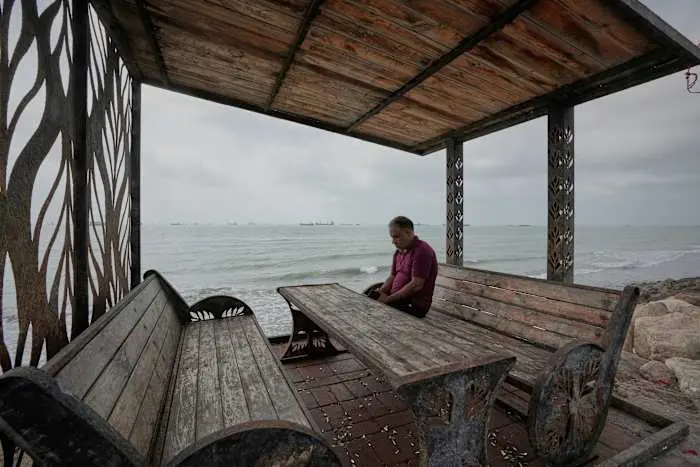
The visual reality of this shutdown is stark. In the Iranian port city of Bandar Abbas, commercial tankers sit idle against the rocky shoreline. Local residents and laborers watch from waterfront shelters as the multi-billion-dollar shipping industry remains frozen by geopolitical brinkmanship.
                           [ Persian Gulf ]
                                  │
                                  ▼
                        [ Strait of Hormuz ]  <─── High Risk Zone (78% traffic drop)
                        (Bandar Abbas, IR)
                                  │
                                  ▼
                          [ Gulf of Oman ]
The Search for the Missing Jewish Leaders
The diplomatic trade-off that secured the release of the five Lebanese civilians is rooted in the painful history of the Lebanese Civil War (1975–1990). During the mid-1980s, several prominent members of Lebanon’s Jewish community, including community leaders and rabbis, were abducted in Beirut by radical factions that would later coalesce into Hezbollah.
For decades, the fates and resting places of these individuals remained closely guarded secrets. The current deal represents the first major breakthrough in resolving these cold cases. Under U.S. pressure and seeking to de-escalate the immediate threat of a full-scale Israeli occupation, Lebanese authorities agreed to facilitate forensic excavations and share historical intelligence archives with international mediators.
Official Statements
Israeli Government Spokesperson
"The release of these four individuals, following yesterday’s repatriation, demonstrates that Israel remains committed to humanitarian principles even in the midst of an active conflict against Iranian proxies. We express our gratitude to the United States for mediating this arrangement. Our primary objective remains the security of our northern border, but we will always pursue avenues to bring closure to the families of those Jewish leaders stolen from us decades ago during the dark years of Lebanon’s civil war."
Lebanese Ministry of Foreign Affairs
"Lebanon welcomes the return of its citizens who were illegally detained by occupying forces in the south. The Ministry emphasizes that these individuals are innocent civilians who have no connection to military operations. While we have cooperated with international intermediaries to resolve outstanding humanitarian issues from our civil war past, we call upon the United Nations and the international community to halt Israeli incursions and respect Lebanon’s territorial sovereignty."
United States Department of State
"We are pleased to see the safe return of these civilian detainees to their families in Lebanon. This successful mediation proves that diplomatic channels remain viable even under the most challenging circumstances. However, we condemn in the strongest terms Iran’s reckless attacks on our regional partners, including the recent strikes affecting Kuwait. The United States will take all necessary measures to defend its allies and restore the free flow of commerce through the Strait of Hormuz."
Iranian Revolutionary Guard Corps (IRGC) Command
"The presence of foreign aggressors in the Persian Gulf is the sole source of instability in our region. Our defensive operations this week have demonstrated that any attack on Iranian soil will be met with an immediate and crushing response. The Strait of Hormuz is under our sovereign jurisdiction, and we will continue to control this waterway as long as the United States continues its economic and military warfare against our nation."
Future Outlook
The dual developments of September 4, 2026, leave the Middle East at a precarious crossroads, with two distinct trajectories emerging for the coming weeks.
The Rome Negotiations: A Pathway to Border De-escalation?
The successful execution of the civilian-for-information exchange has laid the groundwork for a broader diplomatic track. Representatives from Israel, Lebanon, and the United States are scheduled to convene in Rome later this month.
Diplomatic sources suggest these talks will go beyond humanitarian swaps, aiming to establish a framework for a formal ceasefire in Southern Lebanon. Key points of discussion are expected to include:
- The establishment of a demilitarized buffer zone monitored by restructured international peacekeeping forces.
- The withdrawal of Israeli ground forces from recently occupied villages.
- A mechanism for the permanent demarcation of the Blue Line border.
However, the success of the Rome summit remains entirely contingent on whether Hezbollah is willing to decouple its border operations from Iran’s broader strategic directives.
The Energy Crisis and the Threat of Global Recession
While the diplomatic track offers a glimmer of hope for Lebanon, the economic outlook for the West remains grim if the Strait of Hormuz remains blockaded. Energy analysts warn that if shipping volumes do not recover by the end of the third quarter of 2026, the ripple effects through global supply chains will be severe.
[Strait of Hormuz Blockade] ──> [Diesel Surges to $5.85/gal] ──> [Freight & Logistics Costs Spike] ──> [Global Consumer Inflation]The record-high diesel price of $5.85 per gallon is already impacting the U.S. agricultural and freight sectors, where high fuel surcharges are being passed down to consumers. If WTI crude oil breaches the $100-a-barrel threshold due to sustained hostilities in the Gulf, central banks may be forced to raise interest rates once again, risking a global economic slowdown.
Ultimately, the events of this week demonstrate the interconnected nature of modern geopolitical conflict. A localized agreement on the Lebanese border can be negotiated in the morning, but by afternoon, the global economy remains tethered to the volatile, high-stakes military standoff in the narrow waters of the Persian Gulf.

0 Comments