

Executive Overview
Caring for an aging loved one can completely reshape a family’s dynamic, altering careers, straining marriages, and blurring the boundaries between private grief and public support. It is a monumental responsibility—and one that a growing demographic of men is shouldering in unprecedented numbers. According to data compiled by AARP and the National Alliance for Caregiving, an estimated 21 million men in the United States are currently serving as primary caregivers. These individuals are attempting to balance the compounding physical and psychological demands of aging, chronic illness, and cognitive decline alongside the day-to-day pressures of their own professional lives and raising children.
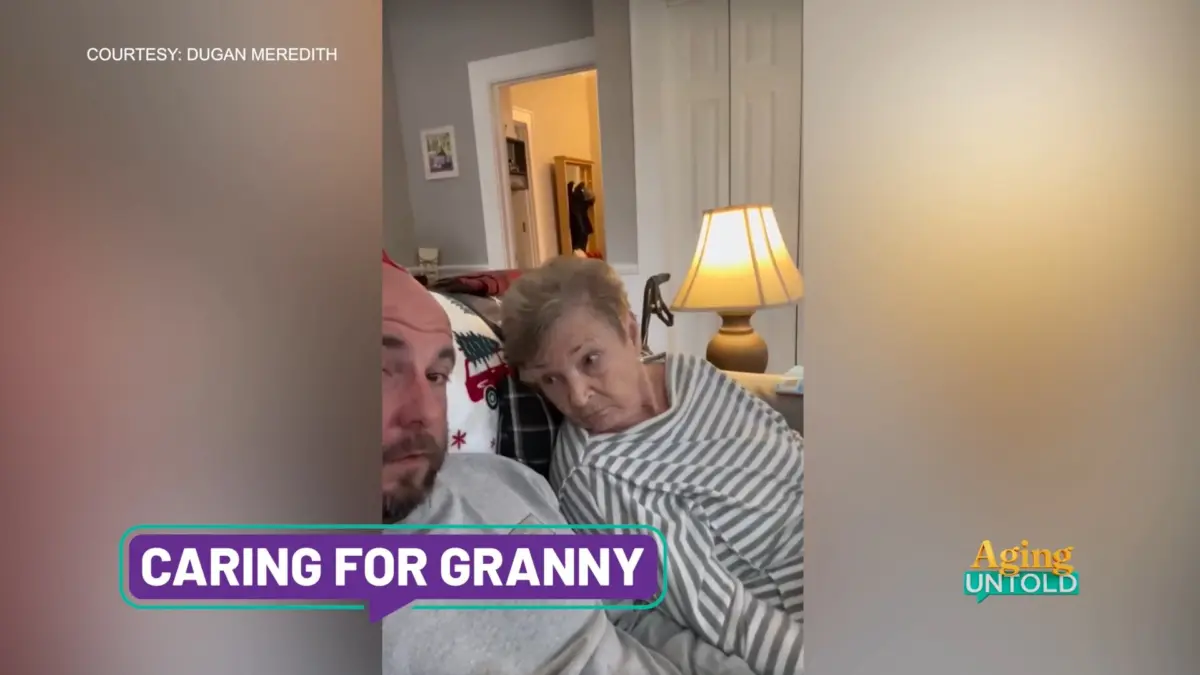
Enter Dugan Meredith, a man whose raw, unvarnished look at caregiving has resonated with millions. Documenting his journey on social media through the widely followed “Taking Care of Granny” feeds on TikTok and Facebook, Meredith has become an unlikely voice for an underserved population. Recently, Meredith joined gerontologist Sam Cradduck and board-certified physician Dr. Rhea Rogers on the Aging Untold podcast to pull back the curtain on what it truly means to step into the caregiving role, manage a loved one through the devastating progression of frontotemporal dementia (FTD), and ultimately find a path forward through community, vulnerability, and a complete reimagining of pride.
Detailed Chronology: From the First Signs to Daily Reality
The Warning Signs and the Turning Point
Meredith’s mother-in-law—affectionately known to his online audience simply as “Granny”—originally lived with her oldest daughter in the Charleston, South Carolina area. Looking back, the family recognizes that the early indicators of cognitive decline were subtle yet dangerous. Granny began experiencing memory lapses that extended far beyond ordinary forgetfulness.
“She was experiencing symptoms, showing signs, forgetting how to go pick up the grandchildren from school, getting lost,” Meredith recalled during his podcast appearance. More alarmingly, her behavioral changes escalated: “Talking to random strangers and inviting them back to the house.”
The true turning point, however, arrived in the kitchen. In an incident that shocked the family and made the severity of the situation undeniable, Granny attempted to cook soup—not by placing a pot on the stove, but by putting the liquid directly into a baking pan inside the oven. Subsequent medical evaluations yielded a definitive and life-altering diagnosis: frontotemporal dementia (FTD), a rare form of dementia that primarily affects the frontal and temporal lobes of the brain, leading to profound alterations in personality, behavior, and language.
An Unplanned Transition of Duties
When Granny eventually moved into the home shared by Meredith and his wife, there was no master plan for care management; the division of labor was dictated entirely by circumstance. Initially, the family intended to split responsibilities with another sister-in-law. However, when work obligations forced her back into a full-time professional schedule, the weight of the situation shifted abruptly.
“I think it was decided for us,” Meredith explained.
For a period, the balancing act required logistical gymnastics. Meredith’s wife took Granny to her workplace during the day, while Meredith took over caregiving duties during the evenings. Eventually, corporate policies and workplace liabilities caught up with the arrangement, forcing the employer to withdraw accommodations. This inflection point compelled the family to seek external, professional assistance to manage the round-the-clock requirements of FTD care.
Learning to “Meet Her Where She’s At”
For Meredith, transitioning into a role that required hiring outside help rather than "fixing" the problem through sheer willpower was an immense psychological hurdle. FTD does not respond to logic, reasoning, or traditional problem-solving frameworks.
“Granny coming to live with us was a struggle for me mentally,” Meredith admitted. “I was exhausted because I could not figure out why I could not get a 72-, 73-year-old woman to understand, you can’t do this—it will hurt you.”
He recounted a harrowing incident where he removed a pair of scissors from Granny’s possession after she wanted to cut her own hair, promising to take her to a professional salon instead. In response, Granny attempted to burn off a piece of her hair using a cigarette lighter.
“I could not understand in my mind, why does this woman do this? Why can I not get her to understand she’s going to hurt herself?” he said.
The breakthrough came through guidance from Aging Untold expert Sam Cradduck, who introduced Meredith to a foundational philosophy of dementia care: abandoning the need for rational control and choosing instead to meet the patient in their current reality.
“You have to meet them where they are,” Meredith realized. It is a lesson he now passionately shares with other men facing similar trials: “For men out there, you’re not going to fix it. The only thing you can do to help the situation is to swallow your pride, swallow your ego, and learn to meet them where they’re at.”
Decoding the Language of FTD
Communication with advanced FTD patients presents unique hurdles. Followers of Meredith’s digital diary are deeply familiar with Granny’s recurring use of a single, signature word: “heavy.”
During the podcast, Dr. Rhea Rogers pressed Meredith on how the household decodes this ambiguous terminology. “What is she trying to tell me? Is her stomach hurt? Is her food cold? Is her food too hot?” Meredith noted, describing the investigative process required for basic daily living. “When she says ‘my heavy is heavy,’ I keep reiterating, and eventually she’ll move a certain way, she’ll do something with her hands, she’ll nod with her head, and we’ll figure it out.”
Ultimately, bridging the communication gap relies less on verbal exchange and more on deeply attuned body language, environmental context, and behavioral cues forged through constant, daily co-habitation.
Supporting Context & Metrics: The Sandwich Generation and Economic Realities
The Pressures of the Sandwich Generation
Meredith and his wife are not just navigating the responsibilities of eldercare; they are simultaneously raising their own children, placing them squarely in what sociologists term the "sandwich generation."
“We are 100% the sandwich generation,” Meredith confirmed when speaking with aging expert Amy O’Rourke.
In the early stages of Granny’s residence, the sheer volume of protocols required to manage her safety meant that Meredith and his wife struggled to allocate sufficient time, energy, and emotional bandwidth to their children. Introducing professional caregivers into the home was not merely a relief for the adults; it was an essential step to ensure their children received the parental attention and presence they deserved.
The Staggering Financial Toll of Memory Care
The economic realities of long-term eldercare heavily influenced the family’s decision-making process. When exploring professional alternatives, the family investigated traditional residential memory care facilities, only to find costs that were financially prohibitive for the average American household.
“You go look at nice memory care facilities—we’re talking $10,000 to $15,000 a month,” Meredith stated.
Faced with these astronomical figures, the family opted for private in-home care supplemented by their own dedicated labor. To help subsidize the high cost of medical supplies, specialized diets, and private aides—and to keep Granny in a familiar, loving environment—the family began monetizing their social media content. When asked whether they intend to keep Granny at home through the final stages of her life, Meredith answered without hesitation: “Everyone always asks, are you going to keep her here until her last breath? We will.”
Official Statements and Expert Perspectives
The conversation on the Aging Untold podcast underscored a broader systemic issue regarding male representation in caregiving spaces and the psychological toll exacted by neurodegenerative diseases.
- On Male Pride and Caregiving: Dugan Meredith emphasized that societal conditioning often instructs men to be problem solvers, fixers, and providers. When confronted with a degenerative condition like FTD, these instincts backfire. As Meredith noted, the transition from managing a household to caregiving requires men to strip away their egos: "You’re not going to fix it. The only thing you can do to help the situation is to swallow your pride, swallow your ego, and learn to meet them where they’re at."
- On Finding Community in Isolation: Reflecting on his initial days at the kitchen table—drinking coffee and recording raw, frustrated videos on his phone—Meredith highlighted the profound isolation felt by informal caregivers. "I felt like I was alone. I felt like nobody in the world understood what was going on within my mind and in my heart." That initial outreach, however, opened the door to a digital ecosystem where compassion far outweighs criticism: "For every one negative person, there’s 500 positives."
- On Professional Insights: Gerontologist Sam Cradduck and physician Dr. Rhea Rogers validated the family’s adaptive strategies, reinforcing that behavioral symptoms in FTD are not purposeful actions designed to test patience, but rather neurological manifestations of a failing brain that require creative, empathetic de-escalation rather than confrontation.
Future Outlook: From TikTok Diaries to a Nonprofit Mission
What began as a solitary therapeutic outlet at a kitchen table has blossomed into a widespread movement. Today, the “Taking Care of Granny” initiative extends far beyond viral videos; it has become a catalyst for systemic advocacy.
Inspired by a conversation with another caregiver who documents his journey supporting a spouse with Parkinson’s disease, Meredith founded the Taking Care of Granny nonprofit organization, an entity dedicated explicitly to providing resources, education, and direct support to the caregivers themselves.
As for Granny’s current status, the disease has continued its inevitable progression. The family has adapted their home environment to match her changing physical capabilities:
- Nutritional Adjustments: Because Granny now experiences difficulty swallowing, her food is completely pureed to prevent aspiration.
- Fall Prevention: Due to a shuffling gait, the family has stripped rugs and other potential trip hazards from the floors.
- Palliative and Hospice Care: Hospice teams have integrated a specialized medical bed directly into the home to minimize fall risks and maximize comfort.
“The disease has progressed, and we’re at that point now,” Meredith reflected on the current stage of care. “लेकिन [Yet] given what we’ve been through, I would say she’s doing well.”
Through relentless dedication, digital transparency, and an unwavering commitment to meeting his mother-in-law in her reality, Dugan Meredith is not only preserving Granny’s dignity—he is rewriting the blueprint for modern, male-led family caregiving.

0 Comments