

Executive Overview
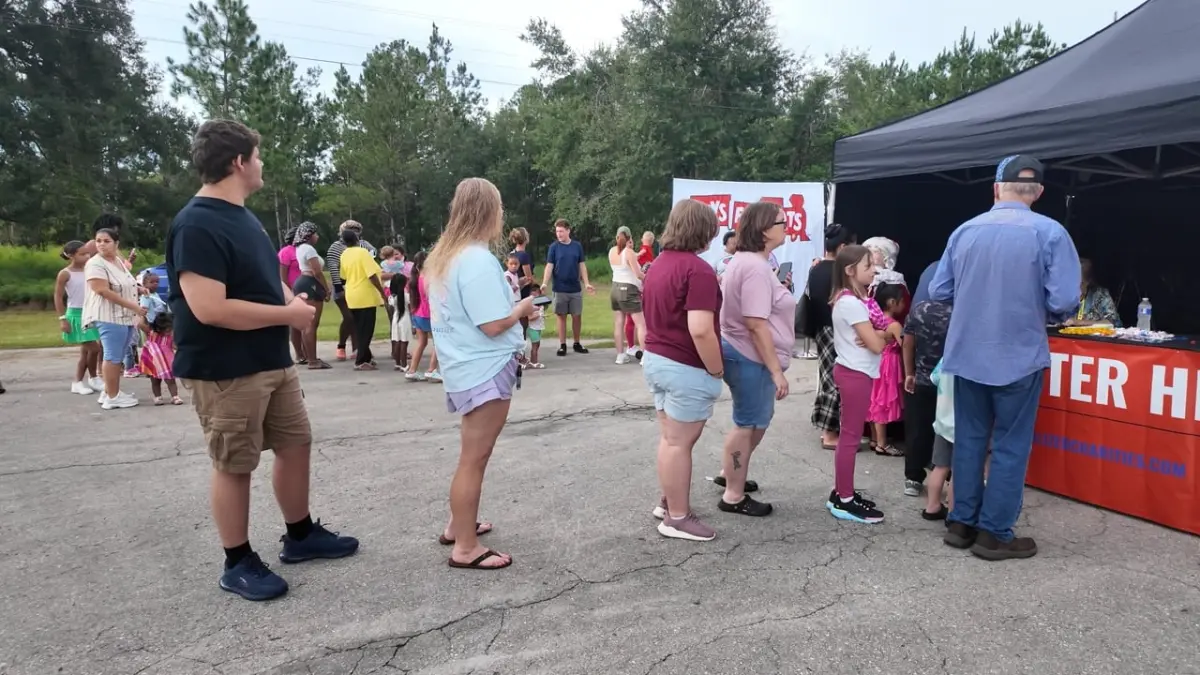
In an era where traditional charitable models often rely on generalized distribution, innovative community outreach programs are reshaping how support is delivered to vulnerable populations. Recently, the air in Live Oak, Florida, was filled with the unmistakable sounds of Christmas music, signaling a holiday celebration occurring months ahead of schedule. Families gathered at a special collaborative event hosted by the Specialized Charities Grant Store in partnership with Toys for Tots, marking a significant departure from standard seasonal charity drives.
Rather than receiving prepackaged, one-size-fits-all care packages that may or may not suit a household’s specific needs, local families participated in an empowering, choice-driven shopping experience. Utilizing a proprietary grant-point system, parents and children browsed store shelves to select items tailored to their individual preferences and developmental needs. This initiative brought tangible relief to local households, addressing both the immediate joy of children and the broader economic pressures faced by working-class families in Suwannee County.
This comprehensive report examines the mechanics of the event, the philosophy of choice-based charitable distribution, community responses, and the vital role organizations like the Specialized Charities Group and Toys for Tots play in bolstering local safety nets. Through structured analysis, including chronological insights, official commentary, and contextual metrics, this article explores how modern philanthropy is evolving to restore dignity and agency to community assistance.
Detailed Chronology: A Morning of Anticipation and Joy in Live Oak
Early Morning Preparations and Community Mobilization
The success of the early Christmas toy giveaway in Live Oak was the result of weeks of meticulous planning, logistics coordination, and inter-agency collaboration between the Specialized Charities Grant Store and regional Toys for Tots coordinators. Preparations began well before dawn as organizers unloaded pallets of toys, organizing the inventory by category, age group, and developmental focus.
By the early morning hours, anticipation was already building outside the facility. Local families, having heard about the unique event through word-of-mouth, social media, and community networks, began forming a queue long before the doors officially opened. The atmosphere in the line was characterized by a palpable sense of excitement. Children chatted eagerly about their favorite characters, games, and hobbies, while parents conversed, sharing a collective understanding of the financial pressures that often accompany the holiday season—pressures that can weigh heavily on households regardless of what month the calendar shows.
Registration and the Grant-Point System in Action
As the doors swung open, the registration process was executed efficiently to ensure a smooth, orderly flow of participants. Volunteers and staff members welcomed each family, verified registration details, and introduced participants to the core mechanism of the event: the grant-point allocation.
Unlike traditional toy drives where recipients are handed a pre-selected box of goods, the Specialized Charities Grant Store operationalizes a philosophy of consumer agency. Children up to the age of 16, accompanied by their parents or guardians, were issued a specific allotment of grant points based on family size and household need.
Armed with these points, the children transformed into shoppers. The floor plan of the store was arranged to mimic a traditional retail environment, complete with clearly marked sections and displays. Shelves were stocked with a diverse array of merchandise, ranging from engaging science experiment kits and literary classics to cuddly plush toys, board games, and creative arts supplies.
The Shopping Experience and Immediate Impact
For the children, the experience of browsing shelves and making active choices fostered a sense of independence and excitement. Rather than passively receiving a predetermined gift, they engaged in decision-making, weighing options to find the items that genuinely sparked their interest.
Parents observed with visible relief and joy as their children navigated the aisles. The system ensured that no child walked away with an item they could not use or did not want, eliminating the waste often associated with mass-distributed holiday charity. By late morning, hundreds of children had successfully selected their items, and the facility buzzed with the energetic hum of satisfied families exiting into the Live Oak sunshine, their arms laden with gifts and their spirits lifted by an unexpected mid-year celebration of holiday cheer.
Supporting Context & Metrics: The Evolution of Dignity-Centric Philanthropy
The Paradigm Shift: Choice-Based vs. Traditional Charity
To fully appreciate the significance of the Live Oak event, it is essential to examine the structural evolution of charitable giving over the past few decades. Traditional holiday toy distribution models, while well-intentioned, frequently suffer from logistical inefficiencies and a lack of personalization. In standard models, charities purchase or collect goods in bulk, sort them into standardized boxes based roughly on age and gender, and distribute them blindly.
While this approach can move a high volume of items quickly, it presents several distinct drawbacks:
- Mismatch of Interests: A child receiving a prepackaged box may find themselves with toys that do not align with their developmental stage, personal interests, or educational needs.
- Erosion of Agency: Receiving goods without input can inadvertently diminish the recipient’s sense of autonomy and dignity.
- Resource Inefficiency: Items that are unwanted or unused often end up discarded, representing a misallocation of charitable resources.
The Specialized Charities Grant Store addresses these systemic flaws through its innovative grant-point model. By shifting the power of selection to the consumer, the organization honors the dignity of the individual. This approach aligns with modern social work frameworks, which emphasize empowerment, self-determination, and trauma-informed care over paternalistic charity models.
Demographic and Economic Realities in Suwannee County
Live Oak and the broader Suwannee County region present unique socioeconomic dynamics that make targeted charitable interventions critical. As a largely rural community, Live Oak experiences distinct economic challenges, including employment volatility, limited access to diverse industrial sectors, and transportation barriers that can isolate low-income families from essential services.
According to regional economic data and community assessments:
- Cost of Living Pressures: While rural areas often boast a lower cost of living compared to major metropolitan hubs, stagnant wage growth in entry-level service, agricultural, and educational support sectors can severely strain household budgets.
- Working Families in Need: A significant portion of families utilizing charitable resources are the working poor—individuals who are employed, often in public service or foundational community roles, yet struggle to bridge the gap between basic living expenses and discretionary spending like holiday gifts.
- Childhood Vulnerability: Educational support staff frequently witness firsthand the silent burdens carried by children whose families face financial hardship. The ability to alleviate even a fraction of this stress through events like the early toy giveaway provides an invaluable psychological and social buffer for the community.
The Role of Strategic Partnerships: Specialized Charities Group and Toys for Tots
The success of the Live Oak event underscores the power of institutional collaboration. By pairing the localized infrastructure and philosophy of the Specialized Charities Grant Store with the massive supply chain and brand recognition of Toys for Tots, the initiative achieved scale without sacrificing personal touch.
Toys for Tots, a program run by the United States Marine Corps Reserve, has a storied history of distributing millions of toys to less fortunate children nationwide. However, partnering with agile, community-based organizations allows national entities to adapt their vast resources to localized, high-impact distribution models like the grant-point system. This synergy ensures that national donations are deployed with maximum efficiency and cultural resonance at the grassroots level.
Official Statements & Community Perspectives
Leadership Insights on Empowerment Philosophy
The operational philosophy driving the Specialized Charities Grant Store was articulated clearly by Dwayne Dixon, Director of Donations for the Specialized Charities Group. In statements detailing the organization’s mission, Dixon emphasized that the core objective extends far beyond simply handing out objects; it is about restoring choice and respect to individuals experiencing hardship.
"Our store issues grant points to individuals who need," Dixon explained. "Our philosophy is, if we give individual grant points, they can go to the store and get the items that they need instead of getting a box of items that they don’t need. They can pick out individual items."
This statement encapsulates a profound shift in charitable administration. By framing the interaction around "grant points" rather than handouts, the organization creates an environment that mirrors a standard retail experience. This subtle yet powerful psychological framing removes the stigma often associated with seeking assistance, allowing parents and children to participate with their heads held high.
Ground-Level Reflections from Community Stakeholders
The resonance of the event was further validated by those who witness community needs on a daily basis. Suany Jones, a Live Oak resident and dedicated employee within the local school system, offered a poignant perspective on why initiatives of this magnitude matter so deeply to the fabric of the community.
"It’s very nice, I would say, because I work in a school system so I see a lot of kids that are not fortunate enough to receive things like this on a daily basis on the regular," Jones remarked, reflecting on the daily realities faced by many of her students. "So I think it’s just very nice for the community, and in general, to be on the way for something that gives back to them. Especially when we’re talking about kids."
Jones’s observation highlights the bridge between institutional education and social support. School employees are uniquely positioned to recognize the emotional and material deficits that can impact a child’s academic engagement and social well-being. When community organizations step in to provide targeted joy and material relief, the positive ripple effects extend directly into the classrooms and playgrounds of Live Oak.
Future Outlook: Scaling Compassion and Sustaining Community Resilience
Expanding the Grant-Point Model
As the Specialized Charities Group Inc. continues to solidify its role as an indispensable anchor for residents in need, leadership is looking toward the future with an eye on expansion and refinement. The success of the early Christmas toy giveaway in Live Oak serves as a compelling proof-of-concept for the scalability of the grant-point system.
Future initiatives may explore:
- Diversifying Inventory: Expanding beyond toys to include educational technology, clothing, books, and household essentials, thereby increasing the utility of the grant points throughout the year.
- Year-Round Engagement: Transitioning from seasonal holiday giveaways to continuous, episodic distribution models that respond to back-to-school needs, emergency relief, and seasonal transitions.
- Enhanced Digital Tracking: Upgrading point-allocation systems to streamline registration, reduce wait times, and ensure equitable distribution across a growing demographic base.
Call to Action: Sustaining Local Philanthropy
The longevity and reach of programs managed by the Specialized Charities Group rely heavily on sustained community engagement, volunteerism, and material or financial contributions. Non-profit initiatives operating on innovative models require robust public backing to maintain inventory levels and expand their physical infrastructure.
Community members, local businesses, and corporate partners interested in supporting the mission, contributing resources, or volunteering their time are encouraged to engage directly with the organization. Detailed information on how to participate, donate, or seek assistance can be found by visiting the official SPECIALIZED CHARITIES portal.
Conclusion
The early Christmas toy giveaway in Live Oak, Florida, was far more than a seasonal anomaly or a simple distribution of gifts. It was a masterclass in modern, dignity-centric philanthropy. By replacing paternalistic charity with an empowering grant-point system, the Specialized Charities Grant Store and Toys for Tots demonstrated how respect, choice, and community collaboration can transform the charitable experience. For the children who walked away with science kits, books, and plush toys—and for the parents who watched them make those choices with pride—the event was a powerful reminder that their community sees them, values them, and stands ready to support them every single day of the year.

0 Comments