

Executive Overview
In an era defined by soaring college tuition costs, growing student loan debt, and an unprecedented labor shortage in the building sectors, alternative pathways to meaningful, high-paying careers have never been more critical. Traditional four-year universities are no longer seen as the exclusive route to professional success. Across the United States, a quiet revolution is taking place within the skilled trades—and Jacksonville, Florida, is standing at the epicenter of this workforce transformation.
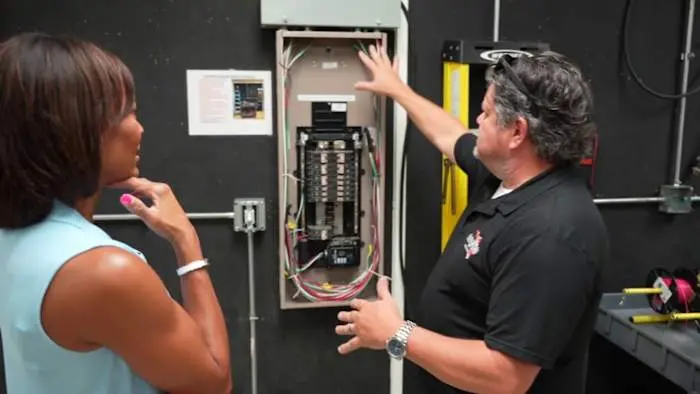
As part of the ongoing TradeUp news series—developed in strategic partnership with WareWorks to examine local career opportunities in the skilled trades—this report takes a deep dive into the Electrical Training Alliance of Jacksonville. Located on Richard Street in the city’s bustling Englewood neighborhood, this premier training facility is redefining vocational education by bridging the gap between classroom theory and real-world application.
At the core of this initiative is a rigorous, four-year apprenticeship model that challenges the conventional wisdom of higher education. Unlike traditional students who accumulate tens of thousands of dollars in debt while spending hours in lecture halls, participants in the Electrical Training Alliance program earn a full-time paycheck from day one. They split their time between immersive, hands-on classroom instruction and working alongside seasoned professionals on major commercial and industrial construction sites throughout Northeast Florida.
This joint venture is co-sponsored by the International Brotherhood of Electrical Workers (IBEW) and electrical contractors represented by the National Electrical Contractors Association (NECA). By combining forces, the union and contractors have created an educational ecosystem that guarantees immediate employment, accelerated career progression, and a direct pipeline to high-demand roles as journeyman wiremen.
Whether welcoming a 39-year-old career pivot or an 18-year-old fresh out of high school, the program demonstrates that it is never too early—or too late—to build a stable, prosperous future. As Jacksonville experiences rapid economic growth and massive infrastructure investments, programs like the Electrical Training Alliance are proving indispensable in supplying the skilled, highly trained workforce necessary to power tomorrow.
Detailed Chronology: From Concept to Career
To fully understand the impact of the Electrical Training Alliance, one must examine the structured trajectory an individual takes from an uninitiated applicant to a master of the trade. The journey is meticulously designed to instill safety, technical proficiency, and professional reliability.
The Spark: Choosing a New Path
The pathway into the electrical trade varies drastically depending on the individual, proving that there is no singular mold for a successful apprentice. Take, for instance, Forest Cardwell. After graduating from the University of Central Florida (UCF) in 2012, Cardwell spent over a decade navigating the demanding and often unpredictable restaurant industry. Yet, the desire for a stable, hands-on career lingered. Inspired by his father, who spent his entire professional life working in power plants, Cardwell decided at age 39 to trade the hospitality industry for the industrial job site.
On the opposite end of the age spectrum is Caleb Gill. At just 18 years old, Gill stepped onto the Richard Street campus immediately after receiving his high school diploma. Rather than facing the anxiety of choosing a college major with an uncertain return on investment, Gill sought a tangible career path that offered immediate financial security and long-term stability.
The Application and Selection Process
Gaining entry into the Electrical Training Alliance is competitive, reflecting the high value of the education and the guaranteed employment that follows. Applicants must meet specific criteria, including aptitude testing and interviews, designed to gauge their commitment to the trade, basic math skills, and readiness for rigorous physical and mental work.
Once accepted, apprentices are paired with program contractor partners. Cardwell, for instance, was quickly selected to work for Miller Electric, a premier regional contractor, entering an orientation period where he awaited his specific project placement.
The "Earn-While-You-Learn" Daily Routine
The operational model of the apprenticeship is built on a dual-track schedule that requires dedication and time management:
- Full-Time Fieldwork: Apprentices work 40 hours a week under the direct supervision of licensed journeymen, gaining invaluable, real-time experience on active commercial and industrial sites.
- Evening Classroom Instruction: One to two nights a week, apprentices report back to the Richard Street facility for advanced theoretical coursework, blueprint reading, electrical code study, and math applications.
- Continuous Wage Progression: As apprentices accumulate designated hours of on-the-job training and successfully pass their semester benchmarks, their hourly wages automatically step up.
By the time students complete the four-year program, they graduate debt-free, possessing both a comprehensive technical education and four years of verified work experience.
Supporting Context & Metrics: The Mechanics of an Accelerated Career
The modern electrical trade extends far beyond residential wiring and replacing circuit breakers. Modern infrastructure demands a deep understanding of complex electrical systems, high-voltage mechanics, and advanced technological integration.
Demystifying the Apprenticeship Model
According to Danny Van Sickle, the apprentice director for the Jacksonville program, the hybrid model of education is mathematically and professionally superior to traditional, unorganized on-the-job training.
"An apprenticeship is an accelerated path to get the final classification, which we call journey worker or journeyman wireman," Van Sickle explains.
Through the structured structure of the Electrical Training Alliance, dedicated students achieve journey-level status in precisely four years. By contrast, industry data indicates that an individual attempting to learn the trade informally—moving haphazardly from one contractor to another without a formal curriculum—can take six to seven additional years to reach the exact same level of competency and wage earnings.
High-Stakes Industrial Environments
The projects managed by IBEW and NECA contractors in the Jacksonville region are monumental in scope. Unlike residential electricians, alliance apprentices routinely find themselves working on massive, mission-critical infrastructure projects, including:
- Regional hospitals and medical research facilities
- Advanced water and wastewater treatment plants
- Heavy industrial powerhouses and paper mills
- High-profile civic and sports infrastructure, such as ongoing developments surrounding the Jacksonville Jaguars’ ambitious "Stadium of the Future" project.
"The voltages are higher that we work with than maybe a typical house electrician," Van Sickle notes, emphasizing the elevated skill set required. "There’s a lot more skill set that goes into that."
Economic Security and Workforce Demographics
The demographic makeup of the Jacksonville program shatters stereotypes about who belongs in the trades. Classrooms feature a dynamic mix of generational backgrounds:
- Career Switchers: Individuals in their 30s and 40s seeking refuge from burnout, stagnant wages, or lack of upward mobility in corporate or service industries.
- High School Graduates: Young adults seeking an immediate alternative to ballooning student loan debt.
For young participants like Caleb Gill, the guarantee of employment provides profound psychological and financial peace of mind. "I’m able to have a family, a house. It makes me very happy," Gill shares. In an economic climate where homeownership feels increasingly out of reach for Gen Z, the skilled trades offer an expedited path to the American Dream.
Official Statements and Institutional Collaboration
The success of the Electrical Training Alliance of Jacksonville relies heavily on the robust, cooperative partnership between organized labor and industry management. This collaborative framework ensures that the curriculum remains cutting-edge, safety standards are uncompromising, and job placement is seamless.
The Power of IBEW and NECA
The International Brotherhood of Electrical Workers (IBEW) represents the workforce, advocating for fair wages, comprehensive health benefits, and secure retirement pensions for its members. Meanwhile, the National Electrical Contractors Association (NECA) represents the business backbone—the premier electrical contractors who design, bid, and execute major construction projects across the country.
By pooling resources, expertise, and funding into the Electrical Training Alliance, IBEW and NECA eliminate the guesswork traditionally associated with career placement.
"Apprentices are guaranteed employment through the program’s contractor partners," Van Sickle reiterates, highlighting the unique security blanket the program provides.
When a student is accepted into the Alliance, they are not just enrolling in a school; they are entering into an employment pipeline where their success is directly aligned with the growth of the region’s top electrical contractors.
Perspectives from the Ground Level
For adult learners who have experienced the corporate or service sector grind, the institutional support provided by the Alliance is striking. Forest Cardwell reflects on his transition from university graduate and restaurant worker to industrial electrical apprentice with a sense of profound relief.
"A lot different than college," Cardwell says with a laugh, contrasting the abstract nature of his past liberal arts education with the immediate, tangible problem-solving required on a commercial job site. In the trades, every hour spent studying is immediately reinforced by physical application the next morning.
Future Outlook: Powering Jacksonville’s Next Growth Era
As Jacksonville continues to experience rapid population growth, commercial expansion, and urban revitalization, the demand for certified, highly skilled electrical workers will only accelerate. The city’s skyline is evolving, and behind every new hospital wing, data center, sports arena, and renewable energy installation is an army of skilled electricians making it all possible.
Addressing the National Skilled Labor Shortage
Nationwide, the "skills gap" remains a pressing economic concern. As a generation of veteran tradespeople reaches retirement age, thousands of open positions risk remaining unfilled. Initiatives like the TradeUp series, in partnership with WareWorks, play a crucial role in shifting public perception. By highlighting real success stories from programs like the Electrical Training Alliance, media and industry leaders are helping to dismantle outdated stigmas surrounding vocational work, rebranding the trades as lucrative, high-tech, and highly respected career choices.
The Road Ahead for Apprentices
For current apprentices like Cardwell and Gill, the future is exceptionally bright. Earning while learning means they will step into their journey worker roles unburdened by debt, equipped with top-tier safety certifications, and positioned to take on leadership roles within the industry. Whether they choose to remain field electricians, advance into project management, or start their own contracting businesses, the foundation provided by the Richard Street facility ensures limitless potential.
Ultimately, the Electrical Training Alliance of Jacksonville serves as a national blueprint for modern workforce development. By uniting labor unions, private contractors, and eager workers of all ages, the program is not only wiring the buildings of tomorrow—it is empowering the workforce that will sustain our communities for decades to come.

0 Comments