
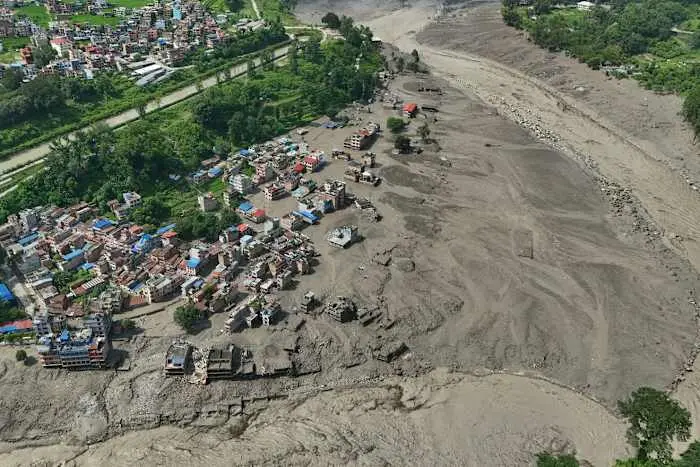

UDIN DHUNGA, NEPAL — A catastrophic flash flood, triggered by a massive avalanche of ice and rock in the high-altitude Himalayan range, has torn through northern and central Nepal. The disaster has claimed at least eight lives, left hundreds missing—including nearly 400 foreign and domestic tourists—and obliterated critical infrastructure, local authorities reported on Wednesday, August 26, 2026.
The sudden surge of water, mud, and alpine debris has put the vulnerability of the ecologically fragile Hindu Kush Himalaya region back into the global spotlight. This disaster occurred just fourteen months after another devastating flood ravaged the same river system, underscoring the accelerating pace of climate change in the world’s highest mountain range.
Executive Overview
On the morning of Wednesday, August 26, 2026, a colossal mixture of glacial ice and rock broke away from a peak on the Nepali side of the Himalayas. The resulting avalanche crashed into the Lhende Khola River, a vital tributary of the Bhotekoshi River. This massive slide created a temporary landslide dam, which rapidly failed and released a catastrophic wall of water downstream.
By 9:00 a.m. local time, the Bhotekoshi River had breached its banks, sending torrents of debris-laden water through villages, agricultural terraces, and critical transportation corridors. The devastation quickly spread downstream into the Trishuli and Narayani river basins, prompting the government to issue urgent evacuation orders across multiple districts, including Rasuwa and Nuwakot.
Disaster Summary: August 26, 2026
┌─────────────────────────┬────────────────────────────────────────────────────────┐
│ Primary Cause           │ Ice and rock avalanche blocking Lhende Khola River     │
├─────────────────────────┼────────────────────────────────────────────────────────┤
│ Confirmed Fatalities    │ 8 (Expected to rise as search operations continue)      │
├─────────────────────────┼────────────────────────────────────────────────────────┤
│ Reported Missing        │ Hundreds, including 384 tourists (291 international)   │
├─────────────────────────┼────────────────────────────────────────────────────────┤
│ Most Impacted Districts │ Rasuwa, Nuwakot, Sindhupalchok                         │
├─────────────────────────┼────────────────────────────────────────────────────────┤
│ Critical Infrastructure │ Multiple hydropower plants, roads, and bridges damaged  │
└─────────────────────────┴────────────────────────────────────────────────────────┘
The human toll is expected to rise sharply. Among the missing are 384 registered tourists who were trekking or vacationing in the popular mountain corridors of Rasuwa and neighboring districts. Of these, 291 are international travelers from India, the United States, the United Kingdom, and Malaysia.
With vital roads washed out and communication lines severed, rescue workers are struggling to access isolated mountain communities, prompting the Nepali government to appeal to neighboring geopolitical giants India and China for immediate cross-border search-and-rescue assistance.
Detailed Chronology
The disaster unfolded with terrifying speed in a region already saturated by seasonal monsoon rains.
The Catalyst: High-Altitude Failure
In the early hours of Wednesday, a massive unstable mass of glacial ice and rock detached from a high-altitude slope on the Nepalese side of the border. Experts believe that unseasonably warm temperatures in the preceding weeks compromised the structural integrity of the glacier, leading to the failure.
The resulting avalanche plummeted into the narrow gorge of the Lhende Khola. Within minutes, millions of tons of ice, rock, and mountain sediment choked the river channel, creating an unstable, temporary dam that blocked the natural flow of the water.
The Breach and Surge
As water rapidly accumulated behind the debris barrier, hydrostatic pressure built to a breaking point. Around 8:30 a.m., the natural dam suffered a catastrophic failure, releasing a colossal volume of water downstream.
By 9:00 a.m., this surge reached the Bhotekoshi River. The wall of water, thick with boulders, uprooted trees, and mud, tore through the narrow river valley at speeds exceeding 40 kilometers per hour.
Timeline of Events: Wednesday, August 26, 2026
  │
  ├── Early Morning: High-altitude glacier failure triggers massive ice-rock avalanche.
  │
  ├── 08:30 AM: Landslide dam on the Lhende Khola collapses under immense water pressure.
  │
  ├── 09:00 AM: The Bhotekoshi River floods, destroying villages, roads, and bridges.
  │
  ├── 11:00 AM: Downstream warnings issued for Nuwakot and Narayani river basins.
  │
  └── 02:00 PM: Government officially requests emergency rescue aid from India and China.
Downstream Destruction
As the floodwaters raced south, they swept away entire sections of the highway connecting Nepal to China, destroyed bridges, and severely damaged several run-of-the-river hydropower stations that supply power to the national grid.
In Nuwakot district, residential areas built along the banks of the Trishuli River were inundated. Dozens of homes were torn from their foundations or left hanging precariously over the eroded riverbanks. Eyewitnesses in Udin Dhunga described scenes of panic as residents fled to higher ground with only the clothes on their backs, watching helplessly as vehicles and livestock were swept away by the brown, churning torrents.
Supporting Context & Metrics
To understand the scale of Wednesday’s disaster, it must be viewed through the lens of regional climate change and historical precedent. The Hindu Kush Himalaya region is warming at a rate significantly higher than the global average—a phenomenon scientists refer to as Elevation-Dependent Warming (EDW).
The Warning from ICIMOD
The Kathmandu-based International Centre for Integrated Mountain Development (ICIMOD) has long warned that the rapid retreat of glaciers in the region is creating unstable mountain environments. According to a comprehensive study published by ICIMOD earlier this year, the rate of glacial ice loss across the Hindu Kush Himalaya has doubled since the year 2000 compared to the previous two decades.
Glacial Ice Loss Trend (Hindu Kush Himalaya)
  Post-2000:  ████████████████ (Ice loss rate doubled)
  Pre-2000:   ████████
This accelerated melting does not merely shrink the glaciers; it destabilizes the surrounding bedrock, making massive rockfalls and ice-rock avalanches far more common. When these events occur in narrow valleys, they inevitably lead to landslide-dammed lake outburst floods (LLOFs) or compound glacial lake outburst floods (GLOFs).
A Pattern of Escalating Disasters
This is the second time in just fourteen months that the Lhende Khola and Bhotekoshi river systems have experienced extreme flooding. In August 2025, a glacial lake in neighboring Tibet overflowed due to high summer temperatures, sending a surge across the border that killed nine people and destroyed a critical border bridge linking Nepal and China.
"The Lhende Khola has now flooded twice in fourteen months," said Saswata Sanyal, a disaster risk reduction specialist at ICIMOD. "This time, the trigger was not an outburst from Tibet, but an ice-rock avalanche from a glacier entirely on the Nepal side. The avalanche blocked the river and released a sudden surge downstream. In a warming Himalaya, early warning is our first and most vital line of adaptation."
The economic fallout of these recurring disasters is staggering. Nepal has invested billions of dollars in run-of-the-river hydropower projects along its steep northern rivers. These projects are highly vulnerable to sediment-heavy flash floods. Wednesday’s disaster has temporarily knocked out several hundred megawatts of generating capacity, threatening widespread power outages across the country.
Official Statements
As the scale of the disaster became clear on Wednesday afternoon, government officials scrambled to coordinate emergency response operations amid challenging weather conditions and severed communication networks.
Appeals for International Assistance
Recognizing the limitations of Nepal’s domestic search-and-rescue infrastructure, particularly in high-altitude, debris-strewn terrains, the government formally reached out to its neighboring countries for help.
"We have officially asked both India and China to assist us with our search, rescue, and recovery efforts," said Sasmit Pokharel, a spokesperson for the Nepalese government. "The terrain is incredibly challenging, and many of the affected areas are completely cut off by road. We require specialized air support, search dogs, and disaster response teams experienced in alpine environments."
Diplomatic Concerns Over Missing Tourists
The high number of missing foreign nationals has triggered a coordinated diplomatic response. Embassies in Kathmandu are working closely with Nepal’s Ministry of Foreign Affairs and local trekking agencies to establish the last known locations of the missing travelers.
- Indian Officials: Expressed deep concern over the high number of missing Indian pilgrims and tourists, who frequently travel through the Rasuwa corridor to reach sacred high-altitude sites.
- US, UK, and Malaysian Embassies: Have set up emergency hotlines for families seeking information on relatives trekking in the Langtang and Rasuwa regions.
Local authorities have urged residents and remaining tourists in the downstream districts of Nuwakot, Dhading, Chitwan, and Nawalparasi to remain vigilant and stay far away from the banks of the Trishuli, Bhotekoshi, and Narayani rivers, as water levels remain dangerously high and unstable.
Future Outlook
The disaster of August 26, 2026, serves as a stark reminder of the challenges facing mountain communities in an era of rapid climate destabilization. As the atmosphere continues to warm, disasters that were once considered "once-in-a-generation" events are occurring with alarming regularity.
Required Adaptation Strategies for the Himalayan Region
┌───────────────────────────────┬────────────────────────────────────────────────────────┐
│ Strategic Priority            │ Action Plan                                            │
├───────────────────────────────┼────────────────────────────────────────────────────────┤
│ Early Warning Systems (EWS)   │ Deploy real-time acoustic and satellite monitoring     │
│                               │ on high-risk glaciers and river channels.              │
├───────────────────────────────┼────────────────────────────────────────────────────────┤
│ Resilient Infrastructure      │ Redesign bridges, highways, and hydropower plants to    │
│                               │ withstand high-velocity, debris-heavy surges.          │
├───────────────────────────────┼────────────────────────────────────────────────────────┤
│ Transboundary Cooperation     │ Establish real-time data-sharing protocols between     │
│                               │ Nepal, India, and China for early flood warnings.      │
├───────────────────────────────┼────────────────────────────────────────────────────────┤
│ Community-Based Preparedness  │ Train local communities in evacuation procedures and   │
│                               │ establish designated safe-zone shelters.               │
└───────────────────────────────┴────────────────────────────────────────────────────────┘
The Push for Transboundary Water Management
Because the river basins of the Hindu Kush Himalaya span international borders, localized disasters in one country can quickly cascade into regional crises. Experts argue that regional cooperation between Nepal, India, and China is no longer optional—it is a survival mechanism. Establishing shared early-warning sensor networks and real-time data-sharing protocols on glacial movements and river levels could save thousands of lives downstream in India’s densely populated plains, where these rivers eventually flow.
Engineering for a New Reality
For Nepal, the economic path forward must also change. The country’s reliance on hydropower means it must adapt its engineering standards to withstand the realities of climate change. Future projects will need to be designed with higher safety margins, advanced sediment-bypass tunnels, and robust upstream monitoring systems to prevent catastrophic structural failures during flash floods.
As night falls over the devastated valleys of Nuwakot and Rasuwa, the immediate focus remains on finding survivors. However, once the floodwaters recede and the mud dries, the government of Nepal and the international community will face a much larger, systemic challenge: how to protect the millions of people living in the shadow of a melting, increasingly unstable mountain range.

0 Comments