

Executive Overview
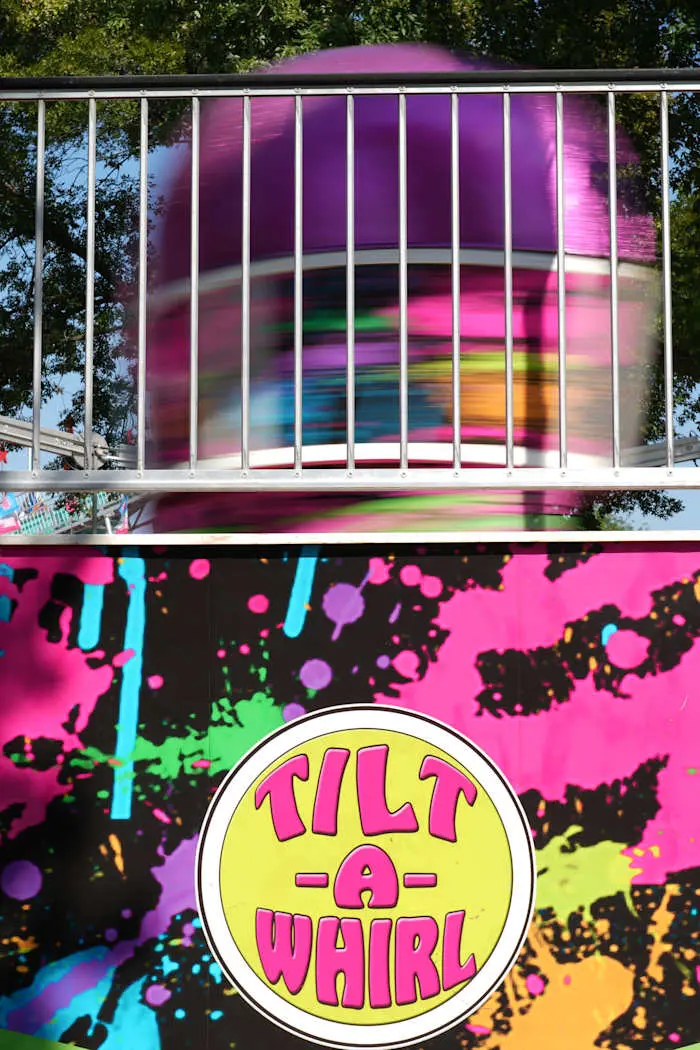
FALCON HEIGHTS, Minn. — Amidst the sensory overload of the 2026 Minnesota State Fair—where the aromas of deep-fried confections mingle with the roar of modern, high-tech attractions—stands a mechanical masterpiece celebrating a monumental milestone. On Thursday, August 27, 2026, fairgoers of all generations gathered in Falcon Heights to honor and experience the Tilt-A-Whirl, an iconic staple of American amusement culture that is officially celebrating its 100th anniversary.
With its distinctive, brightly colored domed cars, undulating circular track, and unpredictable, gravity-defying spins, the Tilt-A-Whirl has transitioned from a novel Jazz Age experiment into a cross-generational cultural touchstone. Originally debuting at this very fairground in 1926, the ride has defied the modern trend toward virtual reality and hyper-engineered roller coasters. Instead, it relies on a brilliant combination of basic physics, robust Midwestern engineering, and the timeless appeal of visceral, unpredictable motion.
This investigative retrospective examines the rich history, complex mechanical physics, and enduring cultural legacy of the Tilt-A-Whirl. Through interviews with historians, ride operators, and multi-generational fairgoers, we explore how a backyard invention from Faribault, Minnesota, survived economic depressions, industrial shifts, and technological revolutions to remain the undisputed king of the American midway.
Detailed Chronology: From Backyard Failure to Global Phenomenon
To understand the longevity of the Tilt-A-Whirl, one must look back to the post-World War I industrial boom of southern Minnesota. The story begins in the early 1920s in Faribault, a quiet manufacturing town where an inventive woodworker and slide builder named Herbert W. Sellner sought to capitalize on the public’s growing appetite for thrill rides.
[Early 1920s] Herbert Sellner experiments with water-based rides in Faribault, MN.
      │
[1925] A catastrophic storm destroys Sellner's prototype "spinning boat" water ride.
      │
[Late 1925] Brother Martin Sellner suggests adapting the concept into a land-based ride.
      │
[August 1926] The Tilt-A-Whirl makes its official debut at the Minnesota State Fair.
      │
[1930s-1940s] Sellner Manufacturing survives the Great Depression and WWII material shortages.
      │
[2011] Sellner Manufacturing's ride division is acquired by Larson International.
      │
[August 2026] The Tilt-A-Whirl celebrates its 100th anniversary in Falcon Heights, MN.
The Genesis of a Classic (1923–1925)
Herbert Sellner was not originally trying to build a midway ride. Operating out of his home workshop, Sellner was fascinated by the dynamics of motion and water. In the mid-1920s, he attempted to design a water-based attraction featuring circular, spinning boats that would slide down a ramp and splash into a lake, spinning frantically on the water’s surface.
According to historical records preserved by the Rice County Historical Society, this early prototype was constructed in Sellner’s backyard. However, nature had other plans. Before the water ride could be commercialized, a violent summer storm tore through Faribault, completely destroying the wooden prototype.
The Pivotal Pivot (1925–1926)
Devastated but undeterred, Herbert Sellner sought counsel from his brother, Martin Sellner. Recognizing the inherent danger and logistical difficulties of operating water-based thrill rides, Martin offered a simple but revolutionary piece of advice: Take the spinning concept and put it on land.
Herbert Sellner went back to the drawing board. He envisioned a ride where cars would not rely on water currents to spin, but rather on an undulating, hilly track that used gravity and centrifugal force to induce rotation. By early 1926, the first prototype of the "Tilt-A-Whirl" was completed. The ride featured a series of wooden cars mounted on a circular track with three distinct hills and valleys.
The 1926 Debut
In August 1926, Sellner transported his creation to the Minnesota State Fair in Falcon Heights. The reaction was instantaneous. Fairgoers, accustomed to static carousels and basic Ferris wheels, were mesmerized by the wild, erratic spinning of the Tilt-A-Whirl cars. The ride was a massive commercial success, prompting Sellner to establish the Sellner Manufacturing Company in Faribault, dedicating his life to mass-producing the attraction for traveling carnivals and amusement parks worldwide.
Supporting Context & Mechanics: The Physics of Chaos
At first glance, the Tilt-A-Whirl appears to be a simple mechanical ride. However, its longevity and popularity lie in its sophisticated, highly unpredictable physical dynamics. Unlike modern roller coasters, which are strictly programmed and computer-controlled, the Tilt-A-Whirl relies on chaotic motion—a branch of mathematics and physics where tiny changes in initial conditions lead to wildly different outcomes.
The Engineering of the Spin
The physical layout of the Tilt-A-Whirl is a masterclass in mid-20th-century industrial design:
- The Track: A circular platform consisting of seven undulating hills and valleys (often referred to as "bulls").
- The Drive System: The platform is propelled by seven individual electric motors distributed evenly around the perimeter, turning the main platform at a constant speed.
- The Cars: Each of the seven cars is mounted on a central pivot on its individual platform, allowing it to spin freely 360 degrees.
       [Undulating Circular Track (Hills & Valleys)]
                     │ (Constant Speed)
           [Freely Pivoted Car]
                     │
    ┌────────────────┴────────────────┐
    ▼                                 ▼
[Gravitational Force]        [Centrifugal Force]
    │                                 │
    └────────────────┬────────────────┘
                     ▼
       [Rider Weight Distribution]
                     │
                     ▼
         [Chaotic, Unpredictable Spin]
The Mathematics of Chaotic Motion
The true magic of the ride occurs when a car ascends a hill and transitions into a valley. As the main platform rotates, gravity pulls the car downward, while centrifugal force pushes it outward.
Because the cars are freely pivoted, their rotation is determined by a delicate balance of forces. If a car is empty, it spins in a relatively predictable pattern. However, when passengers are added, their shifting body weight alters the car’s center of gravity.
"The ride is designed so that gravity does most of the heavy lifting," explains Thomas Lauthier, a veteran ride operator who has run the Tilt-A-Whirl at the Minnesota State Fair for the last 12 years. "As the cars climb the hills, the weight shifts. If the riders lean into the turn, or if there’s a heavy adult sitting next to a child, the balance is thrown off. This sudden shift sends the car into a rapid, whip-like spin that you can’t predict. No two rides are ever exactly the same."
Built to Last: The Metallurgy of Sellner
A significant factor in the Tilt-A-Whirl’s century-long survival is the sheer durability of its manufacturing. Jenna Nelson, a curator at the Rice County Historical Society in Faribault, has spent years researching the Sellner family archives. She notes that the engineering standards of the early 20th century were remarkably robust.
"It really has stood the test of time in terms of how they machined it," Jenna Nelson stated. She revealed an astonishing statistic: throughout the entire 100-year history of the ride, only about 1,000 Tilt-A-Whirl units were ever manufactured and sold. "And yet, walk onto almost any midway in North America today, and you will see one. That is because the equipment is largely the same today as it was decades ago. The steel, the gears, the chassis—they were built to be repaired, not replaced."
Official Statements & Eyewitness Accounts: Voices from the Midway
On Thursday, August 27, 2026, the atmosphere around the Tilt-A-Whirl at the Minnesota State Fair was electric. Long lines of eager riders snaked around the safety barriers, waiting for their chance to experience the century-old thrill. The air was filled with a familiar symphony of clattering metal, roaring motors, and the collective screams and giggles of passengers being whipped through the valleys of the track.
The Operator’s Perspective
For Thomas Lauthier, who travels the country operating the ride, the Tilt-A-Whirl is more than just a job—it is a piece of living history.
"Midwesterners have a very deep, almost spiritual connection to this ride," Lauthier remarked, wiping grease from his hands. "I’ve operated rides all over the country, but here in Minnesota, it’s different. People look at the Tilt-A-Whirl and they see their childhood, their parents’ childhood, and their grandparents’ childhood. It’s an honor to run a machine that has brought joy to people for a hundred years."
The Multi-Generational Legacy
For many fairgoers, riding the Tilt-A-Whirl is a mandatory annual pilgrimage, a tradition passed down through families like a cherished heirloom.
Valerie Nelson, a Minnesota native who moved out of state but returned specifically to visit the 2026 fair, recalled her first experience on the ride. "I first rode the Tilt-A-Whirl as a little girl back in the 1970s," she said, her eyes shining with nostalgia. "It’s my favorite ride forever and ever. Whenever I see it, I try to get on. I love the spin when it pushes you back into the chair."
Joining Valerie was her friend, Sherri Gray of Stillwater, Minnesota, who echoed the sentiment. "It’s the only ride I’ll go on," Gray laughed, catching her breath after stepping off the platform. "The modern rides are too extreme, too digital. This is pure, honest fun."
"It’s definitely a family tradition. Knowing that it’s 100 years old this year is pretty crazy, but I’m glad that we get to be a part of it."
— Mike Pream-Anderson, Minneapolis Native
For Minneapolis native Mike Pream-Anderson, the centennial milestone put his own family history into perspective. "As long as I can remember, when I was young, my parents and my grandparents took me to the fair, and we rode the Tilt-A-Whirl every single time," he reflected. "Now, we love to bring our kids and do the exact same thing. It’s definitely a family tradition. Knowing that it’s 100 years old this year is pretty crazy, but I’m glad that we get to be a part of it."
The Next Generation of Thrill-Seekers
Even in an era dominated by smartphones and video games, the Tilt-A-Whirl continues to captivate younger generations who crave authentic, physical sensations.
Seven-year-old Samuel Mishek of Minneapolis rode the attraction twice in a row on Thursday, screaming with delight as his car spun independently from the rest of the ride. "I like when there’s little bumps," Samuel said excitedly, gesturing with his hands. "Because you can get ready and you know when it’s going to turn really fast!"
For teenagers Riley Lovett and Molly Rossbach, the ride provided a moment of pure, unadulterated joy. After stepping off the platform with dizzy smiles, they shared a high-five upon learning of the ride’s historic milestone. "Happy birthday, Tilt-A-Whirl!" Rossbach shouted over the noise of the midway.
Future Outlook: The Next Century of the Whirl
As the Tilt-A-Whirl enters its second century, its future appears remarkably secure. While the Sellner Manufacturing Company’s ride assets were acquired by Texas-based amusement manufacturer Larson International in 2011, the dedication to preserving the ride’s classic design remains unchanged. Larson continues to manufacture replacement parts and support the hundreds of operating units across the globe, ensuring that the mechanical integrity of Herbert Sellner’s vision is maintained.
| Metric / Attribute | Historical Standard (1926) | Modern Standard (2026) |
|---|---|---|
| Primary Construction Material | Wood and Cast Iron | Tubular Steel and Fiberglass |
| Number of Operating Cars | 7 | 7 |
| Propulsion System | Central Cable/Single Motor | Seven Individual Electric Motors |
| Total Units Manufactured | ~1,000 (cumulative) | Active restoration and parts support |
| Core Physics Mechanism | Chaotic Gravitational Spin | Chaotic Gravitational Spin |
The enduring appeal of the Tilt-A-Whirl lies in its resistance to obsolescence. In a world where digital entertainment is increasingly simulated, the physical, tactile experience of centrifugal force and gravitational unpredictability cannot be replicated by a screen. It represents a simpler era of American ingenuity—a time when a woodworker in a small Minnesota town could construct a machine in his backyard that would go on to make millions of people smile for over a century.
As the lights of the Falcon Heights midway flicker late into the August night, the Tilt-A-Whirl continues its relentless, dizzying dance. It remains a spinning monument to American craftsmanship, family tradition, and the simple, timeless joy of the scream and the giggle. Here’s to the next one hundred years of the spin.

0 Comments