

Executive Overview
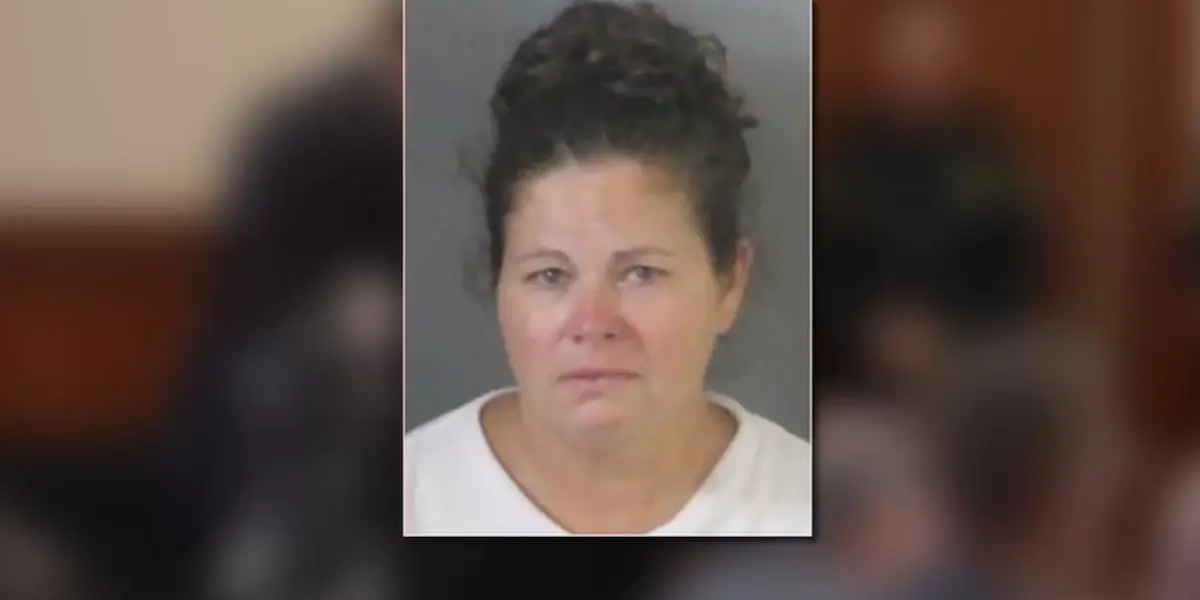
In a decision with far-reaching implications for criminal jurisprudence, neurocognitive science, and parental liability, Florida’s First District Court of Appeals has overturned the conviction of Rhonda Jewell. On Wednesday, October 2, 2026, the appellate court ruled that the murder and severe manslaughter charges brought against Jewell—following the tragic death of an infant left in a hot vehicle—were unlawful.
Jewell, a North Florida babysitter, was sentenced in 2024 to 17 years in state prison. Her defense team consistently maintained that the death of the 10-month-old child, Ariyah, was not the result of criminal intent or reckless disregard, but rather a catastrophic cognitive failure known scientifically as "Forgotten Baby Syndrome."
The appellate court’s ruling challenges the growing national trend of prosecuting caregivers for vehicular hyperthermia deaths. By declaring that a murder-related charge was an unlawful application of the statute under these specific circumstances, the First District Court of Appeals has drawn a distinct legal boundary between criminal culpability and tragic, involuntary human error. This investigative report provides an exhaustive analysis of the case, the scientific and legal arguments that shaped the appeal, and the broader societal implications of this landmark decision.
Detailed Chronology
The legal battle surrounding Rhonda Jewell spans more than three years, moving from a quiet North Florida neighborhood to the state’s highest appellate halls.
+-------------------------------------------------------------------------+
|                                CHRONOLOGY                               |
+-------------------------------------------------------------------------+
|  July 2023:                                                             |
|  Rhonda Jewell is arrested in Baker County, FL, following the death     |
|  of 10-month-old Ariyah inside a hot vehicle.                           |
+-------------------------------------------------------------------------+
|  Late 2023 - Early 2024:                                                |
|  Prosecution charges Jewell with aggravated manslaughter and            |
|  third-degree murder, alleging criminal negligence.                     |
+-------------------------------------------------------------------------+
|  Mid-2024:                                                              |
|  Trial concludes with a conviction. Jewell is sentenced to 17 years     |
|  in state prison. Defense immediately files an appeal.                  |
+-------------------------------------------------------------------------+
|  October 2, 2026:                                                       |
|  Florida’s First District Court of Appeals reverses the conviction,     |
|  ruling the murder-related charges unlawful.                            |
+-------------------------------------------------------------------------+
The Incident: July 2023
On a sweltering afternoon in July 2023, in Macclenny, Florida, Rhonda Jewell was tasked with babysitting several children, including 10-month-old Ariyah. Jewell picked up the infant from her mother and drove to a residence where she was watching other children. Upon arriving, Jewell parked the vehicle, entered the home, and began her daily duties.
Believing she had brought all the children inside, Jewell remained unaware that Ariyah was still secured in her rear-facing car seat in the back of the SUV. Temperatures in North Florida that day exceeded 90°F, causing the interior temperature of the closed vehicle to skyrocket to over 130°F within minutes.
It was not until the infant’s mother arrived several hours later to pick up her child that Jewell realized the catastrophic mistake. Emergency responders were called immediately, but Ariyah was pronounced dead at the scene due to extreme hyperthermia.
The Arrest and Initial Prosecution: 2023–2024
The public and legal backlash was swift. Local law enforcement arrested Jewell, and the State Attorney’s Office pursued severe charges, including aggravated manslaughter of a child and third-degree murder (defined in Florida as an unintentional killing occurring during the commission of a non-violent felony, in this case, child neglect).
The prosecution painted a picture of extreme, culpable negligence. They argued that as a paid caregiver, Jewell had a heightened duty of care and that forgetting a child in a vehicle for several hours crossed the line from a simple mistake to criminal depravity.
The Trial and Sentencing: 2024
During the 2024 trial, the defense introduced expert testimony regarding the cognitive mechanics of memory lapses under stress and routine shifts. However, the emotional weight of the tragedy heavily influenced the proceedings. The jury returned a guilty verdict, and the trial judge sentenced Jewell to 17 years in state prison.
Jewell’s defense team immediately initiated the appellate process, asserting that the state had failed to establish the mens rea (guilty mind) required for criminal conviction, and that applying murder or manslaughter statutes to an involuntary cognitive lapse was a misapplication of Florida law.
The Appellate Ruling: October 2, 2026
After more than two years of legal brief submissions and oral arguments, the First District Court of Appeals issued its opinion on October 2, 2026. The appellate panel ruled in favor of Jewell, declaring that the prosecution’s use of child neglect as a predicate felony for a murder or manslaughter charge was unlawful in the absence of evidence showing willful disregard or conscious intent. The court ordered that the conviction be vacated, marking a monumental victory for Jewell and her legal team.
Supporting Context & Metrics
To fully comprehend the significance of the appellate court’s ruling, it is necessary to examine the intersecting fields of cognitive science, Florida statutory law, and national statistics on pediatric vehicular hyperthermia (PVH).
The Neuroscience of "Forgotten Baby Syndrome"
For decades, neuroscientists have studied how otherwise loving, attentive, and responsible caregivers can completely forget a child in the backseat of a car. Dr. David Diamond, a professor of psychology and molecular pharmacology at the University of South Florida and a leading expert on the subject, has identified the biological mechanisms behind this phenomenon.
According to neurocognitive research:
- The Brain’s Dual Memory Systems: The brain relies on two competing systems: the prospective memory (controlled by the prefrontal cortex and hippocampus, responsible for planning and executing new tasks) and the habit memory (controlled by the basal ganglia, responsible for executing routine, repetitive behaviors).
- The "Habit Override": When a caregiver is fatigued, stressed, or experiences a sudden change in routine (such as driving a different route or performing tasks in a different order), the basal ganglia can override the prospective memory. The brain essentially goes on "autopilot," convincing the driver that the child has already been dropped off or brought inside.
- The Lack of Sensory Cues: Rear-facing car seats, placed directly behind the driver’s seat, prevent visual contact. If an infant is asleep and silent, there are no auditory or visual cues to trigger the prospective memory, allowing the false belief of safety to persist for hours.
Legal Standards: Culpable Negligence vs. Simple Negligence
The crux of the appellate court’s reversal lies in the distinction between "simple negligence" (which is handled in civil courts) and "culpable negligence" (which is required for criminal prosecution).
Under Florida law:
- Simple Negligence: A failure to exercise the degree of care that a reasonable person would take in a similar situation.
- Culpable Negligence: Conduct of a gross and flagrant character, showing a reckless disregard for human life, safety, or the rights of others. It requires a state of mind equivalent to intentional wrongdoing or an entire absence of care that suggests a conscious indifference to consequences.
The First District Court of Appeals determined that forgetting a child due to an involuntary cognitive lapse, while devastatingly tragic, does not meet the high threshold of "culpable negligence" or "willful child neglect." Consequently, using such an accident to anchor a third-degree murder or manslaughter charge was deemed an unlawful application of the statute.
Statistical Overview: Pediatric Vehicular Hyperthermia (PVH)
Data compiled by NoHeatstroke.org, a research project run by the Department of Meteorology & Climate Science at San Jose State University, highlights the scale of this issue in the United States.
PEDIATRIC VEHICULAR HYPERTHERMIA (PVH) DEATHS BY CIRCUMSTANCE (U.S.)
===================================================================
[||||||||||||||||||||||||||||||||||||||||] 53% - Forgotten by caregiver
[|||||||||||||||||||||] 25% - Gained access to vehicle on their own
[|||||||||||||||] 20% - Knowingly left by caregiver
[|] 2% - Unknown circumstances- Florida’s Position: Florida consistently ranks as one of the states with the highest number of hot car deaths in the nation, second only to Texas, due to its subtropical climate and prolonged high temperatures.
- The Criminalization Dilemma: Nationally, approximately 60% of cases involving children forgotten in vehicles do not result in criminal charges, as prosecutors often recognize the lack of intent and the profound grief of the families. However, the remaining 40% face highly inconsistent prosecution, with charges ranging from child endangerment to involuntary manslaughter and murder, depending on the jurisdiction and public pressure.
Official Statements
Following the release of the appellate court’s ruling, key figures from both sides of the case issued formal statements reflecting the intense emotional and legal stakes involved.
The Defense Team
Attorneys representing Rhonda Jewell expressed profound relief and praised the court for prioritizing legal and scientific integrity over public pressure.
"We are deeply grateful to the First District Court of Appeals for their thorough and courageous review of this case. The court has rightly recognized that tragedy is not synonymous with criminality. Rhonda Jewell has lived with the agonizing weight of this accident every single day. Sending her to prison for 17 years did not bring back young Ariyah; it merely compounded a terrible tragedy. This ruling restores the necessary legal boundaries of mens rea and acknowledges the scientific reality of cognitive failure."
The Prosecution and State Representatives
While the State Attorney’s Office expressed disappointment with the appellate decision, they reiterated their commitment to protecting vulnerable children.
"While we respect the appellate court’s authority, we are profoundly disappointed by this ruling. Our office brought these charges in a good-faith effort to seek justice for 10-month-old Ariyah, whose life was cut tragically short due to a failure of care. We believe that caregivers must be held strictly accountable when their actions—or lack thereof—result in the death of a child. We will review our legal options, including a potential appeal to the Florida Supreme Court."
Advocacy and Scientific Groups
Organizations advocating for hot car safety and neurocognitive education welcomed the ruling as a step toward preventative, rather than punitive, solutions.
"Prosecuting caregivers for involuntary memory failures does nothing to prevent the next tragedy. The brain is fallible, and no amount of threat of prison can override a biological lapse under stress. This ruling underscores the urgent need for technological solutions—such as mandatory backseat sensors in all vehicles—rather than the counterproductive criminalization of grieving families and caregivers."
Future Outlook
The appellate court’s ruling in favor of Rhonda Jewell is expected to have a cascading effect on both Florida law and national legal strategies regarding hot car deaths.
Establishing Legal Precedent
By declaring the murder-related charge unlawful, the First District Court of Appeals has set a binding precedent for lower courts within its jurisdiction. Prosecutors in Florida will now face a significantly higher burden of proof if they attempt to charge caregivers with felony-grade offenses for accidental hot car deaths. To secure a conviction, the state must prove that the caregiver acted with conscious, willful disregard for the child’s life—a standard that is nearly impossible to meet in genuine cases of "Forgotten Baby Syndrome."
Acceleration of Technological Mandates
As courts increasingly reject punitive criminal measures for cognitive accidents, the focus is shifting toward legislative and technological solutions.
+-------------------------------------------------------------------------+
|                        PREVENTATIVE SOLUTIONS                           |
+-------------------------------------------------------------------------+
|  1. Federal Regulations:                                                |
|     Implementation of the "Hot Cars Act" provisions, requiring new      |
|     vehicles to be equipped with auditory and visual backseat alerts.   |
+-------------------------------------------------------------------------+
|  2. Aftermarket Technology:                                             |
|     Widespread adoption of smart car seat clips and sensor-enabled      |
|     cushions that sync with smartphone applications.                    |
+-------------------------------------------------------------------------+
|  3. Institutional Protocols:                                            |
|     Daycare centers and preschools implementing mandatory "absence      |
|     checks" where parents are immediately notified if a child fails     |
|     to arrive by a designated time.                                     |
+-------------------------------------------------------------------------+
The Philosophical Shift in Criminal Justice
The Jewell ruling represents a crucial pivot point in the ongoing philosophical debate within the American justice system: When does a tragic accident warrant criminal punishment?
Legal scholars argue that punishing individuals for involuntary cognitive lapses undermines the fundamental purpose of criminal law, which is to deter willful misconduct and rehabilitate offenders. Because "Forgotten Baby Syndrome" is an involuntary neurological event, the threat of imprisonment cannot act as a deterrent.
As society grapples with the devastating loss of children in hot cars, the decision by Florida’s First District Court of Appeals serves as a stark reminder that the legal system must remain anchored in objective standards of intent and law, even in the face of unspeakable tragedy.

0 Comments