
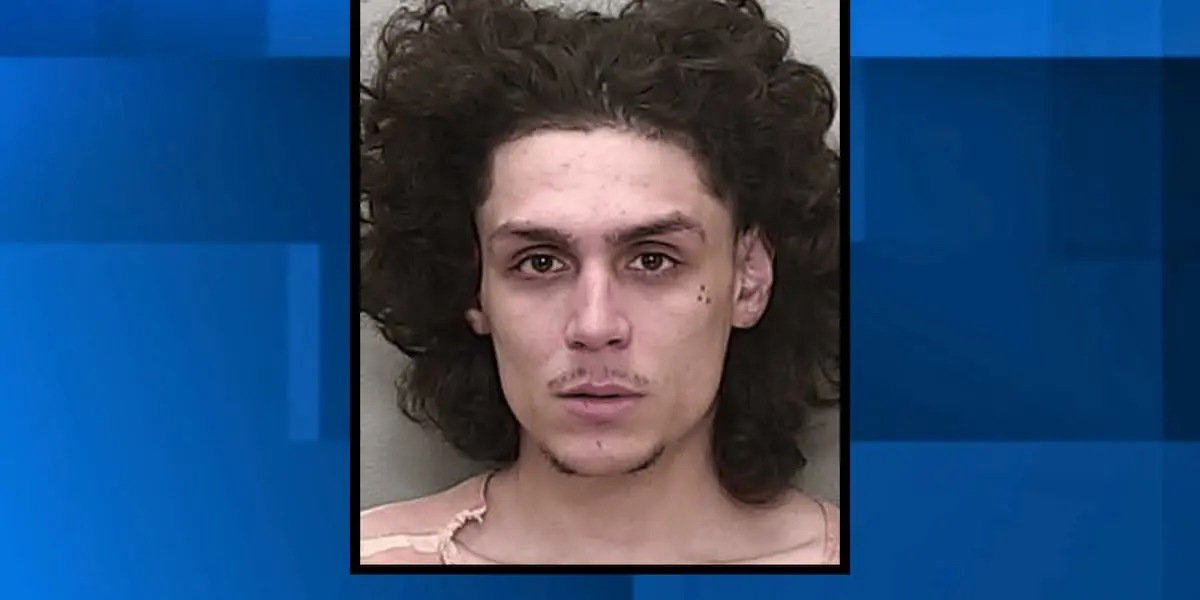

OCALA, Fla. — In a resolution to a high-stakes narcotics prosecution that laid bare the lethal realities of the modern opioid crisis, a 27-year-old Marion County man has been sentenced to ten years in state prison. The sentencing follows a dramatic legal pivot brought on by a hopelessly deadlocked jury, the declaration of a mistrial, and a subsequent plea agreement that traded the possibility of a life sentence for a guaranteed decade behind bars.
Court records show that Eligio Cintron Perez entered a plea of no contest on Friday to a reduced charge of manslaughter. The conviction directly addresses the April 2023 death of 22-year-old Simon Dotson, a young Marion County resident whose life was cut short by acute fentanyl toxicity. What began as a capital prosecution aiming to establish accountability for drug-induced homicide ultimately concluded with a negotiated plea, underscoring the formidable hurdles prosecutors face when trying complex drug-distribution fatality cases before a jury.
Executive Overview
The case against Eligio Cintron Perez served as a bellwether for local prosecutors in Central Florida attempting to aggressively combat the influx of illicit fentanyl through the state’s severe penal statutes. Initially, Perez faced capital-level charges under the legal framework holding drug dealers directly responsible for fatalities caused by the substances they distribute.
However, the trial—presided over by Circuit Judge Steve Rogers—stalled mid-week when the empanelled jurors declared themselves completely unable to reach a unanimous decision. Faced with the prospect of an expensive, uncertain retrial, the state and the defense forged an agreement. By pleading no contest to manslaughter, Perez accepted a ten-year prison sentence, bringing a definitive, if contested, close to a tragedy that devastated Dotson’s family and friends.
This comprehensive report examines the chronology of the case, the mechanics of the trial and subsequent mistrial, the broader public health and legal context of fentanyl-related prosecutions in Florida, and the shifting landscape of accountability for street-level narcotics dealers.
Detailed Chronology: From Tragic Overdose to Courtroom Resolution
The Incident: April 2023
The events culminating in Friday’s sentencing trace back to April 2023 in Marion County. According to investigative files and statements from the Office of the State Attorney, 22-year-old Simon Dotson ingested a substance provided by Eligio Cintron Perez. Within hours, the young man exhibited signs of acute medical distress. Emergency responders arrived too late, and Dotson was pronounced dead at the scene.
Subsequent toxicological testing confirmed the presence of fentanyl, a synthetic opioid roughly 50 to 100 times more potent than morphine, in Dotson’s system. Local law enforcement launched an immediate investigation, tracing the supply chain back to Perez. Investigators gathered digital evidence, witness testimonies, and forensic reports connecting Perez directly to the distribution of the fatal dose. Consequently, the state attorney’s office filed formal charges, treating the distribution not merely as a routine narcotics offense, but as a direct driver of homicide.
The Trial and Deadlock: Wednesday
The courtroom battle commenced earlier this week before Judge Steve Rogers. For days, prosecutors presented a narrative built on digital communications, forensic evidence, and expert testimony aimed at convincing the jury that Perez knowingly provided the fentanyl that ended Dotson’s life.
Under Florida law, charging a defendant with death caused by the distribution of a controlled substance carries severe penalties, often classified similarly to capital felonies or life-imprisonment offenses. The prosecution argued that dealers must bear the ultimate criminal responsibility for the lives claimed by their product.
Conversely, the defense challenged the exclusivity of the state’s evidentiary chain, questioning the precise mechanics of the transaction and whether intervening factors or alternative sources could have contributed to the tragic outcome.
Deliberations proved contentious. After hours behind closed doors, the jury sent word to Judge Rogers that they were hopelessly deadlocked. The panel was split on three distinct options:
- Finding Perez guilty of the capital offense of death caused by fentanyl;
- Finding him guilty of the lesser-included charge of manslaughter; or
- Acquitting him entirely.
Recognizing that further deliberation would be unproductive and risk a coerced verdict, Judge Rogers declared a mistrial on Wednesday, effectively resetting the legal board.
The Plea and Sentencing: Friday
Rather than preparing for a costly and unpredictable second trial, the prosecution and defense engaged in expedited negotiations. The reality of a divided jury often signals to the state that securing a unanimous conviction on the highest charge is an uphill battle.
On Friday, Eligio Cintron Perez formally changed his plea. By entering a no-contest plea to manslaughter, Perez bypassed a formal admission of guilt while accepting the legal consequences of the conviction. Judge Rogers accepted the plea and handed down the mandated sentence: ten years in a Florida state correctional facility.
Supporting Context & Metrics: The Fentanyl Crisis in Florida
To fully understand the weight of the Perez sentencing, one must examine the sweeping socioeconomic and public health backdrop against which these legal dramas unfold. Marion County, much like the rest of the Sunshine State, has found itself on the front lines of an unprecedented opioid epidemic.
The Lethality of Fentanyl
Illicitly manufactured fentanyl has fundamentally altered the drug landscape. Because it is cheap to produce, highly addictive, and immensely potent, transnational cartels and local distributors routinely mix it into other illicit substances—such as cocaine, methamphetamine, and counterfeit prescription pills—often without the end-user’s knowledge.
According to data compiled by the Centers for Disease Control and Prevention (CDC) and the Florida Department of Law Enforcement (FDLE), synthetic opioids remain the leading driver of overdose fatalities nationwide and statewide.
- Potency Metrics: A lethal dose of fentanyl can be as small as two milligrams, roughly equivalent to a few grains of salt.
- Prosecutorial Shifts: In response to the staggering death toll, Florida lawmakers and prosecutors have increasingly leaned on "drug-induced homicide" and aggravated manslaughter statutes. These laws allow prosecutors to bypass standard drug-possession or low-level distribution sentencing guidelines, treating the dealer as a killer when their product causes a fatal overdose.
The Legal Tightrope of Overdose Prosecutions
While the public often clamors for maximum accountability when a young life like Simon Dotson’s is lost, legal scholars point out the intrinsic difficulties of securing convictions in these cases. Juries frequently grapple with questions of proximate cause:
- Did the accused directly administer the drug, or were there intermediaries?
- Did the victim knowingly take the risk, or were they deceived about the substance’s composition?
- Can toxicology and digital forensics definitively link one specific dealer to the fatal dose, especially in cases where users may have multiple sources?
The deadlock in the Perez trial exemplifies these exact judicial friction points. The compromise of a ten-year manslaughter sentence reflects both the state’s desire to secure a firm felony conviction and the defense’s effort to mitigate the risk of a life sentence.
Official Statements and Legal Implications
While dramatic courtroom press conferences were largely absent immediately following Friday’s proceedings, the implications of the case resonate deeply within the legal community of the Fifth Judicial Circuit, which encompasses Marion, Citrus, Hernando, Lake, and Sumter counties.
Law enforcement agencies across Central Florida have consistently maintained a zero-tolerance stance regarding fentanyl distribution. Marion County Sheriff’s Office (MCSO) officials, whose investigative division built the case against Perez, have repeatedly emphasized that individuals who peddle these poisons will be hunted down and prosecuted to the fullest extent of the law, regardless of whether the charges end up as capital felonies or negotiated manslaughter pleas.
Legal analysts observing the case note that the ten-year sentence sends a clear message to street-level dealers: the judicial system will not treat fatal overdoses as mere administrative drug violations. However, critics of overly aggressive drug-induced homicide laws argue that such prosecutions can sometimes deter individuals from calling 911 during an active overdose out of fear of facing murder charges themselves—a dynamic that public health advocates continuously strive to counter through Good Samaritan laws.
Future Outlook
As Eligio Cintron Perez begins processing his decade-long sentence within the Florida Department of Corrections, the ripples of Simon Dotson’s death in April 2023 continue to impact the community.
For the judicial system in Marion County, the case serves as a masterclass in the unpredictable nature of jury trials involving complex forensic evidence. It highlights the strategic calculus prosecutors must perform when faced with a deadlocked jury: risk a retrial with an uncertain outcome or secure a decade-long prison term that guarantees accountability and spares a grieving family the trauma of reliving the tragedy in a second courtroom battle.
Moving forward, local prosecutors are expected to continue bringing aggressive charges against fentanyl dealers, utilizing every tool in the statutory book. Yet, the Perez case stands as a cautionary reminder that even with robust evidence and dedicated investigative work, securing justice in the shadow of the opioid crisis remains a complex, high-stakes legal frontier.

0 Comments