

Executive Overview
In the high-stakes, high-impact world of American football, a silent crisis has loomed over the sport for decades. Chronic traumatic encephalopathy (CTE)—a progressive, degenerative brain disease linked directly to repeated blows to the head—has cast an institutional and moral shadow over the National Football League (NFL) and collegiate athletics. Historically, this devastating condition could only be confirmed posthumously, leaving living athletes, military veterans, and trauma survivors to navigate a terrifying labyrinth of cognitive decline, behavioral volatility, and mood disorders without a definitive diagnosis.
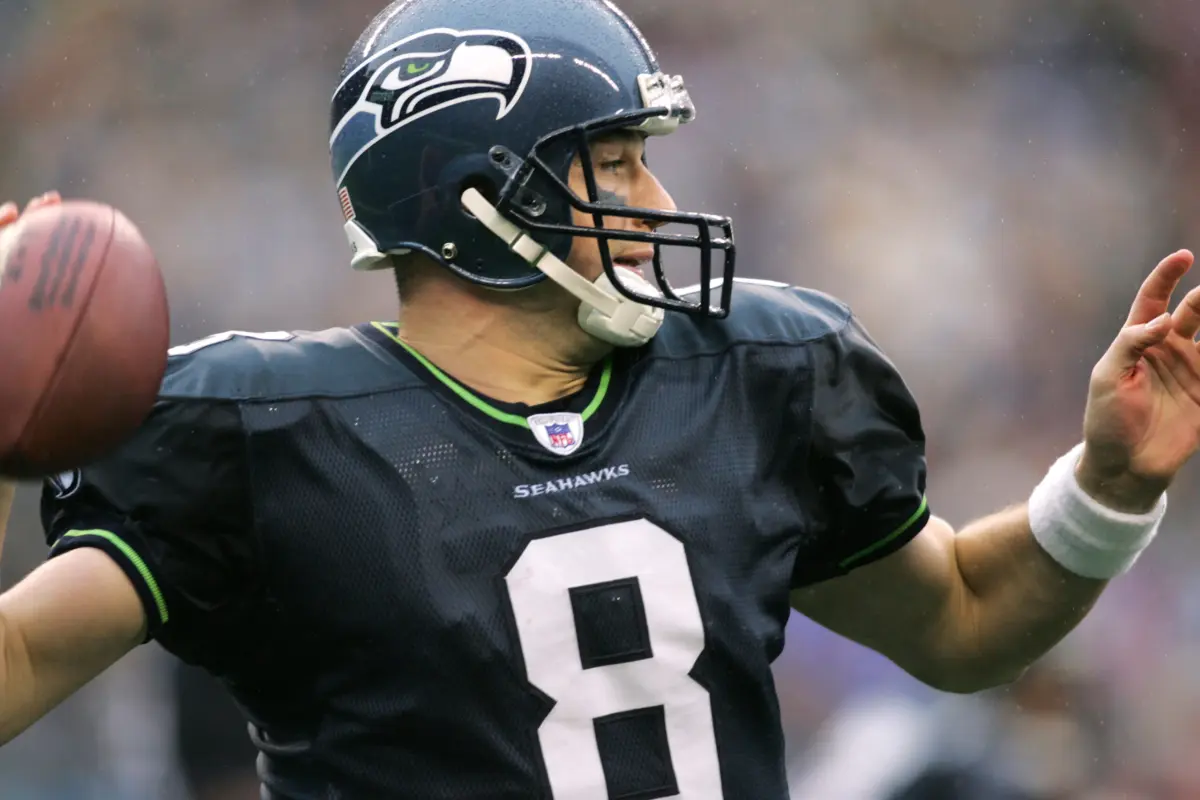
That paradigm may finally be shifting. A pioneering, multi-institutional clinical study backed by a landmark $15 million grant from the National Institutes of Health (NIH) is aggressively working to crack the code on diagnosing CTE in living patients. Among the high-profile figures stepping forward to volunteer is former three-time Pro Bowl NFL quarterback Matt Hasselbeck.
At 50 years old, Hasselbeck spent two intensive days undergoing a battery of advanced neurological tests, cognitive evaluations, and brain imaging scans at Boston University. Though he emerged from a 17-year NFL career, four years at Boston College, and a lifetime of athletic pursuits feeling relatively healthy, his participation is part of a broader, vital scientific crusade: identifying specific biological markers that separate CTE from other neurodegenerative conditions like Alzheimer’s disease. By comparing the neurological profiles of former contact-sport athletes against non-athletes with Alzheimer’s, researchers hope to achieve what was once deemed impossible, paving the way for targeted therapeutic interventions and transforming the future of sports medicine.
Detailed Chronology: From the Gridiron to the Clinical Lab
To understand the gravity of the current research initiative, one must trace the timeline of how head trauma was handled in sports and how modern science has fought to catch up.
The Era of Silence (Pre-2000s)
For generations, football culture was defined by an unwritten code of hyper-masculinity, resilience, and pain tolerance. Throughout Matt Hasselbeck’s childhood, high school years, and early football development, concussions were routinely dismissed as "dings" or "bell-ringers."
Hasselbeck himself sustained three distinct concussions before ever stepping foot on a collegiate campus—suffered across football, basketball, and ice skating. In locker rooms of the late 20th century, the cultural expectation following a violent collision was absolute denial of vulnerability. The universal, expected response to a devastating blow to the head was simple: "I’m good."
The Awakening and Recognition of CTE (2002–2015)
The scientific landscape began to transform in 2002 when forensic pathologist Dr. Bennet Omalu examined the brain of legendary Pittsburgh Steelers center Mike Webster. Dr. Omalu discovered abnormal accumulations of a protein called tau, coining the neuropathological profile of CTE.
Over the next decade, the pathology was identified in dozens of deceased football players, including Pro Football Hall of Famers Junior Seau and Ken Stabler, as well as former New England Patriots tight end Aaron Hernandez.
During the latter half of Hasselbeck’s professional career—which spanned from 1998 to 2015 across stints with the Green Bay Packers, Seattle Seahawks, Tennessee Titans, and Indianapolis Colts—the institutional culture surrounding head injuries underwent a radical, observable shift. By the mid-2010s, the locker room environment had evolved from enforced silence to a space where players were increasingly encouraged to report potential concussions honestly.
The Modern Frontier: NIH Funding and Clinical Breakthroughs (2025–Present)
Despite cultural shifts in the NFL and collegiate ranks, the diagnostic bottleneck remained: CTE could only be verified through an autopsy of brain tissue.
This barrier triggered an infusion of capital and scientific resources. In 2025, the National Institutes of Health awarded $15 million to spearhead a nationwide, multi-site clinical study aimed at discovering in-life biomarkers for CTE. Sites were established in Boston, California, Arizona, Texas, and Florida, bringing together top-tier researchers to map out the subtle, yet critical, differences between CTE and Alzheimer’s disease. In July 2026, this ongoing study drew national headlines as figures like Matt Hasselbeck and Division III linebacker Bryan Savage subjected themselves to rigorous testing to build the clinical database necessary to save future generations of athletes.
Supporting Context & Metrics: The Science of the Search
The ongoing clinical investigation into CTE relies on an intricate framework of comparative medicine, biomarker tracking, and advanced neuroimaging.
The Diagnostic Dilemma: CTE vs. Alzheimer’s
Michael Alosco, co-director of clinical research at the Boston University CTE Center and principal investigator for the Boston research site, notes that researchers initially attempted to apply established Alzheimer’s disease diagnostic frameworks to CTE. That approach ultimately failed.
"We’ve applied what we’ve known worked for Alzheimer’s disease, but we’ve learned it does not work for CTE," Alosco explains. While both are neurodegenerative disorders that can cause memory loss, depression, and severe behavioral changes, they are fundamentally distinct diseases driven by different underlying biological mechanisms and protein manifestations.
To map these discrepancies, the NIH-backed study recruits two distinct cohorts of participants:
- Athletes: Individuals who played professional or collegiate contact and collision sports.
- Controls: Individuals diagnosed with Alzheimer’s disease who possess no history of contact sports or repetitive head impacts.
By contrasting these populations, scientists hope to isolate the specific protein markers unique to CTE.
The Testing Protocol
For participants like Matt Hasselbeck and Bryan Savage, the evaluation process is both comprehensive and humbling. Volunteers undergo a multi-day examination that includes:
- Neuropsychological Testing: Mental agility challenges, including counting backward from 100 by sevens and reciting the alphabet backward, designed to evaluate processing speed, executive function, and working memory.
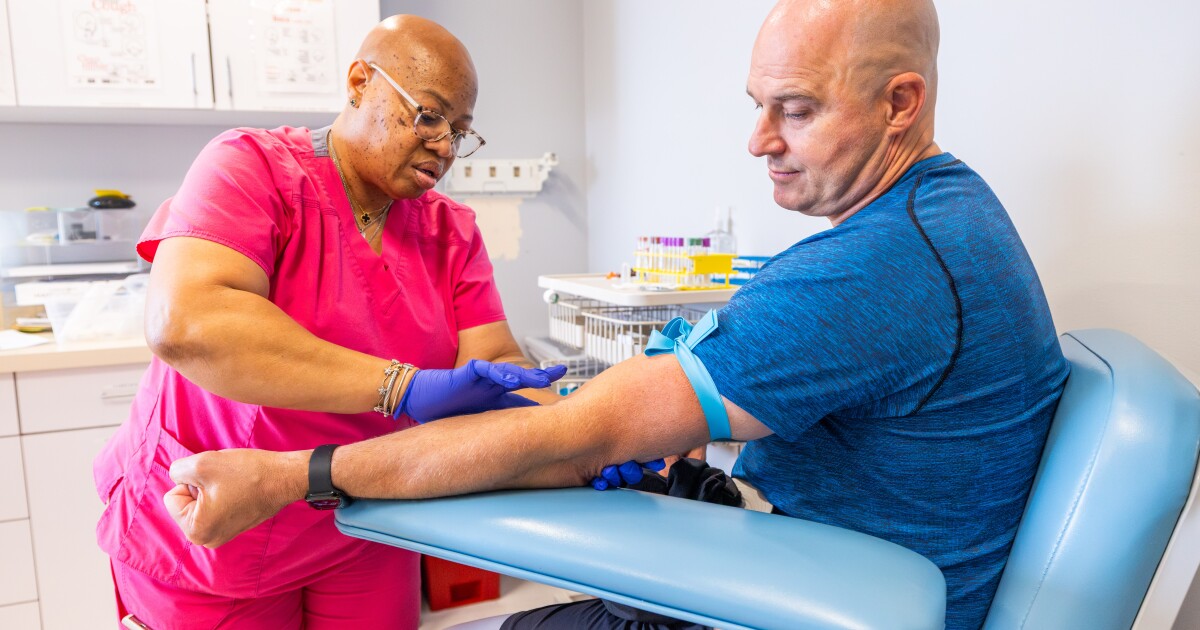
- Biomarker Extraction: Blood draws to analyze circulating proteins and inflammatory markers.
- Structural Neuroimaging: Advanced Magnetic Resonance Imaging (MRI) scans to measure structural brain integrity and detect volume loss.
- Functional Imaging: Positron Emission Tomography (PET) scans utilizing safe, low-dose radioactive tracers to map out active brain function and metabolic activity.
The Scope of the Crisis
The urgency behind these metrics cannot be overstated. Pathological studies have confirmed CTE in more than 100 former NFL players, alongside countless athletes from other contact sports, military veterans exposed to blast waves, and individuals who experienced repetitive domestic trauma.

The symptoms—ranging from memory impairment and explosive rage to profound clinical depression—frequently mimic other psychiatric and neurological conditions, rendering in-life diagnoses a matter of clinical guesswork. According to Nicholas Ashton, a principal investigator at the Arizona study site, unlocking an accurate in-life diagnostic tool will revolutionize the field in the exact same manner it transformed Alzheimer’s therapeutics.
Official Statements and Perspectives
The human element of this scientific endeavor is anchored by the personal testimonies of the athletes and researchers on the front lines.
Matt Hasselbeck: Standing Up for His Teammates
Reflecting on his motivation to spend two days undergoing invasive brain scans at Boston University, Matt Hasselbeck emphasized a sense of camaraderie and obligation to those who bore the brunt of the physical violence on the gridiron.
"They need guys like me—they need people who are feeling good to step up to the plate and volunteer," Hasselbeck said. "I played quarterback, so I didn’t take some of the hits that a lot of my teammates took. But the guys who were blocking for me, or playing special teams, or trying to get the ball back for me on defense, I wanted to do something. They had my back, so in a way I’d like to have their back."
Despite walking into the clinic feeling entirely healthy, Hasselbeck admitted that the process of examining one’s own brain imagery is an emotionally weighty experience.
"I’ve got a healthy respect for people who are dealing with serious brain trauma, whether it’s tumors or cancer," he noted. "I walked in there feeling completely healthy and you still get a little anxious when you’re doing a brain scan, an MRI. You come out and you’re looking at your brain."
Beyond his active participation in the study, Hasselbeck has committed to donating his brain for post-mortem research, cementing a decades-long legacy of advocating for player safety alongside the NFL and the NFL Players Association (NFLPA).
Bryan Savage: A Division III Perspective
The study is not restricted to elite, multi-millionaire NFL quarterbacks. Bryan Savage, a 56-year-old former linebacker from Union College—an NCAA Division III school in Schenectady, New York—traveled to Boston to participate and also committed to posthumous brain donation.
Having navigated unexplained bouts of depression and ADHD in middle age, Savage sought answers regarding his cognitive health.
"I was interested because of some of the things that I’ve gone through physically and mentally," Savage said. "You wonder if it’s just getting older, a midlife crisis or if it’s related to any brain trauma I might have had playing football."
Savage expressed immense relief upon learning his brain scans appeared normal for a man in his mid-50s, prompting him to encourage former teammates—many of whom are grappling with sudden personality shifts, apathy, and cognitive fog—to join the study.
"I’ll talk to some of my former friends and they’re going through a lot of the same things," Savage shared. "They’ll say—’Why do I feel like this? I’ve never been depressed. Things that I used to be passionate about I don’t care about anymore.’"
Scientific Optimism: Michael Alosco and Nicholas Ashton
Researchers leading the charge express cautious optimism that the scientific community is nearing a monumental breakthrough.
"While we’ve been studying CTE for a while, we haven’t had the point where we’ve had all this data during life, that have also donated their brain. We need to get to that place," Dr. Alosco stated. "I’m really hopeful about detecting CTE—I don’t think that’s too distant. Once we can accurately diagnose, that’s when we can start some treatment trials."
Nicholas Ashton echoed this sentiment, emphasizing the power of collective participation: "The more people involved, the more information we get and the closer we get to an answer. Treatments exploded with Alzheimer’s once we were able to accurately diagnose. We’re trying to get to the same spot with CTE."
Future Outlook
The trajectory of contact sports hangs in the balance of discoveries currently being forged within research hubs in Boston, Phoenix, and across the United States.
As clinical researchers analyze data streams from hundreds of living athletes and non-athlete control groups, the timeline toward an accurate, in-life diagnostic test for CTE draws shorter. The implications of this research extend far beyond the professional stadiums of the NFL; they touch every youth football league, high school program, collegiate athletic department, and military training facility where head trauma is an occupational hazard.
By fostering a culture where former players like Matt Hasselbeck and Bryan Savage willingly subject themselves to rigorous cognitive scrutiny—and pledge their biological tissue to science—the sports world is finally confronting its most invisible and dangerous adversary. When the breakthrough finally arrives, it will not only revolutionize neurodegenerative medicine but will fulfill a profound promise: protecting the mental futures of those who gave everything to the game.

0 Comments