

Executive Overview
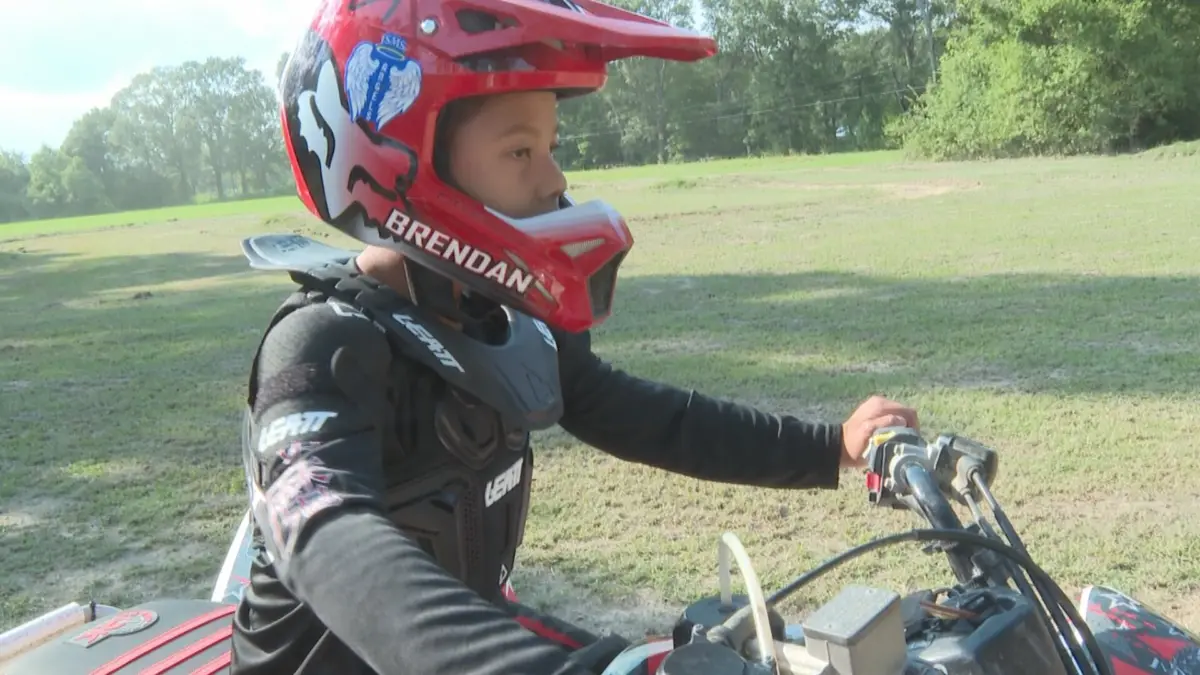
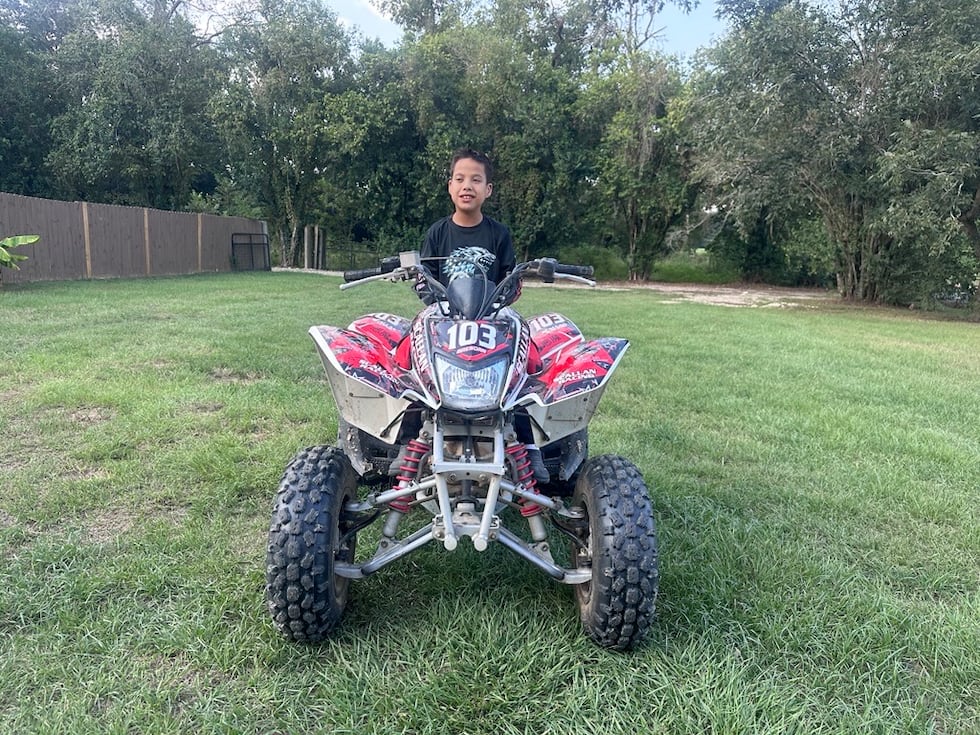
MANSURA, La. — In the quiet bayou country of Mansura, Louisiana, the roar of a Honda ATV engine shatters more than just the afternoon silence; it shatters medical limitations. Ten-year-old Brendan Scallan is not your average competitive motor sports athlete. He is the only known diagnosed case of FOXP1 syndrome in the entire state of Louisiana—a profoundly rare, complex neurodevelopmental disorder that geneticists once claimed would permanently relegate him to virtual racing on a video screen.
Instead, Brendan has captured podium finishes, crosses checkered flags with unbridled joy, and serves as the beating heart of a family-led crusade to accelerate life-changing medical science. Alongside his parents, Nico and Sheila Scallan, Brendan anchors Scallan Wolfpack Racing, an organization transforming high-octane dirt track thrills into an advocacy megaphone for a condition that remains largely unknown to the general public.
Today, the Scallan family’s mission extends far beyond the racing arena. They have joined a vital international cohort of families partnering with the FOXP1 Medical Research Foundation to fuel a groundbreaking gene therapy initiative currently underway at the University of California, Los Angeles (UCLA). With a specific fundraising benchmark of $6,000 required from each of 50 committed families, the Scallans are turning their personal journey of resilience into a rallying cry for a permanent medical breakthrough.
This in-depth report explores Brendan’s remarkable defiance of medical prognoses, the physiological realities of FOXP1 syndrome, the mechanics of the family’s grassroots advocacy campaign, and the scientific horizon of gene therapy that promises hope not just for one Louisiana boy, but for children worldwide.
Detailed Chronology: From Devastating Diagnosis to the Dirt Track
The Early Years and Milestone Delays
Long before Brendan Scallan ever swung his leg over the frame of an adult-sized Honda ATV, his parents sensed that his developmental trajectory was diverging from the norm. For Sheila Scallan, the realization unfolded in subtle, heartbreaking increments during her son’s early childhood.
"Being a mom, I know when he was growing up, when I noticed that he is not meeting the developmental milestones, and it took me a while really to sink in," Sheila recalls.
In a household where parents dream of passing down their passions—long before Brendan was born, Nico Scallan envisioned teaching his son "dirt bike stuff"—watching a child struggle to hit standard motor and cognitive benchmarks brought profound uncertainty. For years, the family navigated a labyrinth of pediatric appointments, developmental evaluations, and specialized therapies, searching for an underlying cause for Brendan’s delays.
The 2019 Diagnosis and the Doctor’s Limitation
The turning point arrived in 2019, when a team of geneticists formally diagnosed Brendan with FOXP1 syndrome, a rare genetic neurodevelopmental disorder driven by a mutation on the Forkhead box protein P1 (FOXP1) gene. Because medical science was—and remains—in its infancy regarding this specific genetic mutation, the diagnostic news came with a heavy psychological toll.
Nico Scallan recalls a conversation with a specialist that felt like a permanent door slamming shut on his dreams for his son. The geneticist bluntly informed the family that due to the cognitive and motor impacts of FOXP1 syndrome, the only four-wheeler Brendan would ever successfully operate would be one inside a video game.
"It broke my heart when they said that," Nico Scallan admits, reflecting on the bleak prognosis. "So I just let all those dreams go right then and just started wondering what he would be able to do, because it was so new. Nobody knew anything about FoxP1."
The Awakening of the Scallan Wolfpack
Yet, medical textbooks and clinical estimates often fail to account for sheer human will—and paternal intuition. As Brendan matured, his inherent fascination with speed, machinery, and outdoor sports did not fade; it intensified. Refusing to let clinical limitations dictate the boundaries of his son’s childhood, Nico decided to test the boundaries of the doctor’s prediction.
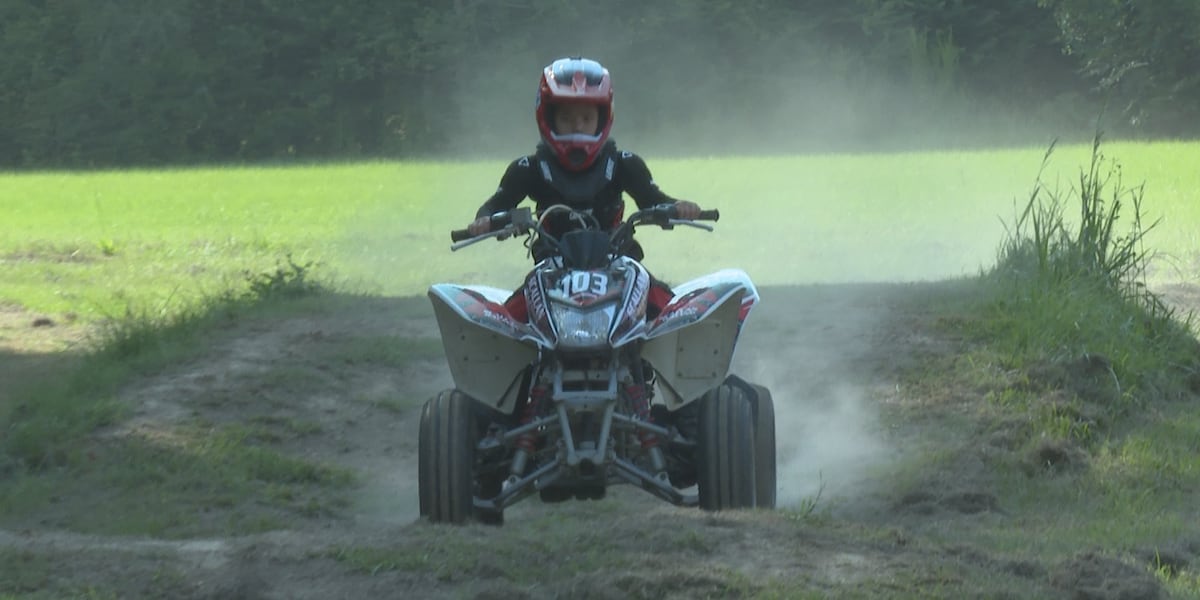
He acquired an adult-sized Honda bike, carefully positioned it into gear, and placed Brendan in the driver’s seat. What happened next instantly rewrote the family’s narrative.
"It was like he was just born to ride it," Nico Scallan says with visible pride.
What began as a tentative backyard test ride quickly blossomed into competitive participation. Brendan adapted immediately to the machine’s mechanics, displaying an intuitive sense of balance, throttle control, and spatial awareness that defied his medical chart. Today, Brendan is a regular competitor on local and regional tracks, consistently crossing finish lines, placing in tournaments, and executing crowd-pleasing maneuvers.
"I want to race Honda in the arena," Brendan declares with a beaming smile, noting his signature move: "I like doing donuts in the Honda."
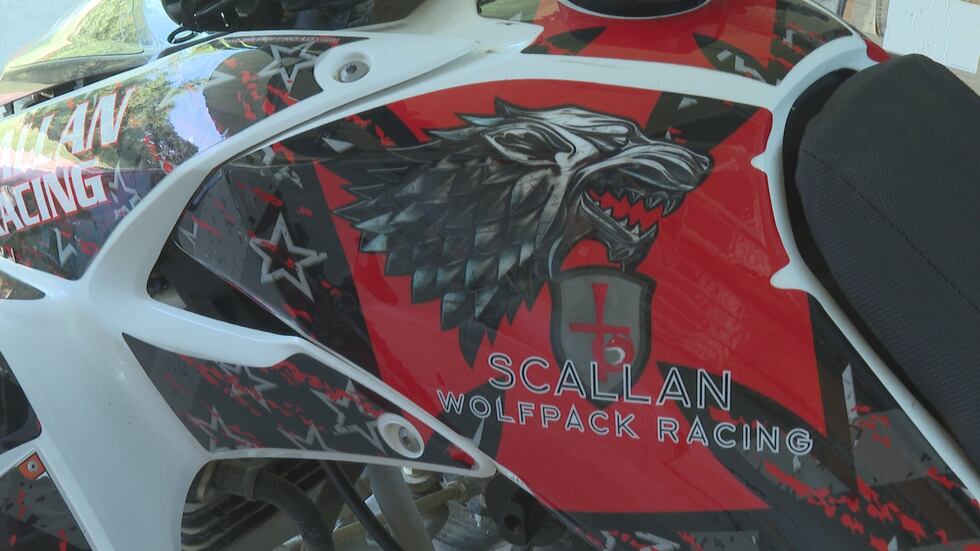
Recognizing the unique platform their son’s racing career provided, the family established Scallan Wolfpack Racing. The racing team serves a dual purpose: it provides Brendan with a supportive, inclusive community where he feels entirely at home, and it acts as a high-visibility billboard for rare disease awareness.
Supporting Context & Metrics: Understanding FOXP1 Syndrome
To fully appreciate the magnitude of Brendan Scallan’s achievements on the racetrack, one must examine the complex science of the condition he battles every day.
What is FOXP1 Syndrome?
FOXP1 syndrome is a rare genetic neurodevelopmental disorder caused by a pathogenic variant, deletion, or mutation of the FOXP1 gene located on chromosome 3 (3p14.1). The FOXP1 gene provides instructions for making a protein that acts as a transcription factor—meaning it binds to specific regions of DNA and regulates the activity of other genes. Because this protein plays a critical role in the embryonic development of the brain, heart, lungs, and other organs, mutations in the gene can disrupt widespread developmental pathways.
Clinically, individuals diagnosed with FOXP1 syndrome typically present with a constellation of symptoms, which can vary widely from patient to patient. Common characteristics include:
- Global Developmental Delay: Delays in achieving motor milestones such as sitting, crawling, and walking.
- Speech and Language Impairments: Significant delays in expressive language, with many individuals experiencing non-verbal communication challenges or severe apraxia of speech.
- Intellectual Disability: Ranging from mild to severe cognitive impairment.
- Autism Spectrum Disorder (ASD) Traits: Sensory processing differences, repetitive behaviors, and social interaction challenges.
- Motor Dyspraxia: Difficulties in planning and executing coordinated physical movements—making Brendan’s proficiency in high-speed ATV racing all the more medically extraordinary.
The Rarity and Isolation of Rare Diseases
In a state of nearly 4.6 million residents, Brendan is recognized by his family and local medical providers as the only known diagnosed case of FOXP1 syndrome in Louisiana. Globally, while thousands of cases have been identified since the syndrome was first characterized in medical literature in the late 2000s, it remains classified as an ultra-rare orphan disease.
This extreme rarity often leaves families isolated, struggling to find local therapists, educators, or physicians who understand the nuanced behavioral and physiological needs of children with FOXP1 mutations. For the Scallan family, transforming their local racing circuit into an awareness campaign has been a vital strategy to combat this isolation.
"I know that FoxP1 is not really known yet, but it is our goal really that when we go to racing that the FoxP1 syndrome, you know, it’s going to be our voice," Sheila Scallan explains.
Official Statements and Institutional Perspectives
The momentum behind Brendan’s story has drawn attention from regional media and medical advocacy networks, highlighting the intersection of grassroots determination and institutional research.
The Parental Perspective: Redefining Possibility
The Scallan household operates on a philosophy of radical inclusion and relentless optimism. Where medical professionals saw insurmountable deficits, Nico and Sheila Scallan chose to look for unchartered potential.
"When we found this [racing community], we knew we found a home and a family for him and she and I just decided to make a whole family thing out of it," Sheila Scallan noted regarding the integration of their family life with competitive racing and advocacy. "We want FoxP1 to be our voice."
Reflecting on the emotional journey from the initial 2019 diagnosis to the roar of today’s engines, Nico Scallan emphasizes the transformative power of letting go of preconceived limitations:
"It broke my heart when they said that [he would only drive in video games]. So I just let all those dreams go right then and just started wondering what he would be able to do… It was like he was just born to ride it."
Medical Research Partnerships and Institutional Scope
While competitive racing provides emotional liberation and public awareness, the ultimate objective for the Scallan family is a medical cure. Institutional efforts are currently coalescing around translational research. Leading academic medical centers, including research laboratories at the University of California, Los Angeles (UCLA), are actively investigating the molecular mechanisms of FOXP1 syndrome.
The FOXP1 Medical Research Foundation serves as the central coordinating body for these scientific investigations, bridging the gap between affected families and translational scientists. According to foundation leadership, while gene therapy development requires rigorous preclinical validation—a process that spans years of meticulous laboratory testing—the blueprint for intervention is actively being drafted.
Future Outlook: The $6,000 Crusade for Gene Therapy
As the medical community edges closer to viable treatments for monogenic neurodevelopmental disorders, funding remains the primary catalyst—and the primary bottleneck—for laboratory progress.
The 50-Family Initiative
The FOXP1 Medical Research Foundation has structured a targeted, highly collaborative funding campaign designed to jumpstart immediate lab testing for gene therapy. The strategy relies on a distributed funding model: if exactly 50 families impacted by FOXP1 syndrome commit to raising or contributing $6,000 each, the cumulative total of $300,000 will provide the immediate financial runway required to initiate crucial laboratory gene therapy testing phases at UCLA and partner institutions.
To support this scientific crusade, the Scallan family has established an official fundraising campaign titled "Brendan’s ATV Crusade Inspires Hope" via GoFundMe. Every dollar raised directly contributes toward securing their family’s block in the 50-family research initiative.
The Scientific Horizon: What Gene Therapy Means for FOXP1
Gene therapy holds unprecedented promise for individuals with single-gene neurodevelopmental disorders like FOXP1 syndrome. Unlike traditional symptomatic treatments—which focus on speech therapy, occupational therapy, and behavioral interventions to manage challenges—gene therapy aims to address the root genetic cause.
By introducing a healthy, functional copy of the FOXP1 gene into target cells using vector delivery systems (such as adeno-associated viruses), researchers hope to restore normal protein expression during critical developmental windows. While scientists caution that clinical translation is a complex, multi-year undertaking requiring stringent safety and efficacy evaluations, the initiation of laboratory testing represents an indispensable first step.
For Nico Scallan, the financial commitment is not merely a donation; it is an investment in his son’s future independence.
"It’d be worth it to us," Nico states firmly.
Racing Toward Tomorrow
On the dirt tracks of Louisiana and across digital advocacy networks, Brendan Scallan continues to accelerate past expectations. Whether he is carving a corner in an arena or executing a celebratory donut in his Honda ATV, the young "FOXP1 warrior" embodies the fierce determination of a family refusing to accept limits.
As the Scallan Wolfpack Racing team travels from event to event, carrying banners for rare disease awareness and pushing toward their $6,000 fundraising goal, they carry with them the hopes of an emerging global community. Through high-octane passion and cutting-edge science, Brendan and his family are not just racing for checkered flags—they are racing toward a cure.
For more information on Brendan’s journey, to follow Scallan Wolfpack Racing, or to contribute to the gene therapy research campaign, visit the official Brendan’s ATV Crusade Inspires Hope GoFundMe page or connect with the family via their dedicated community channels.

0 Comments