In a stunning display of grit, resilience, and late-game execution, the Kentucky Wildcats captured a dramatic 35-34 overtime victory over the No. 10 LSU Tigers on Saturday night in Lexington. Played before a raucous, capacity crowd at Kroger Field, the Southeastern Conference (SEC) thriller lived up to every ounce of its pre-game billing, culminating in a bold, game-winning two-point conversion that will be etched into program lore.
Trailing late in regulation and plagued by missed opportunities, Kentucky (5-1, 3-1 SEC) refused to yield against a heavily favored LSU squad. Quarterback Kenneth Minchey shook off a quiet first half to orchestrate a masterclass after intermission, finishing with 246 yards through the air, the vast majority of which came in the game’s critical moments. Running back C.J. Baxter set the tone early with an explosive 77-yard touchdown scamper on the game’s opening play, ultimately churning out 123 yards and two scores on the ground.
For LSU (4-2, 1-2 SEC), the defeat stings as a profound missed opportunity. Head coach Lane Kiffin’s Tigers held leads in the second half and looked poised to solidify their standing among the nation’s elite. However, untimely turnovers, execution breakdowns in the special teams phase, and an inability to slam the door shut in the closing minutes of regulation came back to haunt them. Quarterback Sam Leavitt played valiantly—accounting for nearly 300 total yards and multiple scores—but critical errors, including a late fumble and an interception, ultimately cracked the door open for Kentucky’s improbable comeback.
The victory marks Kentucky’s second consecutive overtime thriller, mirroring an identical 35-34 escape against South Carolina a week prior, and makes history as the first time the Wildcats have played—and won—back-to-back overtime contests. Operating with a severely depleted defense missing three starting linebackers, two defensive backs, and a key defensive lineman, head coach Will Stein’s team proved that their underdog mentality is more than just bulletin-board material. As the Wildcats prepare to re-enter the national rankings, this unforgettable October night in Lexington signals a seismic shift in the SEC landscape.
Detailed Chronology
Explosive Beginnings and a First-Half Chess Match
The electric atmosphere in Lexington was immediately supercharged just moments after kickoff. On Kentucky’s very first offensive snap, running back C.J. Baxter found a massive seam provided by his offensive line, exploded through the second level, and outran the LSU secondary for a stunning 77-yard touchdown. The rapid strike staked the Wildcats to an early 7-0 lead and sent shockwaves through the Tiger defense, which entered the contest boasting one of the stingiest units in the nation.
LSU, however, quickly steadied the ship. Guided by the dynamic arm and legs of quarterback Sam Leavitt, the Tigers began to methodically dissect a Kentucky defense operating at a severe disadvantage due to injuries. Missing key personnel across all three levels, the Wildcats struggled at times to contain LSU’s multi-pronged rushing attack and vertical passing game. Leavitt settled into a rhythm, distributing the ball effectively to his playmakers and orchestrating long, sustained drives that kept Kentucky’s defense on the field.
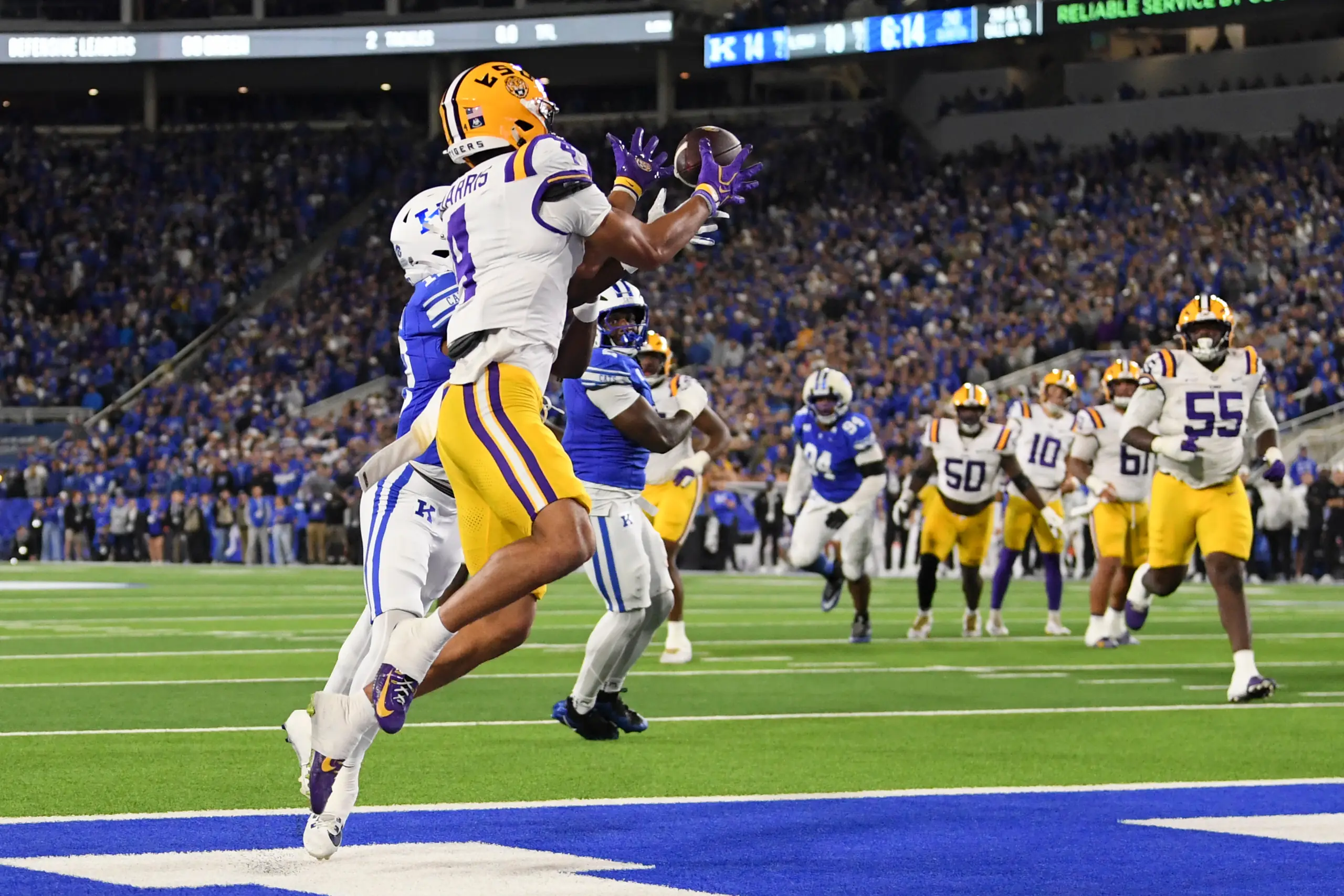
As the first half progressed, LSU’s high-powered offense found its footing. The Tigers countered Baxter’s early heroics with a balanced offensive approach, leaning on powerful runs from Harlem Berry and crisp pass-catching from wideouts like Jackson Harris. A series of strategic adjustments by the LSU coaching staff allowed them to navigate Kentucky’s early blitz packages, ultimately seizing momentum and taking a hard-fought lead into the locker room at halftime.
Momentum Swings and Fourth-Quarter Drama
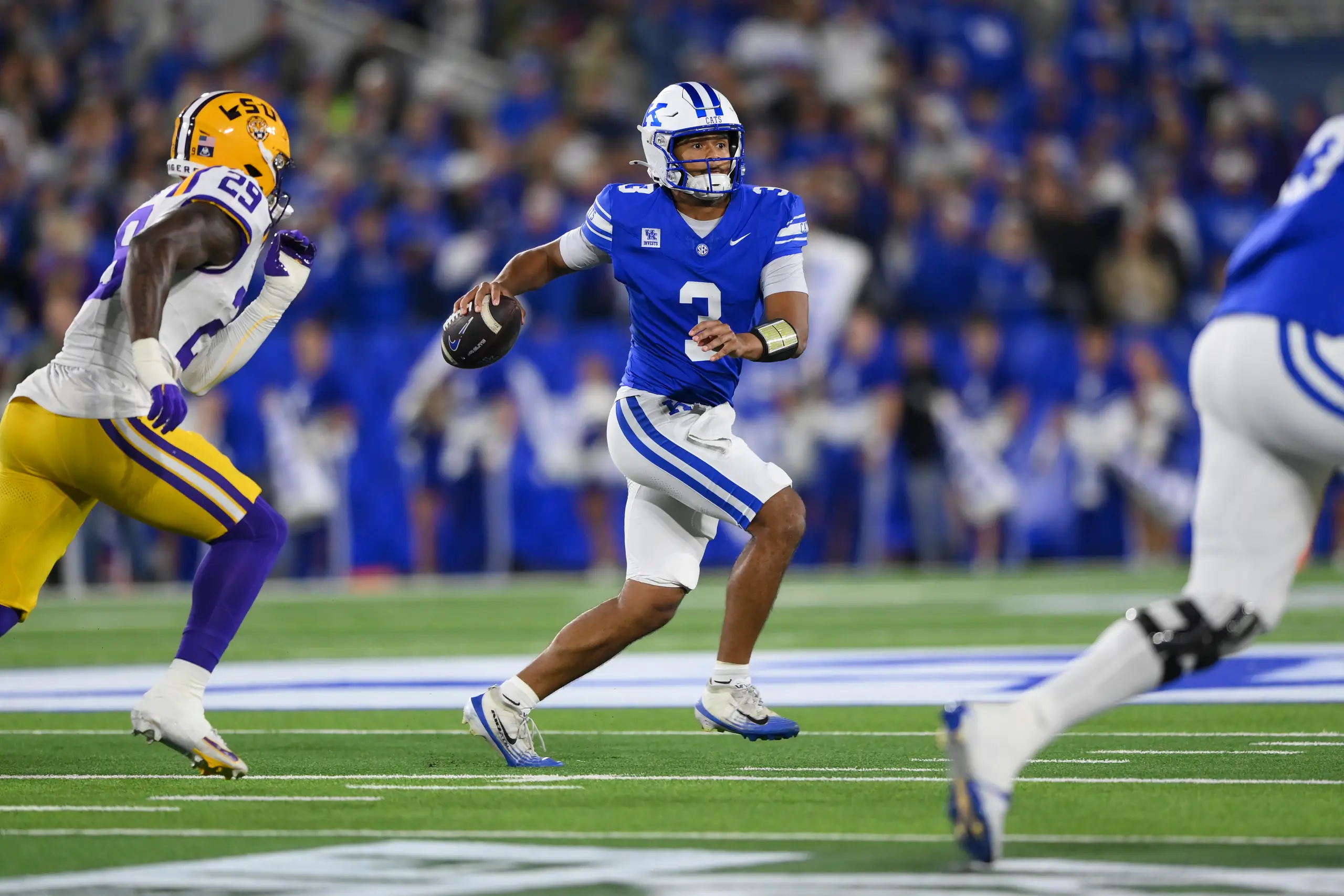
The second half transformed into a heavy-weight prize fight characterized by explosive plays, defensive stands, and escalating tension. Kenneth Minchey, largely contained in the first half as he struggled to find passing windows, emerged as an entirely different player after the break. Minchey began carving up the LSU secondary, amassing 206 of his 246 passing yards in the second half alone as Kentucky turned to a more aggressive aerial attack to claw back into the contest.
The defining moment of the fourth quarter arrived with 9:42 remaining on the clock. In a brilliant piece of trickery, LSU wide receiver Jackson Harris took a backward pass on a gadget play and uncorked a deep, 41-yard touchdown missile downfield to Roman Mothershed. The unorthodox score stunned the home crowd and pushed the Tigers ahead 27-24, capping a furious sequence of lead changes.
With time ticking away, Kentucky mounted a frantic charge. The Wildcats drove deep into LSU territory, only to see their scoring aspirations stall. Kicker Adam Zouagui endured a nightmare sequence, missing field goal attempts from 42 and 26 yards out with under five minutes remaining. The second miss came immediately after a clutch defensive play in which Leavitt was sacked and coughed up a costly fumble, giving Kentucky a golden opportunity to take the lead that they temporarily squandered.
Yet, true to the resilient identity forged by their coaching staff, the Wildcats caught one final break. Gifted another possession in the waning moments, Kentucky drove into field-goal range, setting the stage for redemption. With just 12 seconds remaining on the clock in regulation, Zouagui trotted back onto the field and calmly drilled a 33-yard field goal, erasing the memory of his earlier misses and knotting the score at 27-27 to force overtime.
Overtime Heroics and the Bold Decision
Winning the toss or trading blows in the extra period requires nerves of steel, and both teams delivered immediate drama in the opening sequence of overtime. LSU struck first, utilizing the ground game to move the chains before Leavitt capped the drive with a punishing 15-yard touchdown run. With the extra point good, the Tigers applied maximum pressure, taking a 34-27 lead and placing the burden squarely on Kentucky’s offense.
The Wildcats’ response was swift and surgical. Minchey engineered the possession with poise, but the backbreaking play belonged to freshman receiver Kenneth Darby. A player who had originally committed to LSU before flipping to Lexington, Darby found a soft spot in the coverage and hauled in a 22-yard reception that dragged Kentucky down to the 1-yard line.
On the very next play, C.J. Baxter punched it across the goal line for his second rushing touchdown of the night, slicing LSU’s lead to 34-33. Rather than playing it safe and kicking the extra point to force a second overtime period, head coach Will Stein and his offensive staff made the definitive, gutsy call to go for the win right then and there.
Minchey took the snap on the two-point conversion attempt. Reading the defensive alignment instantly, he realized the middle of the field had completely emptied out as LSU over-pursued Kentucky’s motion men.
"There was nobody in the middle, so I figured I would run there," Minchey recalled. "We had our play called, and I wasn’t necessarily part of it, but that’s what my read told me to do so I ran it in. It was great."
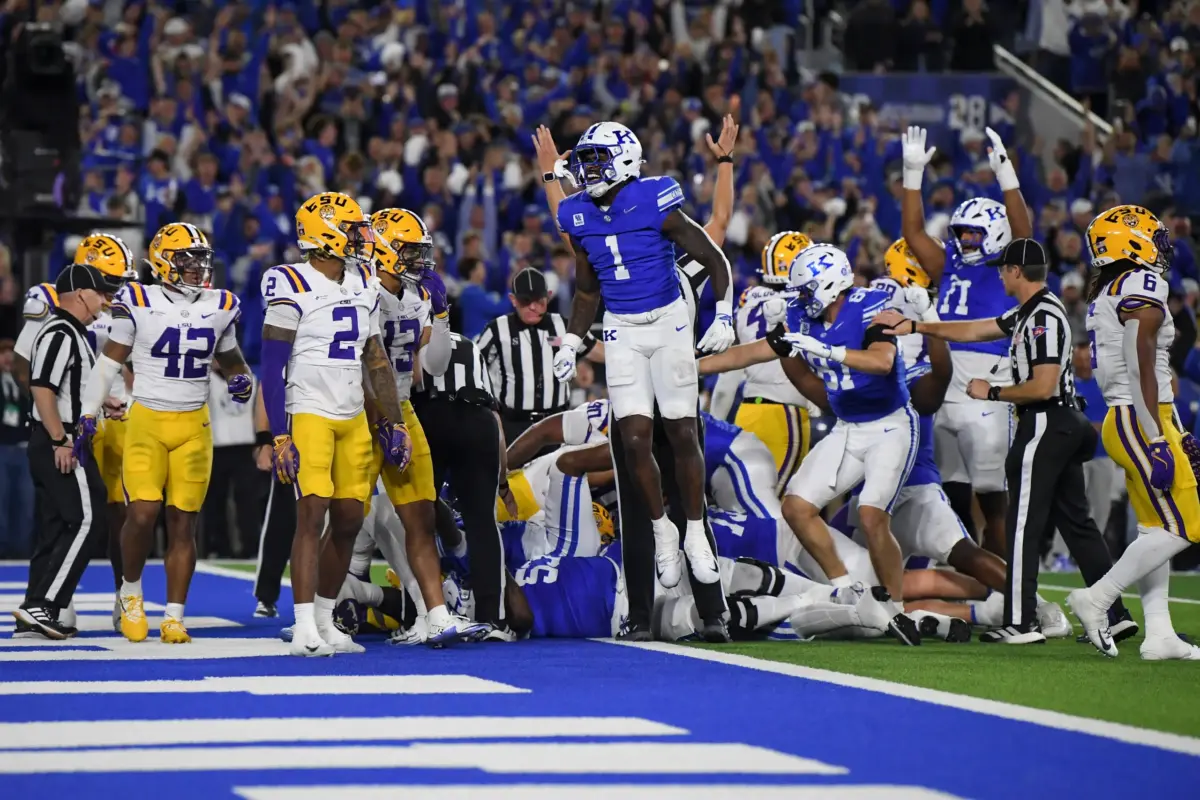
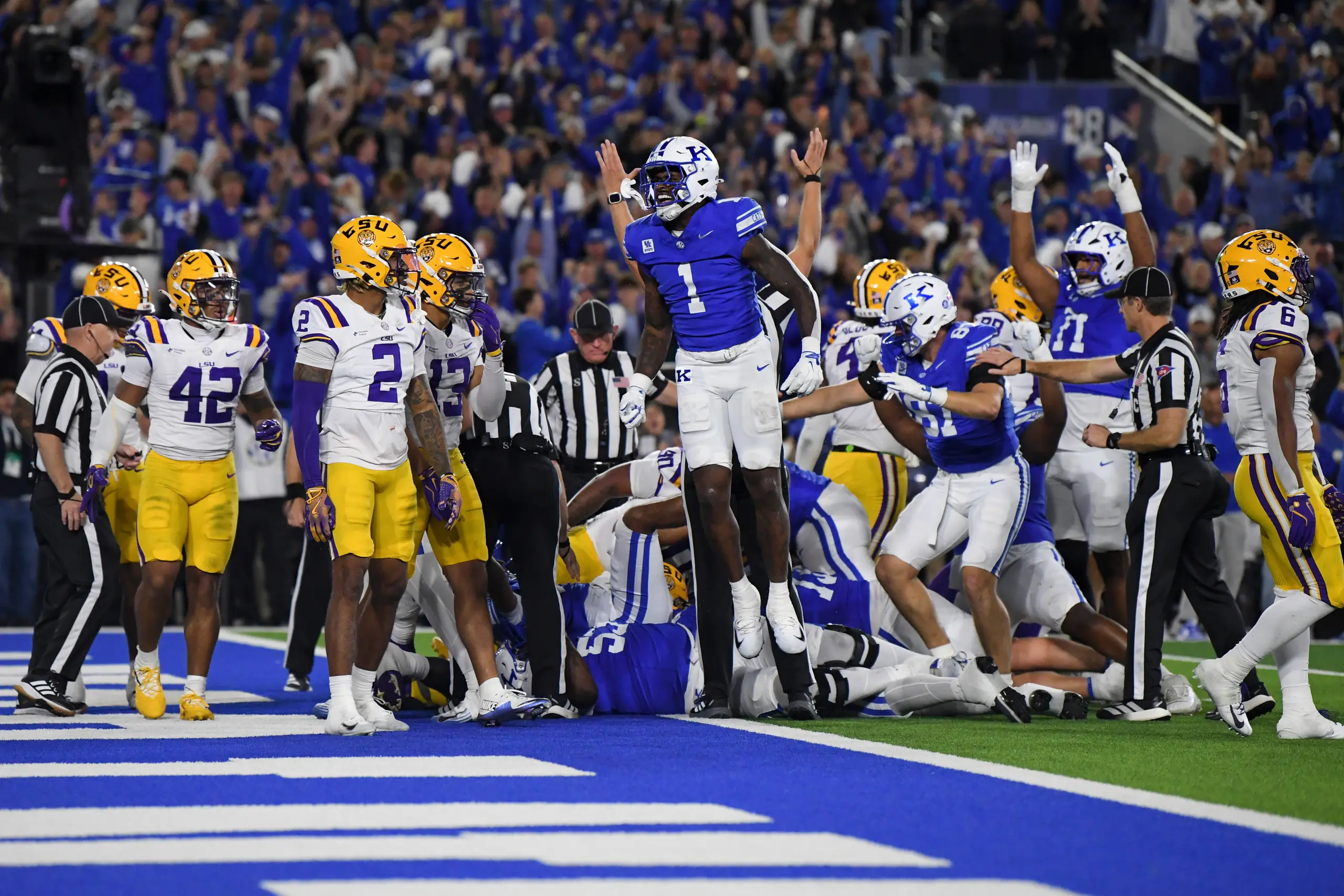
Minchey waltzed into the end zone untouched, sealing the improbable 35-34 victory and touching off a frenzied, chaotic storming of the Kroger Field turf by jubilant Kentucky fans and players alike.
Supporting Context & Metrics
Statistical Breakdown: Where the Game Was Won and Lost
While the final box score reflects a razor-thin margin, a deeper dive into the metrics reveals how both squads battled through statistical anomalies and high-volume execution.
LSU entered the contest boasting one of the most formidable defensive fronts in collegiate football, surrendering an average of just 220.6 total yards per game—good for third-best in the nation. However, Kentucky’s dynamic offensive adjustments in the second half completely shattered that average. The Wildcats racked up 401 total yards of offense, heavily anchored by Minchey’s 246 passing yards and Baxter’s explosive 123-yard rushing performance.
Conversely, LSU’s high-octane offense, which typically burns opponents for a staggering 547.8 yards per game (ranking third nationally), was held in check by a resilient, duct-taped Kentucky defense. The Tigers finished the night with 410 total yards. Sam Leavitt completed 25 of 34 passes for 275 yards and two touchdowns, but his efficiency was marred by a costly interception and a crucial fumble that nearly cost LSU the game in regulation.
The Injury Deficit: A Triumph of Next-Man-Up Philosophy
To fully contextualize the magnitude of Kentucky’s defensive performance, one must examine the staggering list of absentees the Wildcats had to overcome. Head coach Will Stein’s defensive unit played without three starting linebackers, two starting defensive backs, and a key defensive lineman.
Despite missing over half of their projected defensive starters, Kentucky’s depleted unit manufactured crucial takeaways, applied timely pressure, and stood tall in the red zone against an elite SEC offense. This "next-man-up" mentality has quickly become the defining trademark of the Wildcats’ 2026 campaign, transforming what could have been a liability into an inspiring rallying cry for the locker room.
Historical Significance and Poll Implications
Saturday night’s triumph adds several unique entries into the Kentucky football history books:
Back-to-Back Overtime Thrillers: This marks the second consecutive week Kentucky has emerged victorious in an overtime game by an identical 35-34 score, following their road win over South Carolina the previous week.
A Program First: Never before in the illustrious history of the Kentucky football program has a team played in, let alone won, back-to-back overtime games.
Top 25 Re-Entry: Having briefly fallen out of the national rankings following earlier-season adjustments, the Wildcats are widely projected to make a massive leap back into the Associated Press (AP) Top 25 poll this coming week.
The Disrespect Fuel: Unfazed by external predictions—noting that ESPN’s College GameDay crew unanimously picked LSU to win earlier that morning—the Wildcats have successfully weaponized the doubters to fuel their historic run through the conference schedule.
Official Statements
The emotional magnitude of the victory was palpable during the post-game press conferences, where coaches and players alike reflected on the wild swings of momentum and the sheer willpower required to secure the win.
Kentucky head coach Will Stein did not hide his raw emotions when addressing the media, leaning heavily into the underdog narrative that has galvanized his locker room:
"I’m in shock. We’ve got a really good football team. People count us out. I took a picture of College GameDay this morning; everyone picked LSU. Keep doing that. It gives us a lot of fuel," Stein said, visibly energized. "It wasn’t pretty. It wasn’t perfect. We just kept chopping. We kept fighting."
Reflecting on the defensive challenges posed by injuries and LSU’s explosive personnel, Stein praised his players’ tenacity:
"It’s just tough to stop those guys. I mean, Sam Leavitt’s really good. They got big backs. They were throwing it all over the yard. This is not to discredit our defense, our defense made some unbelievable plays and takeaways and dealing with injuries."
Quarterback Kenneth Minchey walked reporters through the split-second decision-making process that ultimately delivered the game-winning two-point conversion:
"There was nobody in the middle, so I figured I would run there," Minchey explained. "We had our play called, and I wasn’t necessarily part of it, but that’s what my read told me to do so I ran it in. It was great."
On the opposing sideline, LSU head coach Lane Kiffin offered a brutally honest assessment of his team’s shortcomings, pointing directly to a lack of execution across all three phases of the game as the primary culprit for the collapse:
"It came down to a one-play game, but there were a lot of plays before that to close the game out. We had the ball ahead, and turned it over," Kiffin stated bluntly. "Disappointing all three phases. If you don’t execute, you don’t execute. On the punt return [a 55-yard house call earlier in the game by Brock Coffman], we had a player there tackling him and he didn’t tackle him. If you don’t execute, you get exposed against a good team."
Future Outlook
As the dust settles on one of the most thrilling SEC games of the 20th-century’s third decade, both programs must quickly pivot their focus toward daunting upcoming challenges that will define the trajectory of their respective seasons.
Kentucky Wildcats: Hitting the Road with Momentum
For Kentucky (5-1, 3-1 SEC), the narrative shifts from celebration to preparation as they look to validate their newfound status among the nation’s elite. Armed with a surging offense led by Minchey and Baxter, the Wildcats will pack their bags for a high-profile, hostile road environment next Saturday.
Kentucky will travel to face a formidable opponent in Oklahoma, a game that will serve as a ultimate litmus test for whether the Wildcats can translate their dramatic, heart-stopping home heroics into consistent success on the road against national championship contenders. If the defense can continue to heal and the offense maintains its second-half efficiency, Kentucky’s dream season may only be just beginning.
LSU Tigers: Seeking Redemption at Home
For No. 10 LSU (4-2, 1-2 SEC), the path forward demands immediate introspection and rectifying the self-destructive errors that derailed their championship aspirations in Lexington. The margin for error in the SEC has narrowed to razor-thin tolerances, and the Tigers cannot afford to let missed tackles and untimely turnovers become a defining trend.
LSU will return home to Death Valley next Saturday to host No. 17 Mississippi State in another crucial conference showdown. Coach Kiffin and his staff will spend the week emphasizing fundamental execution, particularly on special teams and in red-zone defensive stops, as they look to rebound and reassert their dominance in front of their home supporters.



0 Comments