
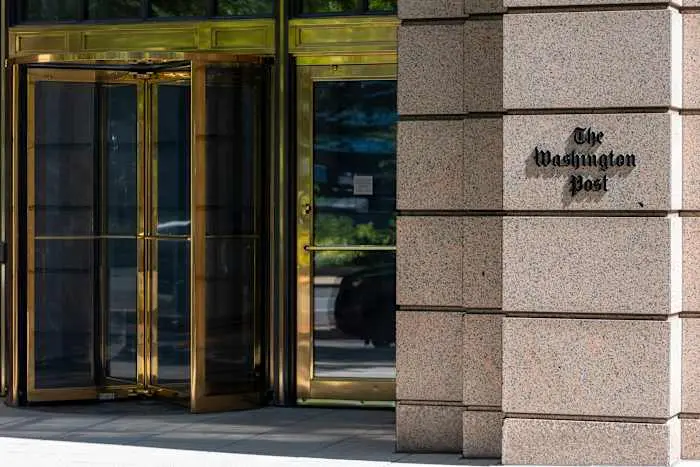

An independent arbitrator has ruled that The Washington Post wrongfully terminated Karen Attiah, a prominent Black opinion writer and the publication’s founding global opinion editor. The binding decision orders the newspaper to immediately reinstate Attiah, award her full back pay, and restore all lost benefits.
The high-stakes labor dispute stems from Attiah’s firing in September following a series of social media posts addressing the assassination of conservative podcaster and Turning Point USA founder Charlie Kirk. At the time of her termination, Attiah was the final Black full-time member of the Post’s opinion desk, a demographic reality that fueled immediate national outcry regarding the shrinking representation of diverse voices in major American newsrooms.
Arbitrator Sarah Miller Espinosa determined in her June ruling that management failed to establish "gross misconduct" and lacked "good and sufficient cause" to dismiss Attiah, thereby violating the collective bargaining agreement negotiated with the Washington-Baltimore News Guild. Labor advocates have hailed the decision as a watershed moment for press freedom and union protections, establishing a critical legal and contractual precedent safeguarding journalists from retaliatory corporate discipline over digital commentary on sociopolitical controversies.
Detailed Chronology
The Catalyst: The Assassination of Charlie Kirk
The events precipitating Attiah’s dismissal unfolded against a backdrop of deep national polarization. On September 10, Charlie Kirk—a prominent conservative activist, close ally of President Donald Trump, and founder of the campus advocacy group Turning Point USA—was shot and killed during a public appearance at Utah Valley University at the age of 31. Kirk’s polarizing career had made him a lightning rod in American politics; known for provocative rhetoric concerning race, gender, and immigration, he frequently targeted progressive institutions and the Black Lives Matter movement, famously describing George Floyd as a "scumbag."
Kirk’s assassination triggered a massive wave of public reaction across digital platforms. While conservative allies and public figures mourned his death, progressive commentators and critics analyzed his legacy in sharp, often unsparing terms. In the immediate aftermath, a wave of employers across various industries—ranging from academia and corporate media to public service—took swift punitive action against employees whose online commentary about Kirk was deemed disrespectful or inflammatory.
The Social Media Posts and Immediate Backlash
Hours after the shooting, Attiah took to her Bluesky account to share her perspective on the cultural and political discourse surrounding Kirk’s death. In one widely circulated post, she wrote:
"Refusing to tear my clothes and smear ashes on my face in performative mourning for a white man that espoused violence is … not the same as violence."
In a follow-up post, she added:
"If anything, the rush to coddle violent white men is self-protective — that we know they are not used to feeling vulnerable and mortal — and will react violently out of fear. And we will all suffer."
Within 24 hours of making these posts, Attiah—who also served as the Post’s only Black female opinion writer—received an abrupt termination letter via email on September 11. Signed by top management, the correspondence accused her of "gross misconduct," asserting that her public commentary violated internal social media policies, compromised the integrity of the journalistic institution, and theoretically endangered the physical safety of newsroom staff.
The Grievance and Arbitration Proceedings
Rather than accepting the termination, Attiah, backed by the Washington-Baltimore News Guild and the Democracy Defenders Fund, mounted a vigorous defense through the legally binding labor arbitration process.
Throughout the hearings—which culminated in a key session on June 4—union representatives argued that the Post applied its social media policies selectively, weaponizing vague procedural guidelines to suppress protected speech and appease external political pressures. Conversely, management maintained that Attiah’s posts crossed the line from protected professional commentary into behavior that actively undermined the publication’s perceived neutrality and safety protocols.
Arbitrator Sarah Miller Espinosa ultimately dismantled the paper’s defense, ruling that the Post had failed to meet the heavy burden of proof required to demonstrate gross misconduct. By ordering her immediate reinstatement and full financial remediation, the arbitrator validated the union’s position that the termination was an overreach that breached the collective bargaining agreement.
Supporting Context & Metrics
The Erosion of Diversity in Elite Newsrooms
Attiah’s dismissal and subsequent legal battle occurred within the broader, highly scrutinized landscape of media industry contraction and demographic shifts. At the time of her firing, Attiah was not merely a veteran columnist; she stood as the last remaining Black full-time writer on The Washington Post’s opinion desk.
The National Association of Black Journalists (NABJ), the country’s preeminent professional organization for journalists of color, immediately flagged the firing as symptomatic of a broader institutional malaise. Industry data compiled by various media watchdog organizations over the preceding decade has consistently highlighted the precarious positioning of minority journalists in mainstream American newsrooms, particularly during periods of economic downsizing or ideological realignment under corporate ownership.
The Digital Speech Minefield for Journalists
The case has reignited intense debate surrounding the boundaries of free expression for journalists in the digital age. Modern newsroom social media policies have evolved into complex administrative minefields. While legacy outlets maintain strict guidelines designed to protect institutional credibility and perceived objectivity, critics argue these policies are frequently enforced arbitrarily, disproportionately impacting journalists of color who address systemic racism, political violence, and social justice.
Legal scholars note that while private-sector employees do not enjoy absolute First Amendment protections against employer retaliation—given that the constitutional amendment restricts government, not private, censorship—unionized journalists occupy a unique legal space. Collective bargaining agreements establish a contractual threshold of "just cause," insulating workers from arbitrary firings driven by shifting political winds, corporate panic, or social media pile-ons.
Official Statements
The resolution of the arbitration case elicited strong reactions from all principal stakeholders, reflecting the profound stakes involved for labor rights and journalistic integrity.
-
Karen Attiah: In an emotional public statement shared via Instagram, Attiah celebrated the culmination of a grueling year-long battle. "After wrongfully firing me last year, an independent arbitrator has ordered the @washingtonpost to reinstate me immediately, with back pay," Attiah wrote. "It’s been a year-long fight, but this is a victory for journalists everywhere. More to come soon."
-
The Democracy Defenders Fund & Washington-Baltimore News Guild: In a joint statement, the legal and labor defense teams framed the outcome as a monumental victory for the Fourth Estate. They emphasized that the ruling serves as a vital safeguard, "confirming that corporate media institutions cannot use retaliatory discipline to silence journalists who address uncomfortable truths."
-
National Association of Black Journalists (NABJ): Reaffirming its stance from the time of the firing, NABJ released a statement underscoring that Attiah’s initial termination had "raised an alarm about the erosion of Black voices across the media," welcoming the arbitrator’s decision as a necessary step toward corporate accountability and institutional fairness.
-
The Washington Post: In stark contrast to the celebratory tone of labor advocates, management offered a subdued and minimal response. A spokesperson for the publication stated simply that the Post respects the established arbitration process, while pointedly declining to offer any further commentary regarding Attiah’s return or the operational fallout of the ruling.
Future Outlook
Reintegration and Workplace Culture
As Attiah prepares to re-enter the newsroom, The Washington Post faces significant organizational and cultural challenges. Reintegrating a prominent writer who was wrongfully terminated by executive fiat creates an inevitable tension between management and the labor force. Newsroom morale, already strained by prior leadership controversies, ownership shifts, and structural layoffs, will likely be tested as staff navigate the practical realities of her reinstatement.
Precedent for Labor and Digital Ethics
From a broader industry perspective, the Espinosa ruling establishes a crucial legal baseline for labor relations in digital journalism. As media organizations grapple with the volatile intersection of social media, political polarization, and public safety, this case demonstrates that arbitrary, reactionary firings will face stringent judicial and arbitral scrutiny under collective bargaining agreements.
Moving forward, major publishing houses may be forced to overhaul and clarify their digital conduct policies—ensuring they balance institutional credibility with robust protections for professional free expression, thereby preventing future legal liabilities and safeguarding the diversity of thought essential to modern journalism.

0 Comments