


As the global community stands on the precipice of another October, the annual guessing game surrounding the Nobel Peace Prize has officially reached a fever pitch. With the Norwegian Nobel Committee preparing to announce its prestigious laureate in Oslo, analysts, pundits, and geopolitical prognosticators are sifting through a robust field of 287 candidates. This year’s contenders reflect a planet deeply fractured by multi-front conflicts, shifting global security architectures, and a distinct erosion of traditional multilateralism.
The race for the 2026 Nobel Peace Prize is as eclectic as it is politically charged. From high-altitude symbols of interplanetary cooperation—such as the international collective behind the International Space Station (ISS)—to frontline grassroots organizations navigating active war zones in Sudan and Ukraine, the spectrum of nominees highlights both the best and worst of modern human endeavor. Yet, high-stakes terrestrial politics inevitably cast a long shadow over the proceedings. Heavyweight political figures, including U.S. President Donald Trump and Canadian Prime Minister Mark Carney, find themselves locked in both policy disputes and speculative contention for the award. Meanwhile, international legal bodies like the International Court of Justice (ICJ) and the International Criminal Court (ICC) are drawing intense scrutiny for their unprecedented enforcement of international humanitarian law amid ongoing global conflicts.
Against a backdrop featuring the highest volume of armed conflict in decades—spanning the Middle East, Ukraine, Sudan, and Yemen—the Norwegian Nobel Committee faces a monumental task. The ultimate decision, slated for announcement on October 9, promises to ignite intense global debate, underscoring the deep ideological divisions that continue to define the twenty-first-century geopolitical landscape.
Detailed Chronology and Contender Analysis
The journey toward the annual Nobel Peace Prize announcement follows a rigorous, multi-month evaluation process managed by the five-member Norwegian Nobel Committee. Nominations close annually on January 31, drawing submissions from thousands of qualified individuals worldwide, including national lawmakers, university professors, former laureates, and international judges. By the time the committee convenes to finalize its shortlist in the spring and early summer, the pool has been narrowed down to a carefully vetted group of contenders.
The Out-of-This-World Frontrunner: The International Space Station
Among the most captivating, non-traditional suggestions gaining traction this year is the collective infrastructure and international partnership behind the International Space Station (ISS). Haakon Gjerløw, a leading forecaster and director at the Peace Research Institute Oslo (PRIO), has highlighted the ISS as a rare, enduring symbol of global cooperation. At a historical juncture where multilateral institutions are fracturing, and nations are retreating into insular nationalist postures, the peaceful, ongoing scientific collaboration aboard the ISS stands out. Proponents argue that honoring the space station—or the multinational agencies operating it—would send a powerful message about humanity’s capacity to transcend earthly divisions for the common good.
High-Profile Political Contenders: Trump and Carney
Terrestrial politics, however, frequently dominate the conversation. U.S. President Donald Trump has made no secret of his ambition to secure the prize, drawing repeated nominations from political allies. Yet, his candidacy remains deeply polarizing. Following the joint U.S. and Israeli military campaign launched against Iran in February, critics argue that Trump’s foreign policy record disqualifies him from consideration for an award dedicated to international fraternity.
Adding an unexpected diplomatic dynamic to the race is Canadian Prime Minister Mark Carney. Carney has gained significant international visibility over the past year by mounting robust economic and political resistance against U.S. tariffs and protectionist policies. While Carney’s defense of international trade norms has elevated his global profile, University of Toronto professor emeritus Nelson Wiseman notes the acute diplomatic friction a win for Carney could cause: "Trump will be unhappy whoever gets the Nobel. If Carney got it, it would make relations with Canada rockier than they are."
Furthermore, the committee’s deliberations are further complicated by the political fallout from the 2025 Nobel Peace Prize. Last year’s laureate, Venezuelan opposition figure María Corina Machado, made headlines by symbolically presenting her prize to Donald Trump just days after U.S. forces removed Venezuelan President Nicolás Maduro from power. This unprecedented gesture has injected a layer of diplomatic complexity into the committee’s current evaluations.
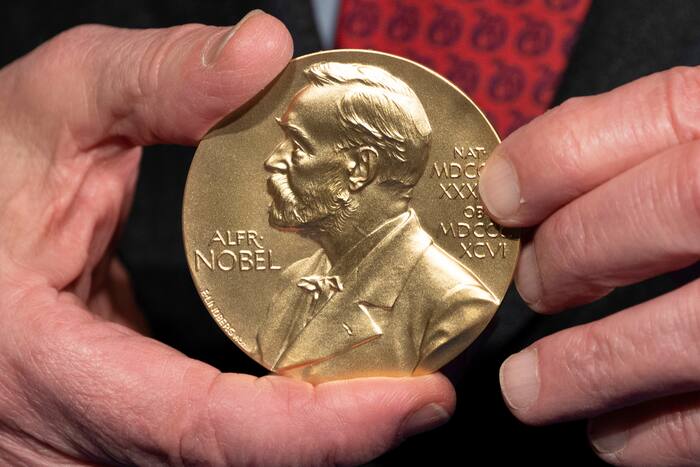
Grassroots Advocates and Legal Institutions
Beyond major heads of state, the 2026 watch lists heavily feature organizations and individuals working on the bleeding edges of global crises:
- Sudan’s Emergency Response Rooms: A decentralized, grassroots relief network providing vital humanitarian aid in a region devastated by catastrophic civil conflict.
- Mykola Kuleba and Save the Children: Recognized for their tireless advocacy on behalf of Ukrainian children uprooted and traumatized by ongoing hostilities.
- The Committee to Protect Journalists (CPJ): Garnering serious attention following the deadliest two-year period for media personnel since reliable record-keeping began nearly 45 years ago.
- The International Court of Justice (ICJ) and International Criminal Court (ICC): Jointly nominated for their efforts to uphold international accountability. However, the ICC’s path has been fraught with controversy, particularly following its issuance of high-profile arrest warrants for Russian President Vladimir Putin and Israeli Prime Minister Benjamin Netanyahu. These actions triggered fierce pushback from Washington, including an explicit U.S. campaign announced by Secretary of State Marco Rubio to counter what the administration termed threats to American sovereignty.
Supporting Context & Metrics
To fully understand the weight of the 2026 Nobel Peace Prize, one must examine the grim statistical reality of contemporary global conflict. According to data monitored by research bodies like the Uppsala Conflict Data Program (UCDP), the world is currently experiencing its most volatile security climate in decades.
The Shifting Global Security Architecture
Shawn Davies, a senior analyst at UCDP, points to a profound structural shift in international relations. For decades, the post-World War II international order relied heavily on the United States to act as the primary guarantor of global rules, norms, and treaties. In recent years, however, that architecture has eroded significantly. Davies notes that Washington has increasingly transitioned from a defender of the postwar order to a direct participant in its circumvention, leading to cascading instability across multiple continents.
"I don’t even think his own base would believe Trump could win the prize now," Davies remarked, pointing to the intractable nature of U.S. military entanglements in the Middle East, "given how he’s stuck in what looks like a forever war in Iran."
Gender Representation and the Nobel Legacy
Another critical metric shaping the conversation around the prize is historical gender representation. Jody Williams, who was jointly awarded the 1997 Peace Prize for her work with the International Campaign to Ban Landmines, has been vocal about the need to address a persistent historical imbalance.
Over the 125-year history of the Nobel prizes:
- Out of 112 individual laureates in the peace category, only 20 have been women.
- However, a noticeable corrective shift has occurred in recent decades: over the past 15 years, eight women have won the prize individually, compared to just six men.
In alignment with this trend, prediction markets have heavily circulated the names of prominent female figures this year. Among them are Dr. Sara al-Saqqa, a surgeon operating under extreme duress in Gaza, and Yulia Navalnaya, the prominent Russian opposition leader and widow of late dissident Alexei Navalny.
Prize Logistics and Schedule
The 2026 Nobel season follows its traditional October schedule, culminating in substantial financial recognition for the laureates:
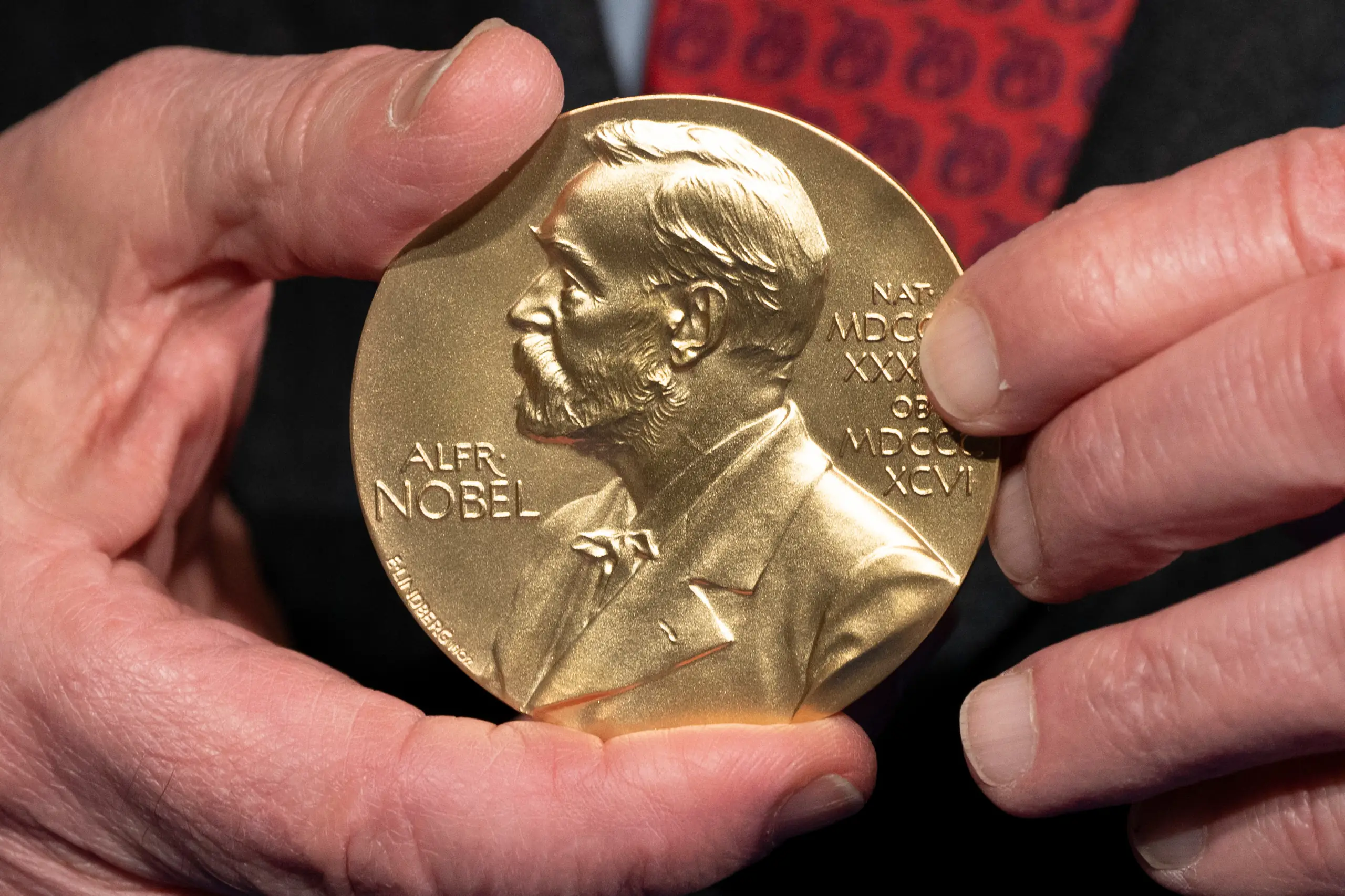
- Prize Money: Regardless of whether an award goes to an individual, a small group, or a large organization, the monetary award for 2026 stands at 12 million Swedish kronor (approximately $1.2 million USD).
- Announcement Calendar:
- Monday: Physiology or Medicine
- Tuesday: Physics
- Wednesday: Chemistry
- Thursday: Literature
- Friday: Peace Prize
- Monday, Oct. 12: Sveriges Riksbank Prize in Economic Sciences in Memory of Alfred Nobel
Official Statements and Expert Perspectives
The divergence of expert opinions underscores the inherent unpredictability of the Norwegian Nobel Committee’s deliberations. Because the committee operates under a strict rule sealing its nomination archives for 50 years, external analysis relies entirely on historical patterns, current events, and public statements from international observers.
Haakon Gjerløw of PRIO emphasizes that the committee consistently values institutions that foster long-term international resilience over short-term political maneuvering. Yet, he acknowledges that ignoring the realities of modern statecraft is impossible. The committee must weigh the symbolic value of cooperative entities—like the International Space Station—against the urgent, life-or-death imperatives represented by grassroots humanitarian workers in Sudan and Ukraine.
Conversely, political scientists point to the unavoidable diplomatic fallout that accompanies any high-stakes political pick. Whether the committee chooses to validate international legal frameworks through the ICJ and ICC, or opt for a safer, civil-society-focused laureate, the decision will inevitably be weaponized in ongoing partisan debates across Western capitals.
Future Outlook
As the countdown to October 9 ticks away, the global spotlight turns once more to the Norwegian Nobel Institute in Oslo. The announcement will not merely crown a new laureate; it will serve as a definitive philosophical statement from the committee regarding the state of global peace in 2026.
If the committee chooses a civil society group or a humanitarian network, it will signal a continued prioritization of frontline aid workers over traditional state diplomacy. If it selects an institutional body like the ISS, it will reaffirm a hopeful vision of technological and scientific cooperation transcending terrestrial political strife. Conversely, recognizing international legal courts would represent a defiant stance in defense of global accountability at a time when international law faces unprecedented stress-tests.
Regardless of the outcome, one certainty remains: in an era defined by overlapping geopolitical crises, the 2026 Nobel Peace Prize will reverberate far beyond the borders of Norway, shaping political discourse and diplomatic maneuvering for months to come.

0 Comments