

Executive Overview
A landmark legal campaign targeting systemic underfunding at historically Black colleges and universities (HBCUs) officially commenced in federal and state forums, launching what civil rights advocates predict will be a sweeping wave of multi-state litigation. The legal assault began in Jefferson City, Missouri, where a coalition of alumni, students, and advocates filed a sweeping lawsuit against the state. The plaintiffs allege that decades of deliberate state-level financial deprivation have systematically compromised the educational quality of Lincoln University, devalued the degrees of its graduates, and perpetuated a two-tiered system of higher education rooted in historical racial discrimination.
At the center of this litigation is a newly formed advocacy and legal group known as the 1890 Project. Named after the federal legislation that mandated equitable funding for segregated Black land-grant institutions, the organization has set its sights on more than a dozen states across the American South and Midwest. According to comprehensive federal analyses, these jurisdictions have collectively withheld billions of dollars in matching funds required by federal statute.
The launch of the Missouri lawsuit follows a pivotal 2023 finding by the Biden administration, which revealed that 1890 land-grant institutions across 16 states were shortchanged by an astounding $12.6 billion over the past three decades. While federal matching formulas demanded dollar-for-dollar state investments to support agricultural research, infrastructure modernization, and academic programming, the vast majority of states systematically ignored these mandates. Legal experts, civil rights attorneys, and educational historians view the 1890 Project’s litigation as a watershed moment in the ongoing struggle for educational parity, potentially reshaping institutional funding models nationwide and holding states accountable for generations of discriminatory budgeting practices.
Detailed Chronology: From Civil War Roots to Modern Legal Action
To fully understand the gravity of the current legal battle against Missouri and the broader implications for the 1890 Project, it is essential to trace the historical evolution of land-grant universities and the legislative frameworks designed—and subsequently subverted—to govern them.
The Morrill Acts and the Creation of a Dual System
The foundation of American public higher education was fundamentally altered by the passage of the first Morrill Act in 1862. Authored by Vermont Senator Justin Smith Morrill, an ardent abolitionist, the legislation granted federally controlled public lands to states. States were instructed to sell these lands and use the proceeds to endow, support, and maintain colleges whose primary objective would be to teach practical subjects related to agriculture and the mechanic arts. This marked a radical departure from the traditional, elite institutions of the era, which catered almost exclusively to the upper class by focusing on classical subjects such as Latin, Greek, philosophy, and theology. Senator Morrill firmly believed that higher education should be accessible to all socioeconomic classes.
However, the original 1862 legislation contained a glaring loophole regarding racial inclusivity, particularly in Southern and border states where slavery had shaped the educational landscape. Following the conclusion of the Civil War and the abolition of slavery, Senator Morrill recognized that the original act failed to guarantee access for Black Americans. Consequently, Congress passed the Second Morrill Act of 1890.
The 1890 Act introduced a stringent mandate: states were required to either open their existing land-grant institutions to students of all races or establish and maintain separate, equitable land-grant colleges for students of color.
The Birth of Lincoln University
Faced with the choice of integrating its flagship, predominantly white institution—the University of Missouri in Columbia—or creating a separate facility, Missouri opted for segregation. To fulfill the requirements of the 1890 Act, the state turned to an institution that had already been forged through immense sacrifice.
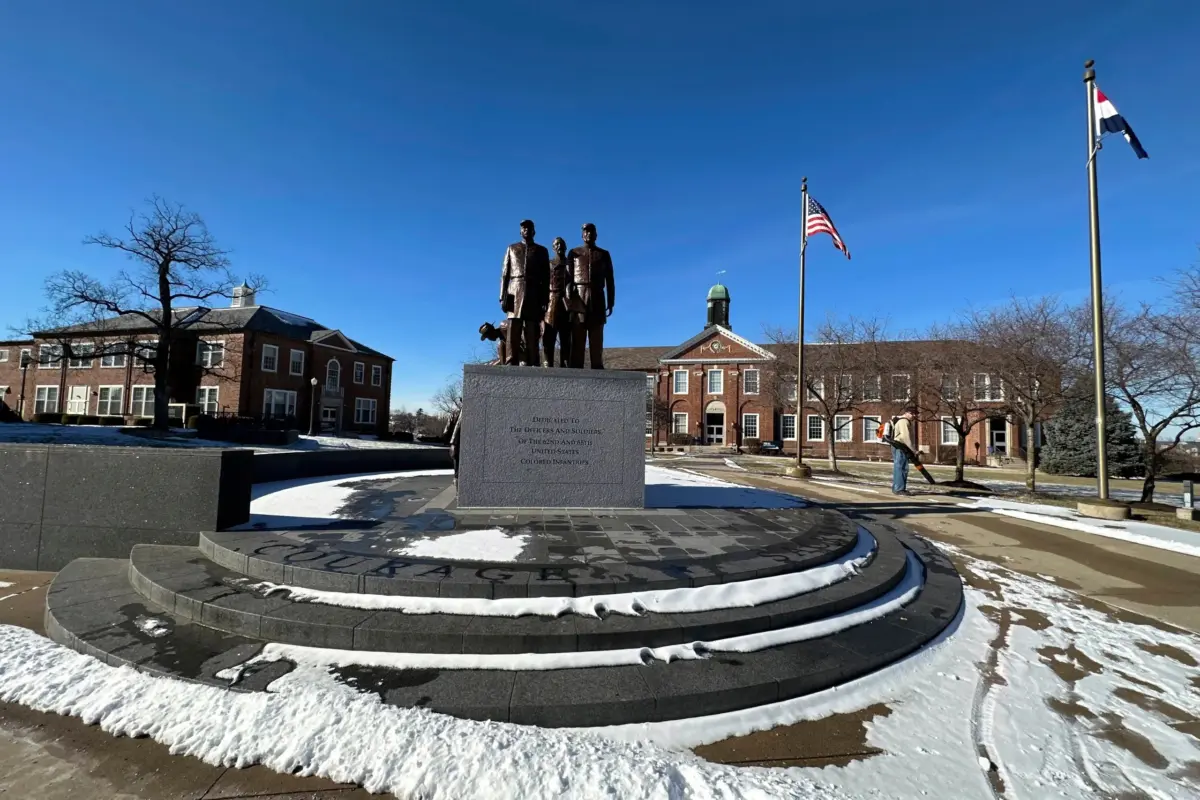
Lincoln University traces its extraordinary origins to the end of the Civil War. In 1866, enlisted men and officers of the 62nd United States Colored Infantry—a Black Union Army unit—pooled their hard-earned military pay to establish a school that would educate newly freed men and women. Originally incorporated as Lincoln Institute in Jefferson City, the school was later designated as Missouri’s 1890 land-grant institution.
Across the former Confederacy and border states, 18 other states similarly established or designated separate land-grant schools for Black students, including institutions such as Florida A&M University, North Carolina A&T State University, and Tuskegee University, the latter of which remains a unique private 1890 land-grant institution.
A Century of Financial Starvation
Despite the clear statutory requirement of the Second Morrill Act—which mandated that federal appropriations be distributed equitably between traditional land-grant universities and their HBCU counterparts—states quickly mastered the art of administrative evasion. Throughout the Jim Crow era and well into the late 20th century, state legislatures routinely withheld matching funds from Black land-grant institutions while fully funding, and often expanding, their white counterparts.
For decades, this disparity operated in plain sight. While predominantly white land-grant universities received robust state appropriations to build state-of-the-art agricultural research laboratories, sprawling engineering complexes, and modern residence halls, HBCUs like Lincoln University were forced to make do with fractional budgets. This chronic underfunding created a cascading crisis of deferred maintenance, outdated instructional technology, and diminished faculty retention.
By the early 2020s, the cumulative financial deficit had reached astronomical proportions. When the federal government finally subjected these funding patterns to rigorous, comprehensive audits, the true scope of institutional neglect was laid bare.
Supporting Context & Metrics: The Scale of the Deficit
The statistical realities underpinning the 1890 Project’s litigation underscore a staggering pattern of institutional deprivation. The numbers reveal that the underfunding of Black land-grant universities was not an accidental oversight, but a systemic, generational policy choice.
The Biden Administration’s 2023 Audit
In September 2023, the U.S. Department of Education and the U.S. Department of Agriculture jointly issued a series of formal letters to the governors of 16 states. The letters revealed a startling conclusion: over the preceding three decades, HBCUs in those states had been collectively shortchanged by $12.6 billion in state matching funds relative to their predominantly white land-grant counterparts.
Federal law requires that states provide matching funds to secure federal appropriations for land-grant universities. Under the law, if a state allocates a dollar of state support to its 1862 land-grant institution, it must proportionally support its 1890 land-grant institution. However, the federal audit discovered that out of the 16 states evaluated, only two states—Delaware and Ohio—had maintained equitable funding between their respective institutions. The remaining 14 states had engaged in varying degrees of discriminatory allocation.
The Lincoln University Deficit
At the heart of the newly filed Missouri lawsuit is an eye-opening financial analysis conducted using federal metrics. According to the complaint, Lincoln University alone was underfunded by an estimated $361 million between 1987 and 2020.
This massive deficit has had a direct, devastating impact on the university’s physical infrastructure and academic competitiveness:
- Enrollment Decline: Lincoln University’s student enrollment has plummeted to approximately 2,200 students, a sharp decline from roughly 3,400 students in 2011. To put this in perspective, the University of Missouri’s Columbia campus boasts an enrollment of approximately 32,000 students.
- Infrastructure Decay: Millions of dollars in deferred maintenance have left campus facilities in disrepair. Alumni and former students have reported severe structural deficiencies, including residence halls frequently lacking basic heating and hot water during harsh Missouri winters.
- Reputational Damage: Chronic underfunding has created a self-fulfilling prophecy, where inadequate resources lead to reduced program offerings, which in turn fuels unfair public perception that HBCU degrees are somehow "second-rate."
The Broader Legal Landscape
Missouri is merely the opening salvo in a coordinated national strategy. Don Calloway, a former Missouri state lawmaker who leads the 1890 Project, has confirmed that his organization is actively engaged in discussions with attorneys general, civil rights groups, and legal teams in several other states, including:
- Virginia
- Arkansas
- Maryland
- North Carolina
- Alabama
- Georgia
Precedent for this type of litigation already exists. Most notably, a protracted legal battle in Maryland over the systemic underfunding of the state’s four public HBCUs culminated in a historic $577 million settlement in 2021. However, legal experts note that previous lawsuits largely targeted general funding disparities across all state-supported HBCUs. The 1890 Project’s legal strategy is uniquely laser-focused on the specific, statutory funding formulas governing 1890 land-grant institutions.
Official Statements and Stakeholder Perspectives
The launch of the Missouri lawsuit has elicited strong emotional, legal, and political reactions from plaintiffs, institutional leaders, and state officials.
Voices from the Plaintiffs
For the individuals whose families have sustained Lincoln University across generations, the lawsuit is deeply personal.
Jeanneth Johnson, a 54-year-old Lincoln graduate living in the Detroit suburb of Sterling Heights and a named plaintiff in the lawsuit, expressed profound frustration with the enduring inequities of the American educational system.
"It is very unfortunate that we still live in a climate where, depending on the color of one’s skin, one gets precedence over the other," Johnson stated.
Herbert Kitchen, another plaintiff whose family ties to the university date back to its founding, shared poignant memories of his time as a student at Lincoln in the 1980s. Kitchen recalled enduring freezing residence halls devoid of heat and hot water, while persistent rumors circulated that the institution might face imminent closure. Despite facing professional skepticism from employers who unfairly questioned the rigor of his education, Kitchen went on to become a community college administrator in California.
Reflecting on his great-great-grandfather, Caleb Lindsey—one of the Civil War veterans whose military pay helped establish the school—Kitchen captured the existential weight of the legal battle:
"I am the hope and dream that my great-grandfather had when he was a slave."
Leadership and Legal Strategy
Don Calloway, executive director of the 1890 Project, emphasized that the litigation is not an appeal for charity, but a demand for legal and financial parity.
"We’re not saying they should be funded equally, but they should be funded on parity," Calloway explained. "And the feds funded Lincoln with the proper parity. The problem is that the state made an intentional choice not to match the federal appropriation. And that’s where Lincoln really was cheated."
Calloway noted that the state’s refusal to match federal funds directly starved Lincoln of the capital necessary to maintain competitive facilities, recruit top-tier faculty, and attract prospective students in an increasingly competitive higher education market.
State and Institutional Responses
In sharp contrast to the impassioned testimony of the plaintiffs, state officials have responded with administrative caution. Both the Office of the Governor of Missouri and representatives for the University of Missouri system issued brief, nearly identical written statements declining to comment on the matter, citing the standard protocol regarding pending litigation.
As the legal proceedings advance through the court system, legal analysts anticipate that the state will mount technical defenses regarding statutes of limitations and sovereign immunity, arguments that civil rights attorneys have successfully countered in previous HBCU funding settlements across other jurisdictions.
Future Outlook: A Turning Point for American Higher Education?
The filing of the Missouri lawsuit marks a critical inflection point for historically Black colleges and universities, signaling a transition from decades of quiet endurance to aggressive, coordinated legal confrontation.
What Lies Ahead
Over the next 12 to 24 months, the 1890 Project expects to expand its legal footprint into multiple jurisdictions. The strategy relies on a potent combination of rigorous econometric data, federal compliance audits, and civil rights litigation to compel state legislatures to fulfill their legal obligations.
If the Missouri litigation follows the trajectory of similar cases—such as the landmark settlement in Maryland—Lincoln University could secure hundreds of millions of dollars in remedial funding. Such a financial injection would allow the institution to overhaul its physical infrastructure, expand academic offerings in high-demand fields like STEM and agribusiness, establish competitive student scholarships, and reverse decades of enrollment decline.
National Implications
Beyond Missouri, the success of the 1890 Project could establish a powerful legal precedent that reverberates across the entire American educational landscape. For over a century, Black land-grant universities have achieved remarkable academic and professional outcomes—producing a disproportionate share of Black engineers, agricultural scientists, educators, and public servants—despite operating with a fraction of the resources afforded to their predominantly white peers.
By forcing states to reconcile past budgetary discrimination through enforceable judicial mandates, this legal movement threatens to permanently rewrite the fiscal relationship between state governments and HBCUs. For alumni like Herbert Kitchen and Jeanneth Johnson, the fight is about far more than dollars and cents; it is about honoring the legacy of the founders, restoring institutional dignity, and ensuring that future generations of students are provided with the equitable educational opportunities they were promised over a century ago.

0 Comments