
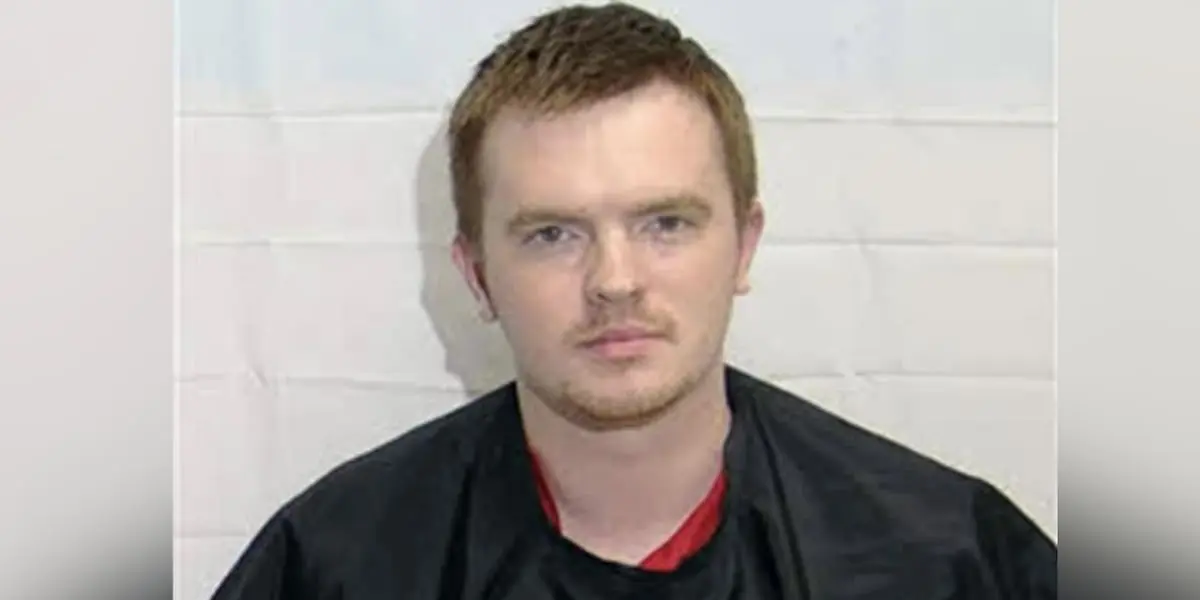

COLUMBUS COUNTY, N.C. — Public trust took another devastating blow in southeastern North Carolina this week as law enforcement officials formally unveiled an extensive financial fraud case against a former local clergyman. Devin Carroll, a former Baptist preacher and school employee, has been arrested and charged with systematically looting nearly $58,000 from a rural congregation to fund a web of personal debts, retail shopping excursions, and dining expenses.
The financial crimes charges represent a severe escalation in Carroll’s legal troubles. They arrive approximately one year after he was first swept into a high-profile criminal investigation involving accusations of sexually assaulting a 13-year-old minor—a separate felony case that is still winding its way toward trial.
According to arrest warrants and investigative summaries released by the Columbus County Sheriff’s Office, Carroll’s alleged white-collar offenses targeted Happy Home Baptist Church, a house of worship where he once held a position of spiritual leadership and financial oversight. Over a series of months in 2024, investigators state that Carroll exploited his institutional access to siphon tens of thousands of dollars from church accounts, treating sacred tithes and offerings as a personal slush fund.
As this complex legal saga unfolds, community leaders, congregants, and legal experts are left grappling with the profound institutional vulnerabilities exposed by the case. The charges against Carroll lay bare the dangers of entrusting unmonitored financial authority to individuals within religious organizations, while compounding the heartbreak felt by a congregation whose good faith was allegedly manipulated for personal enrichment.
Executive Overview
The unfolding legal nightmare surrounding Devin Carroll presents a grim study in institutional vulnerability and alleged personal misconduct spanning multiple jurisdictions and public spheres. At its core, the immediate criminal complaint involves 16 distinct counts of felony embezzlement filed against the former preacher. Court documents assert that Carroll systematically extracted a total of $57,934.13 from Happy Home Baptist Church during his tenure.
Rather than directing these funds toward community outreach, facility upkeep, or ministry operations, investigators allege Carroll funneled the vast majority of the capital toward resolving personal financial distress. A significant portion—exceeding $42,000—was allegedly diverted directly to Advance America, a commercial lending institution, to liquidate an outstanding high-interest loan. The remainder of the misappropriated funds, totaling nearly $15,000, was allegedly sprayed across a variety of everyday consumer expenditures, ranging from fast-food and fine-dining establishments to retail shopping sprees and miscellaneous personal utility bills.
Compounding the gravity of the financial charges is Carroll’s professional background outside the church. Prior to his legal downfall, Carroll maintained a dual presence in the community as both a religious leader and an educational support professional, serving as an in-school suspension aide at Conway Middle School.
However, his public life began to unravel in July 2025, when local authorities arrested him on grave charges accusing him of sexually assaulting a 13-year-old child—an alleged offense tied to his overlapping roles within the community and regional school districts. With the 2025 sexual assault case still pending adjudication in the courts, the addition of 16 felony embezzlement counts cements a multi-pronged legal battle for the former preacher, who now faces heavy prison time if convicted across both indictments.
Detailed Chronology of Events
To understand the trajectory of Devin Carroll’s legal unraveling, investigators have pieced together a timeline that bridges institutional trust, private financial desperation, and eventual criminal exposure.
The 2024 Embezzlement Window
According to evidence gathered by Columbus County financial investigators, the 16 counts of embezzlement did not occur in a single, isolated incident. Instead, they represent a calculated pattern of financial extraction spanning several months throughout calendar year 2024.
During this period, Carroll allegedly maintained administrative or operational control over church accounts at Happy Home Baptist Church. Operating largely behind the scenes, he reportedly authorized electronic transfers, wrote checks, or used debit mechanisms to drain church coffers incrementally. Because small- and mid-sized religious organizations often rely on tight-knit circles of trust rather than rigorous, multi-tiered accounting controls, these unauthorized withdrawals allegedly went undetected for a prolonged period, allowing the total stolen sum to swell past the $57,000 threshold.
The July 2025 Arrest
The first major fracture in Carroll’s public standing occurred in the summer of 2025. Following a joint investigation involving local law enforcement and child welfare advocates, authorities arrested Carroll on accusations of sexually assaulting a 13-year-old. The charges sent shockwaves through both Conway Middle School—where he worked as an in-school suspension aide—and the broader Horry and Columbus County communities.
The arrest immediately severed Carroll’s ties to public education and cast a dark cloud over his ministerial associations. Yet, as the wheels of justice began to turn slowly toward a future trial in the sexual assault case, investigators quietly began digging deeper into his financial footprint, suspecting that his personal life may have been propped up by illicit means.
The August 2026 Financial Indictments
More than a year after his initial brush with felony child sex abuse charges, the other shoe dropped regarding his tenure at Happy Home Baptist Church. In late August 2026, the Columbus County Sheriff’s Office finalized its forensic review of the church’s accounts, culminating in the issuance of warrants for 16 counts of embezzlement.
Carroll was taken into custody once more, bringing his total alleged criminal enterprise into sharp focus. This week, Carroll made his initial appearance in a Columbus County courtroom to face the embezzlement charges. During the proceeding, the presiding judge formally appointed a public defender to represent him and ordered that he be held on a secured bond of $75,000 as prosecutors prepare to unify or sequence his upcoming trials.
Supporting Context & Metrics: Where Did the Money Go?
White-collar crime investigations often reveal a desperate race to outrun mounting personal debt, and the financial breakdown provided in Carroll’s arrest warrants paints a vivid picture of financial collapse. Investigators meticulously tracked the flow of the $57,934.13 allegedly taken from Happy Home Baptist Church, categorizing the expenditures into institutional debt relief and lifestyle maintenance.
The Advance America Outlay
The single largest drain on the church’s treasury was directed toward commercial short-term lending. According to the warrants, Carroll diverted more than $42,000 of the stolen funds directly to Advance America.
Financial analysts note that individuals who turn to high-interest storefront lenders often become trapped in cyclical debt loops. In this scenario, investigators believe Carroll utilized parish funds as an emergency bail-out to clear an aggressive personal loan balance that he could no longer service through his legitimate income as a preacher and school aide. By paying off the loan with stolen church capital, he effectively transferred his personal financial liabilities onto the balance sheet of the congregation.
Retail, Dining, and Miscellaneous Bills
The remaining balance of nearly $15,000 was utilized for a wide array of everyday consumer expenses. Law enforcement forensic accounting uncovered that Carroll used the stolen funds to finance:
- Dining Out: Frequent visits to local restaurants and fast-food chains.
- Retail Purchases: Unspecified consumer goods, clothing, and personal merchandise bought online and in brick-and-mortar stores.
- Utility and Miscellaneous Bills: Household expenses and recurring personal bills that fell outside his legitimate earning capacity.
The stark contrast between the sacred mission of a rural Baptist church and the mundane, self-serving nature of these purchases has amplified the sense of betrayal felt by parishioners.
Official Statements and Institutional Impact
While law enforcement agencies have been methodical in releasing the operational details of the arrest, the broader impact on the institutions involved—and the community at large—cannot be overstated.
Faith-based organizations frequently struggle with the delicate balance between fostering an atmosphere of Christian trust and maintaining rigorous corporate governance. When a religious leader violates that trust, the fallout extends far beyond financial loss, fracturing the psychological and spiritual foundation of the congregation. Happy Home Baptist Church, like many small congregations, relies entirely on the voluntary financial sacrifices of its members—tithes given to support local charitable works, building maintenance, and spiritual programming. Discovering that those contributions were allegedly siphoned off to pay off high-interest personal loans and retail shopping trips has inflicted a deep wound on the church community.
Conway Middle School and the broader regional educational apparatus have similarly faced intense scrutiny regarding vetting processes, though school officials acted swiftly to distance themselves from Carroll following his initial 2025 arrest. The duality of his public profile—serving vulnerable children in a school setting while simultaneously managing a church—highlights the challenges institutions face in identifying red flags before criminal behavior boils over into public indictments.
Legal defense representatives, meanwhile, have offered standard initial responses. During his first court appearance, a public defender was assigned to advocate for Carroll against the 16 embezzlement counts. Given the seriousness of both the financial indictments and the pending sexual assault trial, legal experts anticipate a protracted courtroom battle involving complex evidentiary motions, forensic financial audits, and potentially consolidated pretrial hearings.
Future Outlook: Navigating a Dual Legal Storm
As Devin Carroll sits behind bars on a $75,000 bond, the immediate future holds a series of high-stakes legal hurdles that will define the rest of his life.
The Embezzlement Prosecution
On the financial front, the Columbus County District Attorney’s office faces the task of prosecuting 16 distinct counts of felony embezzlement. Because white-collar financial crimes of this nature rely heavily on paper trails, bank records, and electronic transfer logs, prosecutors possess a robust evidentiary foundation. The inclusion of clear transaction histories—such as the $42,000 wire to Advance America—makes the state’s case straightforward from an accounting perspective. Carroll’s defense counsel will likely explore plea negotiations or scrutinize the exact timelines of the alleged withdrawals to test the state’s jurisdictional boundaries.
The Pending Sex Abuse Trial
Parallel to the white-collar charges is the looming, much more severe felony trial stemming from his July 2025 arrest for the alleged sexual assault of a 13-year-old minor. That case, which carries the potential for a decades-long prison sentence upon conviction, remains active in the regional court system. The convergence of these two distinct legal nightmares means Carroll will likely face multiple criminal proceedings across different dockets over the coming months.
Lessons for the Faith Community
Beyond the courtroom, the case serves as a harsh cautionary tale for religious institutions across North Carolina and the wider United States. Financial transparency experts frequently urge houses of worship—regardless of their size—to implement strict internal financial controls. Best practices include separating the duties of check-signing, bookkeeping, and bank reconciliation; requiring dual signatures on all major expenditures; and subjecting accounts to independent periodic audits.
For the parishioners of Happy Home Baptist Church, the road to recovery will be long. Rebuilding financial health is difficult enough; restoring faith, institutional integrity, and communal trust in the wake of such a profound betrayal will require immense resilience, transparency, and time.

0 Comments