

Executive Overview
A fragile, month-long lull in Middle East hostilities dissolved over the weekend as United States and Iranian forces traded high-stakes military strikes, reigniting fears of a broader regional war. The sudden transition from relative quiet to kinetic confrontation marks a volatile new chapter in a six-month-old conflict that has increasingly pitted Washington’s economic containment strategy against Tehran’s asymmetric military capabilities.
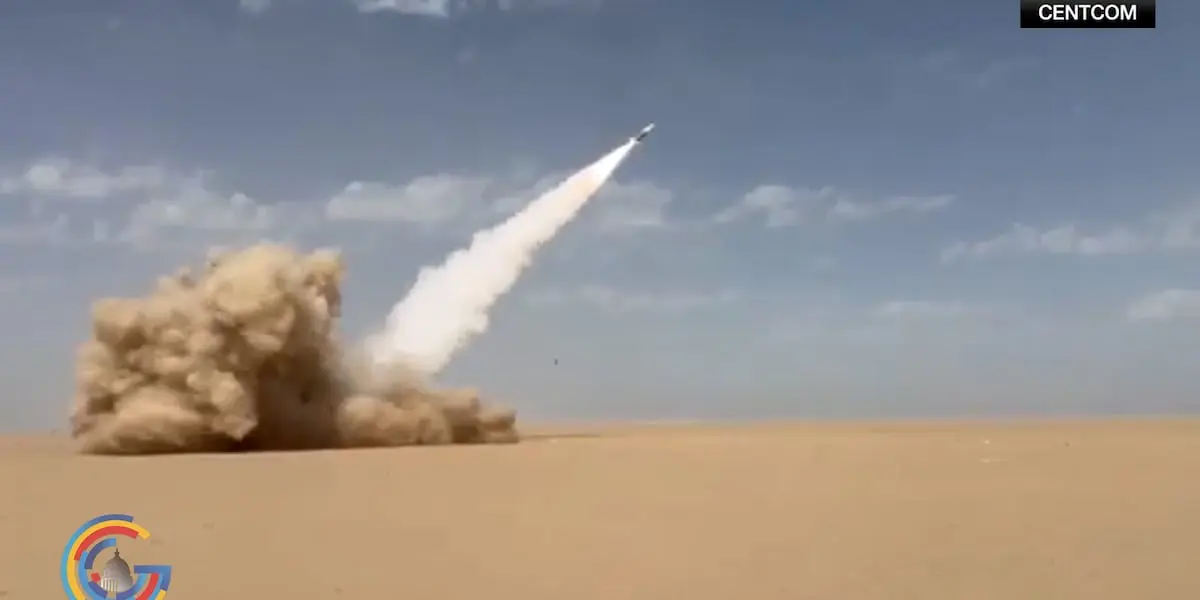
The flare-up began with preemptive U.S. military strikes targeting Iranian rocket launchers positioned along the highly strategic Strait of Hormuz—a maritime chokepoint vital to global energy security. According to Pentagon officials, the defensive operation was executed to neutralize an imminent threat to commercial shipping and allied naval vessels.
Tehran quickly condemned the U.S. strikes as an unprovoked act of aggression and launched a coordinated retaliatory barrage. Utilizing a combination of one-way attack drones and ballistic missiles, Iranian forces targeted military installations hosting U.S. personnel in Jordan and the United Arab Emirates (UAE).
                      [ U.S. Forces ]
                             │
            1. Preemptive Strike on Rocket Launchers
                             │
                             ▼
                 [ Strait of Hormuz ]
                             │
            2. Condemnation & Retaliation
                             │
                             ▼
               [ Iranian Rocket/Drone Sites ]
               ▲                            ▲
               │                            │
    3a. Drone/Missile Strike     3b. Drone/Missile Strike
               │                            │
               ▼                            ▼
         [ Jordan Base ]               [ UAE Base ]
The swift return to open conflict has immediately disrupted global markets. A peaceful August had successfully cooled energy prices, but news of the weekend’s exchanges sent oil benchmarks surging.
With the conflict now entering its seventh month, political resolution remains distant. U.S. President Donald Trump has dismissed the prospect of diplomatic talks, characterizing Iran as a "failed nation" with a degraded military capacity, while promising further American retaliation for the strikes on U.S. personnel.
Detailed Chronology of the Weekend Escalation
The transition from a uneasy truce to active combat unfolded rapidly over a 48-hour window, characterized by precise intelligence collection, rapid command decisions, and retaliatory strikes across multiple national borders.
Phase I: The Preemptive Strike on the Strait of Hormuz
Early Saturday morning, U.S. national security agencies detected heightened activity among Islamic Revolutionary Guard Corps (IRGC) paramilitary units along the rugged coastline of Iran’s Hormozgan Province. According to defense officials speaking on the condition of anonymity, satellite reconnaissance and signals intelligence identified the deployment of multiple-launch rocket systems (MLRS) and anti-ship cruise missile (ASCM) batteries directed toward key shipping lanes in the Strait of Hormuz.
TIMELINE OF ESCALATION:
┌──────────────────────────┬────────────────────────────────────────────────────────┐
│ Time (EST) / Day         │ Event                                                  │
├──────────────────────────┼────────────────────────────────────────────────────────┤
│ Saturday, 04:00 AM       │ U.S. intelligence detects IRGC rocket movements        │
│ Saturday, 11:30 AM       │ U.S. Navy assets launch precision strikes on launchers  │
│ Sunday, 01:15 AM         │ Iran initiates retaliatory drone & missile launches     │
│ Sunday, 02:45 AM         │ Air defenses engage targets in Jordan and the UAE      │
│ Monday, 09:00 AM         │ President Trump delivers address vowing further action │
└──────────────────────────┴────────────────────────────────────────────────────────┘
Believing an attack on commercial or military vessels was imminent, U.S. Central Command (CENTCOM) ordered a series of precision strikes. At approximately 11:30 AM EST on Saturday, U.S. Navy assets—including carrier-based strike aircraft and sea-launched Tomahawk cruise missiles—engaged several mobile rocket launchers and radar installations near the strategic island of Qeshm. Pentagon spokesperson Major General Patrick Ryder confirmed the strikes, stating they successfully "neutralized active threats to international shipping without causing civilian casualties."
Phase II: Tehran’s Coordinated Retaliation
Tehran did not wait long to respond. By early Sunday morning, the IRGC launched a multi-axis retaliatory strike, utilizing its extensive arsenal of unmanned aerial vehicles (UAVs) and short-range ballistic missiles. Rather than targeting U.S. naval vessels directly, Iran aimed at land-based military installations hosting U.S. forces in neighboring countries, expanding the geographic scope of the conflict.
- The Attack on U.S. Positions in Jordan: A swarm of one-way attack drones targeted a remote outpost in northeastern Jordan near the Syrian border. While regional air defense systems, including land-based Patriot missile batteries and Counter-Unmanned Aerial Systems (C-UAS), intercepted most of the incoming drones, at least two penetrated the perimeter, causing structural damage to barracks and minor injuries to several service members.
- The Strike on Al Dhafra Air Base (UAE): Simultaneously, Iran launched medium-range ballistic missiles toward the United Arab Emirates, aiming at Al Dhafra Air Base, a major hub for U.S. and coalition air operations. UAE and U.S. air defense forces successfully engaged and intercepted the incoming threats. However, the attack forced personnel into bunkers and temporarily halted all regional air operations, signaling Tehran’s willingness to target states hosting American military assets.
Supporting Context & Geopolitical Metrics
To understand the sudden return to conflict, it is necessary to examine the broader economic and military strategies employed by both nations over the past six months.
The Maritime Blockade Strategy
Prior to the weekend’s kinetic exchange, the United States had pivoted toward an aggressive economic containment strategy designed to completely isolate the Iranian regime. At the center of this strategy is an active, U.S.-led naval blockade in the Gulf of Oman and the outer perimeter of the Strait of Hormuz.
       [ Persian Gulf ]
              │
              ▼
      [ Strait of Hormuz ]  ◄─── [ U.S. Naval Blockade Zone ]
              │
              ▼
       [ Gulf of Oman ]
              │
              ▼
      [ Arabian Sea / Indian Ocean ]
The blockade seeks to enforce secondary sanctions by physically intercepting tankers attempting to transport Iranian crude oil and petroleum products from major terminals like Kharg Island. Additionally, the naval cordon has restricted access to Iran’s primary commercial ports, such as Bandar Abbas, severely limiting the import of industrial components and raw materials. While Washington defends the blockade as a lawful enforcement of international sanctions and counter-proliferation measures, Tehran has repeatedly labeled it an illegal maritime blockade and an act of economic warfare.
Economic Fallout and Energy Market Volatility
The immediate casualty of the renewed military activity was the global energy market. Throughout the month of August, a temporary pause in direct military actions had reassured global markets, allowing Brent crude prices to slide from their yearly highs back down to a more stable range.
| Indicator | Pre-Escalation (August Average) | Post-Strike Peak (Monday Trading) | Percentage Change |
|---|---|---|---|
| Brent Crude Price (per barrel) | $74.50 | $86.20 | +15.7% |
| WTI Crude Price (per barrel) | $70.10 | $81.80 | +16.7% |
| Maritime Insurance Premiums | Baseline | +250% (Hormuz transit) | +250.0% |
| Global Shipping Volume (Hormuz) | 20.5M barrels/day | 14.2M barrels/day (diverted/delayed) | -30.7% |
The weekend’s strikes shattered this stability. On Monday morning, Brent crude futures surged by over 15%, reflecting deep anxieties that a prolonged conflict in the Strait of Hormuz—through which roughly one-fifth of the world’s petroleum passes—could lead to physical supply disruptions. Maritime insurance underwriters responded by doubling war-risk premiums for vessels transiting the Persian Gulf, forcing several global shipping conglomerates to consider routing tankers around the Cape of Good Hope, a detour that adds significant time and cost to global supply chains.
Official Statements and Geopolitical Rhetoric
The rhetoric from both Washington and Tehran indicates a deepening diplomatic divide, with both administrations facing domestic pressure to project strength.
The American Perspective: No Room for Negotiation
Speaking from the White House, President Trump adopted an uncompromising tone, framing the U.S. strikes as a necessary assertion of American power and maritime security. He rejected any suggestion of returning to diplomatic negotiations under the current circumstances.
"We are dealing with a failed nation," President Trump stated during a press briefing. "Their economy is in shambles, their currency is worthless, and their military is severely depleted thanks to our maximum pressure campaign. If they think they can threaten our ships or our troops without consequences, they are sorely mistaken. We are in no hurry to run back to the negotiating table. We will respond to their attacks on our forces at a time, place, and manner of our choosing."
Administration officials have reinforced this stance, arguing that the six-month campaign of economic strangulation is working and that any diplomatic concession now would only throw a lifeline to a struggling regime.
Tehran’s Response: Resistance Against "Economic Terrorism"
In Tehran, the response was equally defiant. Iranian state media broadcast statements from the Ministry of Foreign Affairs and senior IRGC commanders, framing the drone and missile strikes as a legitimate exercise of self-defense under Article 51 of the United Nations Charter.
An IRGC spokesperson declared that Iran would not tolerate what it termed "maritime piracy" by the United States:
"The Islamic Republic of Iran has proven that it will not stand by while foreign powers attempt to starve our people through illegal blockades and economic terrorism. The Strait of Hormuz is our sovereign gateway, and if our ports are closed to the world, then no ports in this region will enjoy security. The American aggressors must understand that every blow they deliver will be met with a stronger, more painful response."
Future Outlook & Strategic Escalation Risks
The re-ignition of active hostilities presents several escalatory pathways, each carrying profound implications for regional stability, international commerce, and global diplomacy.
                  [ Current High-Tension State ]
                                │
         ┌──────────────────────┴──────────────────────┐
         ▼                                             ▼
[ Scenario A: Managed Friction ]            [ Scenario B: Uncontrolled Escalation ]
  - Target-specific retaliations              - Strikes on sovereign Iranian soil
  - Backchannel de-escalation                 - Total closure of Strait of Hormuz
  - Managed oil price volatility              - Full-scale regional war
Scenario A: Managed Friction and Low-Level Attrition
Under this scenario, both sides continue to exchange strikes but keep them within defined boundaries to avoid a full-scale war. The U.S. would focus on enforcing the blockade and striking proxy networks or launch sites directly threatening shipping. Iran would rely on asymmetric attacks, cyber warfare, and harassment of commercial vessels to drive up the economic cost of the U.S. presence. While this keeps the conflict contained, it guarantees prolonged volatility in global energy markets and keeps the region on a permanent war footing.
Scenario B: Uncontrolled Escalation and Regional War
The risk of a miscalculation remains high. If an Iranian drone or missile strike causes significant American casualties at a base in Jordan, Iraq, or the Gulf, the U.S. administration would face immense pressure to launch direct strikes against targets on sovereign Iranian territory, such as air defense installations, command centers, or nuclear infrastructure.
In response, Tehran could deploy its full arsenal of ballistic missiles against regional energy infrastructure—including desalination plants and oil refineries in neighboring Gulf states—while attempting to physically block the Strait of Hormuz using naval mines and anti-ship missiles. Such a scenario would likely trigger a global economic crisis, drive oil prices well past historic highs, and draw allied nations into a costly, multi-front war.
The Diplomatic Deadlock
For now, the path toward de-escalation is blocked by domestic political realities in both nations. The U.S. administration’s reliance on maximum economic pressure leaves little room for compromise without appearing weak, while the Iranian leadership views capitulation under the pressure of a blockade as an existential threat to its survival. As both military machines position themselves for the next exchange, the international community can only watch and prepare for the fallout of a volatile conflict with no clear end in sight.
Copyright 2026 Gray DC. All rights reserved.

0 Comments