
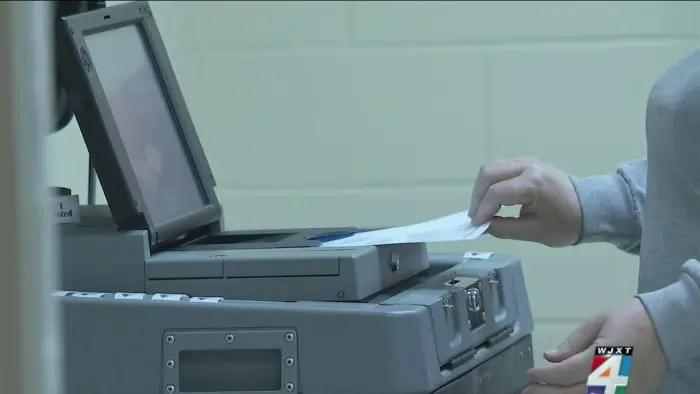

JACKSONVILLE, Fla. — Voters across Florida are heading to the polls as precincts open for the state’s pivotal 2026 primary election. This election cycle represents a critical juncture for the state’s political landscape, featuring a diverse array of congressional, state, and highly contested local races. With the state’s political identity continuing to evolve, today’s primary will select the major-party candidates who will compete in the November general election, while also directly deciding several non-partisan contests, including school board seats and judicial posts.
As Florida’s strict election laws and precinct-specific voting requirements take effect, state and local election officials are preparing for a long day of voting, tabulation, and public scrutiny.
Executive Overview
The 2026 Florida primary election serves as a critical barometer for both political parties as they look ahead to the midterm elections. From Pensacola to Key West, voters are casting ballots in races that will shape the balance of power in Washington and define the legislative agenda in Tallahassee. At stake are nominations for key U.S. House seats, state legislative districts, and influential county-level offices that wield significant power over local budgets, education policies, and judicial administration.
Under Florida’s voting framework, the rules of engagement are precise. Unlike the flexible early voting period—which concluded this past weekend and allowed voters to cast ballots at any designated site within their home county—Election Day requires voters to report to their specific, government-assigned home precincts.
Furthermore, Florida’s status as a closed primary state introduces a layer of complexity for the state’s independent and minor-party voters. However, critical exceptions, such as non-partisan races and "Universal Primary Contests," ensure that virtually every registered voter has a reason to participate.
Initial metrics compiled by the Florida Division of Elections reveal a complex turnout landscape. Early and mail-in voting statistics indicate that more than 1.5 million Floridians have already cast their ballots, representing a statewide turnout of just under 15 percent. Notably, registered Democrats have outpaced Republicans in early participation, with over 20 percent of Democrats voting compared to nearly 16 percent of Republicans. How these early figures reconcile with Election Day’s historically strong Republican in-person turnout will determine the final composition of the electorate and the outcomes of several razor-thin races.
Detailed Chronology: The Mechanics of Election Day
The execution of a statewide primary election in Florida is a massive logistical undertaking, governed by a strict timeline designed to ensure security, access, and timely reporting.
+-------------------------------------------------------------------+
|                     ELECTION DAY CHRONOLOGY                       |
+-------------------------------------------------------------------+
|  06:00 AM -- Poll Workers Arrive & Secure Voting Equipment       |
|  07:00 AM -- Polls Open Statewide (Eastern & Central Time Zones)   |
|  12:00 PM -- Midday Turnout Audits & Ballot Reconciliation       |
|  06:00 PM -- Final Hour Rush & Mail-In Ballot Delivery Cutoff     |
|  07:00 PM -- Polls Close / Tabulation & Transmission Begins       |
|  08:00 PM -- Live Broadcast & In-Depth Election Analysis Commences|
+-------------------------------------------------------------------+
1. The Pre-Dawn Mobilization (6:00 AM – 7:00 AM)
Hours before the first ballot is cast, thousands of poll workers, precinct deputies, and technical specialists arrive at school gymnasiums, community centers, and houses of worship. Under the supervision of county Supervisors of Elections, staff perform mandatory equipment checks, verify that zero-count tapes are printed from optical scanners, and establish secure perimeter boundaries—including the legally mandated 150-foot "no-solicitation" zone around polling place entrances.
2. The Opening of the Polls (7:00 AM)
At exactly 7:00 a.m. local time, doors open to the public. Because Florida spans two time zones, polling places in the western Panhandle operate on Central Time, opening and closing one hour after those in the rest of the peninsula. Throughout the morning, voters must present valid photo and signature identification to poll workers, who cross-reference their credentials with electronic poll books to prevent double-voting and confirm precinct alignment.
3. Midday Monitoring and Reconciliation (12:00 PM – 4:00 PM)
Supervisors of Elections monitor voter flow and equipment functionality throughout the day. Technical teams remain on standby to address any software glitches or hardware malfunctions. Simultaneously, county offices continue to receive, verify, and sort incoming mail-in ballots.
4. The Evening Rush and the Hard Cutoff (5:00 PM – 7:00 PM)
As the workday ends, polling places anticipate a surge of voters. By Florida law, any voter who is physically in line at their assigned polling place by 7:00 p.m. must be allowed to vote.
Crucially, 7:00 p.m. also serves as the absolute deadline for the receipt of vote-by-mail ballots. Unlike states that accept ballots postmarked by Election Day, Florida law dictates that mail-in ballots must be physically in the possession of the local Supervisor of Elections by 7:00 p.m. to be counted. Ballots arriving at 7:01 p.m., regardless of when they were mailed, are legally disqualified.
5. Tabulation and Public Reporting (7:00 PM – Late)
Once the last voter in line has cast their ballot, precinct workers seal the voting machines, print the final results tapes, and securely transmit the encrypted data to the county’s central election headquarters. Simultaneously, physical memory cards and paper ballots are transported under secure escort.
Because early votes and mail-in ballots have been progressively scanned and verified in the weeks leading up to Election Day, these results are typically the first to be published, often appearing on Supervisor websites within minutes of the polls closing.
Supporting Context & Metrics: Analyzing Turnout and Election Rules
To understand the stakes of the 2026 primary, one must examine the demographic data, partisan participation rates, and the legal framework that dictates who can vote and how those votes are validated.
Turnout Dynamics: A Deep Dive into the Early Voting Numbers
According to the latest data from the Florida Division of Elections, the pre-Election Day turnout highlights distinct partisan behavior:
| Voter Affiliation | Early & Mail-In Turnout Rate | Historical Context |
|---|---|---|
| Registered Democrats | ~20.2% | Historically favor mail-in ballots; strong early showing reflects organized party outreach. |
| Registered Republicans | ~15.8% | Historically favor in-person voting on Election Day; expected to surge during daytime and evening hours. |
| Statewide Average | ~14.9% | Standard for mid-cycle primaries, though local competitive races are driving higher localized turnouts. |
This discrepancy underscores a persistent trend in Florida politics: Democrats tend to build an early lead through mail-in voting, while Republicans often rely on a massive wave of in-person voting on Election Day to close the gap and secure victories. The final statewide turnout is expected to land between 20 and 25 percent, meaning that the vast majority of participants will have made their voices heard on Election Day itself.
The Complexity of Florida’s Closed Primary System
Florida is one of 14 states that utilize a strict closed primary system. Under Florida Statute § 101.021, a voter is only eligible to vote in a political party’s primary election if they are registered members of that party. This system effectively excludes hundreds of thousands of voters registered as "No Party Affiliation" (NPA) or with minor parties from participating in high-profile Democratic or Republican contests.
However, there are two major exceptions to this rule that open up the ballot to all registered voters:
- Non-Partisan Races: School board contests, judicial elections, and various municipal races are legally non-partisan. Because these races are often decided during the primary cycle (if a candidate secures more than 50 percent of the vote), all registered voters within the respective district—regardless of party affiliation—receive a ballot containing these contests.
- Universal Primary Contests (UPC): If all candidates for an office belong to the same political party, and the winner will face no opposition in the general election (meaning there are no write-in candidates, minor-party candidates, or opposing-party candidates qualified for the November ballot), the primary becomes a "Universal Primary Contest." In this scenario, the primary is opened to all registered voters, and the candidate who wins the primary wins the office outright.
Voter Identification Requirements and Safeguards
Florida maintains strict voter identification laws. To receive a regular ballot at a polling place, a voter must present a valid, current photo identification card that contains their signature.
APPROVED PHOTO & SIGNATURE IDENTIFICATION FOR FLORIDA VOTERS:
├── Florida Driver's License
├── Florida Identification Card (issued by the DHSMV)
├── United States Passport
├── Debit or Credit Card (featuring photo and signature)
├── Military Identification
├── Student Identification
├── Retirement Center / Neighborhood Association ID
├── Public Assistance Identification
└── Veteran Health Identification Card (issued by the VA)
If a voter’s photo ID does not contain a signature, or if there is a discrepancy, the voter may present a secondary identification card containing their signature.
The Provisional Ballot Safeguard
For voters who arrive at the polls without acceptable identification, or whose eligibility is challenged by poll watchers, the state provides the provisional ballot process.
A provisional ballot allows a voter to cast their vote on a temporary paper ballot, which is then sealed in a secure envelope. Rather than being scanned immediately, the provisional ballot is set aside for review by the county’s three-member Canvassing Board (composed of a county judge, the Supervisor of Elections, and a member of the board of county commissioners).
To have their provisional ballot counted, the voter must ensure that their signature on the provisional ballot certificate matches the signature on their voter registration record. Under Florida law, voters have until 5:00 p.m. on the second day after the election to present additional evidence or "cure" any signature discrepancies with their local Supervisor of Elections office.
Official Statements and Administrative Directives
In the run-up to Election Day, election administrators and civil rights organizations have issued a series of directives aimed at ensuring a smooth, secure, and transparent process.
State Election Officials on Security and Readiness
In a directive issued to county supervisors, state election officials emphasized the security of the state’s voting infrastructure:
"Florida’s voting systems are secure, decentralized, and subject to rigorous pre-election testing. Every vote-by-mail ballot is subject to signature verification, and every electronic tabulator undergoes a public logic and accuracy test prior to deployment. We encourage all eligible citizens to participate with the confidence that their votes will be counted accurately and securely."
Local Supervisors of Elections on Mail-In Ballots
Local election officials, including those in Duval, St. Johns, and Clay counties, have issued urgent warnings regarding the 7:00 p.m. mail-in ballot deadline. In a public advisory, administrators noted:
"If you are still holding a vote-by-mail ballot on Tuesday morning, do not put it in the mail. It will not arrive in time to be counted. Instead, you must physically deliver your completed ballot to one of our designated secure drop boxes or directly to our main administrative office before the 7:00 p.m. cutoff. Alternatively, you can bring your mail-in ballot to your assigned polling place on Tuesday, have it canceled by a poll worker, and vote a regular in-person ballot."
Non-Partisan Voting Rights Coalitions on Voter Access
Civil rights advocates and voting rights groups have deployed hundreds of non-partisan election observers across the state to assist voters who encounter issues at the polls. A spokesperson for a prominent voting rights coalition stated:
"Our goal is to ensure that every eligible voter is able to cast a ballot that counts. We remind voters that if they are in line by 7:00 p.m., the polls must remain open for them. If they face administrative hurdles or lack the proper ID, they have a legal right to request and cast a provisional ballot. We urge anyone experiencing difficulties to contact our voter protection hotlines immediately."
Future Outlook: The Road to November and Beyond
The results of today’s primary will immediately reset the stage for the November 2026 general election. The outcomes of these races will carry profound implications for Florida’s political trajectory and its influence on national policy.
+------------------------------------------------------------------+
|                    THE ROAD TO THE GENERAL ELECTION              |
+------------------------------------------------------------------+
|                                                                  |
|  [August Primary] ---> [September/October] ---> [November General]
|  - Nominees Selected    - Intense Campaigning    - Final Decisions
|  - Non-Partisan Races   - Policy Debates         - Legislative
|    Decided Outright     - Ad Campaigns             Balance Set
|                                                                  |
+------------------------------------------------------------------+
1. Shifting Legislative and Congressional Balances
In Washington, the balance of power in the U.S. House of Representatives often hinges on a handful of competitive districts, several of which are located in Florida. Today’s primary will determine the ideological direction of the candidates representing both major parties in these swing districts. In Tallahassee, the primary will shape the supermajority dynamics of the Florida Legislature, influencing future policy debates on taxation, environmental conservation, healthcare access, and property insurance reform.
2. The Local Battlegrounds: Education and Judiciary
The non-partisan school board races decided today are of particular significance. In recent years, local school boards in Florida have become highly politicized arenas, serving as battlegrounds for national debates over curriculum standards, parental rights, and library book policies. Today’s non-partisan results will provide a clear indication of whether voters prefer a continuation of conservative educational reforms or a shift back toward traditional, local administrative priorities.
3. Testing New Election Administration Laws
The 2026 primary serves as a real-world test for several election administration laws enacted by the Florida Legislature over the last several cycles. These include stricter rules governing third-party voter registration organizations, modified drop-box access hours, and enhanced penalties for voting infractions. The efficiency and security with which today’s election is conducted will likely shape future legislative debates surrounding voting rights and election security in the state.
As the polls close and the tabulation process begins, the focus shifts to the data. Results will be updated in real-time as they are processed by county supervisors, providing candidates and voters alike with a clear picture of Florida’s political future. Coverage of the results, featuring detailed analysis, precinct-by-precinct breakdowns, and candidate reactions, will continue throughout the evening and into the coming days as the state prepares for the general election in November.

0 Comments