When the University of Florida (UF) secured $39 million in Florida Legislative funding to purchase a 550-acre tract intended for a state-of-the-art 36-hole championship golf course, the acquisition included a secondary, ecological asset: an adjoining 2,660-acre expanse of undeveloped wilderness known as the Hickory Sink Forest. Located off Parker Road in Alachua County, this expansive property more than doubles the managed field acreage of UF’s School of Forest, Fisheries, and Geomatics Sciences (SFFCS)—a unit within the Institute of Food and Agricultural Sciences (UF/IFAS).
The acquisition represents a generational shift in regional land conservation and environmental education. Formerly managed for decades as private agricultural, timber, and cattle land by the Lee family, the property was once slated for dense suburban expansion, including high-density housing, commercial centers, and hundreds of acres of solar arrays. Instead, its transfer to university ownership safeguards a critically sensitive "Strategic Ecosystem" defined by high-recharge karst geography and rare sandhill habitats.
Now under the leadership of newly appointed land manager Cully Lord, SFFCS is embarking on an ambitious, multi-year initiative to transform the overgrown, unmanaged scrubland into a functioning living laboratory. By building foundational infrastructure, establishing baseline ecological data via LiDAR and microclimate monitoring, and reintroducing prescribed fire regimes, UF is turning a blank slate into a premier site for research on wildland fire management, invasive species control, and habitat restoration.
Detailed Chronology
[Decades of Private Ownership]
Land operated by the Lee Family for cattle, timber, and agriculture.
       │
       ▼
[Early 2020s: Development Planning]
"Special Area Study" explores 700-acre solar farm, commercial centers, and residential housing.
       │
       ▼
[2025: State-Funded Acquisition]
UF acquires 3,210 total acres ($39M state allocation): 550 acres for golf, 2,660 acres for SFFCS conservation.
       │
       ▼
[Early 2026: Administrative Transfer]
SFFCS officially assumes management mandate for Hickory Sink Forest; high-resolution LiDAR flyovers begin.
       │
       ▼
[June 2026: Onboarding Leadership]
Cully Lord hired as first Land Manager; boots-on-the-ground infrastructure setup begins.
       │
       ▼
[Summer 2026: Initial Remediation]
Removal of 20 miles of barbed wire; first 50-acre prescribed burn conducted with Alachua Conservation Trust.
       │
       ▼
[October 2026 (Upcoming)]
First public open house scheduled to showcase baseline restoration efforts to the local community.
Decades of Agricultural Operations
For generations, the Lee family utilized the thousands of acres spanning southwestern Alachua County for agricultural production, cattle grazing, managed timber harvests, and private hunting grounds. While these activities preserved large swathes of open space, heavy fire suppression over the last decade allowed fast-growing midstory vegetation to choke out native groundcover across the sandhill ecosystem.
The Development Crossroads
Recognizing the rapid urban growth corridor stretching toward Parker Road, land use planners and the Lee family commissioned a comprehensive "Special Area Study." The study evaluated high-density development models for the property, outlining plans that featured 700 acres dedicated to industrial solar panel installations, clustered suburban town centers, and thousands of single-family housing units. Despite the high commercial valuation of these options, the Lee family sought alternatives that would prioritize long-term land conservation.
Legislative Funding and Acquisition
In 2025, a coalition involving the Lee family, Alachua County officials, university leaders, and state lawmakers successfully secured $39 million in legislative funding. The transaction transferred 3,210 total acres to the University of Florida. While 550 acres were earmarked for university golf facilities, the remaining 2,660 acres were permanently set aside for conservation, research, and natural resource education under SFFCS management.
Operational Mobilization in 2026
Early 2026: SFFCS officially took operational control of the property. The university immediately commissioned high-altitude aerial overflights to capture baseline LiDAR (Light Detection and Ranging) topological mapping and high-resolution spatial imagery.
June 2026: Cully Lord, formerly an environmental specialist with the City of Gainesville’s Natural Resources Division, was hired as the inaugural land manager for Hickory Sink Forest.
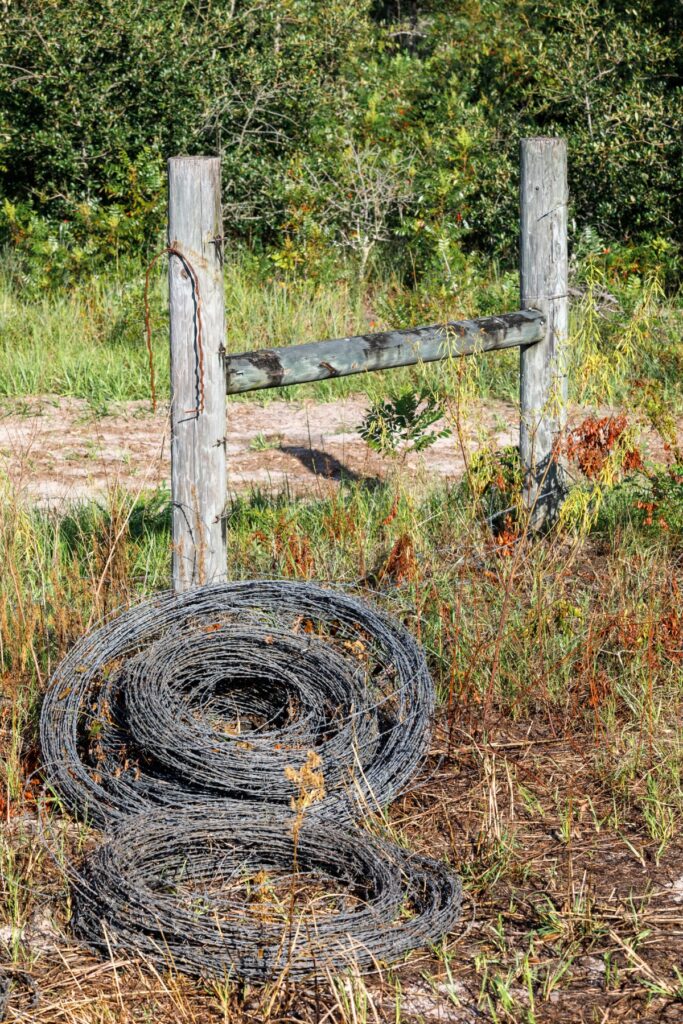
Summer 2026: SFFCS initiated major safety and site-preparation operations, contracting the removal of roughly 20 miles of legacy barbed-wire fencing. Simultaneously, in partnership with the Alachua Conservation Trust, managers executed a initial 50-acre controlled burn to begin mitigating heavy fuel loads.
Autumn 2026: SFFCS announced plans to hold its first public open house in October, offering community members and academic stakeholders a transparent view of early-stage restoration science.
Supporting Context & Metrics
Comparative Forest Management Profiles
The acquisition of Hickory Sink Forest fundamentally expands UF’s terrestrial research footprint, offering ecological conditions strikingly distinct from the university’s historic teaching forest, the Austin Cary Forest.
Property Metric
Austin Cary Forest
Hickory Sink Forest
Total Area
2,040 acres
2,660 acres
Location
Northeast Alachua County
Southwest Alachua County (Parker Rd.)
Primary Ecosystems
Flatwoods, pine plantations, cypress domes, lakes
Xeric sandhills, oak scrub, pastureland, sinkhole karst systems
Dominant Soil Type
Poorly drained, hydric organic soils
Well-drained, nutrient-poor xeric sands
Primary Research Focus
Silviculture, timber yield, wetland hydrology
Fire ecology, karst geology, invasive eradication, restoration baselines
Current Development State
Fully established (decades of management)
Greenfield site (active infrastructure deployment)
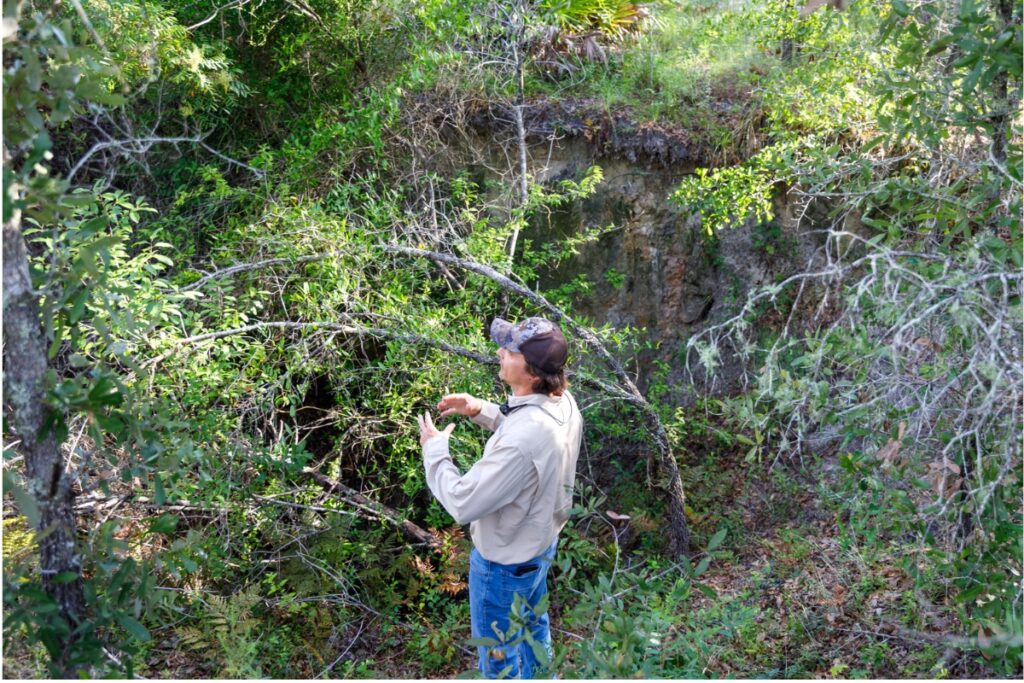
Hickory Sink Forest lies within a hydrologically sensitive karst terrain characterized by soluble limestone bedrock. Over millennia, subsurface collapse has created an array of sinkholes across the site. Confirmed surface features cover more than 10 acres, with individual shafts opening abruptly into three-foot-wide vertical drops of undetermined depth.
The largest sinkhole features sheer limestone walls rising four to five stories high. The microclimates at the base of these sinks feature significantly cooler temperatures and higher ambient humidity than the surrounding xeric sandhills, creating micro-habitats that harbor specialized plant species—as well as invasive exotic flora such as Lygodium japonicum (Japanese Creeping Fern).
Sandhill Dynamics and Fire Suppression
The dominant upland ecological community on the property is sandhill—a drought-prone, high-light ecosystem anchored by longleaf pine (Pinus palustris), turkey oak (Quercus laevis), and native perennial grasses. Sandhill ecosystems depend on frequent, low-intensity surface fires every two to three years to control hardwood encroachers and stimulate seed germination.
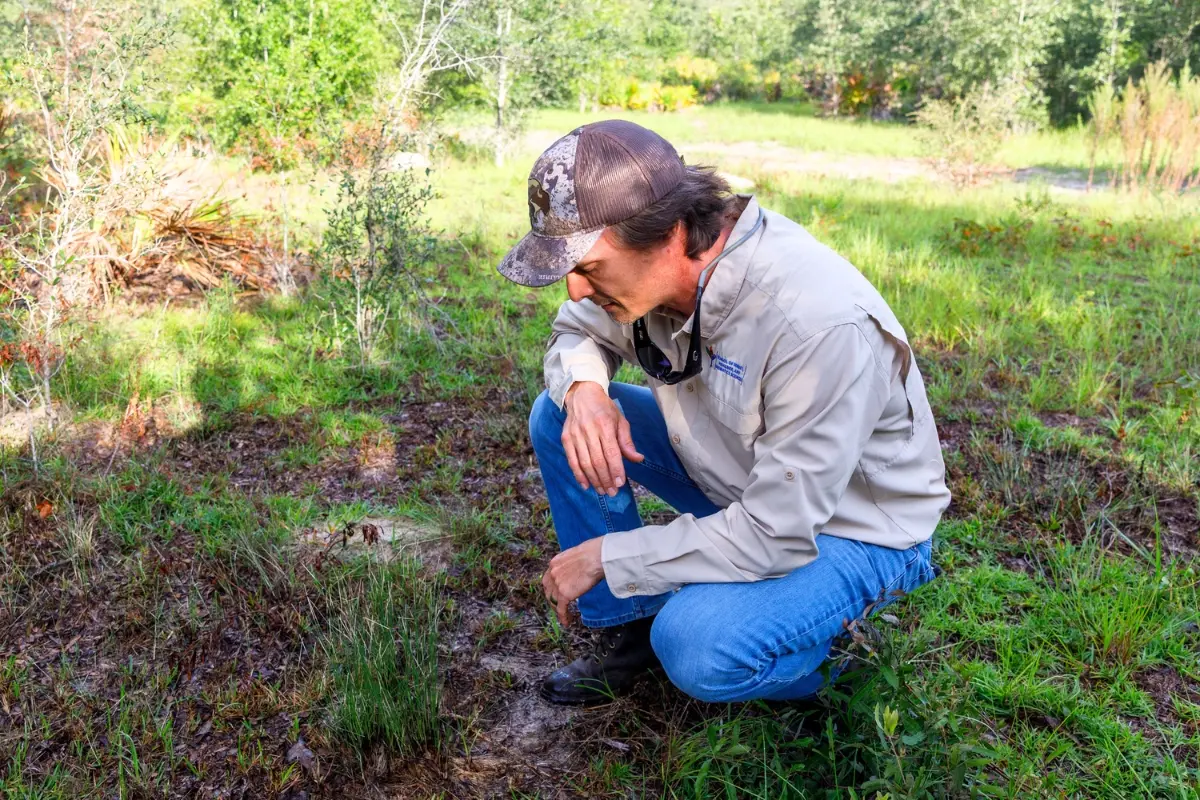
Because the Hickory Sink tract experienced near-total fire suppression for 8 to 10 years prior to state acquisition, oak saplings and woody brush have choked the midstory. Drive-through assessments reveal horizontal sightlines reduced to under 30 feet from access trails. Reintroducing prescribed fire eliminates this hardwood brush, allowing light to reach the forest floor and reviving fire-adapted species such as wiregrass (Aristida stricta), green shoots of which have already begun emerging in the 50-acre burn pilot zone.
       SANDHILL ECOSYSTEM RESTORATION CYCLE

 [ Unmanaged / Fire-Suppressed State ]
   ├── Dense midstory oak brush & saplings
   ├── High fuel load hazard
   └── Heavy shade blocks wiregrass seed germination
              │
              │  (Prescribed Fire Applied)
              ▼
 [ Immediate Post-Burn Phase ]
   ├── Hardwood midstory top-killed
   ├── Mineral soil exposed & nutrients recycled
   └── Wiregrass sprouts new growth within days
              │
              │  (Repeated Fire Cycles: 2–3 Year Intervals)
              ▼
 [ Restored Sandhill State ]
   ├── Open longleaf pine canopy
   ├── High horizontal visibility (1/4 to 1/2 mile sightlines)
   └── Diverse groundcover supporting native fauna
Infrastructure Deployment Metrics
Converting a private ranch into an academic facility requires immediate physical remediation:
Fence Dismantling: Contractors are removing roughly 20 miles of four-strand barbed wire to prevent wildlife entrapment and clear the site for heavy machinery.
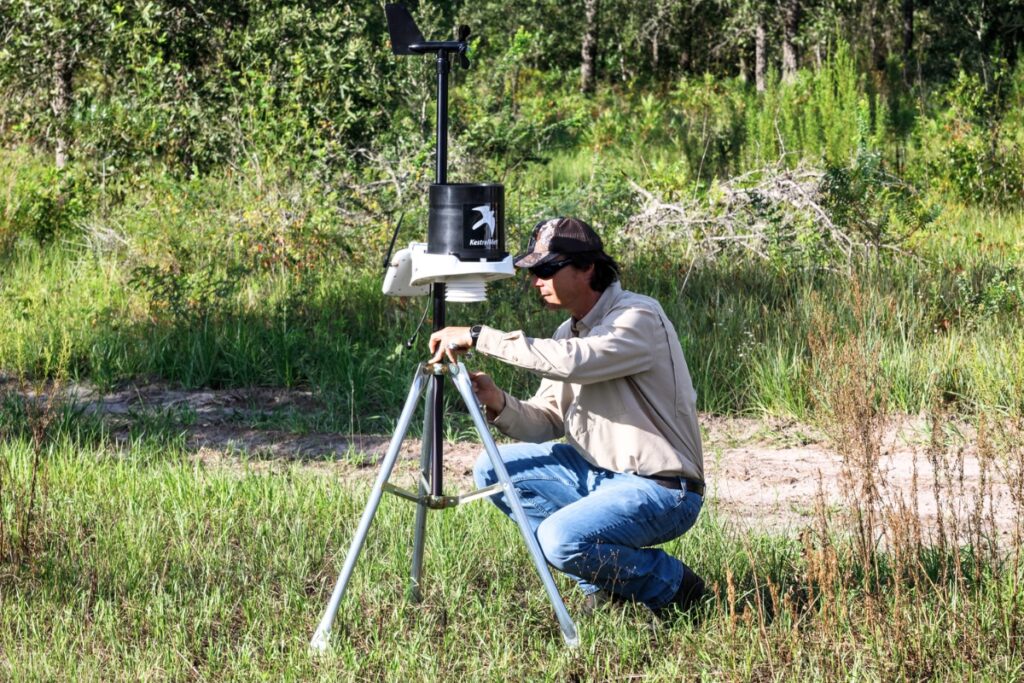
Environmental Monitoring: Portable, solar-powered weather monitoring stations have been deployed to record localized rainfall, ambient air temperature, relative humidity, and wind vectors in real time. These data feeds dictate safe operational windows for prescribed burning.
Remote Sensing: Initial LiDAR and multispectral drone flyovers have established a high-resolution 3D baseline of canopy height, biomass density, and sinkhole topography prior to restoration interventions.
Official Statements
Cully Lord, Land Manager, SFFCS / UF IFAS
"To me, this was like a higher calling. If your higher calling that you felt in life was in your backyard almost, why wouldn’t you go for that opportunity?"
On the physical challenges of site remediation:
"You see how dense and overgrown it is. The area’s had a lot of fire suppression in the last eight to 10 years. So we’ll be dealing with that some, too… After returning fire to the ecosystem, you’ll see the view expand to a quarter or half mile out."
On navigating the hazard-dense karst terrain:
"You’ll be walking along, and there’ll be a hole that’s about three feet wide; you can’t see the bottom of it. So it’s pretty wild. I’ve never seen a property like this before. On paper, we’ve got about 10 or so acres of sinkhole features, but I suspect it’s going to be more than that once we finish mapping."
On long-term restoration goals:
"Another big thing I would love to see come to fruition sooner rather than later would be to have this be a teaching forest specifically focused on fire, because there’s a lot of great opportunity for that and there’s a big need for that—not only on the private landowner side, but the nonprofit and public sectors as well."
Scott Sager, Assistant Director, SFFCS
Reflecting on receiving formal management authority over the tract:
"My reaction was 50% amazement at the opportunity and 50% realization of the sheer amount of work ahead… You’re going to need to burn blocks regularly for several cycles before you can really start to see the ecosystem change and the understory conditions recover."
On intentionally taking a measured, scientific approach to land management:
"We’re only going to do this once, and so we want to make sure we are providing opportunities for folks to set up experiments so that they can evaluate different approaches to different practices. Students will be able to see how you basically start from scratch in terms of establishing a management operation on a piece of ground."
Val Lee, Representative of the Lee Family
On choosing permanent conservation over commercial real estate development:
"Our family evaluated commercial development pathways, but firmly preferred placing the land into permanent conservation. Alachua County and the University of Florida fully backed the initiative and successfully advocated for state funding to secure this outcome."
Future Outlook
Establishing a Premier Wildland Fire Training Facility
One of the core academic priorities for SFFCS at Hickory Sink Forest is developing an applied curriculum focused on wildland fire science. With wildland-urban interface (WUI) risks mounting across the Southeastern United States, SFFCS intends to use the property to train forestry students, private landowners, municipal fire departments, and conservation NGO staff in prescribed fire planning, execution, and ecological monitoring.
Because SFFCS obtained the property before major structural restoration began, researchers have a rare opportunity to conduct true longitudinal control studies. Future projects will evaluate:
Mechanical vs. Chemical vs. Pyric Restoration: Evaluating the effectiveness of mechanical timber thinning, targeted herbicidal controls, and prescribed fire regimes on reclaiming overgrown scrubland.
Pasture Conversion Methodologies: Determining best practices for converting 500 acres of tightly compacted, non-native Bahia pastureland along the eastern boundary back into biologically diverse native longleaf pine savanna.
Karst Hydrogeology Tracking: Monitoring stormwater runoff, sinkhole drainage pathways, and potential aquifer recharge points to protect regional groundwater purity.
Community Integration and Public Access
Like the Austin Cary Forest, Hickory Sink Forest will not be open to general, unsupervised public access on a daily basis, preserving sensitive research plots and mitigating liability around hazardous sinkhole terrain. However, SFFCS leadership is committing to active community outreach through scheduled public programs.
Modeled after successful public events at Austin Cary—such as the annual Flatwoods 5K and the Flatwoods Fire and Nature Festival—Hickory Sink Forest will host community educational events. The inaugural community open house in October 2026 will serve as the public kickoff, inviting local residents to tour the landscape, review early spatial maps, and observe the transformative science turning a former cattle ranch into a flagship ecological research center.



0 Comments