

Executive Overview
The intersection of collegiate athletics and federal criminal law produced a stunning headline on Thursday, as former high-profile college basketball guard Kerr Kriisa stood before a federal court to answer for his actions. Once known for orchestrating offenses on the basketball floors of major NCAA Division I programs—including Arizona, West Virginia, Kentucky, and Cincinnati—the 25-year-old Estonian native officially entered a guilty plea to one federal count of wire fraud.
According to U.S. Attorney Matthew L. Harvey for the Northern District of West Virginia, Kriisa’s legal troubles stem from an elaborate, multi-year fraud scheme that extended far beyond the boundaries of athletic eligibility and university compliance. Court documents and federal indictments reveal that Kriisa orchestrated a complex financial deception, assuming false identities—including that of his own mother—to manipulate victims out of significant sums of money.
The guilty plea focuses specifically on an incident from February of the previous year, during which Kriisa extorted $9,000 from a victim by posing as a fictional persona named “Irene.” However, this single count represents just a fraction of a broader, systemic pattern of deception that federal investigators allege spanned multiple years and involved multi-million-dollar fraudulent claims.
As Kriisa awaits a federal sentencing hearing scheduled for December 22, where he faces a maximum prison sentence of two years, the sports world is left reeling. This case highlights a sobering reality: the stark contrast between the bright lights of collegiate athletic stardom and the shadowy, destructive consequences of financial crime. For Kriisa, a career once defined by dazzling playmaking and elite assist numbers has now been permanently overshadowed by a federal indictment, bringing an abrupt and ignominious end to his basketball aspirations.
Detailed Chronology of the Fraudulent Scheme
The legal unraveling of Kerr Kriisa is built upon a detailed timeline established by federal investigators, stretching back well before his final collegiate season. What began as private financial discrepancies ultimately manifested in a sprawling federal indictment unsealed in June.
The Genesis of Deception (2022 – 2024)
According to federal prosecutors, Kriisa’s fraudulent activities began as early as 2022. During this period, while navigating the high-pressure environment of high-major college basketball, Kriisa allegedly cultivated a pattern of financial manipulation. Rather than relying solely on legitimate revenue streams or standard financial management, the 6-foot-3 guard reportedly turned to elaborate identity deception.
Investigators claim that Kriisa routinely posed as fictitious individuals, and in particularly brazen instances, impersonated his own mother. Utilizing these fabricated personas, he reached out to targets with fabricated emergencies, claiming that he and his immediate family were facing critical, life-threatening, or financially ruinous crises that required immediate monetary intervention.
As the scheme evolved, it grew increasingly sophisticated. Prosecutors noted that Kriisa orchestrated intricate web transactions, at times instructing one victim to transfer funds directly to another under entirely false pretenses. The web of deceit reportedly ballooned into a multi-million-dollar operation, with federal authorities estimating the broader scope of the scheme reached approximately $2.2 million in fraudulent requests and targeted extractions.
Broken Promises and Legal Ultimatums (2025)
The facade began to crack significantly as victims pushed back against mounting financial losses and unfulfilled repayment promises. In April 2025, caught in a corner by mounting pressure from one of his primary targets, Kriisa signed a formal written agreement. The document explicitly promised that he would repay a staggering $100,000 to the victim by February 2026.
However, investigators state that Kriisa never had any intention or ability to honor the agreement. As the deadline loomed without a cent returned, the victim pursued formal channels, pushing the dispute into the view of law enforcement.
The Breaking Point and the "Irene" Extortion (February 2026)
Undeterred by the impending consequences of his broken repayment agreements, Kriisa allegedly continued his deceptive practices. In February 2026, operating under a completely manufactured persona named "Irene," Kriisa sent a series of calculated emails to a targeted individual.
Within these digital communications, he demanded $9,000 under the explicit threat of impending civil litigation and damaging public exposure regarding an ongoing financial dispute. This specific coercive demand formed the core of the federal wire fraud count to which Kriisa officially pleaded guilty on Thursday in Clarksburg, West Virginia.
Indictment and the Plea Agreement (June – December 2026)
Following months of grand jury investigations and evidence compilation, federal authorities formally indicted Kriisa in June on five distinct counts of wire fraud. The legal pressure proved insurmountable, culminating in Thursday’s courtroom appearance where Kriisa entered his guilty plea under the terms of a negotiated agreement with federal prosecutors. With U.S. District Court Judge overseeing the docket, December 22 was officially locked in as the date for sentencing.
Supporting Context & Metrics
To fully understand the gravity of Kerr Kriisa’s downfall, one must examine the extraordinary athletic platform he possessed—a platform that amplified both his collegiate visibility and the shockwaves of his criminal indictment.
A Collegiate Journey Marked by Talent and Turmoil
Kriisa’s basketball career was defined by immense production on the court, frequently juxtaposed with off-court controversy and a nomadic collegiate journey:
- Arizona Wildcats (2020–2023): Kriisa burst onto the national scene as an elite playmaker in the Pac-12. Over two standout seasons in Tucson, he established himself as one of the conference’s premier floor generals, ultimately leading the entire Pac-12 in total assists. His court vision and perimeter shooting made him a fan favorite and a coveted asset in the transfer portal.
- West Virginia Mountaineers (2023–2024): Seeking a new challenge, Kriisa transferred to West Virginia. However, his tenure in Morgantown hit an immediate roadblock when the NCAA suspended him for the first nine games of the season after he admitted to accepting impermissible benefits during his time at Arizona.
- Kentucky Wildcats (2024): Looking to showcase his talents on college basketball’s grandest blue-blood stage, Kriisa made a high-profile move to Lexington. Unfortunately, his time at Kentucky was severely derailed by a persistent foot injury, limiting him to just nine appearances for the Wildcats.
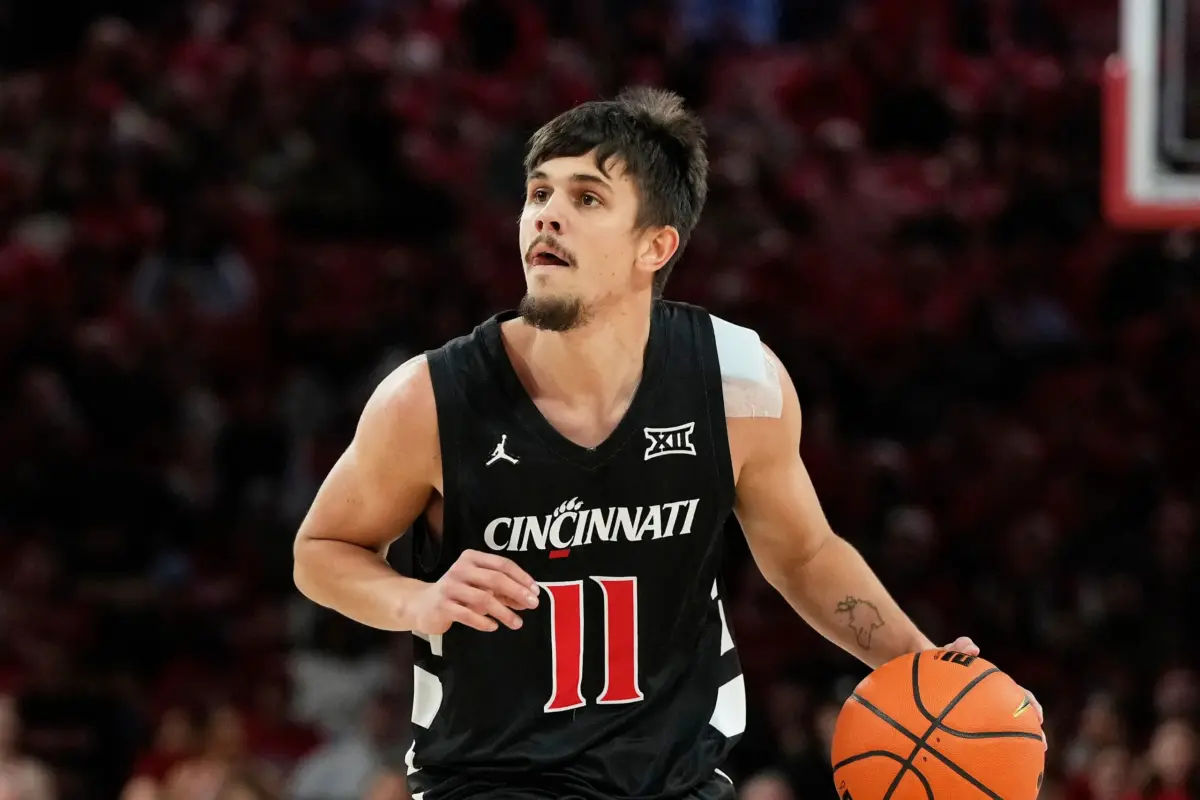
- Cincinnati Bearcats (2025–2026): For his final year of collegiate eligibility, Kriisa took his talents to Cincinnati. He carved out a starting role, opening 12 games for the Bearcats. However, the season was cut short—and his competitive playing career effectively ended—when he suffered a severe shoulder separation.
The Scale of the Crime
- $2.2 Million: The estimated total scope of the fraudulent scheme alleged by federal prosecutors dating back to 2022.
- $100,000: The sum Kriisa promised to repay a primary victim by February 2026 via a signed legal agreement he ultimately defaulted on.
- $9,000: The specific amount extorted via threatening emails under the fake persona "Irene," which formed the basis of his federal guilty plea.
- 2 Years: The maximum federal prison sentence Kriisa faces for the single count of wire fraud.
- December 22: The official sentencing date set by the U.S. District Court in West Virginia.
Official Statements and Legal Perspectives
The gravity of the federal case was underscored by the sharp, uncompromising statements issued by federal law enforcement officials following Thursday’s court proceedings in Clarksburg.
U.S. Attorney Matthew L. Harvey, representing the Northern District of West Virginia, pulled no punches when addressing the public regarding the outcome of the hearing. In an official news release, Harvey emphasized that collegiate status and athletic stardom do not insulate individuals from the rule of law.
"Financial fraud is not a game, and those who choose to deceive and exploit others will be held accountable," Harvey stated firmly, making it clear that federal authorities view identity theft and coercive extortion as severe criminal offenses regardless of the perpetrator’s background.
The response from the defense stood in stark contrast to the prosecution’s direct commentary. Richard Walker, the federal public defender representing Kriisa throughout the proceedings, declined to offer any public comment regarding the plea agreement or the underlying facts of the case, choosing instead to handle the remainder of the defense quietly within the judicial framework ahead of the December sentencing.
Legal analysts observing the case note that by entering a guilty plea to a single count of wire fraud under a plea agreement, Kriisa likely avoided a trial that could have exposed him to significantly more severe cumulative sentencing under the original five-count indictment. Nevertheless, a federal felony conviction permanently alters the trajectory of his life, ensuring that his name will forever be associated with federal penitentiaries rather than basketball tournament brackets.
Future Outlook and Broader Implications
As the legal dust settles on Kerr Kriisa’s guilty plea, the broader ramifications of the case extend far beyond an individual courtroom in West Virginia. The saga serves as a cautionary tale within the modern landscape of collegiate athletics, where name, image, and likeness (NIL) monetization, transfer portal turbulence, and high-stakes pressure cookers frequently intersect with young athletes managing vast sums of money and public notoriety.
For Kriisa personally, the immediate future holds a definitive reckoning. With his competitive playing days already behind him due to mounting injuries—ranging from foot ailments at Kentucky to a separated shoulder at Cincinnati—his professional basketball prospects both domestically and internationally are effectively extinguished. A federal felony conviction for wire fraud makes securing international visas, overseas playing contracts, or standard employment exceptionally difficult.
All eyes now turn to December 22, when U.S. District authorities will hand down Kriisa’s final sentence. While federal sentencing guidelines and the terms of his plea agreement provide parameters, the presiding judge will ultimately decide whether Kriisa will serve time behind bars.
Ultimately, Kriisa’s descent from a celebrated Pac-12 assist leader and high-major starting guard to a federal felon serves as a sobering reminder. It underscores the reality that talent on the hardwood offers no immunity from accountability when individuals cross the line from athletic competition into calculated, destructive criminal deception.

0 Comments