
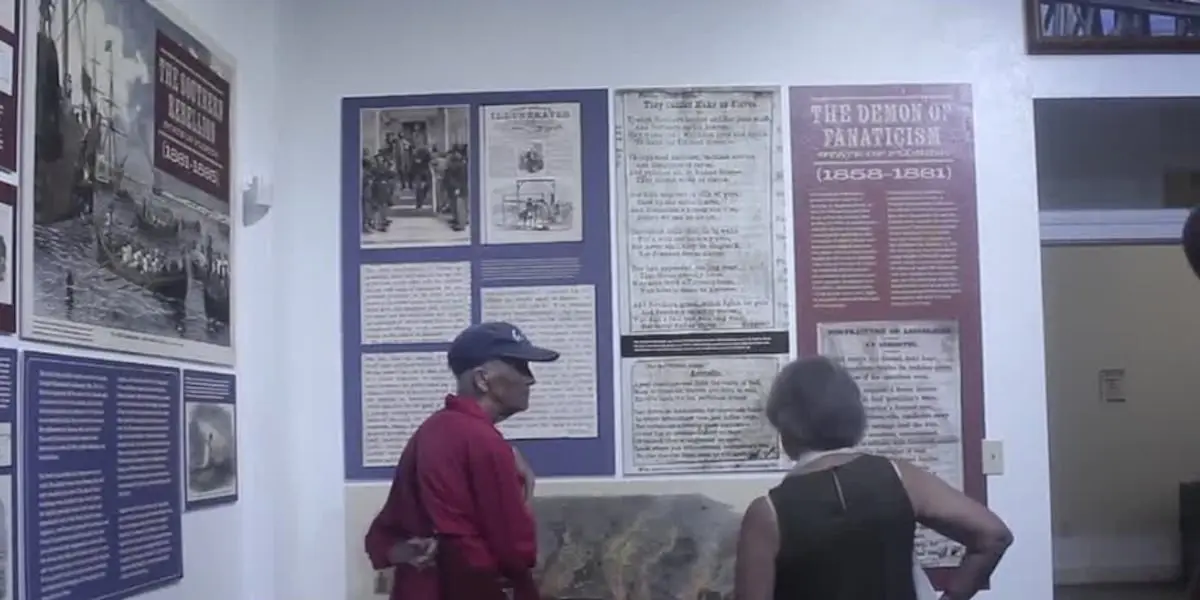

GAINESVILLE, Fla. — As the United States embarks on its Semiquincentennial—the landmark 250th anniversary of the signing of the Declaration of Independence—communities across the nation are grappling with the complexities of the American narrative. In Gainesville, Florida, this milestone is not merely being marked by standard patriotic celebrations. Instead, local historians, scholars, and activists are utilizing the occasion to conduct a rigorous interrogation of the past.
The African and African American Historical Society in Gainesville recently hosted a pivotal commemorative event designed to re-center the African diaspora within the broader tapestry of American history. Against a backdrop of national reflection and intense state-level debates over historical curricula, organizers and speakers at the event emphasized that understanding Florida’s deep-seated Black legacy is not an academic luxury, but an urgent civic necessity for navigating the socioeconomic and political challenges of the 21st century.
Executive Overview
The Semiquincentennial in 2026 arrives at a moment of profound cultural and political inflection in Florida. While state agencies and national commissions prepare grand ceremonies to honor the founding of the republic, grassroots organizations like the African and African American Historical Society are working to ensure that the contributions, struggles, and systemic disenfranchisement of Black Americans are not relegated to the margins of these celebrations.
The Gainesville event served as a critical forum for connecting Florida’s complex African American history—stretching from the Spanish colonial era and the pioneer settlements of Alachua County to the civil rights struggles of the mid-20th century—with contemporary challenges. Organizers posited that the preservation of local history is a vital tool for community empowerment, economic mobility, and civic engagement.
By analyzing the structural parallels between historical policy decisions and modern community struggles, the symposium aimed to provide attendees with a practical framework for advocacy. The central thesis of the gathering was clear: a society cannot effectively chart its future without an uncompromising, accurate comprehension of its past.
Detailed Chronology
The Genesis of the Local Semiquincentennial Initiative
The planning for Gainesville’s alternative Semiquincentennial programming began in late 2024, catalyzed by a growing concern among local historians that official state-sponsored narratives might sanitize the historical realities of the Black experience in Florida. The African and African American Historical Society, in collaboration with local civic organizations, academic departments from the University of Florida, and neighborhood preservationists, sought to design a series of events that would run parallel to national "America250" initiatives.
[Late 2024: Planning Initiated]
       │
       ▼
[Mid-2025: Collaborative Coalitions Formed (UF, Local Historians, Civic Groups)]
       │
       ▼
[Early 2026: Launch of Alternative Semiquincentennial Programming]
       │
       ▼
[Present: Gainesville Commemorative Symposium & Public Forum]
Event Proceedings and Interactive Forums
The commemorative event unfolded over a series of structured panels, historical exhibitions, and interactive community dialogues:
- Morning Session: The Forgotten Pioneers: The day commenced with an archival showcase highlighting the overlooked contributions of Black Floridians during the early days of Alachua County’s development. Researchers presented land deeds, oral histories, and photographs detailing the self-sustaining Black communities that thrived during the Reconstruction era.
- Mid-Day Panel: Legislative Erasure and Modern Advocacy: This panel addressed the current legislative landscape in Florida, focusing on how state-mandated restrictions on history education affect local archives, public school curricula, and community-led historical societies.
- Keynote Address: Dr. Jacob Umofe Gordon, a distinguished scholar and leading voice in African and African American studies, delivered a powerful address on the existential necessity of historical consciousness.
- Afternoon Workshops: The event concluded with strategic planning workshops where community members collaborated on initiatives to digitize local Black family archives, establish historical markers in neglected neighborhoods, and develop supplementary history curricula for local youth programs.
Supporting Context & Metrics
To understand the urgency of the Gainesville event, one must examine the broader historical and demographic context of Alachua County, alongside the shifting legislative environment of Florida.
The Historical Landscape of Alachua County
Alachua County has historically been a microcosm of the wider Southern struggle for racial equality. During the Reconstruction era, the county boasted a politically active and economically ascendant Black population. However, this period was met with severe white supremacist backlash, resulting in decades of systemic disenfranchisement, land theft, and racial violence—most notably exemplified by the nearby Rosewood Massacre of 1923 and numerous documented lynchings in the region.
| Historical Epoch | Key Dynamics in Alachua County & Florida | Contemporary Legacy |
|---|---|---|
| Spanish Colonial Era (Pre-1821) | Fort Mose established as the first free Black settlement in North America; sanctuary for escaped enslaved people. | Early precedent of Black self-determination in Florida. |
| Reconstruction Era (1865–1877) | High rates of Black voter registration; election of Black officials to local and state offices. | Structural blueprints for political organizing; subsequent voter suppression. |
| Jim Crow & Civil Rights (1890–1960s) | Extreme segregation; active local NAACP chapters; integration battles at the University of Florida. | Ongoing disparities in housing, wealth, and educational access in Gainesville. |
The Modern Legislative and Educational Battleground
The historical society’s efforts occur in a climate where the teaching of African American history has faced unprecedented regulatory scrutiny. Over the past several years, the state of Florida has implemented sweeping educational policies—including the "Stop WOKE" Act and revised academic standards—which critics argue minimize the systemic nature of racism and restrict classroom discussions on racial oppression.
According to data compiled by educational advocacy groups:
- Over 60% of Florida public school educators surveyed reported feeling "highly hesitant" to discuss systemic racism or historical racial violence in their classrooms due to fear of administrative or legal repercussions.
- Funding for public university diversity, equity, and inclusion (DEI) programs has been systematically eliminated, directly impacting community outreach programs that previously supported local historical preservation efforts.
- Grants for minority-led historical societies have seen a 35% reduction statewide, forcing grassroots organizations to rely heavily on private donations, mutual aid, and volunteer labor.
Official Statements
The core message of the event was articulated through powerful, urgent testimony from scholars and community leaders who view historical preservation as a form of active resistance.
The Keynote Warning: Dr. Jacob Umofe Gordon
Dr. Jacob Umofe Gordon, a prominent historian and community leader, delivered a sobering assessment of the consequences of historical amnesia. His address connected the dots between the struggles of the past and the existential crises of the present.
"It is important that we understand where we came from, where we are, so that we can plan for the future," Dr. Gordon stated. "It’s very critical in the American past — and we must connect that past with the American present so we can begin shaping what comes next. We’ve got to learn lessons from history. If we don’t, we are likely to perish."
Dr. Gordon argued that the deliberate obfuscation of history is a precursor to the erosion of civil liberties. He urged the audience to view the 250th anniversary of the nation not as a finished monument to freedom, but as an ongoing, contested project in which Black Americans have always been the primary champions of true democracy.
Perspectives from the Ground
Other organizers and attendees echoed Dr. Gordon’s sentiments, emphasizing the practical application of historical knowledge in everyday community life.
- A local archivist and event co-organizer noted: "We aren’t just archiving old papers for the sake of nostalgia. When we show a family that their ancestors owned land in Gainesville in 1880, we are giving them a sense of belonging and a weapon against the gentrification that threatens to displace them today. History is a tangible asset."
- A community advocate added: "The state can change the textbooks, but they cannot change the archives we keep in our community centers, our churches, and our homes. This 250th anniversary is our opportunity to show that our story is foundational to the American story."
Future Outlook
As America’s Semiquincentennial year progresses, the African and African American Historical Society of Gainesville plans to expand its initiatives, establishing a model for other communities throughout the American South.
[Establishment of Mobile History Exhibits] ──► [Digitization of Local Black Family Archives] ──► [Inter-generational Mentorship Programs]Expanding the Digital Archive
Recognizing the vulnerability of physical documents to environmental decay and political shifts, the society is launching a major digitization campaign. By partnering with independent tech collectives and academic allies, they aim to create a secure, open-access digital repository of Alachua County’s Black history. This archive will ensure that historical records remain accessible to students, researchers, and the general public, completely independent of state-controlled educational platforms.
Community-Led Education Initiatives
In response to the curtailment of African American history in public school curricula, the society is designing independent weekend and after-school programs. These "Freedom Schools," inspired by the civil rights models of the 1960s, will utilize local history to teach critical thinking, media literacy, and civic engagement to Gainesville’s youth.
A Blueprint for Grassroots Resilience
The Gainesville event has demonstrated that the celebration of America’s 250th anniversary cannot be monolithic. By asserting their presence and their history, the members of the African and African American Historical Society are proving that the preservation of memory is an active, vital component of community survival.
As the nation reflects on two and a half centuries of existence, the work being done in Gainesville serves as a poignant reminder: the promise of the future is entirely dependent on the courage to confront, preserve, and learn from the complexities of the past.

0 Comments