

Executive Overview
GRAND CANYON, Ariz. — A catastrophic flash flood tore through the inner corridors of the Grand Canyon on Saturday afternoon, leaving a trail of staggering devastation, displacing dozens of backcountry visitors, and triggering a massive, multi-agency search-and-rescue operation. The National Park Service (NPS) confirmed that the body of a 46-year-old man was recovered on Sunday along the Colorado River near Crystal Rapids, marking the first confirmed fatality from the sudden deluge.
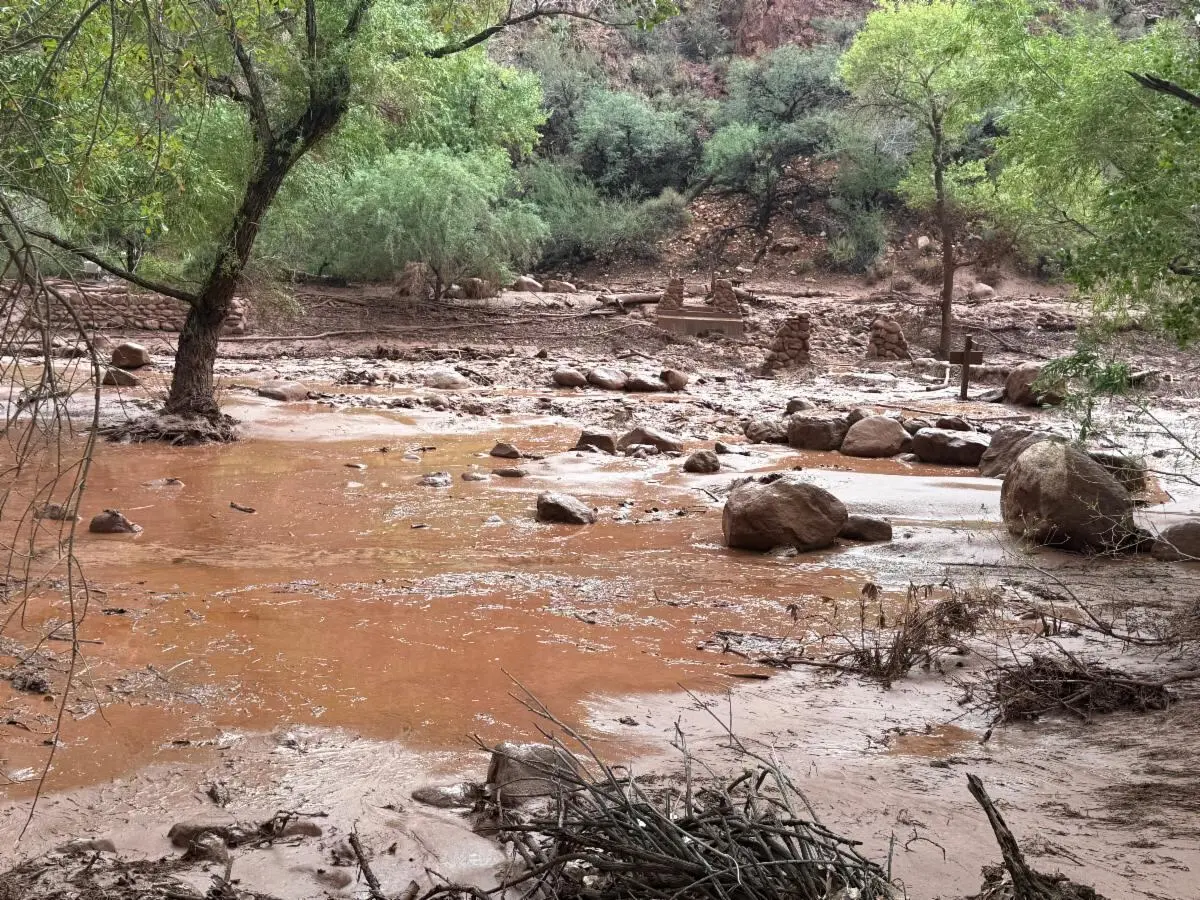
The violent weather event, which struck without warning at approximately 2:30 p.m. on Saturday, August 29, severely compromised critical park infrastructure. Nearly all footbridges crossing Bright Angel Creek were completely destroyed, heavy debris choked the Colorado River—forcing its immediate closure to all river traffic—and a critical Transcanyon Waterline was severely damaged.
As of Sunday evening, approximately 15 people remained unaccounted for, down from an initial, chaotic estimate of more than 20. Concurrently, emergency responders have successfully airlifted 62 people out of high-risk zones, including Phantom Ranch and the lower North Kaibab Trail.
The compounding disasters have forced park leadership to take unprecedented steps. Effective Monday at noon, stringent Stage 4 water restrictions will take effect across the South Rim. In addition, the park is shutting down all overnight hotel accommodations indefinitely to preserve dwindling water reserves, permitting only dry camping for visitors. As investigators comb through the debris-choked canyon corridors, authorities are urging the public to provide any information that could help locate missing hikers.
Detailed Chronology of the Disaster
Saturday, August 29: The Sudden Onset
The meteorological setup that spawned the disaster materialized quickly over northern Arizona, funneling intense monsoon moisture directly into the high-relief terrain of the Grand Canyon. At approximately 2:30 p.m., a wall of water rushed down Bright Angel Canyon.
The flash flood transformed normally placid creeks into violent, debris-laden torrents. The surge caught numerous hikers, backpackers, and campers completely off guard along the Bright Angel Creek corridor, Phantom Ranch, and lower elevations of the North Kaibab Trail.
Debris flows instantly battered the landscape. Historic stone bridge pylons, pedestrian footbridges, and utility lines were pulverized or swept away by the sheer hydraulic force of the water. As daylight faded, communication lines into the inner canyon were severely disrupted, leaving park dispatchers scrambling to assess the scale of the emergency.
Sunday, August 30: Scale of the Devastation Emerges
By Sunday morning, the full magnitude of Saturday’s catastrophe began to crystallize. Park officials, coordinating closely with the Arizona Department of Public Safety (ADPS) and emergency medical services, launched daylight air operations to pluck stranded individuals from precarious positions.
By Sunday morning, 62 evacuees had been airlifted out of Phantom Ranch and the lower North Kaibab Trail. These survivors were flown directly to the South Rim, where the American Red Cross established a reception center at the Maswik Lodge Cafeteria to provide food, psychological support, and temporary shelter.
Further evacuation flights were scheduled throughout Sunday to clear out remaining campers and staff at Cottonwood Campground and Phantom Ranch.
Amidst the rescue operations, the grim reality of the storm unfolded. Search teams scouring the river corridor recovered the body of the 46-year-old male victim near Crystal Rapids on the Colorado River. Concurrently, park officials grappled with fluctuating numbers of missing persons. An initial estimate of more than 20 missing hikers was officially revised downward to approximately 15 just before 3:00 p.m. Sunday, as responders reconciled registration manifests with successful rescue tallies.
Supporting Context & Metrics
The human toll is compounded by massive infrastructural and logistical failures that threaten to paralyze park operations for weeks, if not months.
Infrastructure and Facility Impacts
- Trails and Bridges: Nearly all pedestrian footbridges spanning Bright Angel Creek have been destroyed. This effectively severs the inner-canyon trail network, isolating sections of the Bright Angel and North Kaibab trails and stranding backpackers on the wrong side of impassable channels.
- The Colorado River: The river corridor is entirely closed to commercial and private river traffic until further notice. Heavy metal structures, broken utility lines, and massive tree debris washed directly into the river, creating extreme navigational hazards through Crystal Rapids and surrounding stretches. River parties currently trapped within the canyon are receiving remote guidance from operations rangers via the Grand Canyon River Alert system.
- The Transcanyon Waterline: The lifeline of the park’s infrastructure—the Transcanyon Waterline, which pumps potable water from inner-canyon sources up to the rim—sustained catastrophic damage. Park officials confirmed that the waterline is completely non-operational.
- Water Reserves and Restrictions: With the primary water source disabled, the park is operating on minimal emergency water reserves. Stage 4 water restrictions are slated to begin at noon on Monday, mandating severe conservation across all residential, administrative, and visitor facilities.
- Lodging Closures: To preserve water for essential human needs, the park ordered the closure of all overnight hotel accommodations effective Monday. This sweeping mandate impacts prominent Xanterra-operated facilities—including El Tovar, Bright Angel Lodge, Maswik Lodge, and Phantom Ranch—as well as Delaware North properties like Yavapai Lodge and Trailer Village. Spigot access across the park will be turned off, and only dry camping will be permitted. Day-use access to the park remains open, though heavily discouraged.
Official Statements and Appeal for Information
The National Park Service and local emergency management agencies have mobilized federal and state resources to manage the crisis. However, investigators are facing significant hurdles in establishing a definitive roster of everyone who was in the path of the floodwaters.
In a public appeal issued late Sunday, the NPS Investigative Services Branch requested immediate assistance from the public:
"The National Park Service is asking anyone with information about hikers or backpackers who were in the inner canyon along the Bright Angel Creek corridor on Saturday, or anyone who had a campground reservation in that area, to contact investigators immediately."
Individuals with relevant information, photographs, or details regarding missing persons are urged to call the dedicated tip line at 888-653-0009 or submit digital details via email to [email protected].
Park administrators have emphasized that life safety remains the absolute priority. Rescue operations, hazard assessments, and structural integrity checks on remaining bridges will continue uninterrupted as weather conditions permit.
Future Outlook and Recovery Roadmap
As August gives way to September, the Grand Canyon faces a protracted and complex recovery process. The combination of structural failures, ongoing monsoon weather threats, and the search for the remaining 15 missing individuals sets a grim tone for the start of the autumn tourism season.
Immediate Priorities
- Search and Recovery: Pinpoint the locations of the remaining unaccounted-for individuals through coordinated ground teams, canine units, and aerial reconnaissance along the Colorado River and Bright Angel Creek corridors.
- Water System Stabilization: Formulate an emergency engineering plan to assess, repair, and test the Transcanyon Waterline. Until a temporary or permanent fix is implemented, water conservation measures will remain strictly enforced.
- Hazard Mitigation: Clear massive debris jams from the Colorado River to restore safe navigation, and evaluate the structural integrity of remaining canyon trails to prevent secondary accidents.
Long-Term Challenges
The destruction of multiple historic footbridges and portions of the utility infrastructure underscores the vulnerability of deep-canyon assets to extreme weather events fueled by regional climate volatility. Rebuilding the crossings over Bright Angel Creek will require specialized heavy-lift helicopter operations and substantial capital outlays, likely keeping major inner-canyon bypass routes closed for an extended period.
Park officials have stressed that no definitive timeline has been established for reopening closed inner-canyon trails, campgrounds, or river corridors. Additional closures may be announced on short notice as engineers conduct comprehensive safety audits.
Visitors holding upcoming reservations for inner-canyon campgrounds, Phantom Ranch, or South Rim lodging are strongly advised to monitor the official National Park Service website for real-time operational updates, refund policies, and safety advisories before attempting to travel to the Grand Canyon.

0 Comments