

Executive Overview
Every September, the fertile plains surrounding Grand Island, Nebraska, transform into the epicenter of modern farming technology as they host Husker Harvest Days, one of the largest and most influential agricultural expositions in the United States. Yet, while the massive machinery, cutting-edge agronomy software, and state-of-the-art irrigation systems represent the pinnacle of twenty-first-century agricultural innovation, the ground upon which they rest tells a much older, more foundational story.
Grand Island’s identity is inextricably bound to the sweeping currents of the Platte River and the grand narrative of nineteenth-century American westward expansion. Long before it became a bustling hub of agricultural commerce and trade, the region served as a crucial natural lifeline for a quarter of a million pioneers, fur traders, and empire builders.
As part of the broader historical tapestry of the American West, Grand Island evolved from a French fur-trader’s landmark into a critical railroad outpost, and finally into a powerhouse of modern agricultural production. This report explores the deep historical roots of Grand Island, Nebraska, detailing its transition from a nineteenth-century migration highway along the Platte River corridor into a premier modern agricultural capital.
Detailed Chronology: From Wilderness Corridor to Agricultural Hub
To understand the modern agricultural significance of Grand Island, one must trace the chronological milestones that transformed a wild, braided river valley into a structured, highly productive farming community.
1. The Era of Westward Migration (1840–1870)
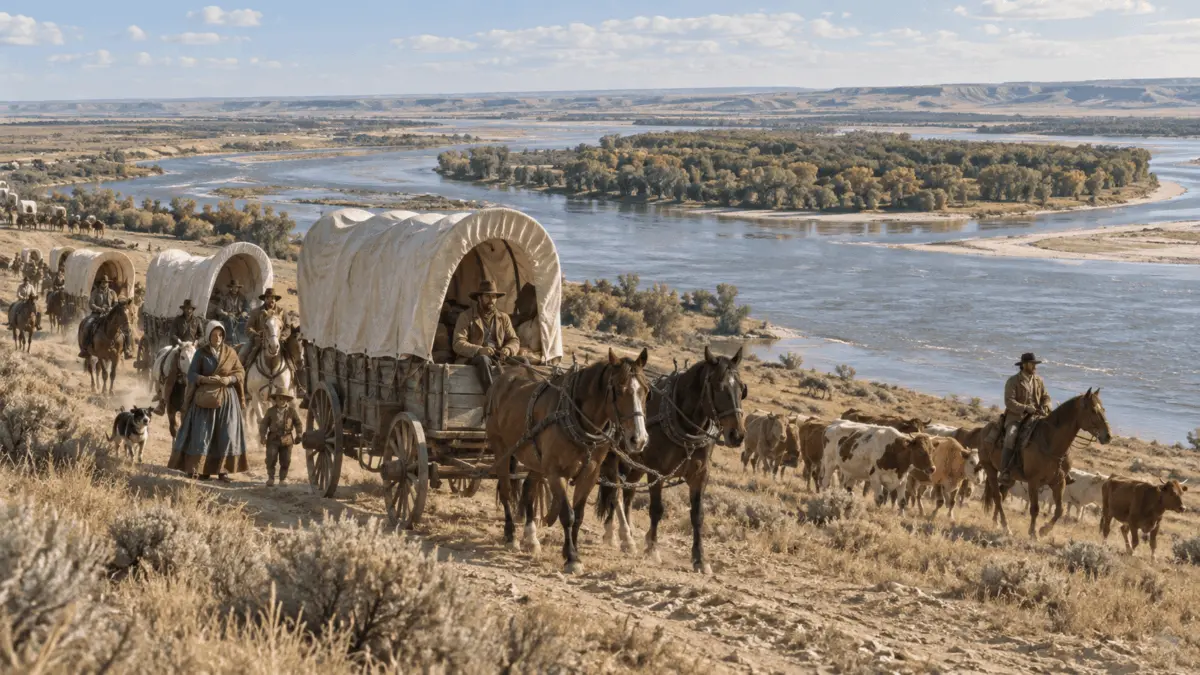
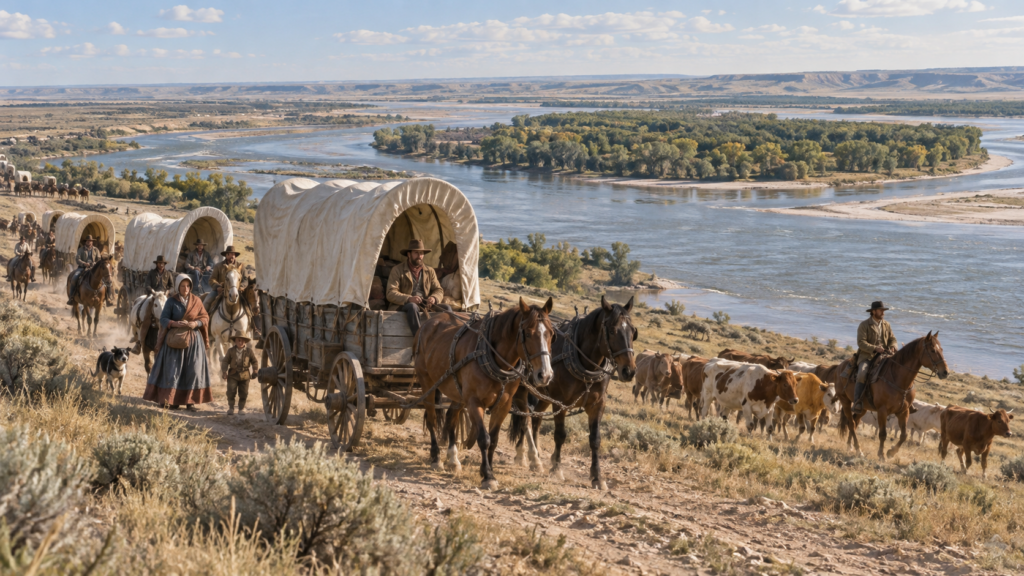
Before permanent agricultural settlements took root in central Nebraska, the Platte River valley served as the primary thoroughfare for the American westward movement. Between 1840 and 1870, an estimated 250,000 settlers traversed this unforgiving landscape. Traveling via the Oregon, California, and Mormon Trails, these emigrants relied almost exclusively on the Platte River corridor.
While the river itself was famously described by nineteenth-century travelers as "a mile wide and an inch deep"—notoriously difficult to navigate by boat—its flat, low-grade valley offered the most viable wagon route across the Great Plains. The corridor provided essential resources: water for livestock, timber for makeshift repairs, and grazing land for exhausted oxen and mules.
2. The French Traders and the Origin of "La Grand Isle" (1850s)
The geographical feature that gave the city its name emerged clearly in the mid-nineteenth century. French-Canadian fur trappers and traders traversing the Platte River noted a massive, heavily forested island situated within the river’s braided channels in central Nebraska. They referred to this prominent landmark as "La Grand Isle" (the large island).
Though the river’s hydrology has shifted drastically over the decades—rendering the original island virtually untraceable today—the moniker stuck, transitioning from a localized geographic reference to the permanent name of the future settlement.
3. The Arrival of the Union Pacific Railroad (1866)
The true catalyst for permanent agrarian and commercial development in the region was the expansion of the transcontinental railroad. In 1866, the Union Pacific Railroad formally platted the area as Grand Island.
The railroad pierced through the heart of the Great Plains, fundamentally altering the economic viability of the region. No longer merely a temporary campsite for travelers pushing toward the Pacific Coast, Grand Island was engineered as a permanent hub. The rails provided a reliable, high-capacity mechanism to ship cattle, grain, and agricultural produce directly to eastern markets, fueling the rapid settlement of the Nebraska frontier.
4. Evolution into a Modern Agricultural Capital (Twentieth Century to Present)
As the open range gave way to fenced homesteads and mechanized farming, Grand Island solidified its status as a regional economic powerhouse. The introduction of deep-well irrigation in the mid-twentieth century unlocked the full agricultural potential of the surrounding Platte River Valley, transforming it into one of the most productive corn and soybean-producing regions in the nation. Today, the city bridges its historic past with cutting-edge industry, serving as home to major agribusinesses, equipment dealerships, and the world-renowned Husker Harvest Days exposition.
Supporting Context & Metrics
The transformation of Grand Island from an ephemeral wilderness landmark to an agricultural titan is best understood through a close examination of the geographical, economic, and historical metrics that define the region.
The Platte River Corridor: Geography and Hydrology
The Platte River is a defining feature of the Nebraska landscape, draining a massive watershed that spans the Rocky Mountains of Colorado and Wyoming.
- Historical Emigrant Traffic: Between 1840 and 1870, approximately 250,000 individuals funneled through the Platte River valley, making it one of the most heavily traveled corridors in human history.
- Geomorphic Shifts: Unlike deep, navigable rivers of the American East, the Platte is a shallow, braided river system. Over the past 150 years, water diversion for irrigation, dam construction, and changing weather patterns have drastically altered the river’s volume, channel depth, and surrounding ecology, leading to the eventual disappearance of the original "Grand Island" that inspired the city’s name.
Economic and Agricultural Impact of Grand Island Today
Grand Island stands as the third-largest city in Nebraska, functioning as a vital economic engine for the central part of the state.
- Husker Harvest Days: Spanning hundreds of acres, this annual September event attracts tens of thousands of agricultural professionals from across the globe. It injects millions of dollars into the local economy and showcases hundreds of millions of dollars in agricultural machinery, precision-ag technology, seed innovations, and livestock management systems.
- Agribusiness Integration: The city’s economy is deeply rooted in grain processing, livestock production, and agricultural equipment manufacturing. Its strategic location along modern highway and rail networks ensures that it remains a critical logistics node for the American agricultural supply chain.
Perspectives from Historians and Agricultural Leaders
To contextualize the enduring legacy of Grand Island, agricultural historians and industry leaders emphasize the unbroken line connecting nineteenth-century pioneers to modern producers.
Agricultural historian and media host Mark Oppold notes the profound symbolic and practical continuity of the region:
"The story of Grand Island illustrates how geography, migration, and transportation helped shape American agriculture. A river that served as a pathway for hundreds of thousands of westward travelers ultimately became part of the history of a community that continues to play a vital role in American agriculture. The island may have disappeared and the river may have changed, but the name and agricultural legacy of Grand Island remain."
Local economic development officials echo this sentiment, pointing out that the traits required to survive the nineteenth-century frontier—resilience, adaptability, and an intimate understanding of the land—are the exact qualities that drive modern Nebraska farmers today. The transition from survival-based homesteading to data-driven, precision agriculture represents an evolution of purpose rather than a break with the past.
Future Outlook: Preserving Heritage While Driving Innovation
As Grand Island looks toward the future, the community faces the dual challenge of honoring its rich historical heritage while aggressively embracing the technological revolution sweeping through modern agriculture.
The Role of Technology in the Platte Valley
Water resource management remains a central focus for the region. Situated above the vast Ogallala Aquifer and framed by the Platte River, Grand Island sits at the forefront of discussions regarding sustainable water use, advanced irrigation techniques, and soil conservation. As climate patterns fluctuate, the agricultural community in central Nebraska continues to pioneer water-saving technologies that ensure long-term productivity without depleting vital natural resources.
Husker Harvest Days as a Global Innovation Stage
Moving forward, events like Husker Harvest Days will continue to serve as a crystal ball for the future of global farming. Autonomous tractors, artificial intelligence-driven crop scouting, drone technology, and advanced biological crop treatments are rapidly transitioning from experimental concepts to everyday farm tools. Grand Island will remain the gathering ground where these innovations are unveiled, tested, and adopted by producers eager to feed a growing global population.
Conclusion
Grand Island, Nebraska, is far more than a dot on a map or the temporary home of an annual farm show. It is a living monument to the American agricultural journey. From the wagon tracks of the 1840s carved into the muddy banks of the Platte River, to the iron rails of the Union Pacific, and finally to the satellite-guided combines of the modern era, Grand Island remains a place where the history of American westward expansion meets the cutting-edge future of global food production.

0 Comments