

Executive Overview
In an era where collegiate athletics increasingly mirrors the financial architecture of professional sports, commercial partnerships have transcended traditional perimeter signage and localized radio spots. The latest indicator of this economic evolution arrives from Tallahassee, where Florida State University (FSU) Athletics announced a landmark, multi-year corporate sponsorship agreement with insurance giant Progressive.
Beginning in the 2026 college football season, Progressive will assume the role of the official presenting sponsor for one of the most storied, high-stakes matchups in American collegiate athletics: the annual cross-state showdown between the Florida State Seminoles and the Miami Hurricanes.
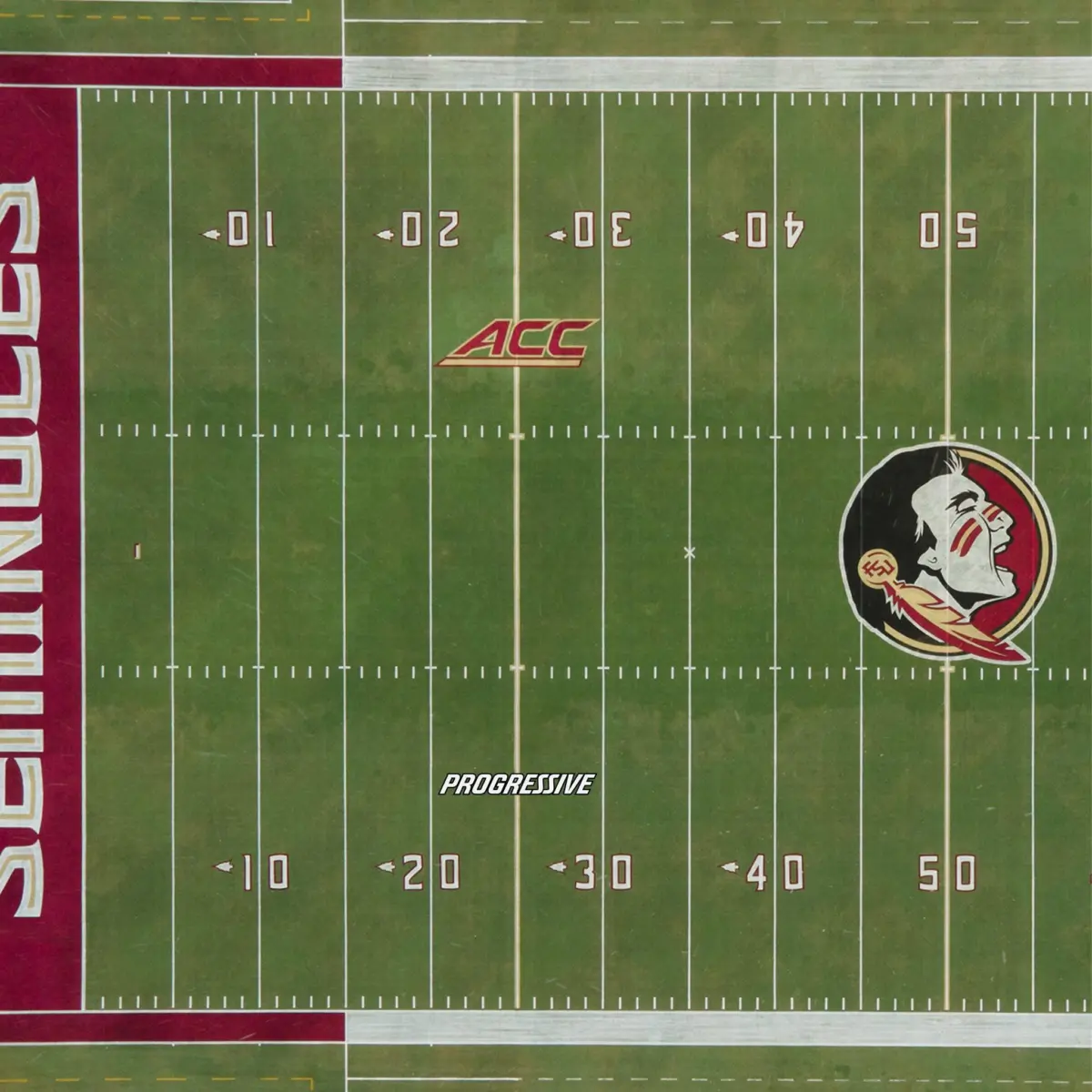
This comprehensive agreement extends far beyond the traditional trappings of game-day advertising. Under the terms of the deal—facilitated by Legends Global in close coordination with athletic department leadership from both universities—Progressive will secure prominent on-field logo placement at every home game hosted by FSU at Doak Campbell Stadium, as well as every home contest played by the Hurricanes. By embedding its brand directly onto the playing surfaces of two national powerhouses, Progressive is executing a high-visibility saturation strategy designed to capture the attention of millions of college football consumers across multiple markets.
For Florida State, the partnership represents a crucial infusion of revenue and brand alignment at a time when athletic departments nationwide are navigating unprecedented fiscal landscapes, including impending revenue-sharing models with student-athletes. For Progressive, the collaboration secures premier positioning within a cultural touchstone that commands massive television audiences, passionate alumni networks, and deep-seated regional engagement.
As athletic directors continually seek innovative ways to monetize their intellectual property, this cross-institutional agreement between FSU, Miami, and a Fortune 500 corporation signals a new benchmark for corporate engagement in collegiate sports.
Detailed Chronology: The Evolution of the Partnership
To fully understand the weight of the Progressive-FSU agreement, it is necessary to examine the trajectory of the collaboration and the structural mechanisms that brought it to fruition. The deal did not materialize overnight; rather, it represents the culmination of months of behind-the-scenes negotiations involving multiple stakeholders, third-party agency representation, and institutional coordination between two fierce athletic rivals.
The Groundwork and Agency Facilitation
The groundwork for the partnership was laid through a collaborative effort spearheaded by Legends Global, the premier live-events and venue partner operating at the intersection of collegiate and professional sports. Legends Global, known for its integrated solutions spanning partnerships, hospitality, and venue management, acted as the primary architect in aligning Progressive’s corporate marketing objectives with the rich promotional inventory of both Florida State Athletics and the Miami Hurricanes athletics partnership team.
In modern collegiate athletics, securing a cross-institutional sponsor—particularly two programs with a contentious, historical rivalry—requires delicate diplomacy and synchronized commercial packaging. Legends Global leveraged its global network and white-label approach to structure a deal that provides Progressive with equitable exposure across both campuses while preserving the distinct identities of the Seminoles and the Hurricanes.
Structuring the 2026 Rollout
While the official announcement was made public ahead of the upcoming schedule cycles, the operational rollout of the partnership is slated to officially kick off with the 2026 college football season. This lead-in time allows both athletic departments, alongside Progressive’s internal media teams and creative agencies, to develop integrated marketing campaigns, customized digital assets, and physical infrastructure adjustments required for the massive on-field branding elements.
The inclusion of Doak Campbell Stadium—currently undergoing its own multi-million-dollar modernization efforts—as a primary canvas for Progressive’s logos highlights how facility upgrades and corporate partnerships now advance in tandem. The agreement ensures that when the Seminoles and Hurricanes take the field in 2026, the visual aesthetic of the games will be unmistakably intertwined with Progressive’s corporate identity, setting a new standard for how national brands integrate into traditional college football environments.
Supporting Context & Metrics: Anatomy of a Storied Rivalry
To evaluate why Progressive chose this specific property for its heavy-hitting investment, one must analyze the cultural and historical equity embedded within the Florida State-Miami football series. In college sports, sponsorship value is directly correlated with audience reach, emotional resonance, and historical significance. The FSU-Miami matchup checks every box.
A Legacy Dating Back to 1951
The athletic series between the Florida State Seminoles and the Miami Hurricanes is not merely a football game; it is a cultural phenomenon that has helped shape the landscape of modern college football. Dating back to their first gridiron meeting on October 20, 1951—a 35-13 victory for the Hurricanes—the two programs have shared a complex, combustible history defined by geographic proximity, recruiting battles for the state of Florida’s elite talent, and national championship implications.
During the 1980s and 1990s, the rivalry reached a zenith that captivated the entire sports world. Games between the Seminoles and Hurricanes frequently decided the national championship, featuring iconic moments, future Pro Football Hall of Famers, and high-drama finishes such as "Wide Right I," "Wide Right II," "Wide Right III," and "Wide Left." These moments transcended regional sports news, establishing the matchup as a cornerstone of the sport’s national television inventory.
Modern Audiences and Economic Impact
In the contemporary media ecosystem, games featuring FSU and Miami routinely draw substantial linear television ratings, digital engagement metrics, and streaming numbers. By anchoring its multi-year campaign to this specific rivalry, Progressive is positioning itself in front of two of the most passionate, highly engaged fan bases in the country.
Furthermore, the structure of the deal—which places Progressive logos on the field for every home game played by both FSU and Miami throughout the season—amplifies the return on investment exponentially. Instead of activating solely during the single week of the head-to-head rivalry game, Progressive secures sustained, high-frequency visual impressions across multiple months. Every home Saturday in Tallahassee and Coral Gables will feature the brand prominently displayed on the playing turf, complemented by comprehensive in-stadium signage and custom digital content designed to feed the insatiable appetite of college football consumers.
Official Statements: Perspectives from Leadership
The strategic intent behind the partnership is best articulated through the key stakeholders who negotiated and finalized the agreement. Their commentary underscores the multifaceted nature of the deal, bridging corporate marketing goals with institutional pride.
FSU Leadership on Community and Reach
Florida State Vice President and Director of Athletics Michael Alford emphasized the partnership’s ability to enhance the fan experience while reflecting the sheer scale and reach of FSU Athletics.
"Progressive’s commitment to Florida State Athletics and its presence on the field throughout the season reflects the strength and reach of this partnership," Alford said in an official statement. "The Florida State–Miami rivalry is one of the most storied and passionate matchups in college football, and we’re excited to work with Progressive to elevate the experience surrounding this game while engaging Seminole fans all season long."
Alford’s emphasis on fan engagement points toward a broader trend in collegiate athletics: the deliberate transition from passive viewership to interactive, multi-channel storytelling. Through custom rivalry content and immersive in-stadium activations, FSU and Progressive intend to maintain fan interest well beyond the final whistle of game day.
Corporate Perspective from Progressive
Speaking on behalf of the corporate entity, Sean Freeman, Media Business Leader at Progressive, highlighted the cultural significance of college football and the alignment between the brand’s values and the traditions of higher education.
"College football is about more than what happens on game day—it reflects the pride, tradition and community that define Universities," Freeman stated. "Rivalries are one of the many things that make college football what it is, and we’re proud to support the student-athletes, alumni and alumni-turned-fans who help make these programs so special. We’re thrilled to have the opportunity to be a part of game days with these historic fanbases as well as being a part of this storied rivalry."
Freeman’s remarks signal a sophisticated understanding of sports marketing. By tapping into the generational loyalty and localized pride inherent in college football fanbases, Progressive aims to foster brand affinity that transcends traditional transactional advertising.
Future Outlook: The Commercialization of College Athletics
The partnership between Florida State, Miami, Legends Global, and Progressive is more than a localized sports business transaction; it serves as a harbinger of where collegiate athletic department revenue models are heading in the post-NIL (Name, Image, and Likeness) and House v. NCAA settlement era.
Navigating the New Fiscal Reality
As major athletic departments prepare to absorb the financial responsibilities of direct revenue-sharing with student-athletes—projected to cost major conference institutions millions of dollars annually—maximizing every square foot of available commercial real estate has shifted from a luxury to an absolute necessity.
The inclusion of on-field logos, long forbidden or strictly regulated by traditional NCAA aesthetic guidelines, has rapidly become the standard across major conferences. By embracing these high-value inventory assets, institutions like FSU are actively generating the capital required to remain competitive in an increasingly cutthroat arms race for coaching talent, facility enhancements, and operational excellence.
What Lies Ahead for Corporate Partnerships
Looking forward, agreements like the Progressive-FSU-Miami pact point toward several emerging trends in sports business:
- Cross-Institutional Packaging: Brands are increasingly looking to purchase unified inventory across rival or conference-aligned institutions to streamline media buying and maximize regional dominance.
- Content-Driven Activations: Traditional signage is no longer sufficient. Sponsors demand integrated digital content packages that live on social media channels, mobile applications, and broadcast segments, ensuring year-round brand touchpoints.
- Agency-Led Integration: The involvement of sophisticated third-party agencies like Legends Global will continue to grow, as athletic departments lean on specialized expertise to package, pitch, and execute complex corporate partnerships that rival professional sports franchises.
Ultimately, while purists may occasionally lament the increasing corporate presence on the hallowed turf of historic stadiums, the economic realities of modern collegiate athletics dictate otherwise. For Florida State University, securing a forward-thinking, blue-chip partner like Progressive ensures that the athletic department remains financially robust, structurally competitive, and fully equipped to meet the demands of the future while honoring the rich traditions of the past.

0 Comments