

Executive Overview
In the high-stress, fast-paced environment of a modern medical facility, the waiting room is often a crucible of anxiety. For patients preparing for invasive procedures and the loved ones tethered to them by worry, the hours leading up to surgery can feel interminable. Yet, on the bustling campus of McLeod Seacoast Hospital in Myrtle Beach, South Carolina, a profound transformation takes place every Thursday. Amid the sterile hum of medical equipment, the muted chime of paging systems, and the quiet sighs of nervous anticipation, a different sound weaves through the corridors: the gentle, cascading notes of a harp.
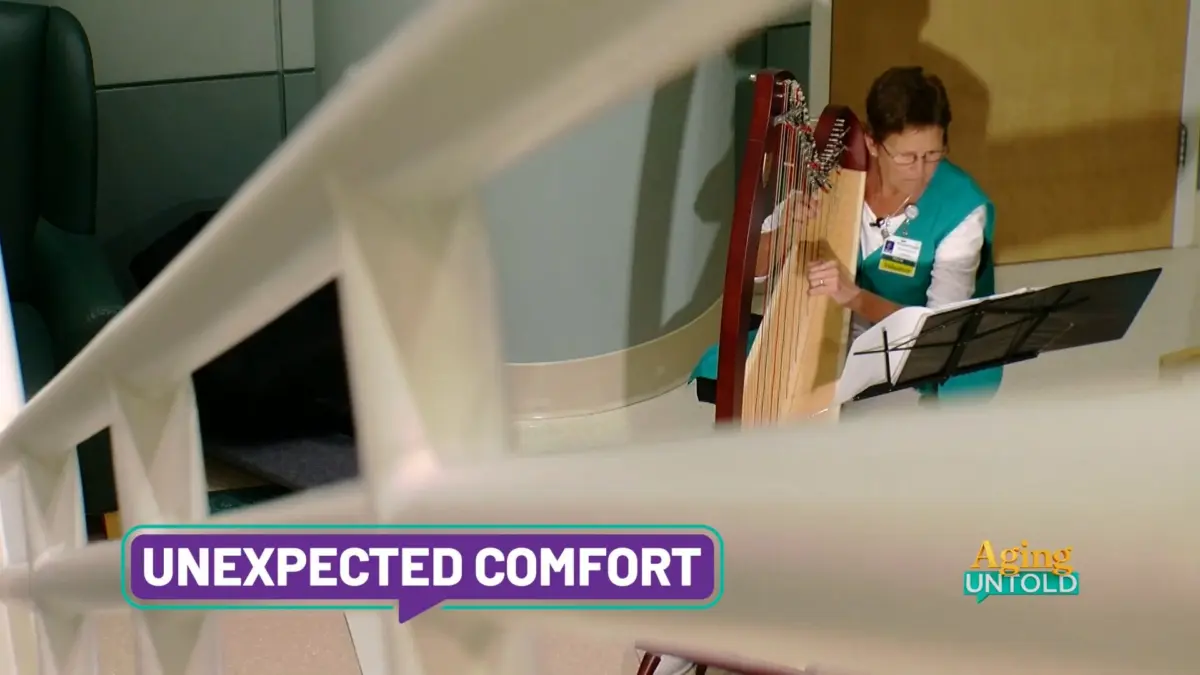
For over a year, volunteer and multi-instrumentalist Peg Mann has dedicated her Thursdays—the hospital’s peak volume day for same-day surgeries—to soothing troubled minds through music. Part of the institution’s volunteer and student services program, Mann does not merely play background music; she anchors the emotional atmosphere of the waiting area. Her presence challenges conventional hospital design by proving that aesthetic and auditory healing can be just as vital to patient care as clinical interventions.
What began as an unconventional proposal by volunteer leadership has blossomed into an indispensable pillar of community care at McLeod Seacoast. Mann’s contributions extend far beyond her musical performances. Her day begins well before the sun rises, encompassing patient transport and the delivery of comfort cart amenities, culminating in personal, deeply moving interactions with families undergoing some of the most vulnerable moments of their lives. This comprehensive feature examines the convergence of music therapy, hospital volunteerism, and the human element of healthcare through the lens of Peg Mann’s remarkable weekly residency at McLeod Seacoast Hospital.
Detailed Chronology: A Day in the Life of a Hospital Harpist
To truly understand the impact of Peg Mann’s ministry of music, one must trace the arc of her demanding Thursday shifts. While many volunteers arrive mid-morning for brief stints, Mann’s commitment spans the entire arc of the hospital’s most demanding operational window.
05:30 AM – The Pre-Dawn Arrival
While most of Myrtle Beach is still wrapped in sleep, Mann arrives at McLeod Seacoast Hospital at 5:30 a.m. This early hour coincides with the initial arrival of the surgical staff, pre-op nurses, and the first wave of patients scheduled for early-morning procedures. Navigating the quiet, dew-kissed entrance, Mann transitions immediately into her first duty of the day: patient escort services and managing the hospital’s "comfort cart."
During these early hours, the hospital atmosphere is tense and quiet. Patients arrive clutching folders of medical history, accompanied by spouses or adult children who look equally exhausted and apprehensive. Mann’s role here is grounded in practical mobility and emotional reassurance. Pushing the comfort cart—stocked with blankets, reading materials, and refreshments—she moves from intake areas to pre-op bays, offering warm smiles and gentle greetings. For patients who are nervous about their upcoming operations, a friendly face and a helping hand during transport can significantly lower baseline cortisol levels and blood pressure.
Mid-Morning – The Transition to Melody
As the morning progresses and the surgical waiting room begins to fill to capacity, Mann shifts her focus toward her primary artistic offering. Setting up her harp in a carefully designated acoustic pocket of the waiting area, she prepares to alter the ambient environment of the hospital entirely.
Unlike performers who crave the spotlight, Mann finds solace in the periphery. She carefully plucks the strings, initiating a continuous stream of relaxing secular melodies and sacred hymns. Her personal favorite, a piece titled "Angel’s Hymn," frequently drifts through the room. As the music fills the space, shoulders in the waiting room visibly drop. Conversations that were once held in anxious whispers soften, and individuals scrolling frantically on their phones look up, drawn into the tranquil acoustic landscape.
The Afternoon – Personal Connections and Consolation
Mann’s shift is not confined to her instrument. Throughout the day, she intentionally carves out breaks from playing to engage directly with families. Recognizing that some family members prefer quiet conversation over musical diversion, she moves among the seating rows.
"Either they come up and visit, or I take the time to go and visit with them too," Mann explains. These moments of connection often yield profound emotional exchanges. Families waiting through lengthy procedures find in Mann an empathetic listener who offers zero clinical judgment—only pure, unvarnished compassion. "I get lots of hugs and kisses," she notes, underscoring the deep bond forged between herself and the people she serves.
Departure – Emotional Reciprocity
By the time Mann concludes her shift, she has traversed physical corridors and emotional landscapes alike. Reflecting on the day as she packs up her harp, she experiences a sense of emotional return on investment. Rather than feeling depleted by the heavy environment of a hospital, Mann leaves with a full heart. "I feel like I have new friends every day when I go home," she says, summarizing a weekly routine built on altruism and mutual healing.
Supporting Context & Metrics: The Science of Sound in Healing Environments
Peg Mann’s residency at McLeod Seacoast is not merely a heartwarming local human-interest story; it intersects with a growing body of medical and sociological research regarding the therapeutic power of music in clinical settings.
The Burden of Waiting Room Anxiety
Surgical waiting rooms are notoriously high-stress zones. Families experience anticipatory grief, fear of surgical complications, and the general disorientation of being in an unfamiliar, clinical environment. Chronic exposure to this type of acute stress triggers the sympathetic nervous system, leading to elevated heart rates, high blood pressure, and compromised immune responses among visitors—who must remain healthy to care for recovering patients.
Integrating live acoustic music, particularly the gentle, resonant frequencies of a harp, introduces a counter-stimulus. The harp is uniquely suited for this purpose. Its broad dynamic range, rich harmonics, and absence of harsh transient sounds make it structurally capable of masking jarring background noises, such as monitors beeping, overhead paging, and rolling gurneys.
The Evolution of Peg Mann’s Musical Journey
Mann’s capability to serve as a hospital musician is built upon a lifetime of dedication to the arts. While she added the harp to her musical repertoire relatively late—beginning her formal instruction in 2005—she brought with her decades of experience playing the piano and the organ.
Playing the harp requires a unique combination of physical stamina and intellectual focus. Unlike keyboard instruments, where notes are laid out linearly and accessed instantly, a harpist must continuously navigate a complex array of strings and foot pedals while maintaining physical posture. Despite the physical demands, Mann’s ongoing commitment—manifested in her continued lessons three times a month—ensures that her technical proficiency remains high. Her extensive background playing in churches and at weddings has uniquely prepared her for the emotional gravity required in a hospital setting, where music often borders on the sacred or the memorial.
McLeod Seacoast Hospital’s Volunteer Ecosystem
At the heart of Mann’s integration into the hospital is the institution’s robust volunteer and student services program. Hospitals rely heavily on volunteers to bridge the gap between clinical necessity and human comfort. Managing such a program requires balancing operational needs with the unique personalities of individuals willing to donate their time.
McLeod Seacoast’s volunteer framework allows for creative placements. By matching Mann’s desire for background service with the hospital’s need for waiting room stabilization, administration has created a sustainable, symbiotic relationship that benefits patients, families, and staff alike.
Official Statements and Institutional Perspectives
Introducing an unconventional element like a full-sized concert harp into a functional healthcare environment required administrative courage and a shift in institutional perspective.
Initial Hesitation and Revelation
Peggy Skudera, the volunteer manager at McLeod Seacoast who ultimately hired Mann, admits that her first reaction to the proposal was guarded. In the high-stakes world of acute care, operational efficiency and solemnity traditionally take precedence over artistic expression.
"I wasn’t sure a harp was the best place to be in a hospital because my thought was, next stop is heaven," Skudera remarked candidly, acknowledging the dark humor and common cultural association between harps and the afterlife.
However, watching Mann perform quickly dispelled any lingering doubts. Skudera observed that Mann’s deep dedication to her craft completely alters the dynamic of the room.
"When you see her play it, you can see she is so in tune and so married to that harp," Skudera noted. "It’s absolutely amazing that she doesn’t know what’s going on around her. She doesn’t know all the people are listening. All the people that are looking at her."
Becoming Part of the Family
Over the course of a year, Mann’s presence has transformed from an experimental volunteer placement into an institutional staple. Skudera emphasizes that Mann is now viewed as an integral member of the hospital community.
"We could not be happier to have her here," Skudera stated, pointing to the universal positive feedback received from both the administrative staff and the families navigating the surgical wing.
The Performer’s Philosophy
For her part, Mann remains entirely grounded, deflecting praise and focusing purely on the utility of her art. She does not perform to draw applause or to showcase virtuosity; she plays to create an emotional buffer for those in distress.
"And I like it because you’re just the background," Mann explains, articulating her philosophy of service. "You’re not the center of attention. That’s not my cup of tea."
She views her diverse musical selections—spanning soothing contemporary arrangements and deeply comforting religious pieces—as a form of quiet ministry. Whether she is mastering "Angel’s Hymn" in her private lessons or performing it live beneath the fluorescent lights of the hospital waiting area, her mission remains unchanged: to bring peace where chaos threatens to take over.
Future Outlook: The Expanding Role of Arts in Modern Healthcare
As healthcare systems across the United States increasingly pivot toward holistic, patient- and family-centered care models, the integration of arts programs into clinical environments is moving from the periphery to the mainstream. Stories like Peg Mann’s at McLeod Seacoast Hospital illustrate the profound impact that community volunteers can have on the institutional culture of modern medicine.
Scaling Compassion Through the Arts
The success of the harp program at McLeod Seacoast raises important questions about the scalability of creative arts in healthcare. While not every hospital has access to a dedicated volunteer harpist with Mann’s specific skill set and stamina, the model demonstrates that low-cost, high-impact non-clinical interventions can dramatically improve the hospital experience.
Administrators are beginning to recognize that emotional and psychological care directly influences patient outcomes and family satisfaction scores. By lowering stress levels among family members in waiting rooms, hospitals reduce the secondary burden placed on nursing and medical staff, who frequently have to manage acute emotional crises alongside clinical duties.
The Sustained Legacy of Peg Mann
Looking forward, McLeod Seacoast Hospital’s volunteer services program hopes to use Mann’s success as a blueprint for expanding similar creative initiatives. Yet, it is clear that Peg Mann occupies a unique space in the hearts of the patients and staff she encounters each week.
For the families who arrive at 5:30 a.m. bracing for the unknown, and for the patients who wheel down the hall knowing their loved ones are being looked after by a community that cares, the sound of the harp represents a steady, unwavering beacon of hope. In an environment defined by clinical uncertainty, Peg Mann’s strings offer a rare and precious commodity: absolute, quiet comfort.

0 Comments