

Executive Overview
COWPENS, S.C. — What began as a tranquil Saturday afternoon excursion to the historic Cowpens National Battlefield abruptly transformed into a harrowing struggle for survival when a sudden, violent convective storm swept through the Upstate region of South Carolina. Shyane Gosnell, a local mother, found herself directly in the crosshairs of a lightning strike while desperately shielding her young daughters and their companions from howling winds and plummeting timber.
The incident, which occurred on a weekend afternoon, highlights both the capricious and deadly nature of sudden severe weather events in national parks, as well as the extraordinary resilience displayed by ordinary citizens under extreme duress. Paralyzed temporarily in her lower extremities by the electrical charge, Gosnell was forced to rely on the astonishing composure of her 10-year-old daughter—who stepped into the role of an emergency dispatcher liaison—while a fellow mother navigated a labyrinth of fallen trees and locked park gates to summon help.
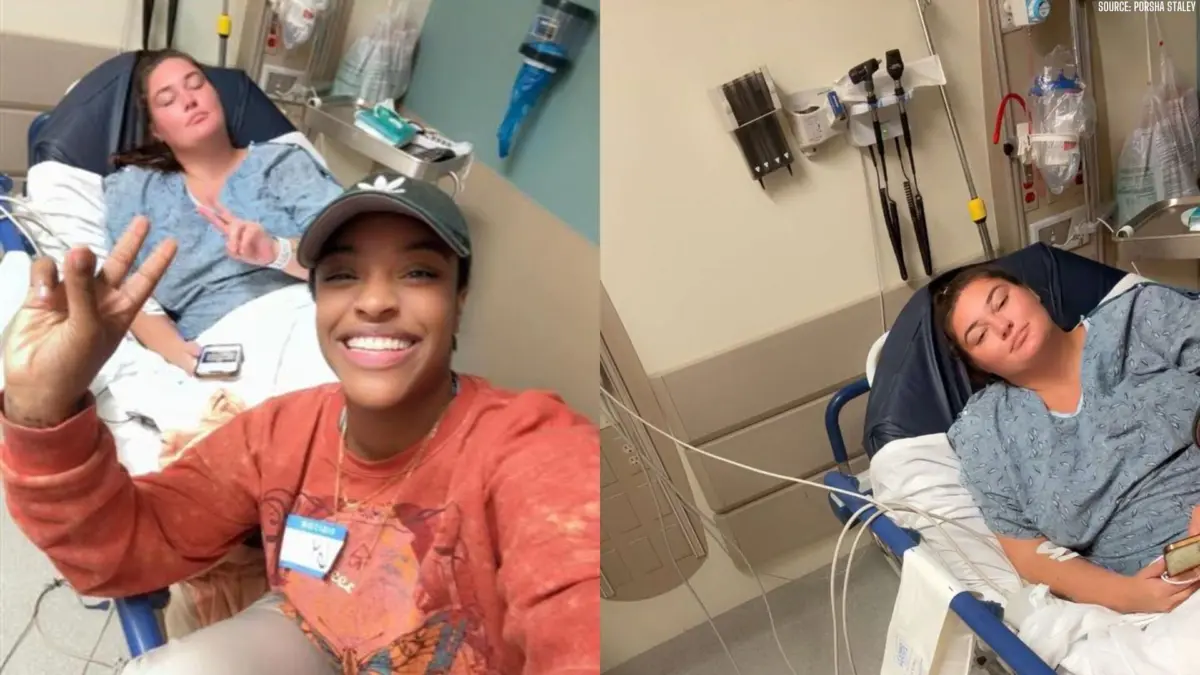
Emergency response crews, battling blocked access points and a landscape littered with more than 20 downed trees, eventually stabilized Gosnell and transported her to a nearby medical facility. Following hours of evaluation and observation, she was released with non-life-threatening injuries. However, the psychological and physical aftermath of the strike serves as a stark reminder of the inherent dangers posed by rapidly developing summertime thunderstorms in the American Southeast.
Detailed Chronology: A Day Trip Interrupted
The Sudden Onset
The afternoon started with high spirits as Shyane Gosnell, accompanied by her close friend Porsha Staley and their young daughters, set out for a recreational day trip to the Cowpens National Battlefield in Cherokee County. The historical park, known for its sprawling green fields and wooded walking trails, offered an ideal setting for the children to enjoy the outdoors.
According to weather radar and eyewitness accounts, the atmosphere shifted with terrifying speed. Without the customary hours-long buildup of heavy, darkening clouds or advanced severe weather warnings, a rogue cell developed directly over the area.
“The storm came out of nowhere, and it came on very, very quickly,” Gosnell recounted, relaying the assessment given to her by emergency responders later that day. “Nobody knew it was about to storm like this.”
The Picnic Pavilion Crisis
As the skies darkened precipitously and the ambient temperature plummeted, meteorological conditions deteriorated from pleasant to treacherous in a matter of minutes. High-velocity winds began tearing through the park’s canopy, sending mature branches and entire trees crashing to the ground.
Recognizing the immediate peril, Gosnell, Staley, and the children sought refuge under the relative safety of a park picnic pavilion. As the tempest intensified overhead, Gosnell made a split-second, maternal decision to physically shield the children. She pressed the frightened youngsters tightly against a sturdy brick wall within the structure, using her own body as a bulwark against the wind-driven debris.
It was during this defensive posture that the lightning struck.
The Electrical Surge
Lightning does not always strike the tallest object in the immediate vicinity; ground currents and side flashes can be equally devastating. In an instant, a massive electrical discharge found its path to earth through Gosnell’s body, entering via her leg.
“Immediately, I felt the shock through my leg, and it went all the way up to my body. My hearing went out just for a second,” Gosnell described, detailing the sensory overload of the strike. “It felt like fire, like a burning pins and needles shock.”
The voltage temporarily disabled her nervous system, robbing her of the ability to feel or move her legs. Stranded on the concrete floor of the pavilion, unable to stand, Gosnell found herself reliant on the very children she had just protected.
The Race Against Time and Barriers
With Gosnell incapacitated, the group fractured into emergency roles defined by sheer instinct and necessity. Porsha Staley transitioned immediately into what she described as “fight-or-flight mode.”
“I gotta save my friend,” Staley said, reflecting on the terrifying moments following the strike. “This is not only my friend, like my child looks at her also like a mama figure.”
Staley sprinted toward the parking lot to seek help, only to find her route obstructed by the storm’s immediate aftermath. Navigating through the park required weaving around massive fallen trunks; forestry crews later confirmed that upwards of 20 trees had been felled within the park boundaries during the microburst-like conditions.
Compounding the crisis, Staley encountered logistical roadblocks upon attempting to re-enter the park perimeter. The main gates had locked early due to the rapidly deteriorating safety conditions, creating a frustrating delay for both Staley and incoming Emergency Medical Services (EMS) personnel who struggled to breach the perimeter to reach the stricken pavilion.
The 10-Year-Old Hero
While Staley fought her way out to guide first responders, back at the pavilion, Gosnell’s 10-year-old daughter stepped into a role no child should ever have to bear. Demonstrating emotional maturity well beyond her years, the young girl took charge of the chaotic scene.
Operating her mother’s cellular phone, she connected with Cherokee County emergency dispatchers, relaying precise coordinates, symptoms, and updates on her mother’s condition. Simultaneously, she managed the emotional state of the younger children present.
“She was like a grown-up,” Gosnell marveled of her eldest daughter. “She was like, ‘Mom, you need to do this… Girls, let’s remain calm. We got this.’”
First responders eventually breached the park’s security gates, cleared the timber-blocked paths, and administered primary field triage. Gosnell was loaded onto a stretcher, placed into an ambulance, and rushed to a regional hospital for comprehensive cardiac and neurological assessment. Miraculously, despite sustaining the full brunt of a lightning strike, she was discharged later that evening. Reflecting on the surreal nature of the event from her recovery bed, Gosnell quipped, “We took our children to have a good time, and then, this happened. That was not on my Bingo card for this year.”
Supporting Context & Metrics: The Danger of Sudden Upstate Storms
The Meteorology of the Upstate Region
The geographic and climatic profile of the South Carolina Upstate makes it particularly susceptible to rapid-onset severe convective weather during the late spring and summer months. The region frequently experiences high humidity and rising thermal air masses that, when met with upper-level atmospheric instability, can spawn pop-up thunderstorms in a matter of minutes. Unlike organized frontal systems that allow for extended lead times through radar tracking, these isolated heat-driven storms materialize rapidly, making outdoor recreation inherently risky.
Lightning Statistics in the United States
According to the National Weather Service (NWS) and the National Lightning Safety Council (NLSC):
- Frequency: The United States averages approximately 20 million to 25 million cloud-to-ground lightning flashes every year.
- Casualties: While the vast majority of lightning strike victims survive—historically exhibiting a survival rate of approximately 90%—survivors frequently face long-term neurological, cardiovascular, and psychological sequelae.
- The "Blue Sky" Threat: A common misconception is that lightning only strikes when rain is actively falling. However, meteorological data shows that lightning can strike up to 10 miles away from the parent thunderstorm—a phenomenon colloquially known as a "bolt from the blue."
Cowpens National Battlefield Infrastructure
Cowpens National Battlefield commemorates a decisive American victory in the Revolutionary War. Spanning over 800 acres of rolling fields, dense pine stands, and walking trails, the park is primarily open-air. While visitors are encouraged to explore the historical landscape, the park’s expansive layout means that sheltering structures—such as picnic pavilions and visitor facilities—can be significant distances apart during an emergency. The sudden closure of automated gates during severe weather incidents, intended to prevent unauthorized entry into hazardous zones, occasionally introduces friction for emergency responders, a factor likely to be reviewed by park administration following this incident.
Official Statements and Institutional Response
Emergency Services and Park Administration
Local emergency management agencies in Cherokee County have praised the calmness of the juvenile callers and the rapid deployment of field units, despite the physical impediments caused by the downed timber.
“When multiple trees fall simultaneously across access corridors, our primary objective shifts from a direct transit to a tactical clearing operation,” noted a spokesperson for the local emergency response network (paraphrased from operational protocols). “First responders rely heavily on clear, concise communication from the scene, which in this case was expertly managed by a remarkably brave young caller.”
Park officials have not yet released a formal statement addressing the gate access issues raised by Staley, though standard safety protocols dictate that park gates may automatically lock or be manually secured during severe weather to prevent visitors from entering high-risk, tree-hazard zones. Review boards typically evaluate such access hurdles post-incident to balance public safety containment with rapid EMS ingress.
Medical Insights on Lightning Recovery
Medical toxicologists and emergency physicians emphasize that surviving a lightning strike is only the first step in a complex recovery process. Electrical currents passing through the human body can cause:
- Cardiorespiratory Arrest: Disruption of the heart’s natural electrical pacemaker.
- Neurological Damage: Memory loss, chronic pain, peripheral neuropathy (the "burning pins and needles" described by Gosnell), and sleep disturbances.
- Acoustic Trauma: Rupture of the tympanic membrane (ear drums) caused by the explosive thunder shockwave, which aligns with Gosnell’s temporary loss of hearing.
Future Outlook & Recommendations
Enhancing Outdoor Safety Protocols
Incidents like the one at Cowpens National Battlefield underscore the vital need for heightened public awareness regarding convective weather patterns. Emergency management experts recommend several proactive steps for families engaging in outdoor recreation:
- Monitor the Atmosphere Continuously: Relying solely on a morning weather forecast is insufficient during the summer months in the Southeast. Weather radar applications that provide real-time lightning strike detection should be monitored.
- The 30-30 Rule: If you hear thunder within 30 seconds of seeing a lightning flash, seek substantial shelter immediately (such as a fully enclosed building with plumbing and wiring, or a hard-topped metal vehicle). Remain inside until 30 minutes after the last observed clap of thunder.
- Avoid Pavilions as Primary Shelter: While picnic pavilions protect against rain, open-air structures with wooden or metal roofs supported by open pillars do not protect against side flashes or ground currents. Fully enclosed structures or vehicles are always the preferred safe haven.
- Park Infrastructure Reviews: National and state park management bodies may need to re-evaluate emergency access integration—specifically ensuring that security and automated gate locks can be remotely overridden or bypassed instantly by certified emergency vehicles during sudden natural disasters.
A Community’s Resilience
For Shyane Gosnell, Porsha Staley, and their daughters, the day trip will forever be etched in their memories not just as a brush with catastrophe, but as a testament to human courage. As Gosnell continues her physical and emotional recuperation at home, the actions of her 10-year-old daughter stand as a shining example of grace under fire, ensuring that a frightening chapter ended in survival rather than tragedy.

0 Comments