

Executive Overview
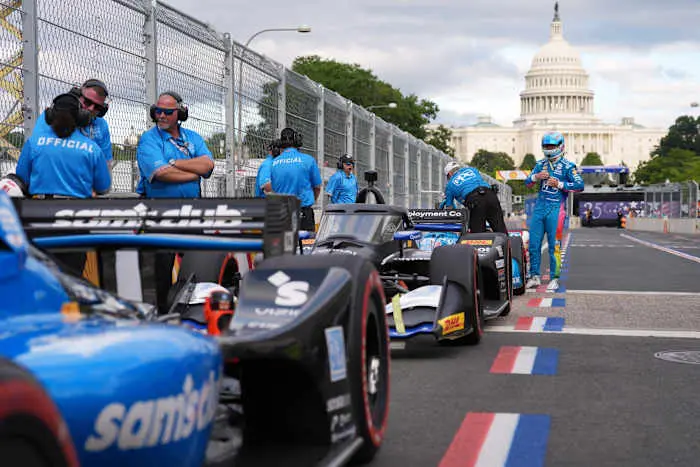
WASHINGTON — For once, the notorious bureaucratic machinery of the United States capital is moving at breakneck speed. On Sunday, August 23, 2026, the historic avenues of Washington, D.C., will trade morning commuter traffic for the ear-splitting, high-octane roar of open-wheel IndyCars racing at speeds approaching 200 mph. The inaugural Freedom 250 Grand Prix marks a breathtaking fusion of motorsport engineering and federal pageantry, transforming iconic federal corridors—including long stretches of Pennsylvania Avenue just blocks from the White House—into a temporary, world-class street circuit.
President Donald Trump and First Lady Melania Trump are scheduled to anchor the grandstands, joined by thousands of spectators, motorsport enthusiasts, and international tourists. The event serves as the centerpiece of the administration’s latest weekend commemoration of the nation’s 250th birthday, the semiquincentennial of the signing of the Declaration of Independence.
Yet, beneath the glossy veneer of roaring engines, military flyovers, and carefully choreographed patriotic displays lies a deeply complex political and logistical reality. The grand prix arrives at a precarious time for the Trump administration. As the president leans heavily into monumental, ceremonial spectacles—ranging from White House lawn UFC cards to World Cup final presentations—his second term faces severe headwinds. An ongoing, six-month conflict with Iran has driven domestic gasoline prices skyward, fueling acute voter anxiety ahead of the critical November midterm elections. With Republican strategists privately expressing concern that the electorate views the administration as detached from daily cost-of-living struggles, the Freedom 250 Grand Prix functions simultaneously as a celebration of American heritage and a high-stakes bid to capture the public narrative.
This comprehensive report examines the convergence of politics, motorsport logistics, municipal engineering, and presidential showmanship defining Washington’s historic weekend.
Detailed Chronology: From Executive Order to the Starting Grid
The journey of IndyCar racing to the heart of the federal district is a masterclass in executive will, private-sector partnerships, and rapid municipal transformation.
The Genesis of a Capital Circuit
The concept transitioned from a distant motorsport dream into an administrative reality earlier this year, when President Trump signed an executive order mandating the creation of the Freedom 250 Grand Prix. The decree framed the initiative not merely as a sporting exhibition, but as a tribute to American industrial might and civic pride.
"Cars and drivers inspire awe and respect in all who watch this quintessentially American sport," the executive order declared, emphasizing that the race would "showcase the majesty of our great city as drivers navigate a track around our iconic national monuments in celebration of America’s 250th birthday."
To turn asphalt and concrete corridors into a Fédération Internationale de l’Automobile (FIA)-standard temporary street circuit, the administration turned to long-standing allies within the motorsport industry. IndyCar series owner Roger Penske—a close friend of President Trump who was awarded the Presidential Medal of Freedom in 2019—mobilized his corporate apparatus to spearhead the logistical planning alongside federal agencies.
The Buildup: Saturday Qualifying and Engineering Marvels
The weekend’s action commenced in earnest on Saturday, August 22, 2026, with practice sessions and high-stakes qualifying heats. Drivers such as Scott McLaughlin, Alex Palou, and Caio Collet pushed their 2.2-liter twin-turbocharged V6 engines to the limit, navigating tight 90-degree street corners framed by federal marble facades and neoclassical architecture.
Behind the scenes, however, the engineering undertaking required to host an IndyCar race in a 19th-century urban grid was monumental. According to Bud Denker, president of the Penske Corporation and chairman of the race, the corporation funded the vast majority of the track development, temporary safety barrier installation, and paddock construction. Meanwhile, the District of Columbia government concentrated on localized road repaving.
Most critically, municipal and racing engineers had to confront the invisible hazards of urban racing. Because IndyCar aerodynamic floors and underwings generate immense downforce, cars passing at high speeds create a low-pressure vacuum capable of ripping municipal infrastructure straight out of the tarmac. To mitigate this catastrophic risk, work crews spent weeks welding more than 200 manhole covers shut across the race route, ensuring the racing surface remained entirely unbroken.
Sunday’s Race-Day Itinerary
Sunday’s schedule is designed to maximize both athletic competition and patriotic theater. The itinerary includes:
- The Presidential Prelude: U.S. Ambassador Monica Crowley, serving as Trump’s liaison to the America250 organizing entity, confirmed that President and First Lady Trump will lead the traditional pre-race kickoff ceremony directly from the backseat of the presidential limousine, rolling onto the track before the starting grid clears.
- Air and Ground Spectacle: In echoes of the National Mall celebrations on July Fourth, military aircraft are scheduled to perform low-altitude flyovers, punctuating the pre-race ceremonies with sonic booms across the D.C. skyline.
- The Grand Prix: The green flag drops for a grueling 250-mile battle of attrition, strategy, and bravery, as drivers thread their carbon-fiber chassis through concrete chicanes mere feet from national landmarks.
Supporting Context & Metrics: The Semiquincentennial and Presidential Styling
The Freedom 250 Grand Prix is far from an isolated event; it represents the culmination of a year-long strategy by the Trump administration to rebrand national historic milestones through populist, high-impact cultural touchstones.
A Year of Spectacle
Since the beginning of the semiquincentennial year, the White House has orchestrated a series of unorthodox celebrations that break sharply with traditional, sober historical commemorations. These events have consistently utilized pop culture, sports, and military hardware to project national power and community engagement:
- The White House Lawn UFC Event: In an unprecedented crossover of sport and statecraft, the administration hosted a premier mixed martial arts event on the South Lawn, drawing millions of online viewers and sharp critiques from historic preservationists.
- The National Mall Independence Day Display: Featuring coordinated military aircraft flyovers and a fireworks exhibition, the July Fourth weekend served as a dry run for the airspace coordination required during this weekend’s grand prix.
- The Great American State Fair: When scores of prominent 1990s-era musical acts backed out of performing at the administration-backed fair, President Trump personally stepped into the breach, headlining the festival and leaning into the populist appeal of the gathering.
Transforming the Capital’s Aesthetics
Sunday’s race also fits neatly into President Trump’s broader campaign to physically and aesthetically reshape Washington, D.C., during his second term. Critics and supporters alike have tracked a wave of capital projects bearing the administration’s distinct stylistic imprint. These include the installation of massive banners bearing the president’s likeness on federal buildings, the construction of a sprawling new White House ballroom, the gilded redecoration of the Oval Office, and extensive—though occasionally controversial—repairs and modifications to the Lincoln Memorial Reflecting Pool.
By bringing IndyCar racing past the very steps of federal institutions, the administration is effectively integrating the capital’s civic architecture into a mobile, televised arena.
Official Statements and Stakeholder Perspectives
The intersection of high-speed motorsport and federal authority has generated a diverse spectrum of commentary from political leaders, corporate organizers, and municipal stakeholders.
The Administration’s View
Promoting the event from the White House earlier this month, President Trump emphasized the emotional and symbolic resonance of the race.
"Their beautiful cars are going to make freedom roar," President Trump told reporters and gathered supporters. "This will be a freedom that’s roaring like never before."
Ambassador Monica Crowley expanded on the logistical collaboration during an interview on Fox Business, highlighting the seamless cooperation between federal entities, municipal leaders, and private corporations.
"This is about taking the absolute pinnacle of American engineering, speed, and competitive spirit and placing it where it belongs—right in the beating heart of our democracy," Crowley noted. "The coordination has been historic, and the American people are going to witness something truly unforgettable."
Private Sector and Racing Leadership
From the perspective of the Penske Corporation, the event represents a crowning achievement for American motorsports, expanding the footprint of open-wheel racing beyond traditional road courses and ovals into the nation’s premier urban landscape.
Bud Denker, race chair and Penske Corporation president, underscored the financial and logistical commitment undertaken by private enterprise to make the race a reality without placing an undue burden on D.C. taxpayers.
"We are footing the vast majority of the bill—from track construction and safety wall implementation to paddock logistics," Denker stated. "We’ve worked hand-in-hand with the District to ensure that every safety protocol, from concrete barrier placement to welding down infrastructure, meets international racing standards while preserving the city’s daily functionality as much as possible."
Political and Public Reception
While motorsport fans have celebrated the arrival of top-tier open-wheel racing to the East Coast, the event has not escaped political friction. Democratic lawmakers and local D.C. officials have raised questions regarding the diversion of municipal resources, street closures, and the potential disruption of public transit during a peak tourist weekend.
Furthermore, political analysts note the undeniable timing of the event against a backdrop of domestic and foreign policy challenges. With the administration struggling to bring a definitive end to the six-month conflict with Iran—a war that continues to keep retail gasoline prices elevated—opposition figures argue that high-profile sports entertainment risks accentuating a perceived disconnect between the White House and the economic anxieties of working-class families preparing for the upcoming midterm elections.
Future Outlook: Legacy and Precedent
As the checkered flag falls on the inaugural Freedom 250 Grand Prix, the long-term implications for Washington, D.C., and American motorsport culture will immediately come under intense scrutiny.
Municipal Viability and Annual Tradition?
The success of Sunday’s race will determine whether temporary street circuits in the nation’s capital can become a sustainable, recurring fixture on the IndyCar calendar. Transforming Washington’s monumental core into a race track required overcoming formidable logistical hurdles, from historic preservation guidelines to complex traffic rerouting. If the event proves economically lucrative for local hospitality industries and safe for competitors and spectators alike, Penske Entertainment and city officials may explore negotiating a multi-year contract, potentially institutionalizing the D.C. Grand Prix as a permanent summer tradition.
The Political Calculus
For the Trump administration, the grand prix serves as a high-risk, high-reward gamble in narrative control. By dominating Sunday news cycles with images of speed, power, and patriotic celebration, the White House aims to project confidence and vitality. Whether this visual spectacle successfully shifts the national conversation away from inflation, cost-of-living pressures, and foreign policy friction will become clear as the November midterm elections draw closer.
For one afternoon, however, the debates of Capitol Hill and the geopolitical tensions of the Middle East will be drowned out by the scream of 800-horsepower engines echoing off marble monuments—a deafening reminder of the unique intersection where American speed, power, and politics collide.

0 Comments