

Executive Overview
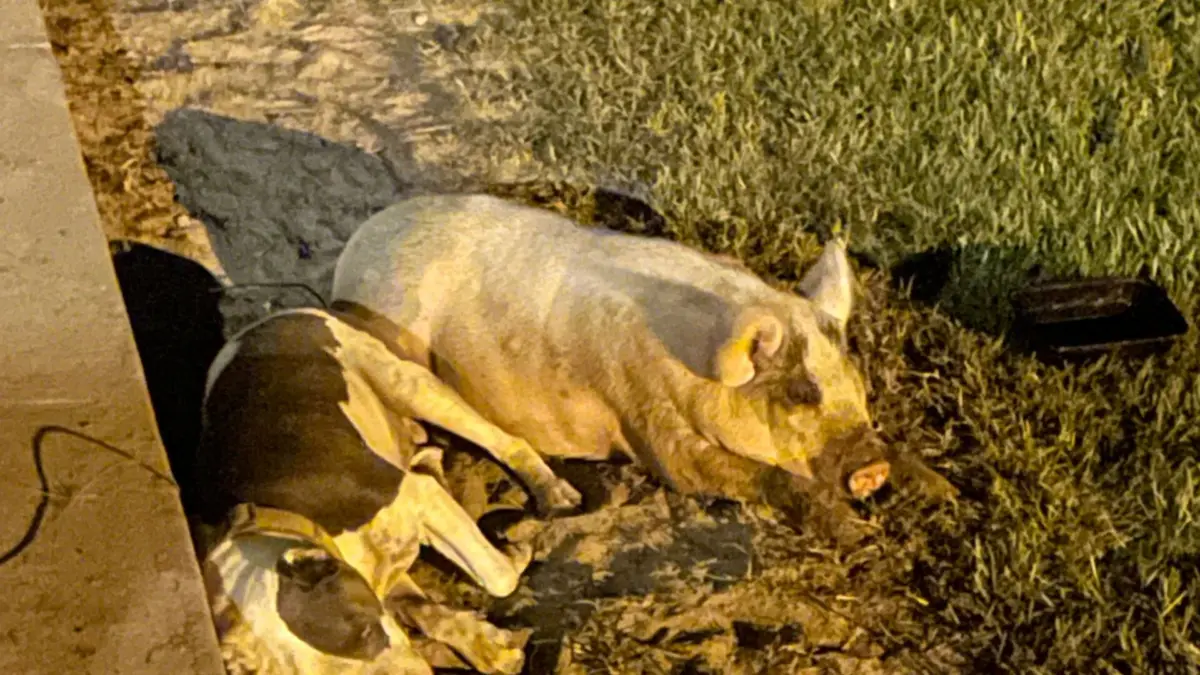
In the quiet rural enclave of Ray City, Georgia, a horrific act of violence has shattered a local family and sparked a broader debate over animal cruelty laws, property rights, and law enforcement accountability. On a quiet afternoon in Lanier County, a beloved domestic pet pig named Charlotte was shot twice and had her throat slit in a residential backyard. The execution, allegedly carried out by a neighbor, occurred in full view of several young children, leaving them deeply traumatized and prompting a formal investigation by the Lanier County Sheriff’s Office.
The incident highlights a volatile intersection of domestic pet ownership, rural livestock management, and the legal definitions of animal cruelty under Georgia law. While the suspect allegedly claimed the act was justified due to property damage, the sheer brutality of the execution—coupled with allegations of a dismissive initial response by responding deputies—has ignited outrage within the local community and attracted the attention of regional animal welfare advocates.
As investigators analyze video evidence captured by the victim’s family, the case remains highly active. No formal charges have been filed against the neighbor, whose identity has not yet been publicly disclosed by authorities. This investigative report provides a comprehensive, chronological, and legal breakdown of the incident, the subsequent law enforcement response, and the statutory framework governing animal welfare in the state of Georgia.
Detailed Chronology of the Incident
The events unfolded on a weekday afternoon at the home of Angela Burnett, a Lanier County resident who lives in the Ray City area. Burnett, who works night shifts, was resting in her home before her scheduled shift when the peace was shattered by the panicked screams of her children.
[ Burnett Resting ] ➔ [ Children Alert Mother ] ➔ [ Gunshots Fired ] ➔ [ Neighbor Slits Pig's Throat ] ➔ [ Police Arrive & Dispatch Animal ]The Assault on the Property
According to Burnett, her children rushed into her bedroom to warn her that a neighbor was in their backyard confronting their pet pig, Charlotte. Before Burnett could fully wake and reach the back door, the situation escalated into extreme violence.
"He shot her twice, and she went to screaming… the worst scream I’ve ever heard," Burnett recalled in an emotional interview. "And then he came over the top of her and slit her neck in front of the kids."
By the time Burnett stepped outside, Charlotte was mortally wounded, bleeding heavily on the ground. All of Burnett’s children witnessed both the shooting and the subsequent throat-slitting, an act of graphic violence that occurred mere feet from their home.
The Arrival of Law Enforcement
Burnett immediately contacted emergency services. Responding deputies from the Lanier County Sheriff’s Office arrived at the scene shortly thereafter. According to Burnett, Charlotte was still alive but in agonizing distress when deputies arrived.
Rather than attempting to render aid or immediately secure the scene as a crime scene, responding officers drew their duty weapons and fired additional shots into the pig to euthanize her before animal control personnel arrived on the scene.
Initial Administrative Dismissals
The immediate aftermath of the shooting was marked by confusion and what Burnett describes as a highly dismissive attitude from the responding deputies. According to Burnett, officers initially told her that no laws had been broken. Their justification was that the neighbor’s gunfire was directed toward nearby railroad tracks rather than directly at the children or the dwelling, thus negating charges of reckless endangerment.
Furthermore, a dispute quickly arose regarding the exact geography of the incident. Responding officers reportedly characterized the shooting as having occurred on the neighbor’s property. Burnett vehemently disputes this claim, asserting that Charlotte was executed squarely within her own backyard. To substantiate her claims, Burnett captured video footage of the immediate aftermath, which reportedly includes an officer acknowledging that the neighbor had crossed onto her property to shoot the animal.
The following day, a sergeant from the Lanier County Sheriff’s Office contacted Burnett to formally document her statement. However, in the days that followed, communication from the department ceased, leaving the family in limbo as they sought justice for their pet.
The Life of Charlotte: From Stray to Beloved Companion
To the Burnett family, Charlotte was not livestock; she was a cherished companion who had integrated into their daily lives over several months.
+-----------------------------------------------------------------+
|                       CHARLOTTE'S JOURNEY                       |
+-----------------------------------------------------------------+
|  1. Brought home by daughter's boyfriend                        |
|  2. Escaped initial enclosure but chose to remain on property    |
|  3. Bonded with family dog and acclimated to human interaction  |
|  4. Learned unique domestic behaviors (e.g., climbing stairs)    |
|  5. Slated for relocation to neighbor's farm prior to tragedy   |
+-----------------------------------------------------------------+
Charlotte originally arrived at the property after Burnett’s daughter’s boyfriend brought her home. Though she initially escaped her designated pen, Charlotte chose not to wander off. Instead, she remained close to the Burnett residence, prompting the family to begin feeding her and integrating her into their household.
Over the months, Charlotte developed unique behaviors that endeared her to the family:
- Canine Bonding: She formed a close bond with the family dog, often playing and resting alongside the canine.
- Domestic Acclimation: She learned to navigate the steps of the family’s back porch, frequently climbing up to interact with the children.
- Community Presence: She was a peaceful fixture on the property, with no history of aggressive behavior toward humans or other animals.
The Tragic Irony of the Neighborly Relationship
Prior to the incident, there had been no documented disputes between the Burnetts and their neighbor regarding Charlotte. In fact, Burnett noted that the neighbor had previously assisted the family in their attempts to corral the pig when she first escaped her pen.
More tragic still, the Burnetts were preparing for an upcoming relocation and had negotiated an agreement with this exact neighbor to move Charlotte to his nearby farm, believing she would live out her life in a safe, spacious environment.
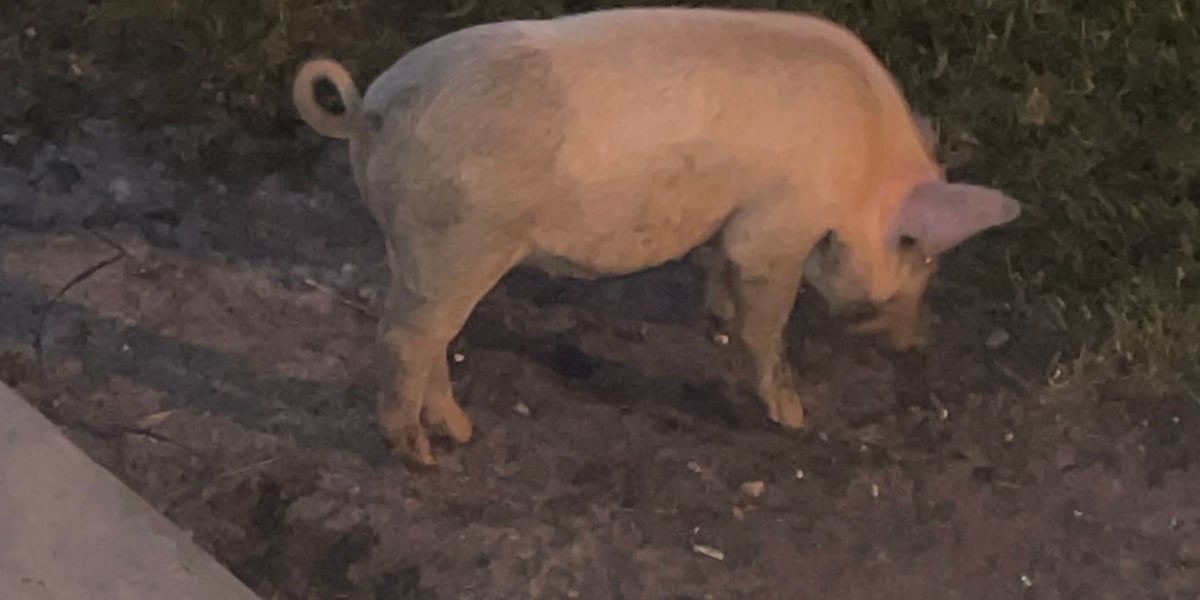
The sudden shift in the neighbor’s demeanor remains a point of shock for the family. The neighbor later claimed he attacked the pig because she had allegedly caused damage to water or utility pipes beneath his home. Burnett maintains that no formal complaints had ever been lodged, no animal control officers had ever been dispatched to the property, and no law enforcement agency had ever been contacted regarding Charlotte’s behavior prior to the afternoon of her death.
Statutory Analysis: Georgia’s Legal Framework
The investigation into Charlotte’s death sits at a complex juncture of Georgia property law, agricultural regulations, and criminal animal cruelty statutes.
Aggravated Cruelty to Animals (O.C.G.A. § 16-12-4)
Under Georgia law, animal cruelty is divided into misdemeanor and felony offenses. The execution of Charlotte strongly aligns with the statutory definition of Aggravated Cruelty to Animals, a felony offense.
Under O.C.G.A. § 16-12-4(d), a person commits the offense of aggravated cruelty to animals when they:
- Maliciously torture, maliciously administer poison to, or maliciously cause the death of an animal; or
- Maliciously cause physical harm to an animal by depriving it of a member of its body, by rendering a part of its body useless, or by seriously disfiguring its body.
A conviction for felony aggravated cruelty to animals in Georgia carries severe penalties, including:
- A prison sentence of one to five years.
- A monetary fine of up to $15,000.
- Both imprisonment and fines, alongside mandatory psychological evaluation or counseling.
+------------------------------------------------------------------------+
|                      O.C.G.A. § 16-12-4 PENALTIES                      |
+-------------------+----------------------------------------------------+
| Felony Status     | Aggravated Cruelty (Malicious Death/Torture)       |
+-------------------+----------------------------------------------------+
| Prison Sentence   | 1 to 5 Years                                       |
+-------------------+----------------------------------------------------+
| Maximum Fine      | $15,000                                            |
+-------------------+----------------------------------------------------+
| Additional Terms  | Mandatory Counseling / Psychological Evaluation    |
+-------------------+----------------------------------------------------+
The "Defense of Property" Justification and Its Limitations
In animal destruction cases, defendants often cite Georgia’s justification statute, which allows individuals to injure or kill an animal if they reasonably believe it is necessary to defend themselves, others, or their property from imminent harm.
However, Georgia law places strict limits on this defense:
- Imminent Threat Required: The justification generally requires an immediate, active threat (e.g., an animal actively attacking livestock or a human). Historical or past property damage (such as alleged damage to pipes under a house) does not legally justify a retroactive execution.
- The Humanity Requirement: The defense of justification is legally voided if the method used to kill or injure the animal is not designed to be as humane as possible under the circumstances. Shooting an animal twice and subsequently slitting its throat—particularly in a residential backyard in front of children—is highly unlikely to meet the statutory standard of a humane euthanasia method.
- Trespass Issues: The justification defense is further weakened if the individual was not lawfully on the property where the animal was killed. If the physical evidence and video footage confirm that the neighbor crossed onto Burnett’s property to execute Charlotte, any claim of justified defense of his own property becomes legally indefensible.
Invasive Species Classifications vs. Domestic Pet Status
Georgia law classifies feral or free-roaming swine as an invasive species due to the ecological and agricultural damage they can cause. State regulations strictly prohibit the release of feral swine and restrict their transport and possession.
However, legal experts note that Charlotte’s status as a domestic pet on private property distinguishes her from wild, feral swine. Because she was kept as a domestic companion on private residential land, she is afforded protections under the state’s domestic animal cruelty statutes, rendering any attempt to classify her as "invasive wildlife" to justify her slaughter legally invalid.
Official Statements and Investigative Progress
Following public outcry and inquiries from local media outlets, the Lanier County Sheriff’s Office issued a formal statement acknowledging the incident and confirming that a criminal investigation is underway.
Official Statement from the Lanier County Sheriff’s Office:
"At this time, the case is being actively investigated by the Sheriff’s Office. Further commentary will be available for release upon the conclusion of the investigation."
As of the date of this report, the neighbor has not been publicly identified, nor have any formal charges been filed. The sheriff’s office has urged patience as investigators compile forensic evidence, review the video footage provided by the Burnett family, and consult with the local District Attorney’s office to determine the appropriate charges.
Future Outlook: Trauma, Accountability, and Community Impact
The brutal killing of Charlotte has left deep emotional scars on the Burnett family, particularly the children who witnessed the graphic violence. Psychological experts emphasize that children who witness extreme cruelty to animals are at a significantly higher risk of developing post-traumatic stress disorder (PTSD), anxiety, and behavioral challenges.
For Angela Burnett, the fight is now about accountability—not just for the neighbor who killed their pet, but for a systemic law enforcement response that she believes initially sought to sweep the incident under the rug.
"There’s been no animal control called on this pig," Burnett emphasized, pointing to the lack of any official complaints that could have justified the neighbor’s sudden violence. "No cops have ever been called out here [prior to the shooting]."
The community of Ray City remains on edge as residents await the conclusion of the Lanier County Sheriff’s Office investigation. The outcome of this case will likely send a powerful message regarding how local authorities handle animal cruelty complaints in rural Georgia, establishing whether the law will treat the brutal slaughter of a domestic pet as a serious felony or dismiss it as a minor neighborly dispute.

0 Comments