
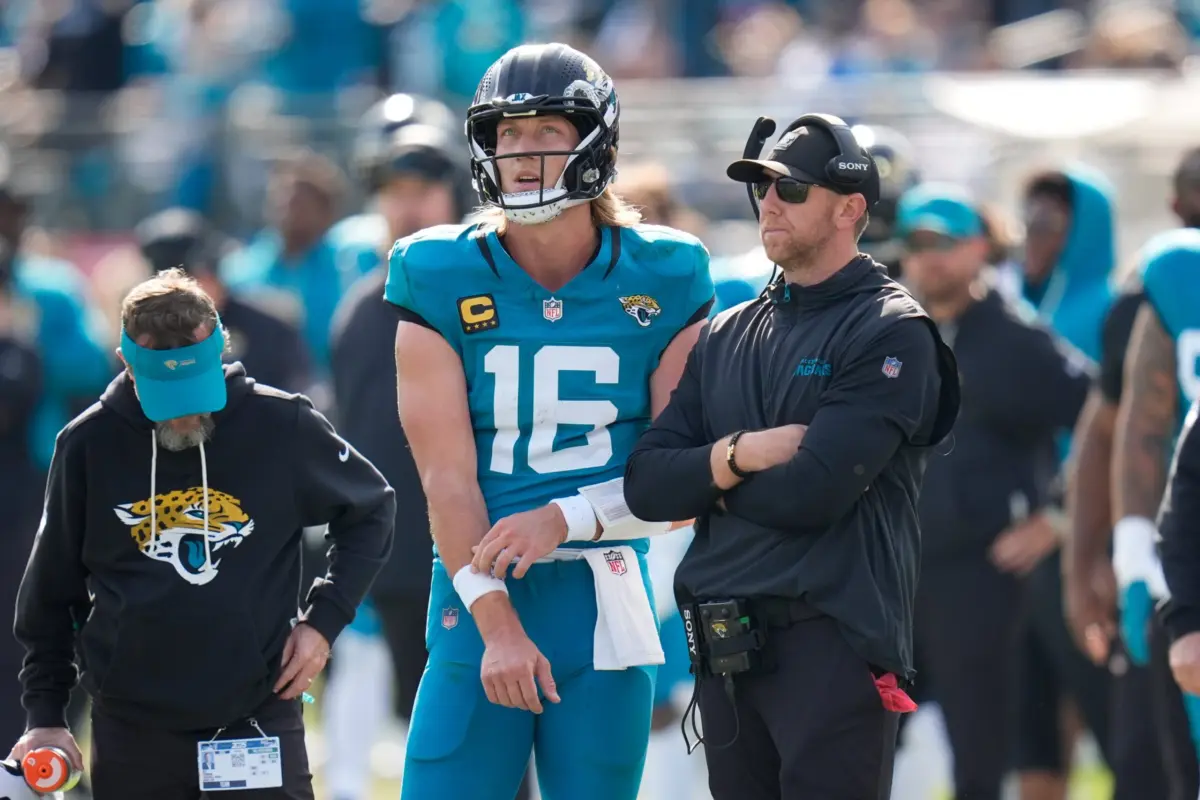

JACKSONVILLE, Fla. — In the high-pressure crucible of the National Football League’s final roster cutdowns, the Jacksonville Jaguars front office executed a series of calculated, fast-paced transactions designed to optimize their 53-man roster for the 2026 regular season. Following the conclusion of their preseason finale against the Tampa Bay Buccaneers, the Jaguars’ personnel department, led by general manager Trent Baalke and head coach Doug Pederson, faced a strict 48-hour window to trim their roster from 90 players to the league-mandated 53.
Rather than merely executing standard player releases, the Jaguars utilized this high-stakes window to reshape their quarterback room and streamline their tight end depth chart. In a pair of striking moves, Jacksonville acquired former highly touted prospect quarterback Quinn Ewers from the Miami Dolphins and subsequently traded tight end Hunter Long to the Arizona Cardinals in exchange for improved future draft capital. These moves signal a clear strategic shift, prioritizing high-upside developmental talent at the game’s most critical position while extracting maximum asset value from surplus depth.
Executive Overview
The final weekend of the NFL preseason is traditionally characterized by frantic waiver-wire monitoring and difficult personnel decisions. For the Jacksonville Jaguars, the post-game evaluation following their matchup with the Tampa Bay Buccaneers served as the catalyst for a broader roster restructuring. The front office operated with a dual mandate: establish a robust backup plan behind franchise quarterback Trevor Lawrence and extract tangible value from positions of surplus.
Jacksonville Jaguars Late-August Trade Ledger:
┌─────────────────────────┬─────────────────────────────┬─────────────────────────────┐
│ Transaction Type        │ Assets Acquired             │ Assets Surrendered          │
├─────────────────────────┼─────────────────────────────┼─────────────────────────────┤
│ Trade (Miami Dolphins)   │ QB Quinn Ewers              │ Undisclosed Compensation    │
├─────────────────────────┼─────────────────────────────┼─────────────────────────────┤
│ Trade (Arizona Cards)   │ 2028 6th-Round Draft Pick   │ TE Hunter Long              │
│                         │                             │ 2028 7th-Round Draft Pick   │
└─────────────────────────┴─────────────────────────────┴─────────────────────────────┘
The acquisition of Quinn Ewers from the Miami Dolphins represents a low-risk, high-reward gamble on a player with elite natural arm talent. Concurrently, the Jaguars resolved a logjam at the tight end position by sending veteran Hunter Long and a 2028 seventh-round draft selection to the Arizona Cardinals. In return, Jacksonville secured a 2028 sixth-round pick, moving up a full round in the late-stage draft assets ledger. This transaction remains pending the standard requirement of a passed physical examination. Together, these moves illustrate an aggressive, forward-thinking approach to roster construction, balancing immediate depth needs with long-term asset management.
Detailed Chronology of the 48-Hour Roster Trim
The sequence of events that reshaped the bottom half of the Jaguars’ roster began the moment the final whistle blew at the conclusion of the preseason finale against the Tampa Bay Buccaneers.
Phase 1: The Post-Game Evaluation (Hour 0 to 12)
Immediately following the game, the Jaguars’ coaching staff and personnel executives convened at EverBank Stadium. The primary objective was to evaluate the bubble players who had logged significant snaps against the Buccaneers. Film study continued deep into the night as the staff graded performances to separate developmental practice squad candidates from those worthy of the active 53-man roster.
Phase 2: Opening the Trade Channels (Hour 12 to 24)
As internal evaluations concluded, the front office identified two distinct areas of opportunity: an excess of capable tight ends and a desire to upgrade the developmental ceiling of the backup quarterback position. Contact was established with the Miami Dolphins regarding the availability of Quinn Ewers. Ewers, who had found himself caught in a depth-chart squeeze in Miami, was identified by Jacksonville scouts as an ideal developmental candidate behind Trevor Lawrence. Simultaneously, discussions intensified with the Arizona Cardinals, who were actively seeking tight end depth to bolster their heavy-personnel run packages.
Phase 3: Finalizing the Agreements (Hour 24 to 48)
With the Tuesday afternoon cutdown deadline looming, both deals were finalized in rapid succession.
- The Ewers Deal: The Jaguars finalized terms with the Dolphins to bring Ewers to Jacksonville, providing the young signal-caller with a fresh start under the tutelage of Doug Pederson, a noted quarterback developer.
- The Long Trade: Shortly thereafter, the front office completed negotiations with Arizona. The Cardinals agreed to absorb Hunter Long’s contract and surrender a 2028 sixth-round pick. To facilitate the upgrade in draft capital, the Jaguars packaged their own 2028 seventh-round pick in the deal.
Both transactions were submitted to the league office, allowing the Jaguars to officially meet the 53-man roster limit while simultaneously executing two significant trades.
Supporting Context & Metrics
The Quarterback Room: Elevating the Backup Ceiling
The acquisition of Quinn Ewers is a move rooted in pedigree and developmental projection. Ewers entered the collegiate ranks as one of the highest-rated recruits in modern history, possessing elite arm elasticity, off-platform throwing capability, and natural field vision. While his initial transition to the professional ranks featured developmental hurdles, his raw physical tools remain undeniable.
Quinn Ewers: Key Developmental Attributes
• Arm Strength: Elite velocity across the middle of the field and deep out-routes.
• Release Quickness: Rapid, whip-like delivery suitable for quick-game concepts.
• Off-Platform Ability: Comfortable throwing from varied arm angles under pressure.
• System Fit: Excellent match for Doug Pederson's RPO and play-action heavy scheme.
In Jacksonville, Ewers enters an environment free from the immediate pressure of starting. Behind Trevor Lawrence, Ewers can focus on refining his footwork, learning to read complex NFL defensive coverages, and mastering the nuances of the West Coast offensive system. For the Jaguars, securing a backup with starting-caliber traits is a crucial insurance policy in an era where backup quarterbacks frequently decide the fate of a franchise’s season.
The Tight End Room: Resolving the Surplus
The decision to trade Hunter Long was made possible by the emerging depth within Jacksonville’s tight end room. With Pro Bowler Evan Engram anchoring the position as a high-volume receiving threat, and developmental assets showing significant progress during training camp, Long became an expendable luxury.
Long, originally a third-round selection by the Miami Dolphins before arriving in Jacksonville, has long been regarded as a balanced, inline tight end capable of contributing both as a blocker and a situational receiver. By trading him to the Cardinals, the Jaguars accomplished several objectives:
- Salary Cap Optimization: Shedding Long’s remaining contract offers minor but valuable relief under the salary cap.
- Draft Capital Appreciation: Upgrading a 2028 seventh-round pick to a sixth-round pick increases the team’s draft-day optionality in future seasons.
- Roster Space Utilization: The move freed up an active roster spot that was subsequently utilized to retain an extra defensive back or special teams contributor.
Official Statements & Tactical Analysis
While front offices typically keep their analytical models confidential, the tactical logic behind these moves is clear to NFL observers.
An NFC personnel executive, speaking on the condition of anonymity, analyzed the Jaguars’ maneuvers:
"What you’re seeing from Jacksonville is a textbook example of roster optimization at the deadline. They recognized that Hunter Long had market value to a team like Arizona that wants to run the ball out of 12-personnel. By moving him, they not only upgraded a future draft asset, but they also cleared the runway for younger, cheaper players they’ve developed internally.
The Quinn Ewers acquisition is the real wild card. In this league, if you don’t have a backup quarterback who can win you a game in a pinch, you’re playing with fire. Ewers has first-round talent. Getting him into Doug Pederson’s quarterback room is a low-risk move that could pay massive dividends if he ever has to step onto the field, or if they decide to flip him for a higher pick down the road."
Tactically, Pederson’s offensive system demands a quarterback who can make quick, decisive reads in the short-to-intermediate passing game while maintaining the arm strength to stretch the field vertically off play-action. Ewers’ collegiate tape at Texas demonstrated a high proficiency in these exact areas. Under the guidance of Pederson and the Jaguars’ offensive staff, the hope is that Ewers can iron out his mechanical inconsistencies and develop into a premier backup—or a valuable trade chip in his own right.
Future Outlook
As the Jaguars transition from the preseason to the grueling reality of the regular season, the ramifications of these roster moves will be watched closely.
For Quinn Ewers, the move to North Florida represents a vital career reset. Removed from the immediate spotlight, he will have the opportunity to develop in a stable environment under a coaching staff with a proven track record of maximizing quarterback play. If Ewers can absorb the playbook quickly, he could solidify his position as the primary backup to Lawrence, giving the Jaguars one of the most talented quarterback rooms in the AFC South.
For the tight end position, the departure of Hunter Long places greater responsibility on the remaining depth. The coaching staff is banking on the continued evolution of their younger tight ends to handle the inline blocking duties that Long previously provided.
Ultimately, these transactions underscore the philosophy of the modern NFL front office: roster building is a continuous, year-round process. By aggressively managing the bottom of their roster, the Jaguars have positioned themselves to be both competitive in the short term and flexible in the long term, ensuring they possess the necessary depth and draft assets to navigate the challenges of the seasons ahead.

0 Comments