

LONDON — In a historic escalation of the global movement for historical justice, the Jamaican government is officially bringing its campaign for reparations to King Charles III. Utilizing an ancient legal tradition tracing back centuries to the roots of the British Empire, Jamaican officials are petitioning the British monarch to refer a series of profound questions regarding trans-Atlantic slavery and state responsibility to the Judicial Committee of the Privy Council.
This unprecedented legal maneuver moves the political crusade for redress out of traditional legislative arenas and squarely into the highest judicial corridors of the former imperial power. The filing serves as a watershed moment in international law, pitting modern human rights expectations against centuries-old doctrines of state immunity and historical legal timelines.
Executive Overview
On Monday, September 7, 2026, representatives of the Jamaican government formally initiated a petition addressed directly to King Charles III. The filing requests that the monarch refer three core legal questions to the Judicial Committee of the Privy Council—the tribunal that functions as the highest appellate court for Commonwealth realms and British overseas territories retaining ties to the U.K. legal framework.
Specifically, the petition asks the judicial body to rule on:
- Whether the forced transport of African people to Jamaica and their subsequent enslavement violated English common law at the time.
- Whether these actions constituted crimes against humanity for which the United Kingdom bears direct state responsibility.
- Whether the U.K. holds a continuous legal obligation to provide a remedy and material redress to the people of Jamaica.
While the petition is formally directed to the Crown, constitutional realities dictate that King Charles possesses no personal discretion in handling the request. He must act strictly on the advice of his government ministers—ministers who have historically resisted calls for state apologies and financial reparations.
Despite the steep legal hurdles, constitutional scholars and international observers note that the strategy holds immense symbolic and political value. Even an unfavorable ruling by the U.K. judiciary could accelerate Jamaica’s ongoing transition toward a republic and further isolate the British monarchy across the Caribbean.

Detailed Chronology: From the Zong Massacre to Modern Petitions
The timing of Jamaica’s legal filing was meticulously calculated to coincide with a deeply painful historical anniversary. On September 6, 1781, the Zong, a Liverpool-registered slave ship, set sail from the West African coast with a human cargo of 442 enslaved Africans bound for Jamaica.
The Zong Massacre and the Catalyst for Abolition
Weeks into the Middle Passage, navigational errors and overcrowding depleted the vessel’s fresh water supplies. Faced with mounting financial losses and realizing that sick, dehydrated captives would command lower prices at market, the ship’s captain, Luke Collingwood, made a calculated economic decision. Over several days, the crew threw 132 enslaved men, women, and children alive into the Atlantic Ocean.
The ship’s owners subsequently filed an insurance claim seeking compensation for the lost "property." The ensuing legal battles—focused not on murder, but entirely on maritime insurance fraud—sparked public outrage across Britain. The horrific details of the Zong massacre galvanized the nascent abolitionist movement, laying bare the profound moral bankruptcy of the trade.
While the massacre accelerated public pressure, dismantling the institutionalized machinery of slavery was agonizingly slow. Britain officially abolished the slave trade in 1807 through the Slave Trade Act, but human bondage itself remained legal within the empire until the Slavery Abolition Act took effect on August 1, 1834. Even then, the legislation instituted a multi-year "apprenticeship" system that forced freed individuals to continue laboring for their former masters, while the British government famously borrowed millions to compensate slave owners for their "lost property," leaving the enslaved themselves with nothing.
The 2026 London Commemorations
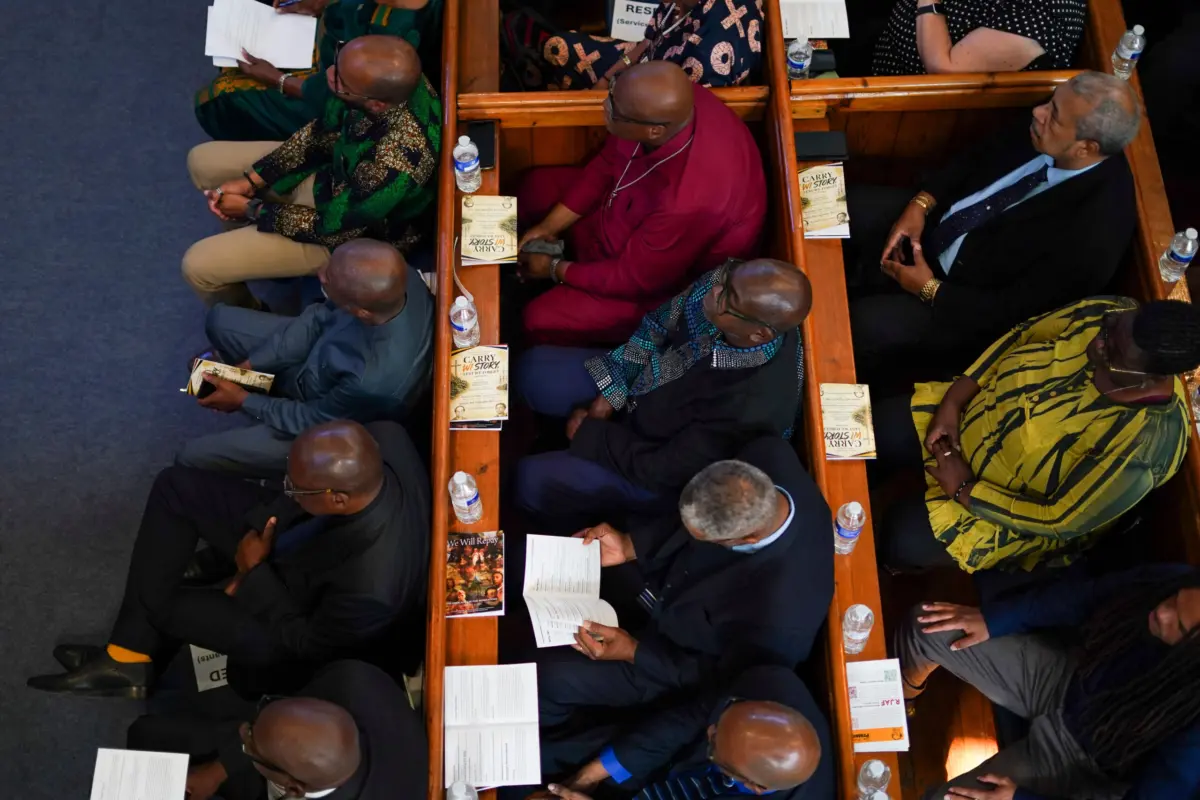
Nearly two and a half centuries after the Zong set sail, Jamaica’s Minister of Culture, Gender, Entertainment and Sport, Olivia Grange, traveled to London to mark the anniversary. Beginning with a solemn church service in south London dedicated to "remembrance, justice, and repair," Grange spearheaded a series of high-profile events leading up to the formal submission of the Privy Council petition.
"In relation to the wrongs that were done, we want answers," Grange told reporters on Sunday prior to the filing. "Once we get those answers, then our attorneys, our lawyers, will determine what the next move is."

Supporting Context & Metrics: The Global Movement for Reparations
Jamaica stands at the vanguard of a growing coalition of Caribbean nations, African states, and diaspora organizations demanding formal apologies and structural reparations from European powers enriched by the trans-Atlantic slave trade.
The Economic and Social Legacy
The structural devastation wrought by centuries of forced labor, resource extraction, and systemic racism continues to reverberate across the Caribbean. Modern economists and human rights advocates argue that the persistent gaps in infrastructure, healthcare, education, and wealth distribution in former colonies are directly traceable to the plantation economies built on chattel slavery.
Caribbean Community (CARICOM) nations have long maintained a unified 10-point plan for reparatory justice, which calls for:
- Formal, unreserved state apologies.
- Debt cancellation and financial development aid.
- Investment in public health infrastructure and educational institutions.
- Repatriation programs and cultural institution funding.
International Diplomatic Friction
The campaign has increasingly found traction on the global stage. In March 2026, the United Nations General Assembly passed a landmark resolution endorsing reparations as a "concrete step" toward confronting the historic crimes of slavery and colonialism.
However, major European powers have fiercely resisted these measures. During the UN vote, the United Kingdom notably abstained. Explaining the U.K.’s stance, British representative James Kariuki reiterated a strict legalistic defense, asserting the principle of tempus regit actum—the doctrine that legal acts must be judged by the laws in effect at the time they occurred.
"There is equally no duty to provide reparation for historical acts that were not, at the time those acts were committed, violations of international law," Kariuki argued before the General Assembly.

Official Statements and Institutional Positions
The clash between Jamaica’s legal offensive and Britain’s defensive posture highlights a deep philosophical divide over historical accountability.
Jamaica’s Resolve
Minister Olivia Grange emphasized that the petition represents a necessary evolution of Jamaica’s strategy, shifting the debate from purely political rhetoric into binding legal scrutiny. By demanding that British courts evaluate whether the foundational acts of the slave trade breached English common law, Kingston is challenging London to defend its imperial history using its own jurisprudential standards.
The British Crown and Government
While King Charles III has repeatedly acknowledged the profound horrors of the slave trade during international visits—notably describing the institution as an "appalling atrocity" and an "indelible stain on the history of our world" during a 2018 speech in Ghana—he has meticulously avoided endorsing financial reparations or personal state liability.
Successive British governments have maintained a blanket refusal to issue formal financial payouts or official apologies, frequently expressing "deep sorrow" for the past while insisting that contemporary generations cannot be held financially accountable for the actions of their ancestors centuries ago.
Future Outlook: Constitutional Implications and the Path to a Republic
Legal and constitutional experts agree that the petition faces immense procedural hurdles within the British legal system.
A Peculiar Legal Mechanism
According to Craig Prescott, an expert on constitutional law and the monarchy at Royal Holloway, University of London, the petition is an ingenious yet highly unusual maneuver. The right of British subjects to petition the Crown for justice dates back to the Norman Conquest of 1066, when the monarch was viewed as the ultimate arbiter of equity across all dominions.

The modern mechanism relies on an 1833 statute that established the Judicial Committee of the Privy Council as the supreme appellate court for the British Empire. Although the empire has since dissolved into the Commonwealth, countries that maintain legal ties to the U.K. still technically retain access to this court.
Prescott predicts that while the petition will likely be formally referred to the Judicial Committee—where a panel of U.K. Supreme Court justices will review it—the board will approach the filing with deep institutional skepticism.
"I think, at the very least, the board will look at this with a skeptical eye, not because of questions of whether slavery is wrong or right or otherwise, but just this is a very peculiar legal procedure that is sort of just one on the statute books that rears its head from time to time," Prescott observed.
Catalyst for Jamaican Republicanism
Crucially, experts note that even if the Privy Council rejects the petition—a highly probable outcome given standard judicial conservatism—the rejection itself could serve Jamaica’s broader geopolitical goals.
Prime Minister Andrew Holness has made clear his administration’s firm intention to formally sever Jamaica’s remaining constitutional ties to the British Crown and transition the island nation into a full republic, mirroring Barbados’s historic transition in 2021.
If the U.K.’s highest judicial body, operating in the king’s name, dismisses a plea for justice regarding the greatest crime in Caribbean history, it will starkly illustrate the irrelevance of the British monarchy to modern Jamaicans.

"It does raise the question of why have a head of state who really does not share the positions that are widely held in Jamaica," Prescott concluded. "If those residual links don’t deliver an answer that is what they’re looking for in Jamaica, then you might be looking at severing those links."
As the Privy Council prepares to weigh the arguments, Jamaica’s bold legal challenge has already achieved a vital objective: ensuring that the ghosts of the trans-Atlantic slave trade cannot be quietly buried by legal technicalities, forcing the modern British establishment to confront the enduring legacy of its imperial past.

0 Comments