
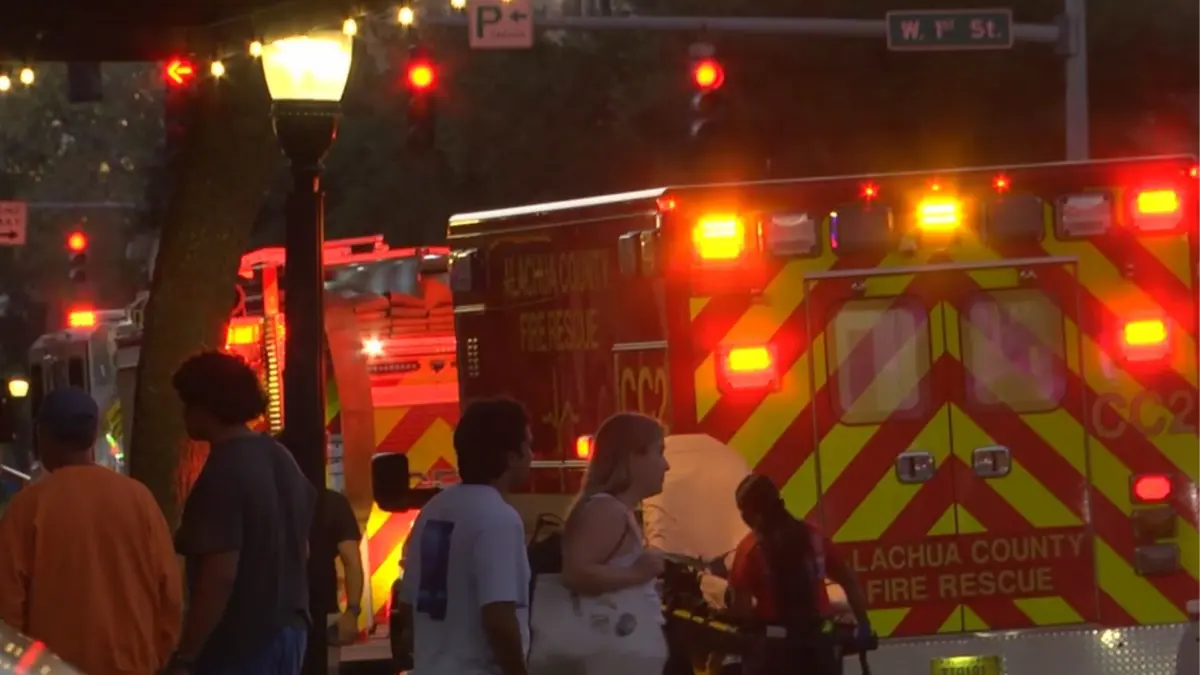

GAINESVILLE, Fla. — As the University of Florida prepares to host a high-stakes Southeastern Conference matchup against the Ole Miss Rebels this weekend, local and campus law enforcement agencies are implementing a massive, highly visible security surge. Citing the convergence of tens of thousands of visiting alumni, fervent student sections, and a bustling local nightlife economy, the Gainesville Police Department (GPD) and the University of Florida Police Department (UFPD) have joined forces to secure downtown Gainesville and the popular Midtown commercial district.
While the operation is designed to manage the massive influx of football-related traffic and revelry, officials emphasize that the mobilization carries a dual mandate: maintaining crowd control and fiercely protecting public health. This weekend’s game arrives under a heavy emotional cloud for the visiting Ole Miss community, which is currently reeling from the tragic, sudden deaths of two students earlier in the week—a developing tragedy allegedly linked to the consumption of the controversial herbal supplement kratom. In response, local authorities, grieving families, and student organizations are sounding an urgent alarm regarding personal safety, responsible consumption, and situational awareness.
Executive Overview
The operational blueprint for this weekend’s security measures represents a coordinated, multi-agency response to one of the most anticipated weekends on the local calendar. Ben Hill Griffin Stadium—affectionately known to the Gator Nation as "The Swamp"—is expected to reach peak capacity on Saturday, drawing upwards of 90,000 screaming fans, ecstatic students, and passionate visitors to Alachua County.
To preemptively manage the logistical and security challenges inherent to such massive gatherings, GPD and UFPD have abandoned traditional jurisdictional silos. Instead, they are deploying a unified tactical front that integrates foot patrols, mounted units, traffic control details, and plainclothes monitoring throughout the city’s primary entertainment corridors.
According to public information officers, the heightened police presence is not merely punitive; rather, it is a proactive outreach campaign aimed at mitigating the risks associated with excessive alcohol consumption, underage drinking, and illicit substances. The collaborative deployment extends well beyond the perimeter of the athletic campus, enveloping the densely packed bars, restaurants, and residential-commercial mixed-use spaces of Midtown and the historic downtown square.
Simultaneously, the timing of the game has injected a sober, reflective tone into the weekend’s festivities. The recent, tragic passings of two University of Mississippi students have cast a national spotlight on the dangers of unregulated herbal and synthetic supplements, prompting law enforcement to issue sweeping warnings about the perils of consuming unfamiliar substances amid high-energy collegiate celebrations.
Detailed Chronology of the Security Mobilization
Phase 1: Pre-Gameday Intelligence and Perimeter Securing
Planning for Saturday’s matchup began weeks in advance, drawing on historical data from previous high-profile SEC matchups. Law enforcement leaders analyzed foot-traffic patterns, local transit bottlenecks, and historical crime and medical-call data from prior gamedays to map out high-risk zones.
By Thursday afternoon, GPD and UFPD command staff formally activated their joint command center. This centralized hub allows real-time monitoring of municipal traffic cameras, private security feeds, and emergency dispatch logs. Initial deployment phases focused on securing parking zones, logistical staging areas for media and team buses, and verifying the structural readiness of pedestrian walkways connecting downtown Gainesville to the UF campus.
Phase 2: The Friday Night Influx and Nightlife Enforcement
As thousands of visitors and alumni arrived in North Central Florida ahead of the weekend, enforcement operations shifted toward the commercial districts. Friday evening marked the formal rollout of joint GPD-UFPD foot patrols in Midtown—the nightlife strip located directly across from campus—and downtown Gainesville.
Officers deployed in pairs and small teams, engaging directly with patrons, venue owners, and security staff. The primary objective during this phase was early intervention: establishing a visible deterrent against disorderly conduct, verifying compliance at local watering holes, and conducting targeted bar checks to crack down on underage drinking.
Art Forgey, a spokesperson for the Gainesville Police Department, detailed the philosophy guiding Friday night’s operations. "We realize that there are a lot of clubs and a lot of bars in the Midtown and downtown area and that students want to take advantage of those," Forgey stated. "And so we want to educate those students that, you know, don’t overdo yourself. You know, if you’re under 21, you know, you’re probably gonna get cited if you have liquor with you. We do bar checks."
Phase 3: Gameday Surge and Tactical Response
Saturday morning marks the apex of the security operation. Beginning at dawn, road closures, parking restrictions, and pedestrian-only zones took effect around Ben Hill Griffin Stadium.
Officers are stationed at critical intersections to manage vehicular and pedestrian traffic flows, preventing bottlenecks that historically lead to friction between motorists and crowds. Inside the entertainment districts, undercover and uniformed personnel will maintain a constant vigil throughout the duration of the game and deep into the post-game celebrations.
Law enforcement has made it clear that while fans are encouraged to enjoy Gainesville’s hospitality, zero tolerance will be applied to acts of violence, property destruction, driving under the influence, and narcotics distribution. Tactical medical units have also been strategically positioned throughout the deployment zones to ensure rapid response times in the event of heat exhaustion, alcohol poisoning, or other medical emergencies.
Supporting Context & Metrics: The Anatomy of a SEC Gameday
To comprehend the scale of the Gainesville Police Department and UFPD’s mobilization, one must examine the staggering metrics associated with an SEC football weekend in a classic college town.
Population Surge and Economic Impact
Gainesville, a municipality with a permanent population of roughly 145,000 residents, routinely sees its local population swell by 30% to 50% on home gamedays. The influx of roughly 90,000 ticket-holders, combined with thousands of non-ticketed tailgate attendees, places an unprecedented strain on municipal infrastructure, waste management, hospitality staff, and emergency services.
Local economic analyses indicate that high-profile SEC matchups inject millions of dollars into the local economy, fueling hotels, restaurants, and retail establishments. However, this economic windfall brings substantial logistical externalities. Emergency medical services (EMS) providers in Alachua County frequently report a 40% to 60% spike in call volumes on gamedays, with the vast majority of calls linked to alcohol-related trauma, severe dehydration, falls, and minor physical altercations.
The Shadow of Substance-Related Tragedies
Compounding the standard gameday risks this weekend is a profound public health concern originating outside the state of Florida. The University of Mississippi community is currently mourning the tragic deaths of two students, developments that have sent shockwaves through the broader collegiate sports landscape.
Preliminary investigations into these fatalities have pointed toward the consumption of kratom—a tropical tree native to Southeast Asia whose leaves contain compounds that can have psychotropic (mind-altering) effects. Marketed widely as an herbal supplement for pain relief, anxiety, or energy, kratom remains largely unregulated at the federal level, though several states and municipalities have enacted bans or strict age limits due to concerns over addiction, overdose risks, and dangerous adulterants.
The association of these deaths with an unregulated substance has transformed what is typically a purely celebratory weekend into a moment of heightened vigilance regarding what students ingest. Law enforcement and university administrators are using the tragedy as a stark cautionary tale, urging students and visiting fans to exercise extreme caution regarding unfamiliar substances, open containers, and unregulated products sold in unregulated markets.
Official Statements and Community Perspectives
The multifaceted nature of this weekend’s security effort has elicited commentary from municipal representatives, campus leaders, visiting families, and student safety advocates.
Law Enforcement and Municipal Authorities
GPD leadership has stressed that the collaboration between city and campus police goes far beyond basic crowd control or reactive policing. It is framed as an active partnership designed to foster community trust while maintaining firm boundaries of accountability.
Art Forgey reiterated the department’s dual focus on education and enforcement. "We want students to enjoy the environment responsibly," Forgey explained. "Our officers are out there not just to write citations, but to be a resource, to look out for vulnerable individuals, and to prevent minor bad decisions from escalating into life-altering tragedies."
University of Florida officials echoed these sentiments, releasing joint advisories encouraging students to utilize campus safe-ride programs, download emergency applications, and lean on their peers for support.
Visiting Families and Ground-Level Advice
For families traveling to Gainesville to experience the game alongside their children, safety remains an omnipresent priority. The emotional resonance of the week’s national news has made parents particularly vocal about the need for street-smart vigilance.
Stephen and Bonnie Adderley, parents visiting Gainesville for the weekend’s festivities, shared practical wisdom with local reporters regarding how young adults should navigate dense crowds and nightlife environments.
"Stay in the group and make sure at least one person in the group is not drinking, is not doing anything, and that’s the watch eye for the group to make sure everybody stays safe," the Adderleys advised. "Try to be aware of your surroundings at all times."
This sentiment was reinforced by numerous students and local residents interviewed by regional media outlets. The collective consensus among seasoned gameday attendees centers on a few non-negotiable rules of self-preservation:
- The Buddy System: Never travel alone through unfamiliar areas or unlit parking structures, particularly late at night.
- Beverage Integrity: Never leave a drink unattended, and immediately discard any beverage if its security or whereabouts were compromised, even for a moment.
- Pacing and Limits: Recognize individual physiological thresholds regarding alcohol consumption, ensuring that impairment never compromises basic situational awareness or consent.
Future Outlook: Legacy and Long-Term Implications
As the final whistle blows on Saturday evening and the tens of thousands of departing fans clear out of Alachua County, the legacy of this weekend’s security operation will be measured not merely by the final score on the gridiron, but by the absence of major safety failures.
The unprecedented level of cooperation between the Gainesville Police Department and the University of Florida Police Department serves as a working prototype for future large-scale events in the region. As college athletics continue to expand in commercial scope, drawing larger crowds and generating higher stakes, the integration of municipal and campus law enforcement will undoubtedly become more sophisticated, tech-driven, and resource-heavy.
Furthermore, the tragic events unfolding within the Ole Miss community are likely to spark renewed legislative and institutional scrutiny regarding the accessibility and regulation of herbal supplements like kratom on and around college campuses nationwide. University health centers, student government associations, and local public health boards are already signaling plans to launch educational initiatives in the coming weeks aimed at demystifying the chemical risks of unregulated over-the-counter substances.
For now, all eyes in the collegiate sports world are fixed on Ben Hill Griffin Stadium. As the Gators and the Rebels battle under the Florida sun, the formidable wall of law enforcement patrolling Midtown and downtown Gainesville stands as a reminder that celebration and security must go hand in hand. Through proactive engagement, strict accountability, and community-wide vigilance, local authorities and watchful families are striving to ensure that a weekend defined by sport remains defined by safety, unity, and life.

0 Comments