

Executive Overview
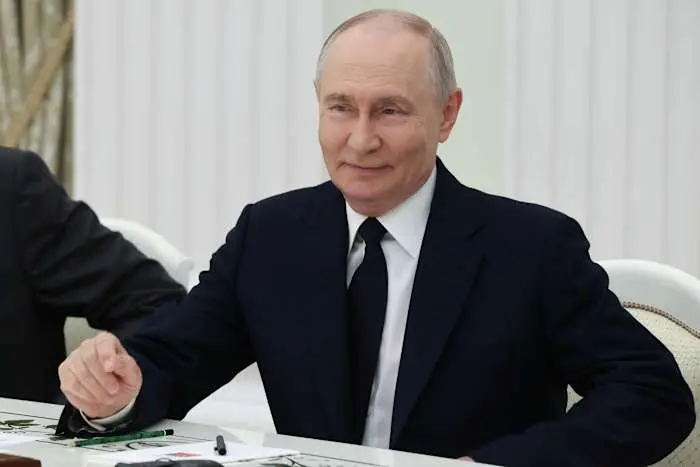
In a move that signals growing desperation over the vulnerability of its domestic industrial base, Russian President Vladimir Putin has signed a sweeping decree allowing the state to temporarily seize control of critical infrastructure. Announced late Monday, August 24, 2026, the executive order targets private owners who fail to adequately protect their facilities from Ukrainian drone strikes or delay rebuilding them after sustaining damage.
As the war of attrition enters its fifth year, the Russian economy is grappling with the cumulative toll of increasingly precise, deep-penetration aerial attacks by Ukrainian forces. Kyiv’s reliance on domestically produced, long-range attack drones has successfully disrupted Russia’s energy, logistics, and retail sectors. The strikes have caused localized fuel shortages, damaged major commercial hubs, and exposed systemic gaps in the Russian Federation’s domestic air defense umbrella.
The decree applies to a broad swath of the economy, including energy, fuel, industrial manufacturing, communications, transport, and logistics. While Kremlin officials insist the measure does not constitute permanent nationalization, independent analysts view it as an aggressive ultimatum. By threatening temporary expropriation, the government is forcing private conglomerates and oligarchs to shoulder the immense financial burdens of war—specifically, purchasing private air defense systems and bankrolling the rapid, repetitive reconstruction of targeted industrial assets.
Detailed Chronology: The Road to the August 2026 Decree
[May 2026] ------------------> [Late Aug 2026] -------------> [Aug 25, 2026]
State authorizes private       Putin signs critical          Afipsky refinery hit;
air defense procurement        infrastructure decree         decree takes active effect
The signing of the decree is the culmination of a months-long effort by Moscow to adapt its legal and military frameworks to a threat landscape that has shifted far behind the front lines.
The Spring 2026 Defensive Shift
By May 2026, the frequency of Ukrainian drone strikes on refineries in western and southern Russia had reached a tipping point. Recognizing that the Russian military could not protect every high-value civilian target across the country’s vast geography, Russian lawmakers approved a landmark bill. This legislation authorized the Central Bank, the state-controlled financial giant Sberbank, and other critical financial and corporate entities to independently procure and deploy military-grade electronic warfare and air defense systems to protect their premises.
Following this, investigative reports from Russian news outlet RBC revealed that the Ministry of Defense had established a formal, fast-track mechanism allowing private corporations to legally purchase anti-drone weaponry and tactical detection equipment. This effectively privatized a portion of national air defense, signaling that the state’s official military resources were fully committed to the front lines in Ukraine.
Summer Escalation and the Afipsky Strike
Despite these legislative changes, many private operators hesitated to invest heavily in expensive, specialized defense systems. The vulnerability of these sites was highlighted once again on the morning of Tuesday, August 25, 2026—just hours after Putin signed the new decree.
Ukraine’s General Staff confirmed a successful overnight strike on the Afipsky oil refinery in the southern Krasnodar region. Krasnodar Governor Veniamin Kondratyev acknowledged that a major fire had broken out at the facility. The Afipsky refinery, a critical node for processing export-grade petroleum products near the Black Sea, has been targeted repeatedly throughout the conflict. This latest strike underscored the central challenge the Kremlin faces: despite promises of enhanced security, critical infrastructure remains highly vulnerable to low-cost, high-precision drone technology.
Supporting Context & Metrics: The Cost of an Unprotected Hinterland
The economic consequences of these strikes have forced the Kremlin to make difficult fiscal adjustments. As the conflict drags on, the financial strains on both the state budget and private enterprises are mounting.
+-------------------------------------------------------------------------+
|                FISCAL STRAINS ON THE RUSSIAN WARTIME ECONOMY             |
+-------------------------------------------------------------------------+
|  [Tax Hikes & Debt]   --> Government raises taxes and increases domestic  |
|                           borrowing to manage the rising budget deficit.|
+-------------------------------------------------------------------------+
|  [Supply Chain Dis- ] --> Strikes on logistics hubs (e.g., Wildberries) |
|  [ruption & Relief]       force tax and insurance payment extensions.    |
+-------------------------------------------------------------------------+
|  [Infrastructure  ]   --> Private owners face "investment fatigue,"      |
|  [Repair Dilemma]         hesitating to rebuild repeatedly targeted sites.|
+-------------------------------------------------------------------------+
The Financial Burden on Refineries and Private Capital
For private operators of oil refineries and storage terminals, the financial math of the war has become increasingly difficult. Rebuilding a damaged modern distillation or catalytic cracking unit can cost hundreds of millions of dollars and require specialized components that are hard to acquire under international sanctions.
Faced with the prospect of a repaired facility being targeted again weeks later, many owners have quietly delayed reconstruction. This dynamic of "investment fatigue" directly threatens Russia’s domestic fuel supply and its export revenues, prompting the Kremlin to intervene with the threat of state takeover.
Supply Chain Fractures: The Case of Wildberries
The vulnerability of Russia’s internal market is not limited to heavy industry. Wildberries, Russia’s largest online retailer, along with the thousands of third-party merchants who rely on its platform, has suffered significant losses due to strikes on major warehousing and logistics hubs.
To prevent a broader collapse in consumer retail and logistics, the Russian Finance Ministry recently proposed emergency relief measures. These include extending deadlines for tax and insurance payments to give Wildberries and its network of sellers crucial financial breathing room. This intervention highlights how deeply Ukrainian strikes have penetrated the civilian economy, forcing the state to step in as a financial backstop.
The Air Defense Deficit Across Eleven Time Zones
The fundamental challenge for Russian defense planners is geographical. Russia’s territory spans eleven time zones, making comprehensive air defense coverage virtually impossible.
Protecting thousands of miles of pipelines, railway networks, power grids, and industrial plants requires a level of resource distribution that the Russian military cannot sustain while actively fighting a high-intensity war. By transferring the legal and financial responsibility for air defense to the private sector—and threatening to seize assets if owners fail to protect them—the Kremlin is attempting to outsource domestic national security to private enterprise.
Official Statements and Strategic Interpretations
The announcement of the decree has drawn various interpretations from government officials and political analysts, who view the move through different lenses.
       ┌────────────────────────────────────────────────────────┐
       │             HOW THE DECREE IS BEING FRAMED             │
       └────────────────────────────────────────────────────────┘
                                   │
         ┌─────────────────────────┴─────────────────────────┐
         ▼                                                   ▼
  [Government View]                                  [Analyst View]
  Denis Manturov (Deputy PM)                         Abbas Gallyamov (Analyst)
  - Not nationalization.                             - It is a direct ultimatum.
  - Temporary state management.                      - "Finance repairs, or we
  - Targeted, security-focused.                       take your assets away."
The Kremlin’s Clarification: Management, Not Nationalization
In an effort to prevent panic within the business community and stabilize domestic markets, Deputy Prime Minister Denis Manturov issued a statement clarifying the scope of the executive order:
"This decree does not imply the nationalization of companies or a permanent change of ownership. It refers strictly to the temporary involvement of the state in the management of an enterprise to solve specific security problems. This mechanism does not imply widespread use—targeted, carefully considered decisions will be made at the highest level."
On state television, President Putin emphasized the need for a more integrated approach to national defense:
"We must and will improve the air defense system and enhance its capabilities. We need to streamline coordination between defense, law enforcement, and civilian agencies at all levels, and to leverage the capabilities of both state-run enterprises and private businesses."
The Analyst Verdict: An Ultimatum to Oligarchs
Independent analysts offer a more pragmatic assessment of the decree. Abbas Gallyamov, a political analyst and former speechwriter for Putin, argues that the measure is a tactical tool designed to break the gridlock between the state and reluctant industrial barons:
"Given the fact that the same refinery has already been hit three to five times, it’s safe to assume that the owners are now reluctant to invest in restoring what’s been destroyed. Why spend billions if they’re going to get hit again tomorrow?"
According to Gallyamov, the decree acts as a direct financial ultimatum to Russia’s business elite:
"The government is giving companies an ultimatum: ‘If you don’t finance the restoration of the refineries, we’ll take them away from you.’"
This policy also carries geopolitical weight. On the same day the decree was signed, Putin met with Indian Foreign Minister Subrahmanyam Jaishankar at the Kremlin. The meeting underscored Russia’s ongoing efforts to secure alternative trade routes and energy markets in Asia, even as its domestic refining infrastructure faces persistent disruptions.
Future Outlook: The Creeping State Command Economy
As Russia enters the late stages of 2026, the introduction of this decree points toward a deeper structural shift: the gradual transition of the Russian Federation toward a state-directed command economy.
| Metric / Dimension | Before the Decree | Under the New Decree |
|---|---|---|
| Primary Security Burden | Borne almost entirely by state military forces. | Shared with private owners via mandatory defense investments. |
| Asset Ownership & Control | Private owners maintain operational autonomy. | Threat of temporary state takeover for security failures. |
| Reconstruction Incentives | Subject to market forces and risk assessments. | Mandated by state decree under threat of expropriation. |
| State Economic Footprint | Regulatory oversight with selective intervention. | Direct, targeted management of private assets. |
While Deputy Prime Minister Manturov’s assurances may temporarily ease concerns about widespread nationalization, the practical reality of the decree is clear. If Ukrainian drone strikes continue to bypass domestic air defenses, the Russian government will likely begin taking over key industrial assets.
This setup creates a challenging dynamic for private owners. If they invest heavily in repairs and private air defenses, they risk losing that capital in subsequent strikes. Conversely, if they refuse to invest, they risk losing their businesses to state administrators. This pressure may widen the quiet rift between the Kremlin and the country’s economic elite, who are increasingly forced to choose between absorbing unsustainable wartime losses or yielding their assets to state control.
For Ukraine, this development confirms the strategic value of its long-range drone campaign. By targeting the economic foundations of the Russian state, Kyiv has forced Moscow to adopt highly interventionist policies, stretching its domestic air defenses and turning the protection of private property into an increasingly difficult challenge for the Russian state.

0 Comments