
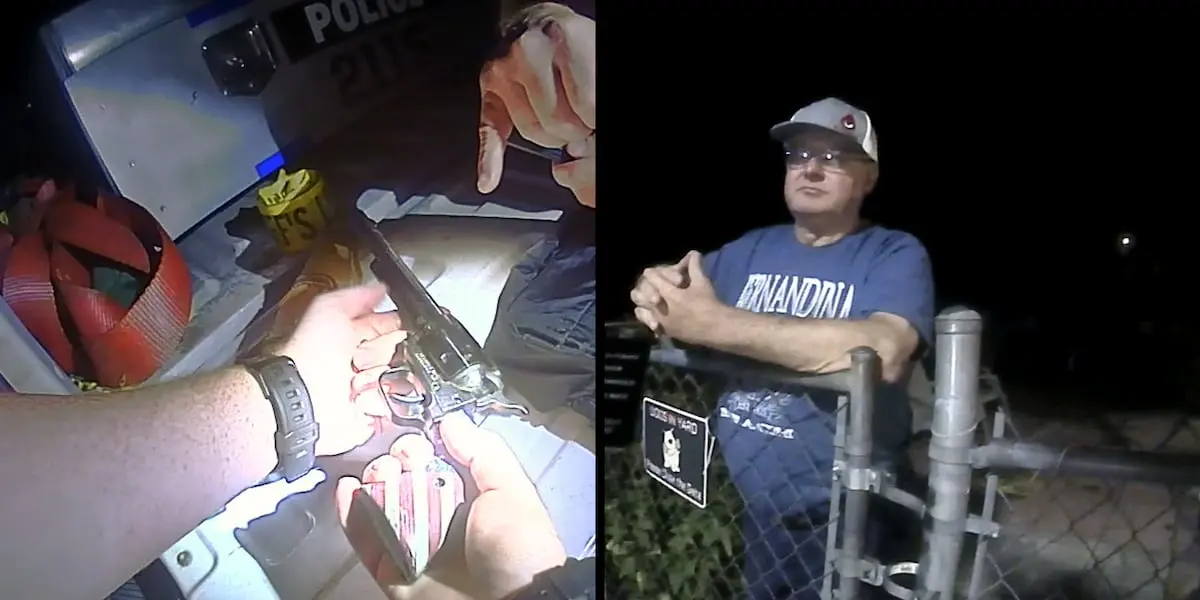

HAMPTON, Fla. — State prosecutors have formally dropped a felony case against Hampton City Councilman Douglas Williamson, who was arrested earlier this summer following an armed altercation with a local resident. According to court documentation from Bradford County, the office of the state attorney filed a "no information" notice, leading a local judge to officially close the case on August 13.
The dismissal brings a sudden legal conclusion to an incident that sent shockwaves through the small North Florida municipality of Hampton, situated in Bradford County. Williamson had faced serious criminal exposure after being accused of threatening a neighbor with a firearm during a heated neighborhood confrontation in June. While the legal jeopardy has dissipated for the embattled local official, the fallout from the episode leaves lingering questions regarding community safety, property rights, and the ethical expectations placed upon elected municipal leaders.
Executive Overview
The abrupt termination of the prosecution against Councilman Douglas Williamson marks a pivotal turning point in a controversy that has dominated local headlines in Bradford County throughout the summer of 2026. Williamson’s arrest in mid-June stemmed from allegations that he confronted a neighbor while brandishing a firearm and issuing explicit verbal threats. The initial Bradford County Sheriff’s Office reports detailed an alarming escalation of neighborhood tension, capturing the attention of regional media and alarming constituents within the small city of Hampton.
However, the criminal justice system’s trajectory shifted dramatically on August 13, when prosecutors exercised their discretion to file a "no information"—a legal mechanism indicating that the state has chosen not to formally prosecute the defendant on the charges brought forth during the initial arrest. Without a formal charging document moving forward, the presiding judge had no legal basis to keep the docket active, resulting in the immediate closure of the case.
This comprehensive report examines the anatomy of the case, detailing the timeline from the initial June confrontation to the August dismissal. It explores the conflicting narratives offered by the defense and the accuser, analyzes the broader metrics surrounding property crime and gun disputes in small-town Florida, evaluates the official statements surrounding the incident, and considers the future outlook for Councilman Williamson’s political career and community standing.
Detailed Chronology of Events
To understand the resolution of the case, it is essential to retrace the timeline of events that began with a late-spring dispute and culminated in a mid-summer judicial closure.
The Spark: June 2026 Property Concerns and Rising Tensions
In the weeks leading up to the June incident, Hampton and its surrounding rural corridors in Bradford County experienced a perceptible uptick in reported property crimes. For local residents, the perception of compromised security fostered an environment of heightened vigilance. Councilman Douglas Williamson, like many property owners in the area, grew increasingly apprehensive about the safety of his real estate and personal belongings.
According to statements later provided by Williamson, the neighborhood climate was charged with anxiety regarding opportunistic thefts. It was against this backdrop of perceived vulnerability that tensions finally boiled over in mid-June, drawing the immediate intervention of local law enforcement.
The Arrest: June 15, 2026
On or about June 15, 2026, Bradford County Sheriff’s deputies were dispatched to a residential area in Hampton following an emergency call reporting an active armed disturbance. Upon arrival, deputies interviewed a local man who alleged that Councilman Williamson had confronted him, brandished a firearm, and leveled a chilling verbal threat—specifically stating, "I will kill you."
The gravity of the accusation—involving an elected municipal official allegedly using lethal threats in a property dispute—prompted an immediate and thorough police response. Deputies gathered statements, assessed the scene, and subsequently took Williamson into custody. He was booked into the Bradford County detention facility on felony charges related to aggravated assault with a deadly weapon without intent to kill. The arrest immediately thrust Hampton’s municipal government into the spotlight, as local media outlets picked up the story, highlighting the jarring juxtaposition of a city lawmaker facing a violent felony rap.
The Defense Narrative: Protection of Property
Following his release and the subsequent legal proceedings, Williamson offered his perspective on the incident during an interview with regional broadcaster TV20. The councilman maintained that his actions had been entirely misunderstood and mischaracterized.
According to Williamson, he was not acting out of malice or aggression, but rather out of a desperate concern for neighborhood security fueled by the recent wave of local thefts. Believing that his property was under immediate threat or that suspicious activity required direct intervention, Williamson contended that he thought he was actively protecting his home and assets. While Florida’s expansive self-defense and property-protection statutes provide specific legal frameworks for homeowners, the initial application of these laws by law enforcement often hinges on the immediate, objective reasonableness of the threat—a threshold that frequently requires deep forensic and prosecutorial review.
The Turning Point: The "No Information" Filing and August 13 Closure
Despite the initial severity of the charges and the media attention surrounding the arrest, the evidentiary threshold required to secure a conviction at trial is exceptionally high. In the weeks following the arrest, prosecutors from the state attorney’s office reviewed the investigative reports, witness statements, and applicable Florida statutes.
Ultimately, the state determined that there was insufficient evidence to sustain a reasonable likelihood of a conviction beyond a reasonable doubt, or that the facts did not legally support moving forward with a felony prosecution under the specific statutory constraints governing justifiable use of force or property defense. Consequently, the state filed a "no information" action. Court records confirm that on August 13, 2026, the presiding judge officially acknowledged the state’s decision and closed the case file, clearing Williamson of the pending criminal charges.
Supporting Context & Metrics
The incident involving Councilman Williamson does not occur in a vacuum; it reflects broader socio-legal challenges facing small municipalities in North Florida, particularly regarding property crime anxieties, rural policing resources, and firearm legislation.
Crime and Vigilance in Rural and Small-Town Florida
Hampton, a compact municipality in Bradford County, operates with limited local administrative and municipal law enforcement resources compared to major metropolitan hubs like Jacksonville or Orlando. In jurisdictions like Bradford County—where the Sheriff’s Office shoulders primary municipal and countywide policing duties—response times to remote or rural property disputes can occasionally stretch thin.
This structural reality often fosters a do-it-yourself security culture among residents and property owners. Criminological data compiled across rural Florida counties indicates that property crimes, such as thefts from unfenced yards, outbuildings, and vehicles, are among the most frequently reported offenses. When residents feel that local law enforcement cannot be everywhere at once, self-help measures, heightened watchfulness, and, in some cases, the visible display of firearms can escalate minor neighborhood disputes into major criminal investigations.
| Metric / Indicator | Contextual Overview |
|---|---|
| Jurisdiction | Bradford County Sheriff’s Office & Eighth Judicial Circuit |
| Primary Offense Alleged | Aggravated Assault with a Deadly Weapon |
| Prosecutorial Decision | "No Information" (Charges Dropped) |
| Date of Case Closure | August 13, 2026 |
| Core Contributing Factor | Property crime concerns / Neighborhood security disputes |
Legal Mechanics: Understanding the "No Information" Action
To the lay observer, the sudden dropping of felony charges can sometimes appear confounding or arbitrary. However, within the American legal system—and specifically within Florida’s criminal procedure rules—a "no information" (often referred to as a nolle prosequi when executed after charges are formally filed via an information) is a routine discretionary tool wielded by the state attorney.
When a law enforcement agency makes an arrest based on probable cause at the scene, they are operating under an emergency standard of proof. Once the case is handed over to the prosecutor’s office, the state must evaluate whether the evidence satisfies the much higher standard required for a criminal conviction beyond a reasonable doubt. Factors that frequently lead to a "no information" filing include:
- Evidentiary Inconsistencies: Conflicting statements between the accuser and the defendant that create reasonable doubt regarding the aggressor.
- Statutory Defenses: Potential applicability of Florida’s robust self-defense doctrines, which protect individuals who reasonably believe they are defending their property or person from imminent harm.
- Cooperation Issues: Unwillingness or hesitation of key witnesses or victims to proceed with a protracted trial.
In Williamson’s case, the combination of his stated intent to protect his property from recent thefts and the evidentiary challenges inherent in the neighborhood dispute likely persuaded prosecutors that a conviction was legally unattainable.
Official Statements and Stakeholder Responses
The dismissal of the case has generated varied reactions from local officials, community members, and legal observers, highlighting the delicate balance between public accountability and individual exoneration.
Legal and Judicial Status
With the official court closure on August 13, the judicial branch has signaled that Williamson holds no active criminal record stemming from the June 15 incident. Legally, the presumption of innocence remains intact, and the "no information" filing effectively restores Williamson to the legal standing he held prior to his arrest. Court administrators have confirmed that all docket activity regarding the Bradford County felony case has ceased, and no further court dates are scheduled.
Community and Municipal Reactions
Within the city limits of Hampton, the resolution of the case has been met with a mixture of relief and lingering unease. As a sitting city councilman, Williamson occupies a position of public trust. While the legal system has cleared him of criminal culpability, elected officials are often held to an ethical and reputational standard that extends beyond the strict parameters of criminal law.
Constituents and local observers have debated the implications of an elected leader engaging in an armed neighborhood dispute, even if no crime was legally proven. Questions regarding community decorum, conflict resolution, and the responsibilities of public servants during times of stress remain a central topic of conversation among Hampton residents. To date, municipal leadership has navigated the situation by respecting the judicial process, leaving the ultimate judgment of Williamson’s fitness for office to the ballot box and the conscience of the local electorate.
Future Outlook
As Councilman Douglas Williamson resumes his duties on the Hampton City Council without the immediate cloud of a felony prosecution hanging over his head, the long-term ramifications of the summer’s events are beginning to come into focus.
Political Sustainability and Governance
For Williamson, the primary hurdle—avoiding a felony conviction that could have resulted in immediate suspension from public office under Florida law—has been successfully cleared. Under Florida executive suspension guidelines, governors possess the authority to suspend municipal officials charged with certain felonies; however, with the charges dropped via a "no information" filing, that legal threat has evaporated.
Nevertheless, navigating the political landscape in the aftermath of a high-profile arrest requires careful reputation management. Williamson must work to rebuild consensus among fellow council members and reassure constituents that his focus remains squarely on municipal governance, infrastructure development, and fiscal responsibility within Hampton.
Broader Community Implications
The incident serves as a cautionary tale for small communities across North Florida regarding the volatile intersection of property crime fears, neighborly disputes, and firearm possession. Local civic leaders and law enforcement agencies in Bradford County have used the episode to reiterate the importance of utilizing official channels—such as reporting suspicious activity directly to the Sheriff’s Office—rather than engaging in unilateral confrontations that carry the risk of tragic escalation or legal peril.
As Hampton looks past the turbulence of the summer months, the community faces the ongoing challenge of fostering local security and civic harmony. For Councilman Williamson, the closure of the case on August 13 provides a clean slate legally, but the true test of his public leadership will lie in his ability to move forward constructively in service to the people of Hampton.

0 Comments