

Executive Overview
In the upper echelons of modern interior design and lifestyle curation, few names carry the aristocratic pedigree and contemporary cultural currency of India Hicks. As the granddaughter of Earl Mountbatten of Burma and a goddaughter of King Charles III, Hicks has spent decades navigating the intersections of British nobility, bohemian island life in the Bahamas, and global tastemaking. Yet, for all her high-society connections, her latest literary endeavor strips away the pretense of stiff, hyper-formal entertaining in favor of something far more elusive: effortless elegance paired with a healthy dose of reality.
Published by Rizzoli, her latest book, India Hicks: Entertaining, with a Side of Chaos, serves as a masterclass in how to host without losing one’s mind. Rather than promoting pristine, untouchable dinner parties where hosts hover anxiously over guests, Hicks champions a philosophy rooted in preparedness, spontaneity, and, above all, great food executed with minimal fuss.
Central to this philosophy is the dynamic between Hicks and her longtime home chef and culinary right hand, Claire Williams—whom Hicks affectionately dubs her “top banana.” In Entertaining, with a Side of Chaos, Hicks pulls back the curtain on the behind-the-scenes orchestration that makes her gatherings appear so deceptively simple. As Hicks writes in the book: "On particularly optimistic days I will say to Claire, ‘Let’s keep it simple. Just going to be a very quick lunch.’ She will then, in what can only be described as the flash of a pan, produce a soup, a salad, and a little extra."
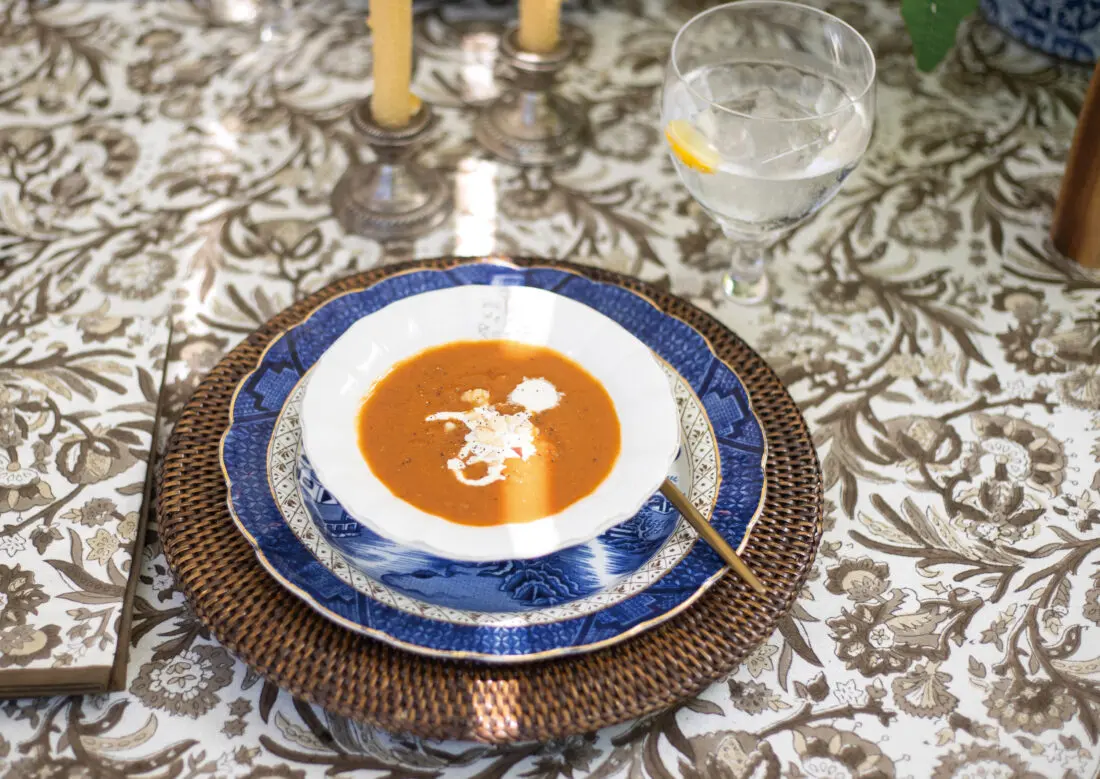
This feature explores the culinary mechanics of that “quick lunch,” examining a standout recipe from the book: Claire Williams’s Roasted Tomato and Red Onion Soup. Designed to serve as the ultimate first course or a light midday meal, this recipe encapsulates the book’s core thesis—that sophisticated flavor profiles do not require hours of arduous kitchen labor. Through an exploration of Hicks’s hosting philosophy, the mechanics of high-level home cooking, and the broader cultural shift toward relaxed domesticity, this article provides a comprehensive look at how modern hosts can master the art of the organized, yet delightfully chaotic, gathering.
Detailed Chronology: From Royal Roots to the Modern Domestic Frontier
To fully understand the ethos behind India Hicks: Entertaining, with a Side of Chaos, one must trace the winding trajectory of Hicks’s life and career. Her perspective on hospitality is not born from a rigid culinary academy or a commercial catering background; rather, it is a hybrid product of British aristocratic tradition and the breezy, decentralized lifestyle she cultivated over decades of living in the Out Islands of the Bahamas.
The Evolution of a Tastemaker
- Early Influences: Growing up immersed in British high society, Hicks was exposed early to the mechanics of large-scale, formal entertaining. However, her subsequent move to Harbour Island in the Bahamas fundamentally altered her relationship with domestic life. Island living demanded resourcefulness, adaptability, and a departure from stuffy drawing-room protocols.
- The Brand Building Years: Over the past twenty years, Hicks has successfully translated her unique aesthetic into a lifestyle empire, authoring several books on design, family, and island living while building a community-driven lifestyle brand.
- The Genesis of the Book Project: Recognizing a gap in the market for a hospitality book that acknowledged the messy reality of modern life—kids, dogs, unexpected guests, and burnt toast—Hicks conceptualized Entertaining, with a Side of Chaos. The book was designed not as a set of rigid rules, but as an intimate invitation into her home, showcasing the chaotic choreography that precedes every successful dinner party.
- The Collaboration with Claire Williams: Central to Hicks’s domestic operations is Claire Williams. Their professional partnership bridges the gap between Hicks’s visionary table-setting and Williams’s tactical culinary execution. The book formalizes this partnership, shining a light on the unsung heroes of domestic hospitality: the home chefs who turn high-minded concepts into edible realities.
- Release and Reception (September 2026): Debuting to widespread acclaim from design and culinary critics alike, the book has quickly established itself as a definitive guide for a new generation of hosts who prioritize warmth and connection over perfectionism.
Supporting Context & Metrics: The Anatomy of a “Quick Lunch”
In the contemporary culinary landscape, the term “quick lunch” often conjures images of uninspired desk salads or hastily microwaved leftovers. In the world of India Hicks and Claire Williams, however, a quick lunch is an exercise in deceptive simplicity. It is an approach to cooking that relies on high-quality, seasonal ingredients and foundational techniques that maximize flavor while minimizing active preparation time.
The Philosophy of Roasted Components
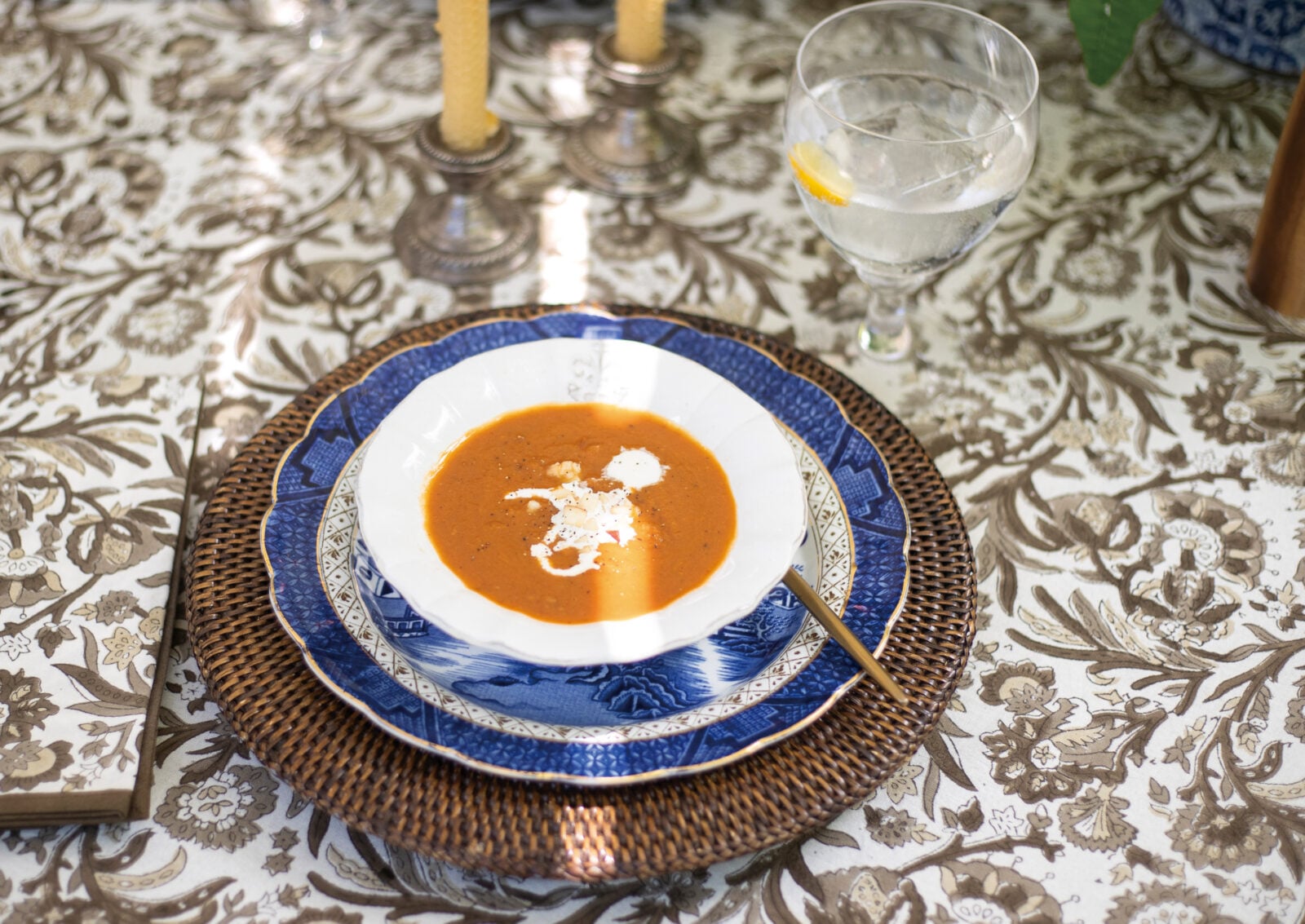
Williams’s Roasted Tomato and Red Onion Soup is a textbook example of modern home cooking at its most efficient. By utilizing the roasting process, the chef achieves several culinary objectives simultaneously:
- Caramelization: High-heat roasting breaks down the natural sugars present in both tomatoes and red onions, generating deep, complex flavor notes that raw or simply boiled vegetables cannot replicate.
- Moisture Reduction: Oven-roasting evaporates excess water from the tomatoes, naturally concentrating the soup’s body without the heavy reliance on excessive stocks, creams, or thickeners.
- Passive Labor: Unlike stovetop reductions that require constant stirring and monitoring, roasting is a passive cooking method. Once the ingredients are prepped and tossed in oil and seasoning, the oven does the heavy lifting, freeing the host to focus on table settings, guest arrival, or simply pouring a glass of wine.
The Role of the First Course in Modern Entertaining
In her book, Hicks emphasizes that a successful gathering relies heavily on pacing. The first course sets the psychological tone of the meal. A heavy, overly complex starter can fatigue the palate and bog down the evening’s momentum. Conversely, a vibrant, well-balanced soup—such as this roasted tomato and red onion iteration—cleanses the palate, stimulates the appetite, and provides an immediate sensory welcome.
Moreover, soup is one of the ultimate make-ahead components for a host. It can be prepared hours, or even days, in advance, requiring only a gentle reheat on the stove just before service. This operational efficiency is the secret weapon behind Hicks’s ability to remain relaxed and present when guests arrive.
Official Statements & Insights from the Creators
In interviews accompanying the launch of India Hicks: Entertaining, with a Side of Chaos, Hicks has been candid about the realities of running a lively household and the intentionality required to make entertaining look effortless.
"People often look at a styled table or a well-plated meal and assume it materialized out of thin air," Hicks notes in the introductory chapters of her book. "They don’t see the dog tracking mud across the kitchen floor, the wine cork rolling under the refrigerator, or Claire and me frantically debating whether we have enough fresh basil. Entertaining isn’t about the absence of chaos; it’s about learning how to host right alongside it."
This philosophy shifts the paradigm of modern hospitality from one of anxious perfectionism to one of resilient grace. The inclusion of recipes developed by Williams—such as the Roasted Tomato and Red Onion Soup, paired with options like her mini cheesecakes for dessert—underscores the book’s practical utility. It bridges the gap between high-end aesthetic inspiration and tangible, kitchen-tested execution.
Culinary collaborators like Williams operate as the invisible backbone of such high-profile domestic setups. Their ability to improvise, pivot, and deliver restaurant-quality dishes within a domestic environment is what allows tastemakers like Hicks to focus on the overarching guest experience.
Future Outlook: The Shift Toward Relaxed, Sustainable Hospitality
As society continues to navigate a post-pandemic cultural landscape, our relationship with gathering has fundamentally transformed. The era of hyper-formal, stiffly catered dinner parties has given way to a renewed appreciation for intimacy, authenticity, and sustainability in the home.
Books like India Hicks: Entertaining, with a Side of Chaos point toward a broader future for home economics and lifestyle curation. Several key trends are emerging in this space:
1. The Elevation of the Everyday Meal
Hosts are increasingly rejecting the notion that special recipes should be reserved exclusively for major holidays or milestone celebrations. By integrating elevated yet accessible dishes—like a robust roasted tomato soup—into casual weekday lunches or impromptu weekend get-togethers, hosts are cultivating a lifestyle where everyday moments feel celebrated.
2. Radical Transparency and the Embraced “Chaos”
The immaculate, filtered perfection that dominated social media aesthetics over the past decade is experiencing fatigue. Audiences are gravitating toward creators and tastemakers who embrace vulnerability, humor, and authenticity. Acknowledging the burnt edges, the late-arriving guests, and the frantic kitchen moments makes entertaining feel attainable rather than intimidating.
3. Seasonal and Resourceful Cookery
With growing awareness of food waste and ecological sustainability, recipes that make the most of abundant seasonal produce—such as summer and autumn tomatoes—are taking center stage. Techniques that concentrate flavor naturally, such as roasting, reduce the need for processed additives and complex ingredient lists, aligning home cooking with modern environmental values.
Conclusion
Ultimately, India Hicks and Claire Williams remind us that the true measure of a great gathering is not the absence of imperfection, but the presence of warmth, good conversation, and exceptional food. Whether you are planning a grand dinner party or a spontaneous midday meal with friends, starting with a foundation of thoughtful, efficient recipes—like this classic roasted tomato and red onion soup—ensures that the host remains just as much a guest at their own table as anyone else.

0 Comments