

Executive Overview
On the afternoon of Wednesday, September 9, 2026, a severe multi-vehicle collision in the 1400 block of East University Avenue prompted a rapid, high-stakes emergency response from Gainesville Fire Rescue (GFR) and local law enforcement. The incident, which occurred along one of Gainesville’s most heavily trafficked arterial corridors, required specialized technical extrication to rescue an occupant trapped within the wreckage of a severely damaged vehicle.
Following a coordinated effort by first responders, the victim was successfully extricated and transported to a regional trauma center with minor injuries—an outcome that emergency personnel described as fortunate given the structural damage sustained by the vehicle. While the scene was cleared relatively quickly, restoring the flow of midweek commuter traffic, the collision has once again cast a spotlight on the ongoing safety challenges associated with State Road 26 (University Avenue).
This investigative report provides a comprehensive breakdown of the incident, analyzes the historical and infrastructural context of the East University Avenue corridor, reviews local traffic safety metrics, and examines the systemic planning initiatives aimed at mitigating such incidents in the future.
Detailed Chronology of the Incident
[Wednesday Afternoon: Crash Occurs]
       │
       ▼
[1400 Block of E. University Ave] ───► GFR & GPD Dispatched Immediately
       │
       ▼
[First Responders Arrive] ───────────► Scene Secured & Traffic Diverted
       │
       ▼
[Technical Extrication] ─────────────► "Jaws of Life" Used to Free Trapped Occupant
       │
       ▼
[Medical Transport] ─────────────────► Patient Transports to UF Health Shands Hospital
       │
       ▼
[Scene Cleared] ─────────────────────► Debris Removed & Roadway Reopened
The Initial Collision and Dispatch
The sequence of events began on the afternoon of Wednesday, September 9, 2026, as traffic volume began to peak ahead of the evening rush hour. Emergency dispatchers received multiple 911 calls reporting a multi-vehicle collision in the 1400 block of East University Avenue, a segment of the roadway characterized by commercial access points, varying speed limits, and high-density transit.
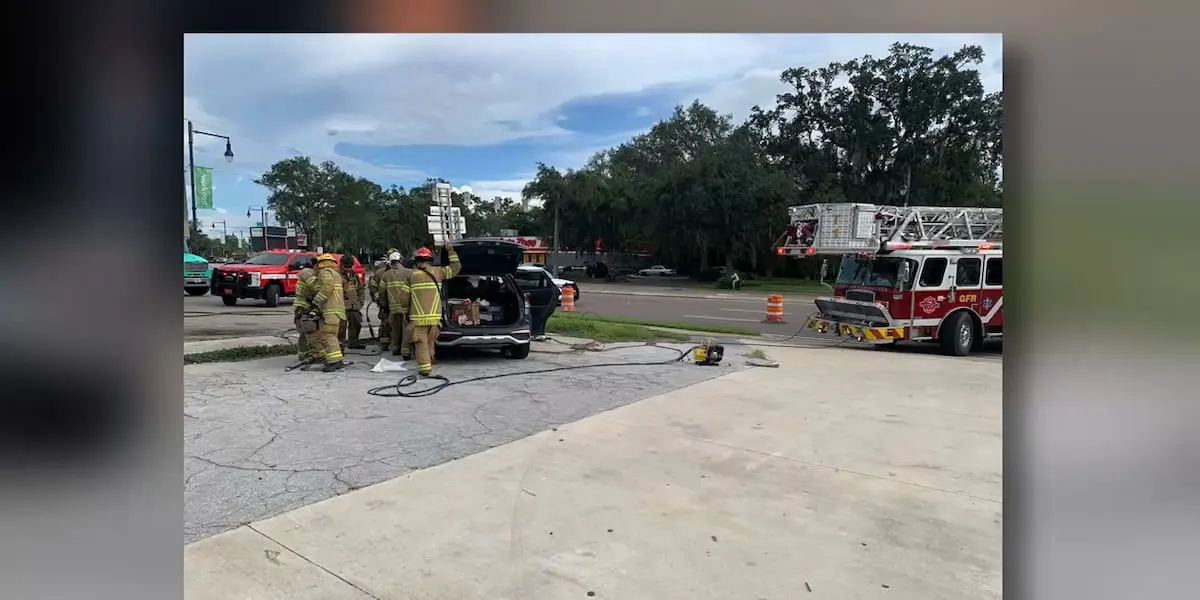
Gainesville Fire Rescue (GFR) dispatched a heavy rescue squad, engine crews, and emergency medical services (EMS) personnel to the scene. Units arrived within minutes of the initial call to find a chaotic scene involving at least two passenger vehicles, with one vehicle suffering significant side-impact and front-end intrusion.
Technical Extrication Operations
Upon arrival, GFR officers conducted a rapid triage and scene assessment. They identified a single occupant trapped inside the cabin of the most severely damaged vehicle. The structural integrity of the passenger compartment had been compromised, pinning the individual and preventing standard egress.
GFR Extrication Protocol:
1. Vehicle Stabilization (Cribbing & Struts)
2. Glass Management & Patient Shielding
3. Hydraulic Cutting & Spreading (Pillar Removal)
4. Controlled Extrication to Longboard
Rescue crews immediately initiated vehicle stabilization protocols, utilizing specialized cribbing and struts to prevent the vehicle from shifting during the rescue operation. Once the vehicle was secured, firefighters deployed hydraulic rescue tools—commonly known as the "Jaws of Life"—to perform a door displacement and "B-pillar" cut. This technical maneuver allowed crews to peel back the damaged metal casing of the vehicle, creating an opening large enough to safely slide the patient out on a spine board, minimizing the risk of secondary spinal injuries.
Patient Stabilization and Transport
Throughout the extrication process, paramedics maintained continuous verbal and physical contact with the trapped occupant, monitoring vital signs and administering preliminary trauma care.
Once freed from the wreckage, the patient was transitioned to an awaiting Alachua County rescue unit. The individual was transported to UF Health Shands Hospital—the region’s premier Level 1 trauma center—for comprehensive evaluation. Hospital officials later confirmed that, despite the violence of the impact, the patient was treated for minor, non-life-threatening injuries and is expected to make a full recovery.
Scene Clearance and Investigation
While the medical transport was underway, Gainesville Police Department (GPD) officers worked to manage traffic flow, closing down sections of East University Avenue to preserve the scene for crash investigators and to protect the working emergency crews. Debris, including shattered glass, automotive fluids, and fragmented body panels, was cleared from the roadway. Tow trucks removed the disabled vehicles, and by early Wednesday evening, all lanes of East University Avenue were fully reopened to traffic.
Supporting Context & Metrics
The Legacy of University Avenue: A Corridor of Contrast
State Road 26, known locally as University Avenue, serves as the central east-west spine of Gainesville. The road undergoes a dramatic transformation as it moves from west to east:
- West University Avenue: Characterized by the University of Florida campus, heavy pedestrian traffic, lower speed limits, and extensive traffic-calming infrastructure.
- East University Avenue: Transitions into a higher-speed, multi-lane arterial design. The 1400 block, situated east of the downtown core, acts as a transitional zone where drivers frequently accelerate as they move toward Waldo Road and the outer limits of the city.
This transition from an urban, pedestrian-focused street to a suburban highway design has historically made East University Avenue a zone of elevated collision risk. The mix of local neighborhood traffic, commercial delivery vehicles, public transit buses, and high-speed commuters creates a volatile traffic environment.
| Corridor Section | Average Speed Limit | Primary Traffic Conflict | Pedestrian Infrastructure |
|---|---|---|---|
| West University (near UF) | 20–30 MPH | High pedestrian/cyclist volume | High (Raised crosswalks, wide sidewalks) |
| Downtown Core | 30 MPH | Parking maneuvers, turning vehicles | Moderate-High (Signalized intersections) |
| East University (1400 Block) | 35–45 MPH | High-speed rear-ends, turning conflicts | Moderate (Narrower sidewalks, fewer crossings) |
Regional Traffic Safety Trends
Alachua County, and Gainesville in particular, has grappled with traffic safety challenges for years. According to historical crash data compiled by the Florida Department of Highway Safety and Motor Vehicles (FLHSMV), Alachua County records thousands of traffic crashes annually, with a disproportionate number occurring on major state roads running through the city center.
The City of Gainesville formally adopted a Vision Zero policy, aiming to eliminate all traffic fatalities and serious injuries on local roadways by the year 2040. While progress has been made on municipal roads, state-maintained roadways like University Avenue (SR 26) require coordination with the Florida Department of Transportation (FDOT), adding layers of bureaucratic complexity to physical infrastructure changes.
Official Statements
Following the successful rescue operation on Wednesday afternoon, local agency representatives praised the rapid coordination of the responding crews while emphasizing the broader imperative of road safety.
A spokesperson for Gainesville Fire Rescue commented on the tactical execution of the extrication:
"The rapid extrication performed by our crews on Wednesday afternoon is a testament to the rigorous, continuous training our firefighters undergo. When a vehicle compartment collapses, every second counts. Our team utilized hydraulic cutters and spreaders to safely free the occupant within minutes of arrival, minimizing the potential for further trauma. We are incredibly grateful that the occupant sustained only minor injuries, but this incident serves as a stark reminder of how quickly a routine drive can turn into a life-threatening situation."
An officer with the Gainesville Police Department’s Traffic Division, speaking on the condition of anonymity due to the ongoing nature of the crash investigation, highlighted the challenges of the East University corridor:
"The 1400 block of East University Avenue remains an area of consistent monitoring for our traffic enforcement units. We see a high volume of lane-change maneuvers and speed differentials in this sector. We urge all drivers to remain vigilant, put away distractions, and strictly adhere to the posted speed limits, especially during peak commute hours when traffic density rises sharply."
Future Outlook
Planned Infrastructure Overhauls
In response to historical crash data and community advocacy, FDOT, in partnership with the City of Gainesville, has proposed several long-term safety enhancements for the East University Avenue corridor.
Planned Safety Improvements (SR 26 / East University Ave):
┌───────────────────────────┐     ┌───────────────────────────┐     ┌───────────────────────────┐
│     Lane Narrowing        │ ──► │  Mid-Block Crosswalks     │ ──► │  Enhanced LED Lighting    │
│  (Reduces average speeds) │     │  (With pedestrian beacons)│     │  (Improves night vision)  │
└───────────────────────────┘     └───────────────────────────┘     └───────────────────────────┘
These planned interventions include:
- Lane Dieting and Narrowing: Reducing the width of travel lanes to naturally encourage lower driving speeds.
- Mid-Block Crossings: Installing high-visibility crosswalks equipped with Rectangular Rapid Flashing Beacons (RRFBs) to protect pedestrians.
- Intersection Signal Modification: Adjusting signal timing to allow for dedicated left-turn phases at high-risk intersections, reducing T-bone and side-impact collisions.
- Improved Street Lighting: Installing high-output LED streetlights along the eastern stretch to improve visibility during dawn, dusk, and nighttime hours.
The Role of Technology in Emergency Response
As vehicles become structurally safer—featuring advanced crumple zones, side-curtain airbags, and high-strength steel cages—the nature of extrication is changing. Modern emergency response agencies like GFR must continually update their tactics and tools to cut through reinforced vehicle frames without triggering un-deployed airbag canisters or damaging hybrid/electric vehicle high-voltage battery packs.
The successful outcome of Wednesday’s crash demonstrates that the synergy of advanced vehicle safety design and highly trained rescue personnel can turn what would have historically been a fatal collision into an incident resulting in only minor injuries.
Conclusion
The crash in the 1400 block of East University Avenue ended without tragedy, but it serves as a clear warning sign for municipal planners, state officials, and local residents alike. While emergency services proved their capability to respond swiftly and effectively to high-velocity impacts, the ultimate goal of Gainesville’s urban planning remains prevention. Until the physical infrastructure of East University Avenue is redesigned to match the traffic-calming successes of its western counterpart, first responders will remain the thin line between a minor injury and a roadway fatality.

0 Comments