

Executive Overview
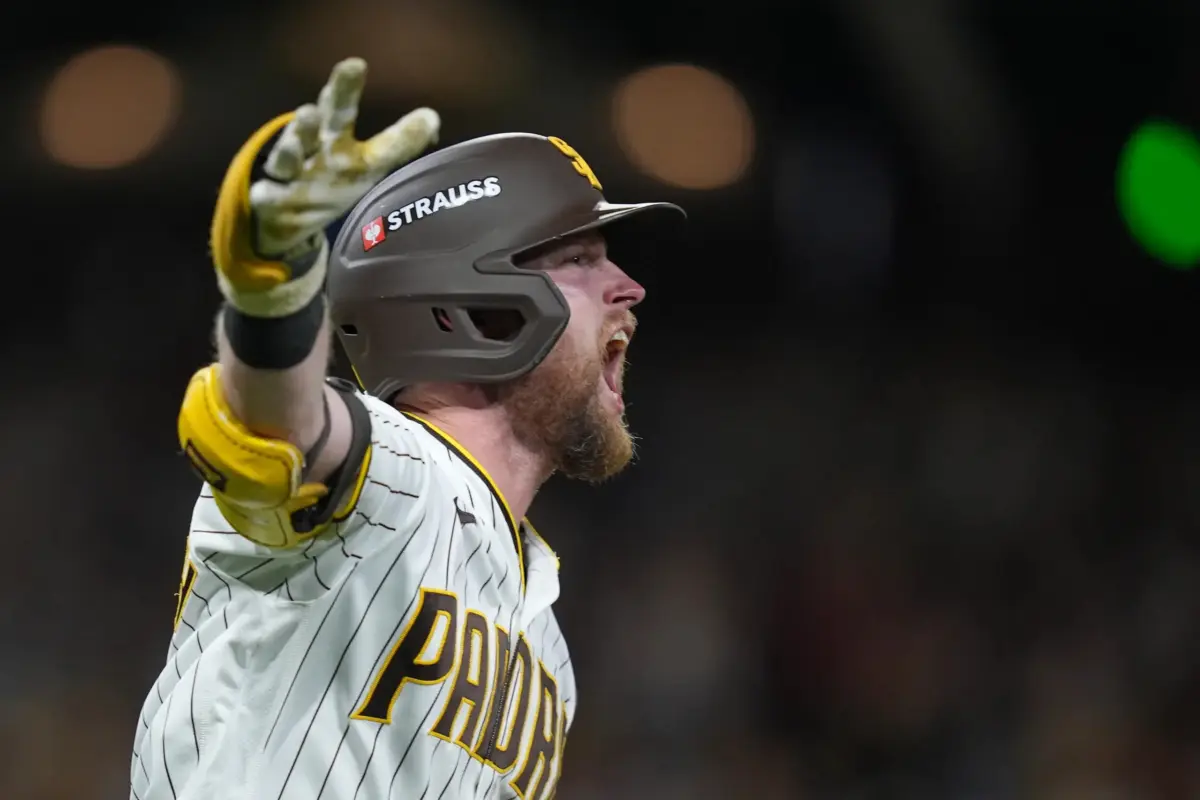
SAN DIEGO — In a high-stakes postseason drama that tested the limits of pitching depth, bullpen management, and defensive execution, the San Diego Padres staved off elimination on Tuesday night. Fueled by a tiebreaking home run from veteran infielder Jake Cronenworth and an unprecedented, gutsy two-inning relief performance from starting pitcher Michael King on just one day of rest, the Padres captured a 4-3 victory over the Milwaukee Brewers in Game 3 of the National League Division Series.
The win at Petco Park trims Milwaukee’s lead in the best-of-five series to 2-1, keeping San Diego’s championship aspirations breathing under the uncommonly warm October night air in Southern California. Yet, the victory did not come easily. Playing without star closer Mason Miller—who was placed on the paternity leave list just 45 minutes before first pitch—San Diego manager and his coaching staff had to throw conventional bullpen calculus out the window. Enter Michael King, who started Game 2 just 48 hours prior. Working out of the bullpen for only the third time in his three-year tenure with the Padres, King navigated a chaotic, bases-clearing threat in the top of the ninth inning before shortstop Xander Bogaerts turned a breathtaking, game-ending double play.
According to statistical trackers at OptaStats, King became the first pitcher in Major League Baseball history to start a postseason game and subsequently earn a multi-inning save within a 48-hour window since saves became an official statistic in 1969. For the Brewers, the loss extends a staggering and historic postseason road losing streak to 12 consecutive games, a skid dating back to the 2018 National League Championship Series. Despite controlling the series momentum after taking the first two games in Milwaukee, the league’s top regular-season team was left lamenting 11 stranded runners and a series of missed opportunities that ultimately allowed San Diego to claw back into the matchup.
Detailed Chronology: A Game of Momentum and Relentless Pressure
The tone for Game 3 was established early as both clubs traded blows in an uncharacteristically tense atmosphere at Petco Park. The Padres entered the evening seeking to reset their offensive rhythm after dropping two consecutive heartbreakers on the road last weekend. Their sense of urgency was evident from the opening frames.
San Diego starter Nick Pivetta took the mound tasked with neutralizing a potent Milwaukee lineup. While Pivetta did not pitch deep into the contest, yielding two runs and five hits while navigating into the fifth inning, his counterpart, Dustin May, also experienced an abbreviated evening. May was abruptly pulled by the Brewers’ coaching staff after falling behind 1-0 on a count to Bogaerts with a runner aboard in the fourth frame.
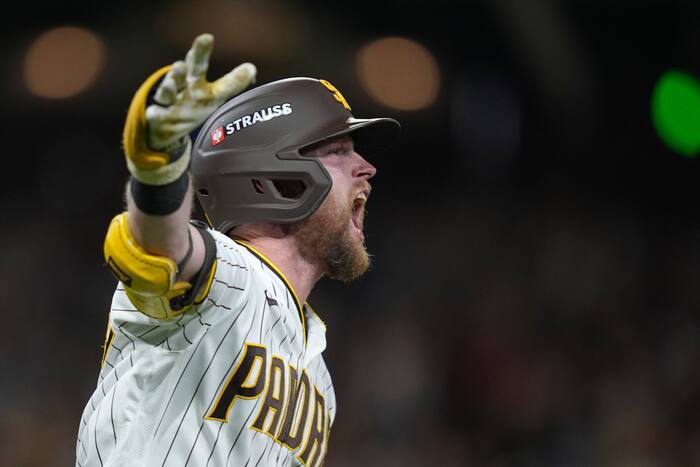
The Padres broke the game’s initial deadlock in the bottom of the third inning through aggressive base-running. Samad Taylor and Jackson Merrill ignited the home crowd by hitting back-to-back singles, aggressively swiping second base, and eventually coming around to score to put San Diego ahead. The Milwaukee response was swift. Catcher William Contreras—continuing a stellar offensive series—launched his second home run of the NLDS, circling the bases with a theatrical trot that quieted the home faithful.
The seesaw battle continued immediately following Pivetta’s departure in the fifth. Milwaukee knotted the score at 2-2 when Cooper Pratt raced home after a sacrifice fly by 22-year-old phenom Jackson Chourio, whose deep drive measured 242 feet. The sacrifice fly marked Chourio’s fifth RBI of the series and the 16th of his young postseason career, tying him with franchise legend Ryan Braun for the most postseason RBIs in Brewers history.
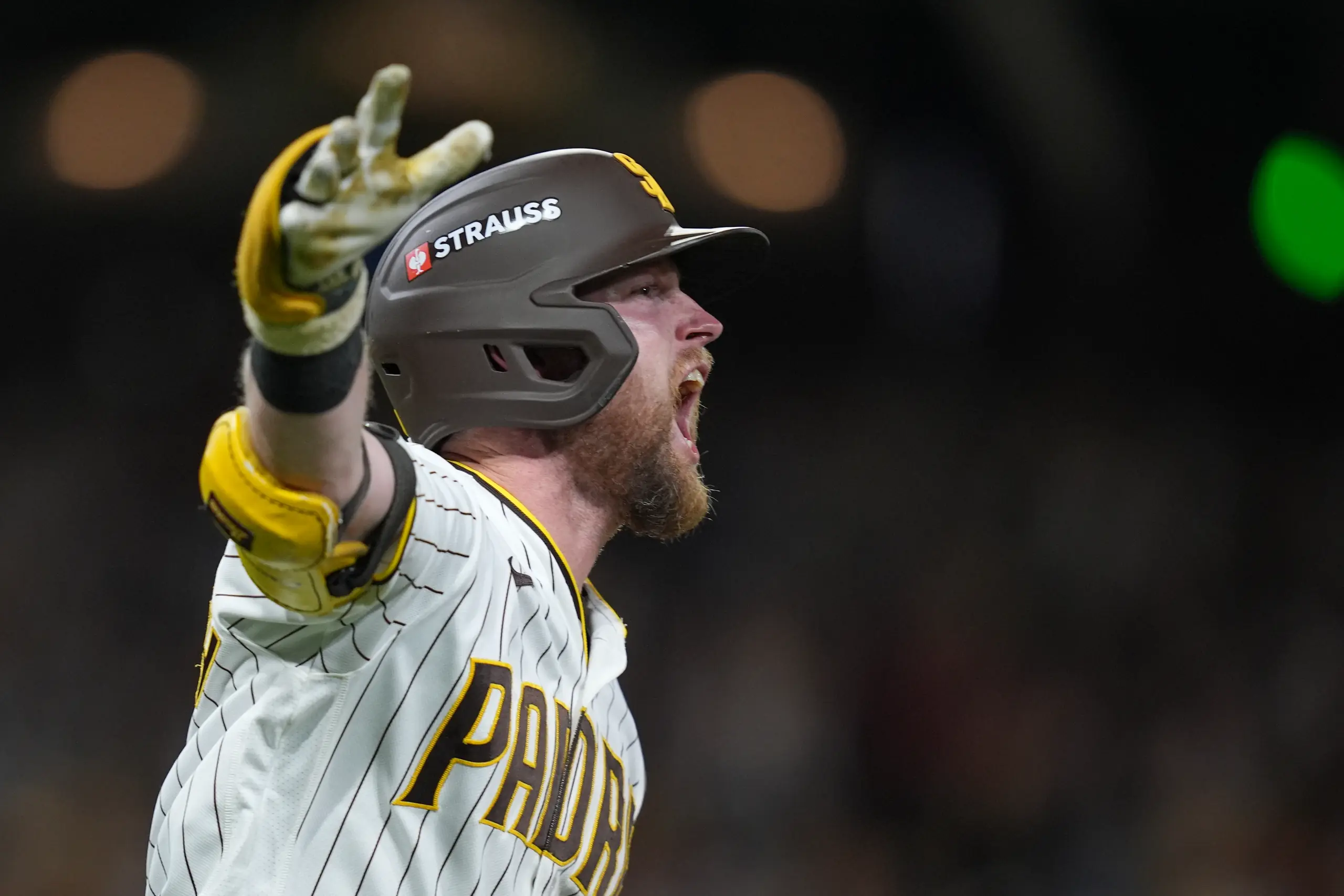
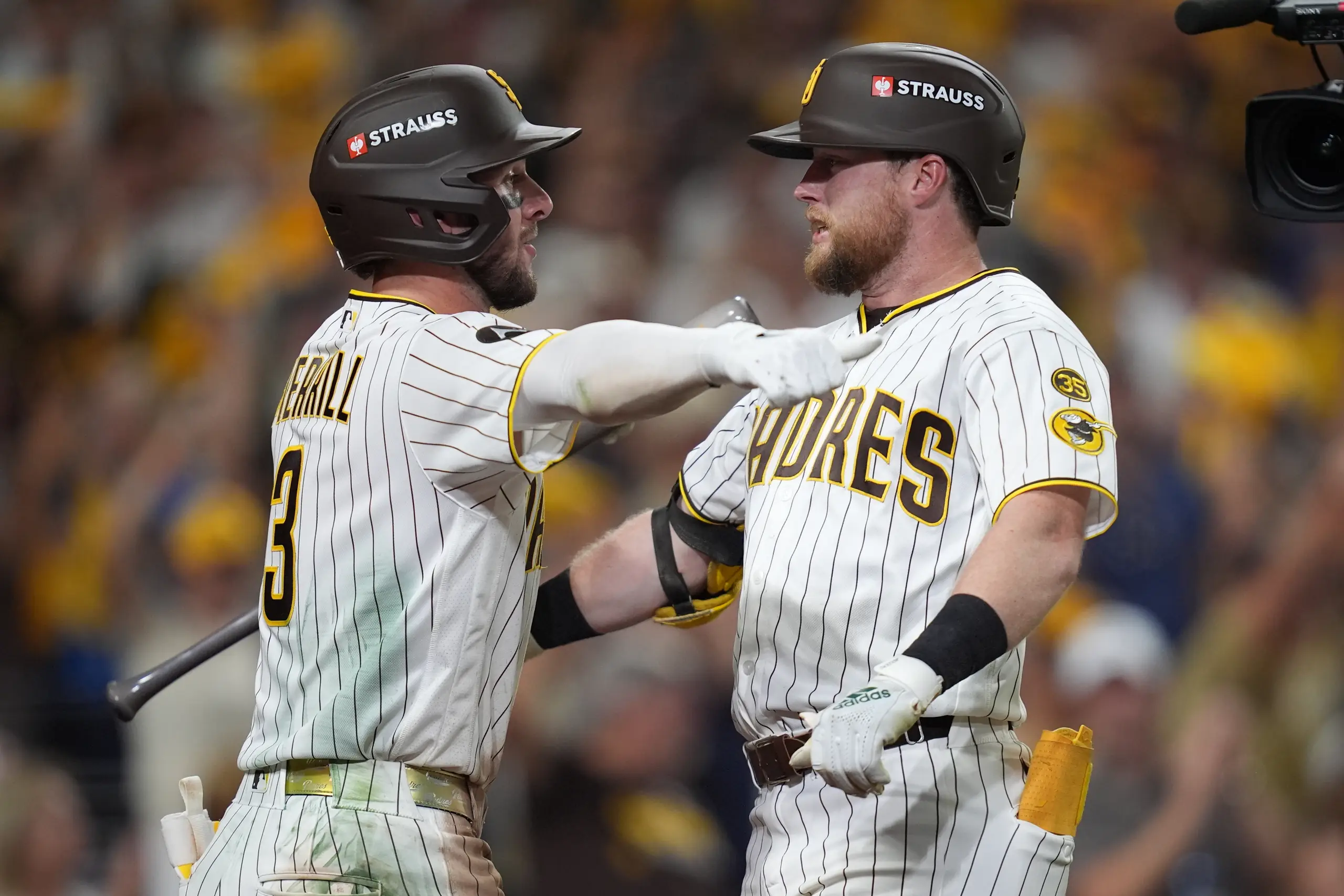
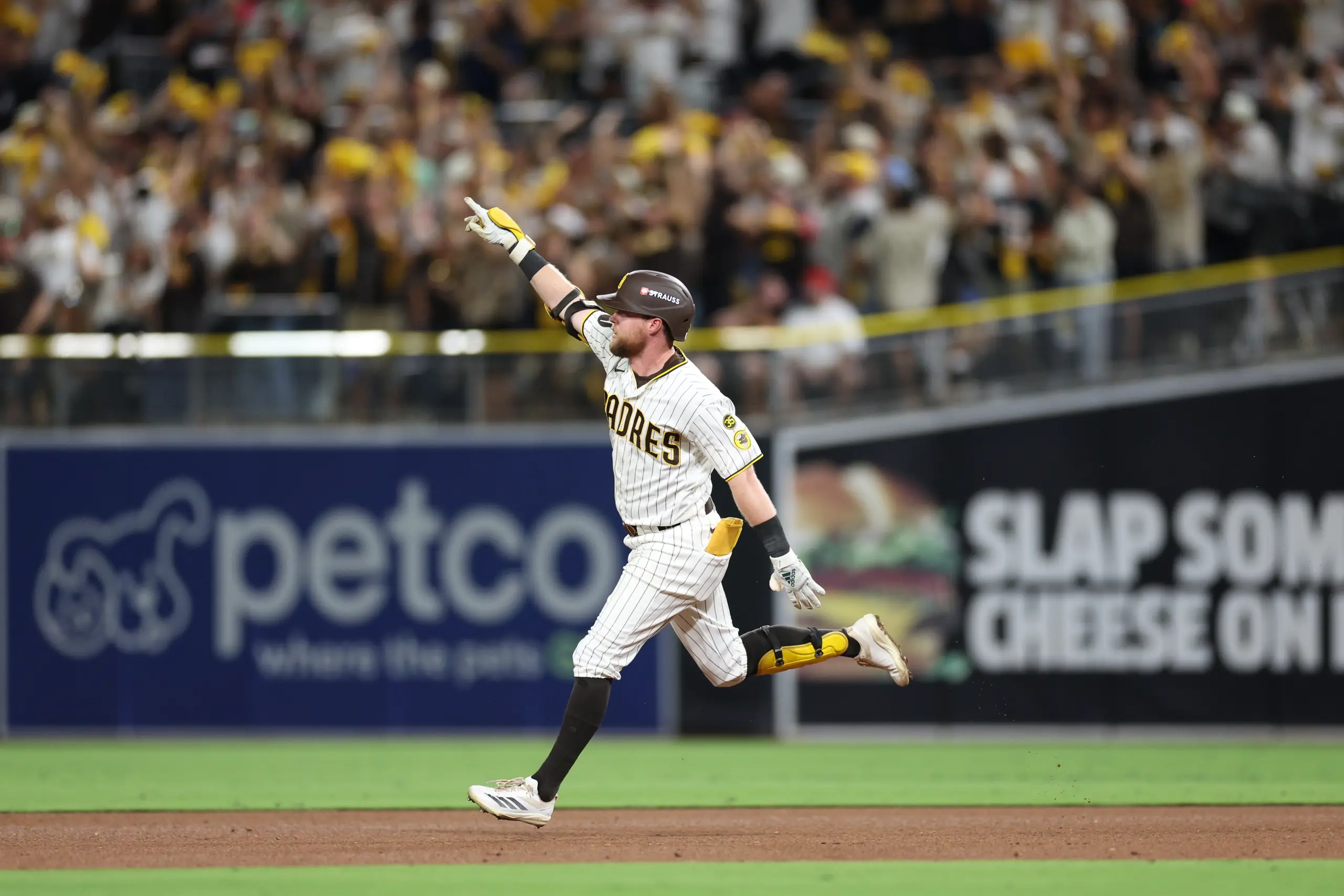
However, the deadlock was short-lived. In the bottom of the fifth, Jake Cronenworth stepped into the batter’s box against Milwaukee reliever JoJo Romero. Looking for a fastball, Cronenworth jumped on Romero’s first offering, lining it high and deep over the wall in right field for a solo home run. It was only Cronenworth’s second hit of the postseason, but it carried monumental weight, reclaiming a 3-2 lead for San Diego.
San Diego added a crucial insurance run in the sixth frame. Bogaerts laced a single, advanced to second on a wild pitch, and scampered home when Milwaukee shortstop Cooper Pratt committed an erratic throwing error under pressure, compounded by a broken bat flying dangerously close to the play from Miguel Andujar.
Milwaukee refused to go quietly. In the seventh, the Brewers manufactured another run when Christian Yelich laced a run-scoring single past a diving San Diego outfield, driving home Contreras. The hit marked Yelich’s first playoff RBI since Game 7 of the 2018 NLCS against the Los Angeles Dodgers—ending a drought that spanned 87 plate appearances across 19 games. Yet, despite mounting pressure and numerous traffic on the basepaths, the Brewers’ inability to deliver a decisive clutch hit proved fatal, as they left 11 runners stranded by the time the final out was recorded.
Supporting Context & Metrics: History, Bullpen Strain, and Statistical Anomalies
To fully grasp the magnitude of Game 3, one must examine the unprecedented circumstances surrounding San Diego’s pitching deployment. The pre-game scratching of closer Mason Miller due to the birth of his child threw the Padres’ meticulously planned bullpen architecture into complete disarray. Miller has been a shutdown anchor for the club all season, and his absence left a massive void in the late innings.
This crisis forced manager decision-makers to ask the unthinkable of Michael King. Traditionally a starter who transitioned from a relief role early in his career with the New York Yankees, King had logged five taxing innings just two days prior in Game 2. Asking a starting pitcher to return on one day of rest to secure a multi-inning postseason save defies modern baseball analytics, which heavily prioritize pitcher health and workload management.
Yet, King delivered a masterclass in resilience. Through the eighth inning and into the ninth, he flashed the command that made him a vital piece of San Diego’s rotation. Though he stumbled briefly in the ninth—surrendering back-to-back, one-out walks to William Contreras and Brice Turang that brought the go-ahead run to the plate—King regrouped when it mattered most. Confronting former MVP Christian Yelich with the game on the line, King induced a vicious 107 mph line drive up the middle.
The play that followed will be etched into Padres lore. Shortstop Xander Bogaerts instinctively dropped to his knees, cleanly fielding the short hop on the scorching liner. Showing extraordinary presence of mind, Bogaerts scrambled to touch second base for the force out before unleashing a strong throw to first base to complete the game-ending double play.
Series Snapshot: NLDS (Best-of-Five)
--------------------------------------------------
Game 1: Brewers 5, Padres 4 (Milwaukee leads 1-0)
Game 2: Brewers 6, Padres 5 (Milwaukee leads 2-0)
Game 3: Padres 4, Brewers 3 (Milwaukee leads 2-1)
Game 4: Wednesday at Petco Park (TBD)
Game 5*: Friday at American Family Field (If necessary)
The metrics underscoring Milwaukee’s offensive struggles highlight why the series remains tightly contested despite their 2-1 advantage. Leaving 11 runners on base in a one-run playoff loss points to a recurring issue with runners in scoring position. Furthermore, the continuation of their 12-game postseason road losing streak suggests a psychological hurdle when playing away from American Family Field.
Official Statements and Postgame Reactions
The emotional aftermath of Game 3 reflected the exhausted elation of a team that had just stared elimination in the face and refused to blink.
"We knew we were backed into a corner, but this club has shown all year that we don’t quit," San Diego manager addressing the media in his postgame press conference. "Losing Mason [Miller] right before game-time changes your entire blueprint. But what Michael King did tonight is something special. You don’t see starting pitchers coming back on one day of rest to close out a postseason game. That takes a level of mental and physical toughness that defines who we are as a ballclub."
Michael King, visibly fatigued yet smiling after earning his first career postseason save and his first since 2013, downplayed the historic nature of his workload.
"At this point of the year, throw the analytics out the window," King told reporters on the field. "When your number is called and your team needs outs to stay alive, you figure out a way to get the job done. My arm felt fine once the adrenaline took over. Xander [Bogaerts] made an unbelievable play behind me to bail me out in the ninth. That’s what team baseball is all about."
On the opposing side, Milwaukee manager offered a candid assessment of his team’s missed opportunities, particularly regarding their inability to capitalize with runners in scoring position.
"We had our chances tonight, plenty of them," the manager remarked. "When you leave 11 guys on base against a pitching staff of that caliber, you’re playing with fire. We hit some balls hard, but we couldn’t get that one big swing when it mattered most. Credit to King; he came in and made the pitches he had to make in the ninth. We still have the lead in the series, and we need to turn the page quickly and get ready for Game 4."
Future Outlook and What’s Next
As the dust settles on a classic October battle in San Diego, the focus immediately shifts to Game 4, scheduled for Wednesday night at Petco Park.
The stakes could not be higher. For the San Diego Padres, the mission is simple: win on Wednesday to force a decisive Game 5 back in Milwaukee on Friday. Doing so, however, will require immense creativity from the coaching staff regarding pitching depth. With Nick Pivetta having thrown into the fifth and Michael King having exhausted his arm on one day of rest to pitch the eighth and ninth innings, San Diego’s bullpen will be heavily taxed heading into Wednesday. Neither team had officially announced its Game 4 starting pitcher as of late Tuesday night, setting up a high-stakes tactical chess match between the two dugrooms.
For the Milwaukee Brewers, the objective is to secure the single victory needed to punch their ticket to the National League Championship Series and put their historic road playoff woes behind them once and for all. To accomplish this, the Brewers’ offense must rediscover the timely hitting that deserted them in Game 3, translating their ability to generate base runners into actual run production.
As the calendar turns to Wednesday, the 2026 NLDS has officially transformed into a war of attrition, where mental fortitude, bullpen management, and split-second defensive brilliance will dictate who advances toward the World Series.

0 Comments