

Executive Overview
Once the undisputed darling of pandemic-era indoor fitness, Peloton is fighting for its corporate survival. Facing years of slumping sales, plunging stock values, structural layoffs, and leadership churn, the connected-fitness pioneer is launching its most critical turnaround strategy to date. At the center of this high-stakes bet is a complete overhaul of its treadmill lineup, headlined by the introduction of the company’s first-ever foldable model: the Tread Flex.
Priced at $2,195, the Tread Flex is significantly cheaper than Peloton’s legacy equipment—cutting about $1,000 off the brand’s standard entry point—and is engineered with a space-saving, folding frame that shrinks to roughly half its operating size. With this release, Peloton aims to conquer urban apartments and smaller homes, directly targeting the massive, surging popularity of running and walking.
Under the direction of CEO Peter Stern, Peloton is deliberately shifting its institutional weight away from its signature stationary bikes and toward the lucrative at-home running market. North America’s at-home treadmill market is projected to skyrocket by 40%, expanding into a $5.6 billion category by 2030, whereas stationary bike growth has slowed to a crawl.
However, launching innovative hardware is only half the battle. Peloton must still convince consumers to invest premium dollars in a market flooded with free outdoor running alternatives, budget walking pads, and low-cost fitness applications. Coupled with software upgrades—such as deeper integrations with health-tracking powerhouses like Whoop, Garmin, Apple Health, and Fitbit—Peloton’s fall product launch represents a make-or-break moment. If the Tread Flex and its companion models fail to capture the imagination of modern fitness enthusiasts, the company’s path to profitability will narrow dramatically.
Detailed Chronology: From Pandemic Apex to Rebuilding the Brand
To understand the weight riding on the Tread Flex, one must examine Peloton’s turbulent trajectory over the last half-decade. The brand’s timeline highlights a classic case of pandemic over-expansion followed by a sobering reality check.
The Pandemic Apex (2020–2021)
During the COVID-19 lockdowns, Peloton became a cultural phenomenon. Confined to their homes, millions of consumers rushed to purchase stationary bikes and treadmills, transforming the company into a high-flying tech and fitness hybrid. Demand vastly outstripped supply, stock prices soared, and leadership assumed that home-fitness habits had permanently replaced commercial gym memberships.
The Post-Pandemic Slump (2022–2024)
As global economies reopened and traditional gyms, boutique fitness studios, and outdoor running clubs welcomed back members, Peloton’s momentum vanished. The company dramatically overestimated structural shifts in consumer behavior. Warehouses filled with unsold inventory, supply chain miscalculations bled capital, and consecutive quarters of steep losses forced a sweeping corporate contraction.
Leadership Shuffles and Workforce Reductions (2025–Early 2026)
The financial strain triggered widespread executive turnover. Former CEOs stepped down as the company initiated rolling rounds of layoffs, slashing global headcounts by roughly 15% to stem the bleeding. By October 2025, when Peloton last unveiled a slate of new products, market confidence remained severely shaken. Investor skepticism deepened, and the company’s stock plummeted by 42% in the months following that release—a clear signal that superficial hardware iterations were no longer enough to win back Wall Street or wary consumers.

The Pivot to Running and the Tread Flex Launch (Late 2026)
Recognizing that the spinning market had plateaued, newly installed CEO Peter Stern anchored the company’s future on a bold premise: running and walking represent the future of sustainable, habitual at-home exercise. On Tuesday, Peloton pulled back the curtain on its revamped treadmill ecosystem, highlighted by the debut of the Tread Flex, marking a strategic pivot designed to pull the company out of its prolonged slump.
Supporting Context & Metrics: The Shift in Consumer Fitness Habits
Peloton’s pivot is not occurring in a vacuum; it is a calculated response to a fundamental shift in how people approach health and wellness.
The Death of Choreographed Sweating and the Rise of Practical Fitness
According to Joe Vennare, CEO and co-founder of the health industry newsletter Fitt Insider, consumer habits have evolved away from overly intense, highly choreographed indoor cycling routines.
"The fitness landscape is evolving toward more sustainable and habitual routines rather than overly choreographed or intense workouts," Vennare noted in interviews with industry analysts.
Spinning classes have steadily lost cultural momentum as consumers increasingly prioritize the community, measurable progress, convenience, and holistic health outcomes offered by strength training and running. Running and walking have surged in popularity post-pandemic because they are accessible, inexpensive, and highly social, spawning thousands of independent running clubs across major urban centers.
Market Projections: Treads vs. Bikes
Financial forecasts heavily favor Peloton’s new focus. While the North American stationary bike sector has matured and plateaued, the at-home treadmill market tells a starkly different story:
- Market Valuation: The North American at-home treadmill market is forecast to expand by 40%, reaching a massive $5.6 billion category by 2030.
- Audience Expansion: By introducing a sub-$2,200 foldable machine, Peloton unlocks demographic segments previously priced out of its ecosystem—particularly younger professionals and urban dwellers living in apartments with limited square footage.
The Competition and the Cost Hurdle
Despite the promising market metrics, Peloton faces stiff headwinds. Consumers can run outdoors completely for free, utilize budget walking pads under their standing desks, or join low-cost commercial gyms for a fraction of a monthly Peloton subscription.
To combat this, Peloton is expanding its software ecosystem. Alongside the hardware announcements, the company revealed expanded integrations with Whoop, supplementing its existing connectivity with Garmin, Apple Health, and Fitbit. By allowing users to seamlessly track their complete running journey and ingest holistic performance data into third-party apps, Peloton is positioning its hardware as the central hub of a broader, connected fitness lifestyle rather than an isolated piece of luxury furniture.
Official Statements and Product Breakdown
Peloton’s executive leadership is framing this product rollout not just as a seasonal refresh, but as an existential reinvention.
Leadership Vision
In an official press release detailing the new hardware, CEO Peter Stern emphasized that doubling down on the treadmill category is essential for long-term growth.
"This will allow us to connect with a much wider audience and help us win the multibillion-dollar at-home treadmill market," Stern stated.
By addressing historical consumer complaints—namely, price barriers and spatial constraints—Peloton believes it has engineered the exact tools required for a commercial renaissance.
The 2026 Treadmill Ecosystem
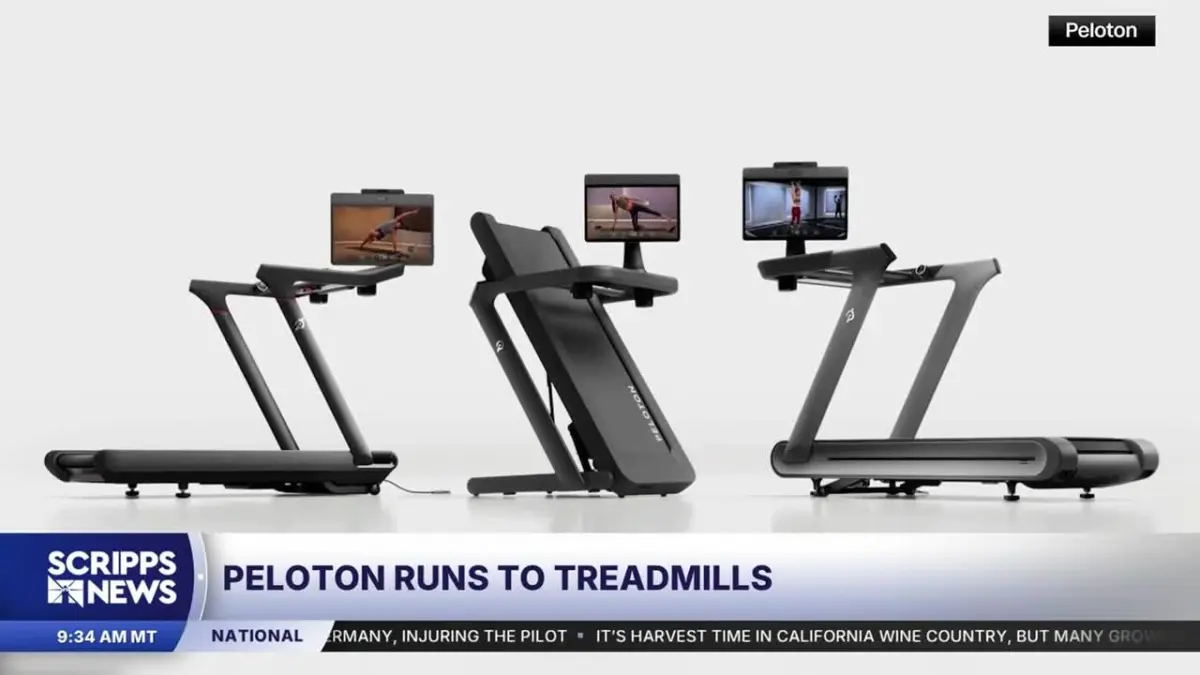
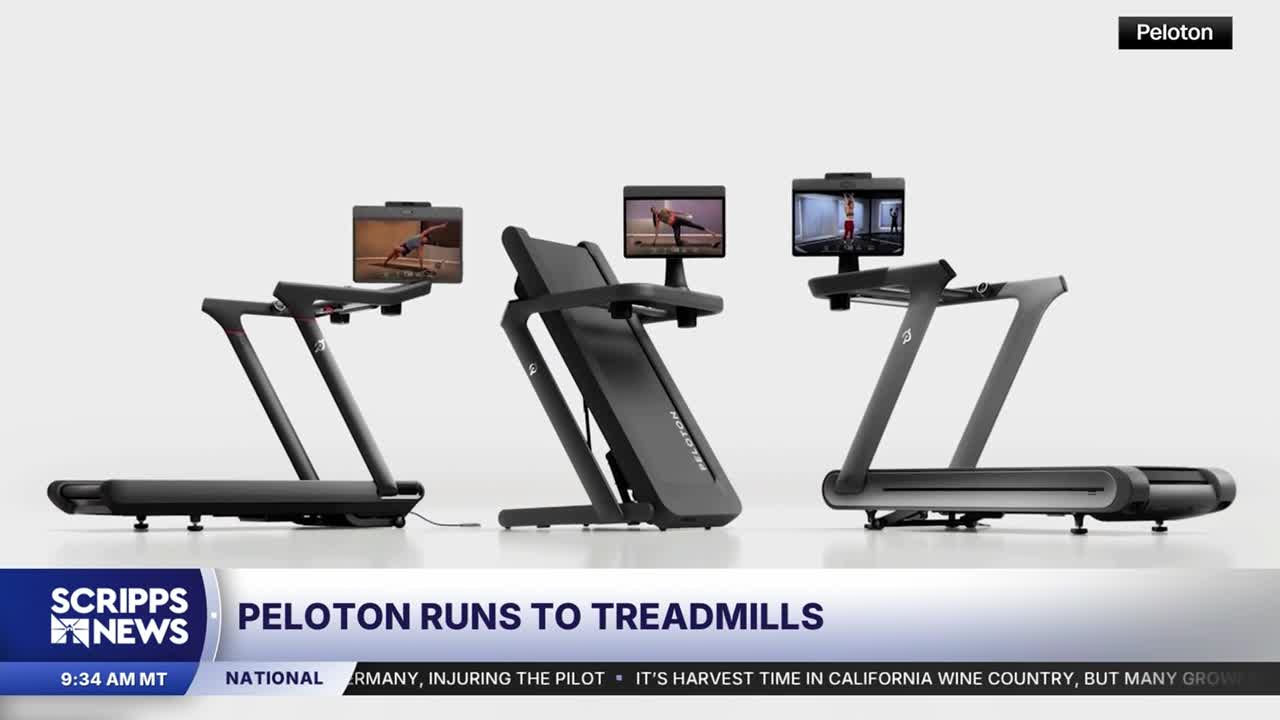
Peloton’s newly announced lineup caters to distinct tiers of the fitness market, ranging from budget-conscious apartment dwellers to elite endurance athletes:
-
The Tread Flex ($2,195):
- The Hook: Peloton’s cheapest and first-ever foldable treadmill.
- Engineering: Features a mechanical folding frame that contracts to roughly half its operating size, directly solving spatial issues for urban homes and apartments.
- Target Audience: Space-conscious runners looking for premium Peloton software integration at a more accessible price point.
-
The Tread Vision ($3,495):
- The Hook: An upgraded, mid-tier option designed for dedicated enthusiasts.
- Engineering: Features an advanced, proprietary cushioning system built to reduce joint impact during long-distance endurance runs.
-
The Tread+ Vision ($6,695):

- The Hook: The ultimate luxury machine engineered for hardcore fitness buffs and hybrid athletes, such as HYROX competitors.
- Engineering: Equipped with heavy-duty structural builds and powerful resistance features capable of handling extreme training volumes.
Shared Technological Innovations
Across all three models, Peloton has integrated cutting-edge hardware features to justify their price points:
- Swivel TVs: High-definition rotating touchscreens that make transitioning from running to floor-based strength, yoga, and stretching classes seamless.
- AI-Powered Cameras: Integrated optical sensors designed to provide users with real-time, automated feedback on form, pacing, and posture.
All three treadmills are scheduled to officially go on sale on October 1 in North America, strategically positioning the brand to capture holiday shopping momentum.
Future Outlook: Can Peloton Stick the Landing?
As Peloton prepares for the October launch of the Tread Flex, Tread Vision, and Tread+ Vision, the stakes could not be higher. The company’s recent history serves as a cautionary tale of what happens when a hardware maker overextends during a temporary economic boom. Yet, the underlying strategy behind this latest pivot is fundamentally sound.
By lowering its entry price point to $2,195, introducing a long-overdue folding mechanism, and leaning heavily into the secular boom of running and walking, Peloton is actively plugging the leaks in its business model. Furthermore, acknowledging that modern fitness consumers demand interoperability—evidenced by robust integrations with Whoop, Apple Health, and Garmin—shows a maturity that was missing during the height of the pandemic hype.
However, execution will determine everything. Peloton must prove to skeptics on Wall Street and budget-conscious consumers at home that its brand equity still commands a premium. If the Tread Flex successfully captures the apartment-dwelling running demographic, Peloton may finally transition from a pandemic anomaly into a sustainable, diversified fitness powerhouse. If it stalls, the company will face an uphill battle from which recovery may prove mathematically impossible.

0 Comments