

Executive Overview
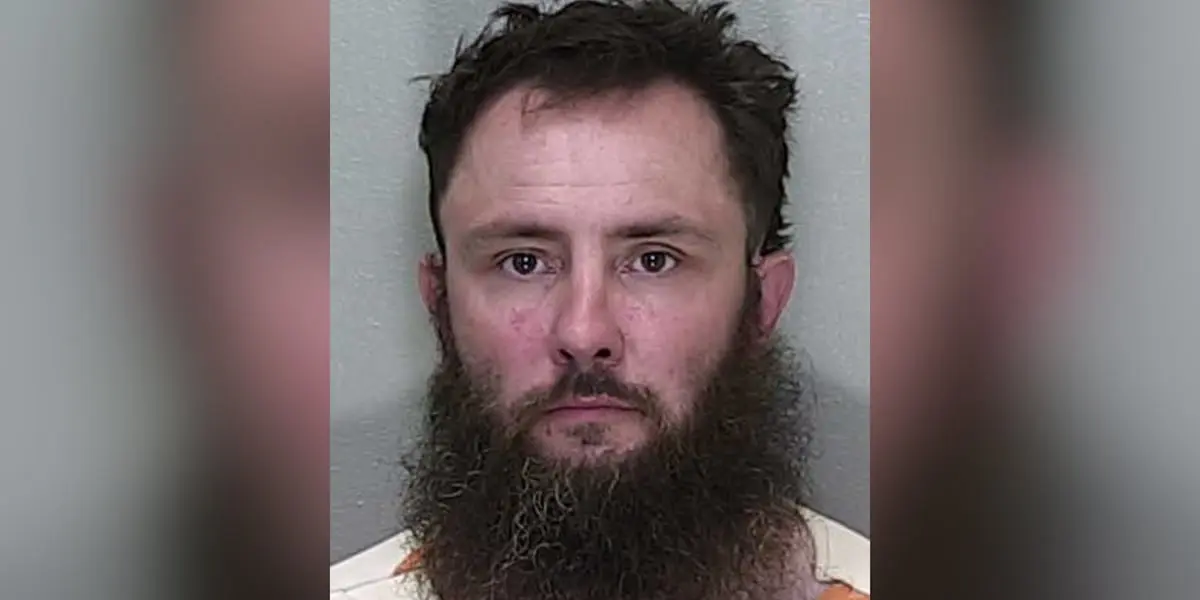
In a striking illustration of how routine traffic enforcement can abruptly derail a concealed criminal enterprise, law enforcement officers in Marion County, Florida, apprehended a 35-year-old man with a violent past following a seemingly minor infraction. William Myers, currently serving a term of supervised probation for second-degree murder, was taken into custody on Monday after operating an All-Terrain Vehicle (ATV) unlawfully on a public roadway.
What began as a standard verification of driving credentials swiftly escalated into a comprehensive criminal investigation. Marion County Sheriff’s Office (MCSO) deputies discovered that the ATV Myers was operating was stolen. Subsequent inquiries linked Myers to a broader wave of property crimes, resulting in an array of serious felony charges, including grand theft of a motor vehicle, burglary, and criminal mischief.
The arrest has reignited regional discussions regarding the efficacy of post-release supervision frameworks, offender rehabilitation metrics, and the persistent vulnerabilities communities face when violent offenders re-enter society. Myers, whose criminal trajectory includes a 2009 second-degree murder conviction in Marion County, had been granted supervised release less than a year prior to this latest incident. As local prosecutors prepare to formally file charges that could return Myers to maximum-security incarceration for the remainder of his natural life, this case underscores the unpredictable and high-stakes nature of modern front-line policing.
Detailed Chronology of Events
The Traffic Interception on Northeast 245th Street
The sequence of events leading to Myers’ apprehension unfolded on Monday along Northeast 245th Street, a secondary thoroughfare within the jurisdiction of Marion County. According to incident reports released by the Marion County Sheriff’s Office, a patrol deputy observed an individual operating an off-highway ATV directly on the paved roadway—a direct violation of Florida traffic statutes, which generally prohibit motorized all-terrain vehicles from traversing public streets and highways unless specific, localized exemptions apply.
Recognizing the infraction, the deputy initiated a standard traffic stop, signaling for the driver to pull to the shoulder. The operator, later identified as William Myers, complied without physical resistance. However, as the interaction progressed from a routine warning or citation to standard identification verification, red flags immediately surfaced.
Identity Verification and Initial Discrepancies
Upon requesting identification and proof of vehicle registration, deputies quickly determined that Myers did not possess a valid driver’s license. In the state of Florida, operating any motorized vehicle on public roads without proper licensure is an arrestable offense, particularly when compounded by the nature of the vehicle being driven.
Further complicating matters, deputies turned their attention to the ATV itself. Standard protocol dictates running the Vehicle Identification Number (VIN) or structural serial numbers through regional and national databases, including the Florida Crime Information Center (FCIC) and the National Crime Information Center (NCIC). Within minutes, dispatchers confirmed that the vehicle was actively listed as stolen out of a local jurisdiction.
Escalation to Major Felony Charges
The discovery of the stolen ATV shifted the encounter from a minor traffic misdemeanor into a felony investigation. Deputies detained Myers on the spot, conducting a preliminary search incident to arrest. As investigators expanded the scope of their inquiry, evidence began accumulating that tied Myers to additional unsolved property crimes within the vicinity.
By the conclusion of the initial field investigation, the charges against Myers had multiplied significantly. In addition to the traffic violations and motor vehicle theft, investigators formally charged him with:
- Burglary: Indicating unlawful entry into a structure or conveyance with the intent to commit an offense therein.
- Criminal Mischief: Pertaining to property damage inflicted during the commission of the secondary offenses.
- Driving Without a Valid License: Compounding the initial traffic infraction.
Myers was subsequently transported to the Marion County Jail, where he was booked and held without bond pending his initial court appearance before a circuit judge.
Supporting Context & Metrics
The 2009 Murder Conviction and Judicial History
To fully understand the gravity of Monday’s arrest, investigators and legal analysts must look back nearly two decades. Public court records from Marion County indicate that William Myers was convicted of second-degree murder in 2009 following a violent episode that permanently altered multiple lives in the community.
While second-degree murder in Florida does not carry the mandatory premeditation element of first-degree murder, it remains a severe, first-degree felony punishable by up to life imprisonment. Myers was subsequently sentenced to a substantial term in the custody of the Florida Department of Corrections (FDC).
For over a decade, Myers remained behind bars, traversing the state’s correctional infrastructure. Throughout his incarceration, correctional administrators assessed his institutional behavior, participation in rehabilitation programs, and threat level—metrics that ultimately contributed to his eventual transition toward release.
The Mechanics of Supervised Release
In July of the preceding year, Myers reached a legal milestone: his release from institutional custody into a program of supervised release, commonly referred to as probation. Supervised release is designed to reintegrate offenders into society under strict behavioral mandates, monitored by professional correctional probation officers.
Standard conditions of felony probation in Florida typically require:
- Periodic reporting to an assigned probation officer.
- Maintaining gainful employment or active enrollment in an educational/vocational program.
- Abstaining from the possession of firearms, weapons, or illicit substances.
- Avoiding injurious habits and maintaining a law-abiding lifestyle.
- Immediate notification of any law enforcement contact or arrest.
By allegedly committing new felony offenses—specifically motor vehicle theft and burglary—Myers has committed an absolute, unambiguous violation of his probation terms. Under Florida law, a probation violation (often referred to as a VOP) triggers an independent legal proceeding that can run concurrently with or consecutively to the new criminal charges. Because he was on probation for a violent felony (murder), the presiding judge holds expansive discretion to revoke his release entirely and impose the remainder of any suspended prison sentence.
The Broader Landscape of ATV Thefts and Property Crime in Central Florida
The inclusion of an ATV in this criminal episode highlights a growing trend across rural and semi-rural counties in Central Florida. All-Terrain Vehicles, utility task vehicles (UTVs), and dirt bikes represent high-value, highly mobile targets for opportunistic thieves. Because these vehicles are frequently stored in unsecured sheds, open-air carports, or agricultural outbuildings, they are particularly vulnerable to property crimes.
Law enforcement databases indicate that stolen off-road vehicles are frequently used either as primary modes of transportation to facilitate further burglaries or transported quickly across county lines to be resold via online marketplaces with altered or obliterated serial numbers. The Marion County Sheriff’s Office has repeatedly urged residents to secure outbuildings with heavy-duty deadbolts, utilize GPS tracking tags on valuable machinery, and immediately report suspicious motorized traffic on local roadways.
Official Statements and Law Enforcement Perspective
Marion County Sheriff’s Office Remarks
While formal press conferences are often reserved for major homicides or multi-agency task force sweeps, leadership within the Marion County Sheriff’s Office has expressed profound concern over the circumstances surrounding Myers’ apprehension.
Speaking on condition of anonymity regarding ongoing investigative details, an agency spokesperson emphasized the unpredictable nature of patrol work. "A deputy initiates a traffic stop because a vehicle is operating where it legally should not be," the official noted. "It appears routine—a simple infraction on a residential or rural road. But professional vigilance, standard database checks, and thorough investigative follow-up reveal that the individual behind the handlebars is a convicted murderer actively flouting the terms of his supervised release while committing fresh property crimes against our citizens."
The MCSO has consistently highlighted proactive patrol tactics as the cornerstone of community safety. By refusing to treat minor traffic violations as mere administrative inconveniences, deputies frequently intercept career criminals before their sprees escalate into even greater violence.
The Role of Probation and Parole Oversight
The arrest has also cast a critical spotlight on the administrative realities of Florida’s probation system. Critics and community safety advocates frequently debate the balance between rehabilitation and public protection, particularly when individuals with histories of violent crime are returned to civilian life.
While state correctional authorities operate under statutory guidelines that govern gain-time and supervised release eligibility, law enforcement agencies are left to manage the operational reality on the streets. Probation officers, operating under heavy caseloads, rely heavily on notifications from local law enforcement agencies when a supervised individual interacts with the justice system. The swift arrest of Myers ensures that his assigned probation officer was immediately notified, initiating the paperwork required to formally file a Violation of Probation (VOP) warrant alongside the new felony charges.
Future Outlook and Legal Implications
Upcoming Judicial Proceedings
As William Myers sits within the secure confines of the Marion County Jail, the legal machinery of the Fifth Judicial Circuit of Florida is moving swiftly. The procedural roadmap facing Myers involves multiple distinct legal tracks:
- First Appearance and Bond Determination: Because Myers was on active felony probation at the time of his arrest, standard bond schedules for the new charges of grand theft, burglary, and criminal mischief are rendered largely academic. Prosecutors will request—and judges routinely grant—a "No Bond" status on the probation violation, ensuring that Myers remains incarcerated regardless of his ability to post bail for the new offenses.
- Formal Arraignment: The Office of the State Attorney for the Fifth Judicial Circuit (encompassing Marion, Citrus, Hernando, Lake, and Sumter counties) will review the MCSO investigative reports and formally file charging documents (Information or Indictment) in Circuit Court.
- Violation of Probation (VOP) Hearing: Unlike a standard criminal trial, where the state must prove guilt beyond a reasonable doubt, a probation revocation hearing operates under a lower evidentiary standard: the "preponderance of the evidence." If the state can demonstrate that Myers more likely than not committed the new crimes or violated his administrative terms, the judge can revoke his probation immediately.
- Sentencing Exposure: Should his probation be revoked on the 2009 second-degree murder conviction, Myers faces the activation of any unserved prison time associated with that case, compounded by whatever consecutive or concurrent sentences are handed down for the current charges of burglary and vehicle theft. Given his age (35) and his recidivist history, legal experts suggest Myers faces the very real possibility of spending the remainder of his life incarcerated.
Community Impact and Preventative Takeaways
The case serves as a stark reminder to the residents of Marion County regarding the persistent presence of career criminals within local neighborhoods. It also reinforces the critical partnership between community members and law enforcement.
Local authorities continue to urge citizens to practice target-hardening techniques: locking vehicles, securing recreational equipment, installing motion-activated security lighting, and immediately reporting any unauthorized or suspicious operation of ATVs and utility vehicles on public roads. What began as a deputy enforcing a minor traffic ordinance on Northeast 245th Street has successfully removed a high-risk offender from the streets, neutralizing an active threat to property and public safety across Marion County.

0 Comments