BIRMINGHAM, England — Standing before a packed auditorium at the International Convention Centre, Conservative Party leader Kemi Badenoch delivered a definitive message to a party still nursing the wounds of historic defeat: the era of self-inflicted chaos is over. Addressing the Conservative Party’s annual conference on Wednesday, Oct. 7, 2026, Badenoch drew a hard line against internal division, ideological drift, and political opportunism, positioning the Tories as a disciplined, resurrected force ready to reclaim power.
Two years after the 2024 general election reduced the once-mighty Conservative Party to a demoralized rump of 121 seats in the House of Commons, Badenoch’s keynote speech marked a psychological turning point. Where last year’s gathering was plagued by existential dread and open backstabbing, this year’s conference in Birmingham buzzed with cautious optimism.
Crucially, Badenoch used the international stage to categorically reject any notion of an electoral pact or alliance with Reform UK, the insurgent right-of-centre party led by Nigel Farage. Denouncing what she termed the "race-based nationalism" leaking into British politics, Badenoch drew fervent applause by declaring that the Conservatives would not compromise their values to appease the far-right.
Instead, the Conservative leader pivoted toward traditional economic conservatism—promising lower taxes, deregulated markets, deep cuts to welfare spending, and fiscal discipline—while framing the current Labour administration under Prime Minister Andy Burnham as an anachronistic throwback to the socialist stagnation of the 1970s. As political turmoil continues to envelop both the governing Labour Party and Farage’s Reform UK, Badenoch is betting that disciplined messaging, economic pragmatism, and a rejection of toxic identity politics can make the Conservative Party fashionable once more.
Detailed Chronology: From Electoral Devastation to the Birmingham Rebound
The 2024 Debacle and the Long Road to Recovery
The narrative of modern British conservatism cannot be understood without revisiting the catastrophic fallout of the July 2024 general election. Following years of internal scandals, policy U-turns, and rapid-fire changes in prime ministerial leadership, voters handed the Conservative Party its worst-ever defeat at the ballot box. Keir Starmer’s Labour Party swept into Downing Street, while the Conservative tally in the House of Commons plummeted to just 121 seats out of 650.
In the immediate aftermath, the party appeared on the verge of fracturing entirely. Prominent figures traded insults in the media, while the newly ascendant Reform UK—capitalizing on anti-immigration sentiment—began poaching high-profile Conservative lawmakers and local councillors.
The Rise of Kemi Badenoch
Amid the wreckage, Kemi Badenoch emerged as the standard-bearer for a traumatized party. Winning the leadership contest to become the first Black woman to lead a major U.K. political party, Badenoch inherited a fractured caucus and a skeptical public.
Rather than leaning into the culture-war theatrics that had occasionally defined her early political career, Badenoch spent her first two years systematically purging the party of its internal drama. By the time delegates gathered in Birmingham in October 2026, the atmosphere had shifted palpably.
The Conference Turning Point
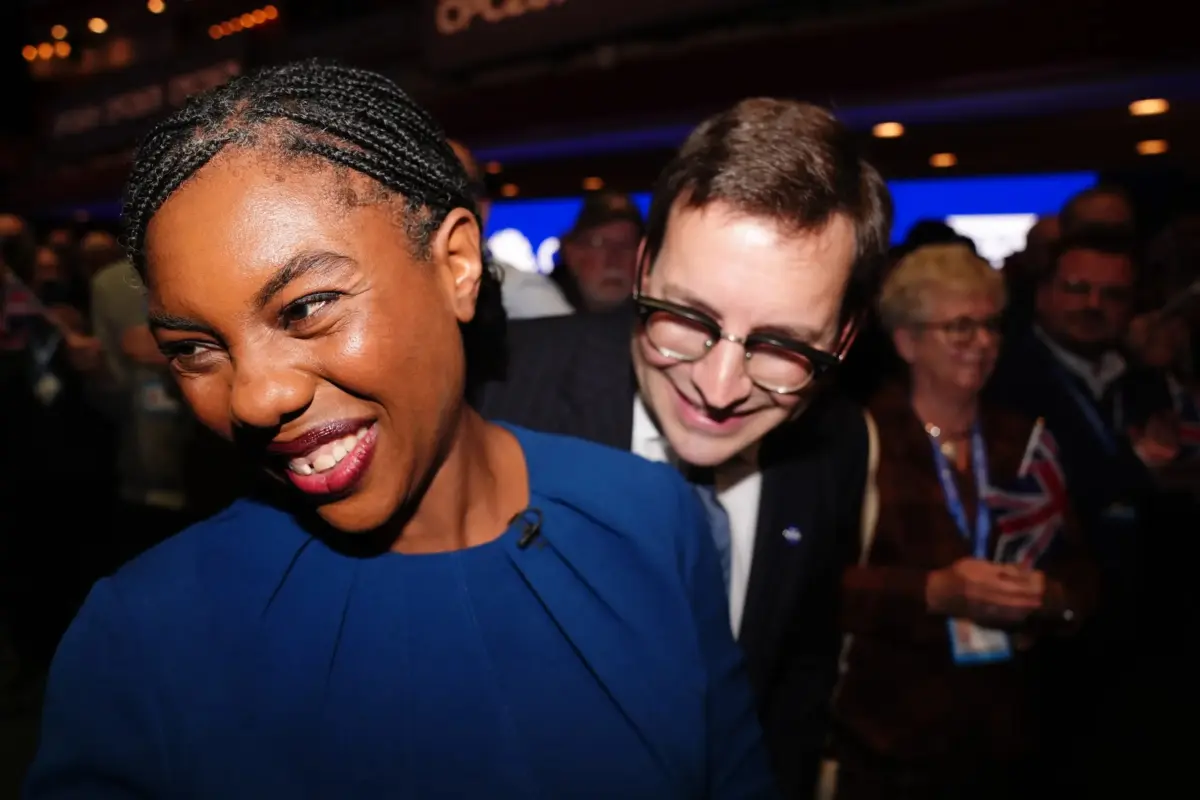
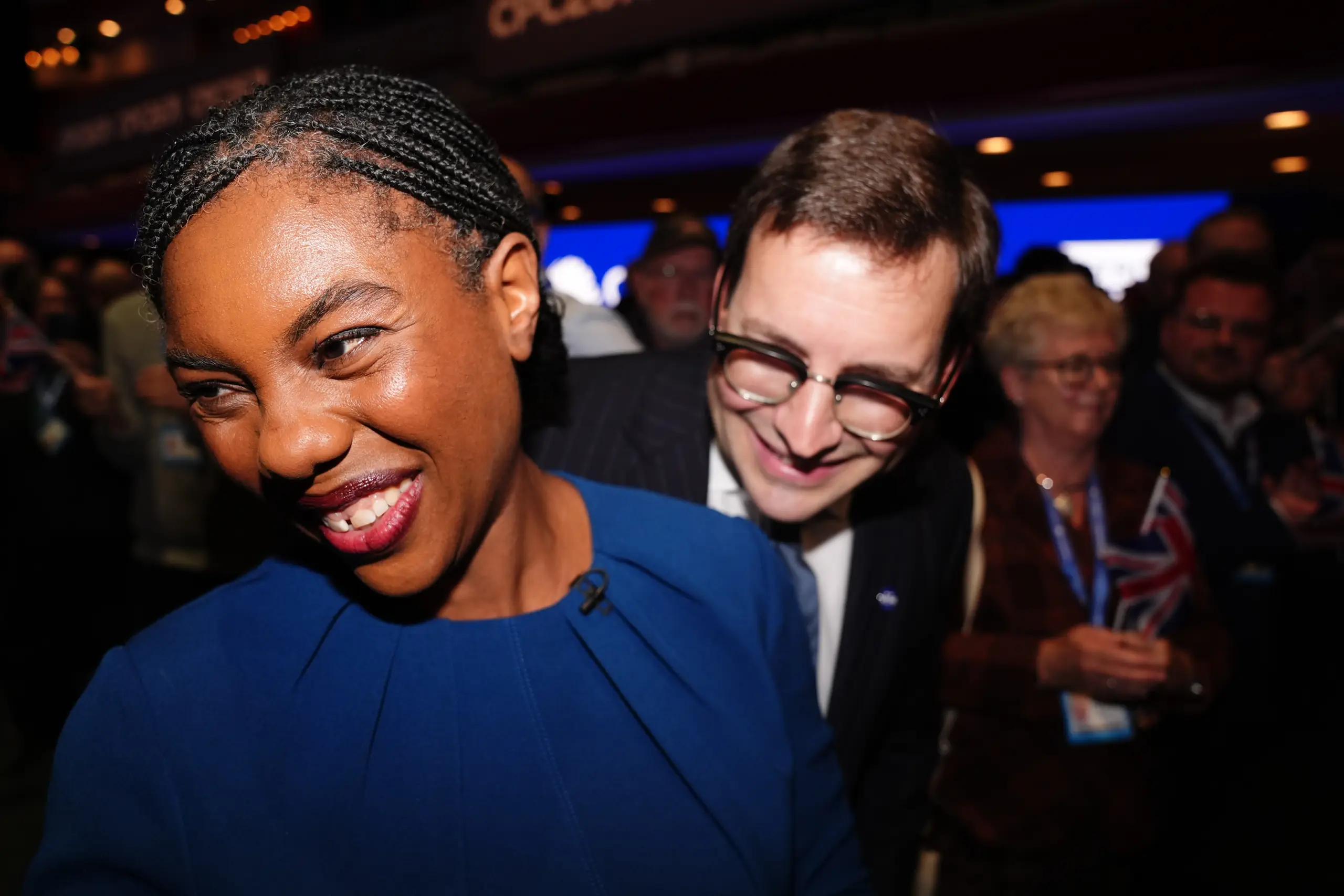
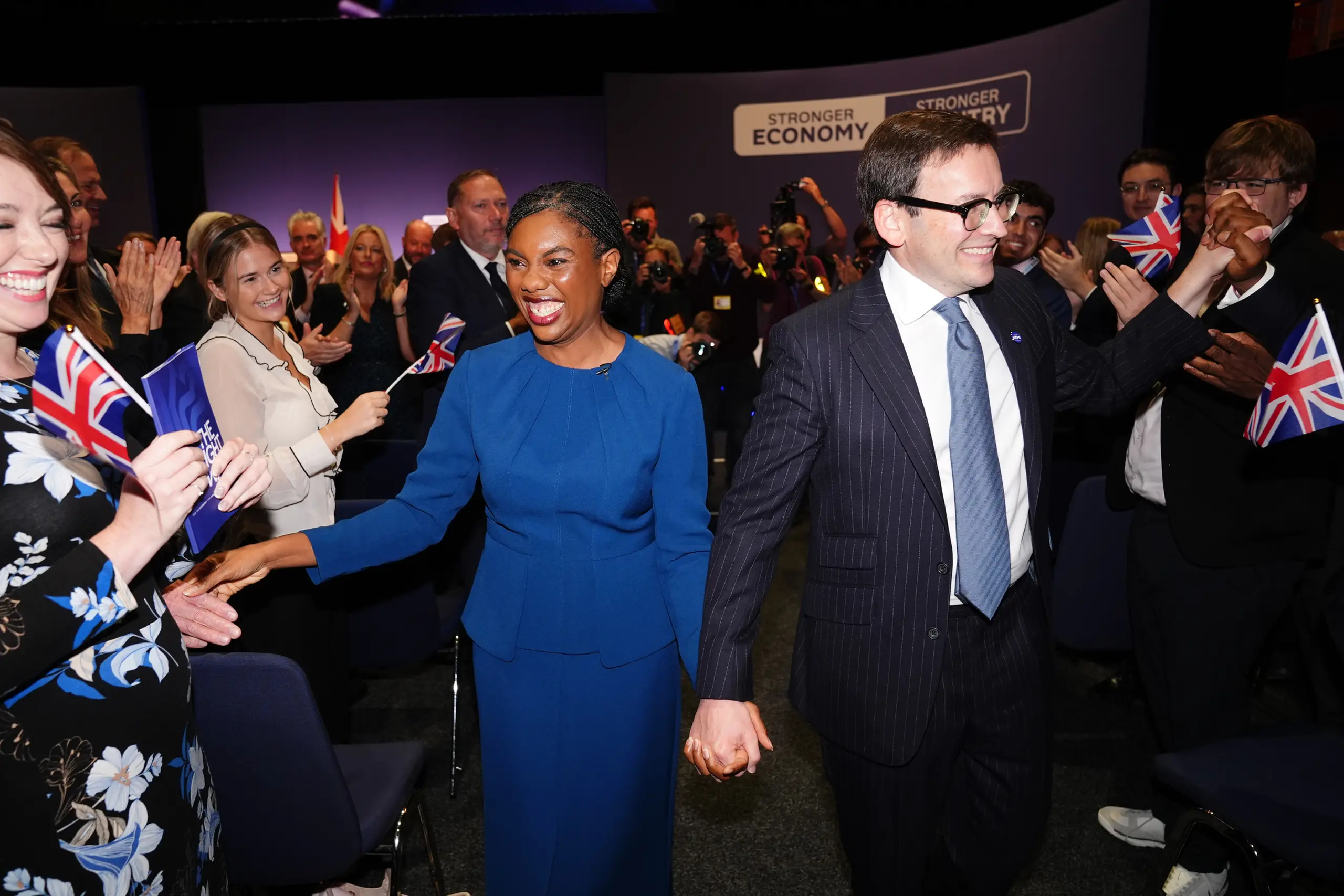
Wednesday’s keynote address was designed to project absolute authority. Entering the stage alongside her husband, Hamish Badenoch, to a rapturous reception, Badenoch wasted no time diagnosing the party’s past ailments.
"This party is now the no-drama party," Badenoch told delegates. "We are the no-nonsense party."
Comparing the party’s revival to the storied British high-street retailer Marks & Spencer—which spent years viewed as dowdy and dull before reinventing itself as a modern, fashionable staple—Badenoch argued that the Tories had learned hard lessons from their electoral humiliation. The speech signaled a definitive shift from introspection to outward-facing offense, setting the stage for an aggressive ideological battle against both the left and the radical right.
Supporting Context & Metrics: The Political Landscape of 2026
To fully grasp the significance of Badenoch’s strategy, one must examine the broader political chessboard in late 2026. The British electorate is currently more fragmented than at any point in modern parliamentary history.
The Numbers Game
121: The number of seats held by the Conservative Party in the House of Commons following the 2024 electoral wipeout, down from a comfortable working majority.
£10 Billion ($13.2 Billion): The proposed budget for the Conservative Party’s heavily debated "Britannia Shield" air-defense system, which later faced criticism over scaled-back ambitions.
Trailing Poles: Despite the rebound in party morale, opinion polls consistently place the Conservatives third behind both the governing Labour Party and Nigel Farage’s Reform UK, underscoring the uphill battle Badenoch faces in winning back working-class and suburban voters.
The Turmoil Among Rivals
While the Conservatives are working to mend their image, their primary political opponents are grappling with severe crises of their own:
Labour’s Collapse: Keir Starmer’s premiership unraveled faster than anticipated. Following a series of policy U-turns, executive missteps, and a collapse in public trust, Starmer was ousted by his own Labour Party in July 2026. He was succeeded by Prime Minister Andy Burnham, whom the Tories have quickly cast as an unreconstructed socialist.
Reform UK’s Legal Scandals: While Reform UK has successfully capitalized on voter disillusionment through anti-immigration platforms and defections from the Tory right, the party is currently under intense parliamentary and police investigations regarding its campaign financing and internal operations. These scandals have provided a crucial window of opportunity for Badenoch to stabilize her leadership.
Official Statements and Rhetorical Flashpoints
The defining moment of Badenoch’s address—and the focal point of British political commentary—was her unambiguous rejection of Reform UK and the nationalist rhetoric espoused by some of its figures.
Drawing a Red Line on Nationalism
The tensions between the Conservatives and Reform UK escalated sharply after several former Tory figures, including high-profile former minister Suella Braverman, defected to Farage’s camp. Braverman and other Reform figures had recently promoted exclusionary definitions of British identity, suggesting in various forums that ethnic background dictates true Englishness.
Badenoch, an immigrant of Nigerian descent and a mother of mixed-race children, addressed the controversy with deeply personal and uncompromising language:
"We must not let these people take us backwards. That is not the country we are. For people who say ‘Unite the right’ — we are not uniting with that."
She added pointedly that she had no desire to live in a country run by individuals who "debate whether my mixed-race children are English." The remarks earned a prolonged, standing ovation from the convention floor, signaling that the mainstream Conservative base remains deeply uncomfortable with ethno-nationalist politics.
Economic Conservatism and the Anti-Socialist Crusade
Shifting away from social culture wars, Badenoch dedicated the substantive core of her speech to orthodox economic conservatism. She laid out a sharp free-market platform designed to energize business leaders and tax-weary middle-class voters:
Welfare Reform: A pledge to aggressively slash welfare spending to incentivize workforce participation and reduce state dependency.
Deregulation: Promises to strip away bureaucratic red tape inhibiting small and medium-sized enterprises.
Tax Relief: A specific commitment to a sharp reduction in inheritance tax, which she framed as a predatory levy on family aspiration and hard-earned savings.
Directly targeting the new Prime Minister, Badenoch attacked Andy Burnham’s economic vision:
"He wants to turn the clock back to the 1970s, burdening working people with socialist dogma while the rest of the world races ahead."
Policy Missteps: The "Britannia Shield" Controversy
Not all of Badenoch’s policy announcements went off without a hitch. Earlier in the week, the party rolled out a headline-grabbing proposal for a £10 billion ($13.2 billion) national air-defense system dubbed the "Britannia Shield," explicitly comparing it to Israel’s Iron Dome to protect against drone and missile threats.
However, defense analysts and political opponents immediately questioned the feasibility and cost-effectiveness of the initiative. Party officials were subsequently forced to walk back the grandiosity of the claim, acknowledging that the scope of the project would be considerably more limited than initially advertised. Critics seized on the gaffe as proof that the party is still prone to theatrical policy-making, highlighting the tightrope Badenoch must walk between bold vision and credible governance.
Future Outlook: Can the Tories Mount a Realistic Comeback?
As the Birmingham conference drew to a close, Kemi Badenoch succeeded in achieving her primary objective: she bought herself breathing room, united the party apparatus against external threats, and established a clear ideological baseline for the future.
Yet, monumental challenges remain. Translating internal party enthusiasm into tangible electoral gains will require bridging a massive polling deficit. While the implosion of Keir Starmer’s government and the legal woes of Nigel Farage’s Reform UK have cleared some political debris from the path, the British electorate remains deeply skeptical of traditional political parties.
Badenoch’s bet is that by shedding the internal drama, refusing to pander to the far-right fringes, and offering a disciplined, low-tax, pro-growth economic agenda, the Conservative Party can rebuild trust from the ground up.
Like Marks & Spencer adapting to modern tastes, the Tories are attempting a difficult corporate and political turnaround. Whether British voters are willing to buy what Kemi Badenoch is selling will remain the defining question of U.K. politics as the country marches toward the next electoral cycle.



0 Comments