

Executive Overview
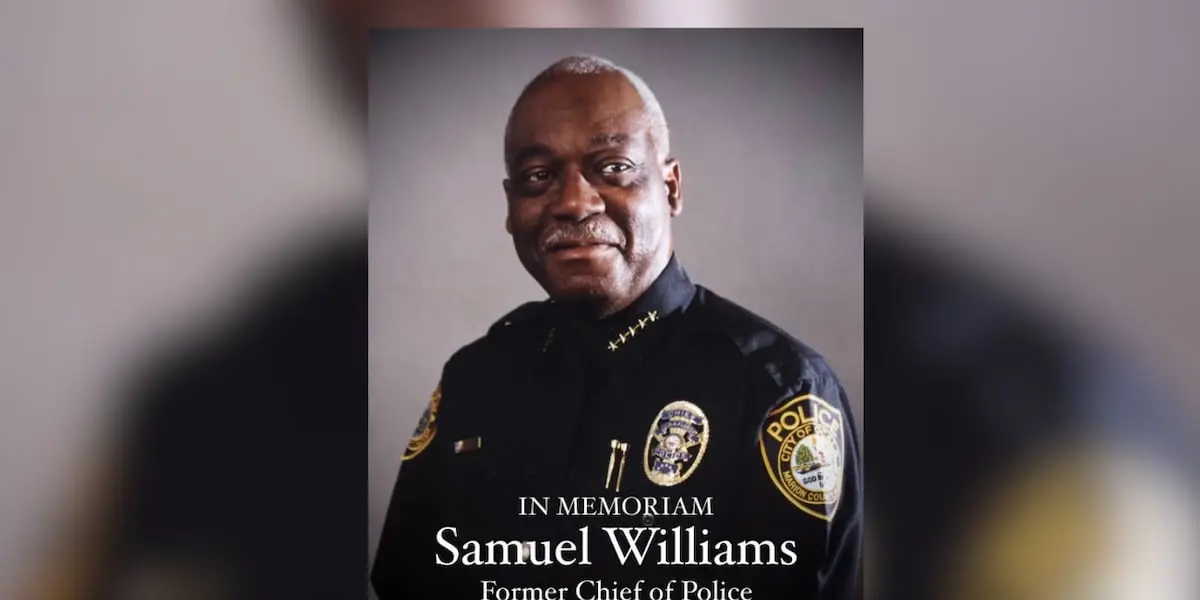
The city of Ocala, Florida, and the broader law enforcement community are mourning the loss of Samuel Williams, a trailblazing leader who served as the city’s police chief from 2003 until his resignation in 2011. Williams, who passed away at the age of 79, leaves behind a profound and multifaceted legacy defined by military valor, technological modernization, and a deep, unwavering commitment to community engagement. As only the second Black police chief in the Ocala Police Department’s (OPD) more than 120-year history, Williams shattered long-standing barriers, opening doors for future generations of minority leaders in municipal public safety.
Throughout a distinguished career spanning four decades, Chief Williams transformed the institutions he served. A proud veteran of the Vietnam War, he brought the discipline, strategic foresight, and resilience forged in combat into the realm of domestic law enforcement. From his early days pounding the pavement with the Miami-Dade Police Department to his high-level administrative roles in county government, and finally to his defining years at the helm of the Ocala Police Department, Williams consistently demonstrated a forward-thinking approach to policing.
This retrospective examines the extraordinary life, career, and enduring impact of Chief Samuel Williams. By exploring his biographical foundations, his transformative tenure in Ocala, the specific metrics of his administrative success, and the heartfelt reflections of those who knew him, this article paints a comprehensive portrait of a leader who viewed policing not merely as a mechanism of law enforcement, but as a vital instrument for community empowerment and social uplift.
Detailed Chronology: A Life of Service, From Vietnam to the Top Brass
To understand the leadership style and administrative philosophy of Chief Samuel Williams, one must trace the chronological arc of a career that spanned turbulent decades in American history, civil rights evolution, and the modernization of police tactics.
Early Life and Military Service
Born and raised during an era of profound social transition in the United States, Samuel Williams developed a strong sense of civic duty and personal accountability early in life. When the call to service came during the height of the Vietnam War, Williams answered without hesitation. Serving in one of the 20th century’s most grueling and psychologically taxing conflicts, he developed a resolute composure under pressure.
Military service during the Vietnam era instilled in Williams a deep appreciation for tactical readiness, operational discipline, and, crucially, the welfare of the personnel under his command. These leadership tenets would become the bedrock of his career in uniform, shaping how he managed crisis situations and mentored younger officers throughout his decades in law enforcement.
Entering the Ranks: Miami-Dade Police Department (1971)
Upon returning from military service, Williams pivoted to a career dedicated to protecting domestic peace and upholding the rule of law. In 1971, he joined the Miami-Dade Police Department, entering law enforcement at a time when major metropolitan departments were grappling with rapidly changing urban environments, rising crime rates, and shifting community relations.
Over a multi-decade tenure in South Florida, Williams earned a reputation as a meticulous investigator, a fair-minded supervisor, and a dynamic administrator. He steadily rose through the departmental ranks, occupying numerous leadership positions that tested his administrative capabilities and tactical judgment. Working within one of the largest and most complex police agencies in the country prepared him for the nuanced challenges of executive leadership. His ability to navigate complex bureaucratic structures while maintaining operational effectiveness caught the attention of municipal and county leaders alike.
Transition to Executive Administration
Before taking the helm in Ocala, Williams expanded his administrative acumen outside the traditional chain of command by serving as an Assistant County Manager. This executive role broadened his perspective on local government operations, budget allocation, inter-agency cooperation, and public policy.
As an Assistant County Manager, Williams was tasked with overseeing various municipal services, managing fiscal resources, and bridging the gap between elected officials and civil servants. This holistic view of governance proved invaluable when he returned to active policing in 2003, equipping him with the financial literacy and political savvy necessary to steer a modern police department through economic fluctuations and shifting legislative landscapes.
The Ocala Appointment and Tenure (2003–2011)
In 2003, Samuel Williams was appointed Chief of Police for the City of Ocala. His arrival marked a watershed moment for the agency and the community. As the second Black police chief in the department’s storied 120-year history, Williams stepped into a role of immense visibility and symbolic importance.
Rather than viewing his appointment solely through the lens of representation, Williams immediately set to work on operational reform. Over an eight-year tenure characterized by steady, deliberate progress, he restructured the department’s approach to technology, community policing, and officer professionalization. When he tendered his resignation in 2011, he left behind a department that was structurally, technologically, and culturally lightyears ahead of the agency he inherited in 2003.
Supporting Context & Metrics: Modernizing Ocala Law Enforcement
When Chief Williams assumed command of the Ocala Police Department, law enforcement agencies nationwide were facing mounting pressure to adapt to the post-9/11 security landscape while simultaneously improving community relations and embracing emerging digital technologies. Williams met these dual mandates head-on, leveraging grants, institutional partnerships, and progressive operational philosophies to elevate the OPD.
Technological Modernization and Grant Acquisition
Recognizing that 20th-century policing strategies could not effectively combat 21st-century crime, Williams made technological advancement a primary strategic objective. Under his leadership, the OPD overhauled its legacy data systems, integrated advanced computer-aided dispatch (CAD) and records management systems (RMS), and equipped officers with the tools necessary to analyze crime patterns in real-time.
Securing the funding required for such sweeping modernization is notoriously difficult for mid-sized municipal departments. However, Williams utilized his extensive administrative experience and strategic vision to secure over $1 million in external grants during his tenure. These federal, state, and private funds allowed the OPD to purchase state-of-the-art equipment, enhance officer safety protocols, and implement cutting-edge investigative technologies without placing an undue financial burden on Ocala taxpayers.
Professional Development and the FBI Academy
Williams firmly believed that an agency is only as strong as the individuals who wear its uniform. To foster a culture of excellence and continuous learning, he prioritized staff development at every level of the organization.
He actively encouraged and financially supported the advanced training of his command staff and ranking officers, promoting participation in prestigious leadership pipelines, most notably the FBI National Academy. By sending Ocala officers to train alongside elite law enforcement professionals from across the globe, Williams ensured that the OPD remained aligned with national best practices in leadership, ethics, crisis management, and constitutional policing.
Groundbreaking Community-Focused Initiatives
Chief Williams understood that sustainable public safety cannot be achieved through enforcement alone; it requires deep, trust-based partnerships with the neighborhoods police are sworn to protect. During his tenure, he championed innovative, proactive community policing models that addressed the root causes of crime and poverty.
The Drug Marketing Intervention (DMI) Program
One of the cornerstone initiatives launched under Williams’s leadership was the Drug Marketing Intervention (DMI) program. Developed nationally as a targeted strategy to dismantle open-air drug markets, the DMI program utilized a community-led, law enforcement-backed approach that prioritized rehabilitation and diversion over mass incarceration for low-level offenders. By collaborating with community stakeholders, faith leaders, and social service providers, the OPD under Williams successfully disrupted illicit drug networks while offering offenders a pathway to legitimate employment and social support.
Phoenix Rising: Empowering Youth and Building Homes
Perhaps the most enduring community legacy of the Williams era was the Phoenix Rising project. Far more than a traditional youth outreach program, Phoenix Rising was a holistic empowerment initiative designed to break generational cycles of poverty and juvenile delinquency.
The program engaged local at-risk teenagers, providing them with tangible vocational skills, legitimate income-earning opportunities, and direct mentorship. In a remarkable synthesis of community development and youth rehabilitation, participants in Phoenix Rising worked alongside construction professionals and community volunteers to help build actual homes for families in need. Through this initiative, participating teens learned the value of hard work, financial independence, and civic contribution, while simultaneously helping to revitalize vulnerable Ocala neighborhoods.
Official Statements and Community Legacy
News of Chief Samuel Williams’s passing reverberated deeply across Marion County, drawing tributes from current and former municipal leaders, law enforcement colleagues, and the citizens he served for decades.
The Ocala Police Department released a formal statement on Saturday morning, expressing profound sorrow over the loss of their former leader and highlighting his indelible contributions to the agency and the city. Current department leadership underscored that Williams’s vision laid the groundwork for many of the community-oriented programs that continue to define the OPD today.
Civic leaders who worked alongside Williams during his tenure recalled a man of immense integrity, quiet strength, and unwavering dedication. Former colleagues noted that while Williams carried himself with the authoritative presence of a decorated military veteran and senior police commander, he possessed a deeply compassionate heart and a genuine listening ear for ordinary citizens.
Throughout his life, Williams steadfastly avoided personal self-aggrandizement, preferring instead to deflect praise onto his officers and the community members who partnered with the department. His historic status as the second Black police chief in Ocala’s history was a milestone he wore with characteristic humility, viewing it primarily as an opportunity to open doors and inspire the next generation of public servants.
Future Outlook: The Enduring Blueprint of Chief Williams
As the City of Ocala reflects on the life and career of Chief Samuel Williams, his passing marks the end of an era for local law enforcement. However, the blueprint he established during his eight years at the helm of the OPD will continue to guide the agency for years to come.
In contemporary law enforcement, departments nationwide are grappling with the challenges of recruitment, retention, technological evolution, and community trust. The solutions that modern agencies seek—data-driven operations, grant-funded innovation, rigorous executive professional development, and community-centric diversion programs—were precisely the pillars upon which Chief Williams built his administration over a decade ago.
The legacy of Samuel Williams lives on in the modernized infrastructure of the Ocala Police Department, in the career paths of the officers he mentored and sent to the FBI Academy, and in the lives of the young people who found purpose, dignity, and a future through initiatives like Phoenix Rising.
While the formal cause of his passing at age 79 has not been made public, the impact of his life is an open book written in the safer streets, stronger neighborhoods, and more progressive institutions of Ocala, Florida. Chief Samuel Williams leaves behind a standard of excellence, a dedication to equity, and a profound love for community service that will forever remain a defining chapter in the history of Florida law enforcement.

0 Comments