

Executive Overview
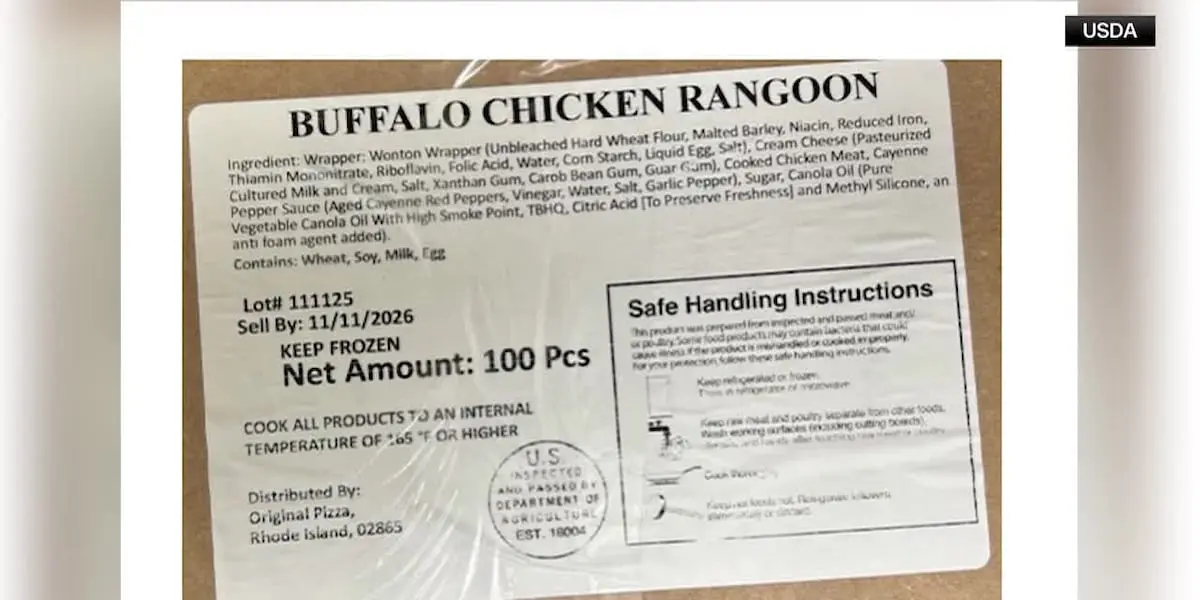
In a sweeping food safety action announced by the United States Department of Agriculture’s (USDA) Food Safety and Inspection Service (FSIS), the Shanghai Ravioli Corporation has officially initiated a recall of approximately 24,900 pounds of frozen, not-ready-to-eat buffalo chicken products. The affected items, primarily distributed to commercial food service establishments across five Northeastern states, bypassed mandatory federal inspection protocols prior to entering the commercial supply chain.
While the regulatory announcement has triggered widespread precautionary measures across the hospitality and institutional dining sectors, federal health officials have confirmed that no confirmed cases of illness or adverse health reactions have been reported to date in connection with the recalled items. Nevertheless, the nature of the oversight—failing to undergo rigorous federal inspection—raises critical concerns regarding potential contamination vectors, specifically the presence of undeclared food allergens and pathogenic bacterial strains such as Salmonella, Listeria monocytogenes, or pathogenic E. coli.
This comprehensive investigative report examines the mechanics of the recall, the scope of distribution, the systemic implications of inspection lapses within the commercial food manufacturing sector, and the broader regulatory landscape governing frozen poultry products in the United States. Through a detailed analysis of the chronology, public health implications, and institutional responses, this article provides an authoritative overview of an incident that underscores the fragility of modern food supply chains.
Detailed Chronology of the Recall Event
The sequence of events leading to the public announcement of the Shanghai Ravioli Corporation recall highlights the intricate, multi-layered oversight mechanisms managed by federal agricultural and public health authorities.
Phase 1: Production and Distribution Breakdown
The frozen, not-ready-to-eat buffalo chicken products in question were manufactured at production facilities operated by Shanghai Ravioli Corporation. During the standard processing and packaging lifecycle, these items were earmarked for commercial food service channels rather than direct-to-consumer retail shelves. Between the initial manufacturing runs and final distribution, a critical breakdown occurred: the products failed to receive the mandatory federal inspection required by the Federal Meat Inspection Act (FMIA) administered by the FSIS.
Without the oversight of federal inspectors stationed within processing facilities, the standard verification steps—which include verifying sanitation procedures, checking thermal processing parameters, validating ingredient labels, and confirming allergen declarations—were omitted. Despite this procedural failure, the shipments left the manufacturing floor and entered the commercial supply chain, reaching institutional kitchens, restaurants, and catering facilities across New England.
Phase 2: Regulatory Discovery
The omission was subsequently flagged during routine supply chain audits and internal verification processes by regulatory bodies. Once FSIS personnel determined that the frozen buffalo chicken items had been distributed without the benefit of federal inspection, an immediate administrative escalation ensued.
Because meat and poultry products distributed across state lines must bear the official mark of inspection and comply with strict federal tracking standards, uninspected goods represent a violation of federal food safety statutes. The FSIS, in coordination with corporate management at Shanghai Ravioli Corporation, classified the situation as a high-priority enforcement action, culminating in the voluntary recall of the affected inventory.
Phase 3: Public Notification and Agency Escalation
On the day of the public release, the USDA issued an official recall notification to alert food service operators, distributors, and public health agencies. The alert was categorized to reflect the potential, albeit unverified, risks associated with consuming meat products that have evaded standard regulatory oversight.
Since the initial announcement, state-level public health departments in Maine, Massachusetts, New Hampshire, Rhode Island, and Vermont have amplified the federal warning, contacting local food service networks, school lunch coordinators (where applicable), and restaurant associations to ensure that the uninspected inventory is immediately identified, quarantined, and returned or destroyed.
Supporting Context & Metrics
To fully comprehend the gravity of the Shanghai Ravioli Corporation recall, it is essential to analyze the quantitative metrics, geographical distribution footprints, and historical context of food safety infractions within the commercial poultry processing sector.
Scope and Scale of the Recalled Inventory
The quantitative metrics associated with this administrative action outline a substantial volume of commercial-grade food products:
- Total Recalled Weight: Approximately 24,900 pounds (roughly 12.45 tons) of frozen poultry.
- Product Classification: Frozen, not-ready-to-eat buffalo chicken products. Because these items require thorough cooking by the end-user prior to consumption, the thermal kill-step during preparation serves as an additional mitigation factor; however, improper handling or cross-contamination prior to cooking remains a primary vector for foodborne illness.
- Target Market: Commercial food service institutions (restaurants, cafeterias, hotels, catering operations, and institutional dining facilities) rather than retail grocery stores. This distinction significantly alters the consumer notification strategy, shifting focus from public supermarket shoppers to commercial kitchen managers and wholesale distributors.
Geographic Footprint: The New England Distribution Matrix
The distribution network for the uninspected buffalo chicken products was concentrated entirely within the Northeastern United States, specifically impacting five states:
- Maine: Affecting local eateries, coastal hospitality venues, and regional institutional suppliers.
- Massachusetts: The largest commercial market in the distribution cluster, encompassing diverse food service operations from Greater Boston to Western Massachusetts.
- New Hampshire: Impacting hospitality providers in tourist-heavy regions and local dining establishments.
- Rhode Island: Reaching food service networks across the state’s densely populated commercial corridors.
- Vermont: Distributing into farm-to-table restaurants, institutional dining halls, and hospitality centers.
The Hidden Dangers: Allergens and Pathogens
The primary rationale cited by the USDA for issuing the recall centers on the absence of proper inspection. Without FSIS oversight, two major health hazards cannot be ruled out:
- Undeclared Allergens: Commercial buffalo chicken formulations frequently incorporate complex sauces, dairy derivatives (such as butter or blue cheese components), soy, wheat-based thickeners, and various spices. If product labels fail to accurately reflect these ingredients due to a lack of regulatory verification, consumers with severe food allergies (such as milk, wheat, or soy allergies) face the risk of severe anaphylactic reactions.
- Pathogenic Bacteria: Meat and poultry products processed outside of official inspection regimes may harbor dangerous microbial pathogens, including Salmonella species, Campylobacter, and Listeria monocytogenes. While proper internal cooking temperatures (typically 165°F for poultry) will neutralize most bacterial threats, handling raw, uninspected meat increases the risk of cross-contamination on kitchen surfaces, utensils, and ready-to-eat foods.
Official Statements & Regulatory Framework
Federal regulatory bodies and industry stakeholders operate under strict statutory frameworks designed to maintain the integrity of the American food supply. The response to the Shanghai Ravioli Corporation incident reflects these established protocols.
The Role of the USDA and FSIS
The Food Safety and Inspection Service is the public health agency in the U.S. Department of Agriculture responsible for ensuring that America’s commercial supply of meat, poultry, and egg products is safe, wholesome, and correctly labeled and packaged. Under the Federal Meat Inspection Act, FSIS inspectors are mandated to be present in official establishments during slaughter and processing operations.
In official statements accompanying the recall, the FSIS emphasized that any meat or poultry product entering interstate commerce without the mandatory stamp of inspection is deemed adulterated under federal law. Consequently, the agency utilizes its enforcement powers to mandate or facilitate product recalls, removing potentially compromised goods from the marketplace as quickly as possible.
Industry Responsibilities and Liability
Food manufacturing corporations bear the ultimate legal and moral responsibility for ensuring that every batch of product leaving their facilities complies with federal law. When an inspection lapse occurs, companies are expected to cooperate fully with federal investigators, trace the distribution channels, and notify downstream purchasers immediately.
Legal experts specializing in food safety law note that while voluntary recalls mitigate punitive regulatory penalties, companies can still face severe civil liability if uninspected products result in consumer illness or injury. Furthermore, the reputational damage sustained by institutional suppliers can have long-lasting commercial consequences, impacting contract renewals and client trust within the hospitality industry.
Future Outlook: Industry Implications and Preventative Measures
Incidents involving uninspected food products entering the commercial supply chain prompt broader industry-wide reevaluations of internal quality assurance, regulatory compliance, and supply chain transparency.
Enhancing Internal Audits in Food Manufacturing
To prevent similar occurrences, food processing corporations are increasingly turning to advanced digital tracking systems and automated compliance verification. Relying solely on manual oversight within bustling manufacturing plants leaves room for human error, miscommunication between shifts, and oversight omissions. Implementing blockchain-enabled supply chain ledgers and digital gatekeeping mechanisms can ensure that no batch of product can be marked as "ready for shipping" without a verified, cryptographic timestamp of federal inspection approval.
Strengthening Food Service Awareness
For commercial food service operators, the Shanghai Ravioli Corporation recall serves as a sobering reminder of the importance of robust receiving protocols. Commercial kitchens must maintain meticulous inventory logs, cross-referencing incoming shipments against active USDA recall notices. Chefs, kitchen managers, and purchasing agents are encouraged to subscribe directly to FSIS email alerts and RSS feeds to receive real-time notifications regarding recalled ingredients.
Regulatory Evolution and Future Oversight
As the food industry continues to evolve with the rise of ghost kitchens, third-party logistics providers, and complex distribution webs, federal regulatory agencies are under mounting pressure to modernize inspection protocols. Lawmakers and food safety advocates are continually debating the need for increased funding for the FSIS, enhanced staffing levels at processing plants, and stricter penalties for companies that circumvent mandatory inspection regimes.
Ultimately, the resolution of the Shanghai Ravioli Corporation recall—marked by rapid identification, transparent public communication, and proactive removal of inventory—demonstrates the resilience of the nation’s food safety safety net. However, it simultaneously serves as a cautionary tale illustrating that continuous vigilance remains the absolute price of public health protection in the modern agricultural economy.

0 Comments