

Executive Overview
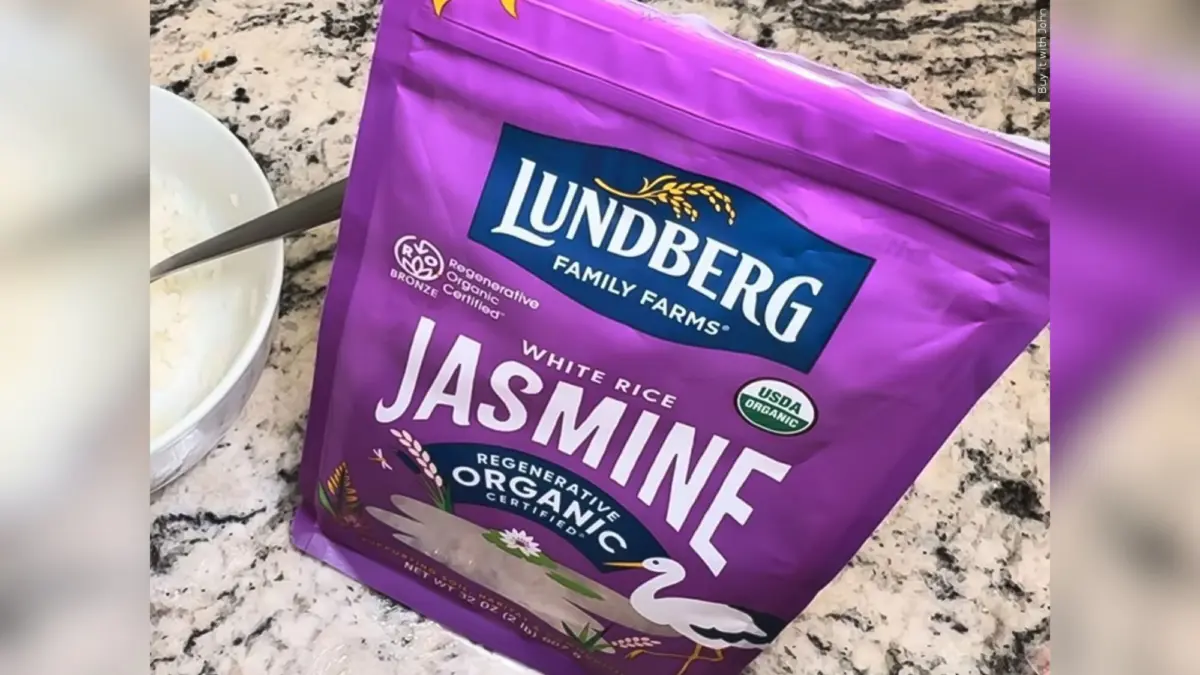
In an escalation of a months-long food safety action, the United States Food and Drug Administration (FDA) has officially designated the recall of Lundberg Organic Jasmine White Rice as a Class II health hazard. The recall, which was quietly initiated in the spring of this year, targets more than 27,000 retail packages of the premium organic grain distributed across 13 states. The federal agency’s updated classification underscores a heightened level of risk associated with the product, warning that exposure to the affected batches could lead to "temporary or medically reversible adverse health consequences."
The product in question—packaged in convenient two-pound bags—is manufactured by Lundberg Family Farms, a prominent California-based pioneer in the organic agricultural sector. According to regulatory filings, the recall was prompted by the potential presence of unidentified "foreign material" within the rice packages. While neither the manufacturer nor the FDA has publicly disclosed the exact physical nature of the contaminant, the scale of the distribution network—which spans major national supermarket chains including Walmart, Target, Whole Foods Market, Wegmans, and Giant—has triggered widespread consumer advisories.
As dry pantry goods like white rice possess exceptionally long shelf lives, safety advocates warn that the contaminated packages may remain in household cupboards for years to come, with "best-by" dates stretching well into 2027.
Detailed Chronology
The regulatory timeline of this safety intervention reveals a slow-burning administrative process that began in early spring and has only recently culminated in formal federal classification.
+------------------+-------------------------------------------------------------+
| Date             | Event                                                       |
+------------------+-------------------------------------------------------------+
| Mid-April        | Lundberg Family Farms initiates voluntary recall of specific|
|                  | lots of Organic Jasmine White Rice (2 lb bags).             |
+------------------+-------------------------------------------------------------+
| April–Summer     | Retailers quietly remove affected stock from shelves;       |
|                  | inventory audits and tracing are conducted.                 |
+------------------+-------------------------------------------------------------+
| Late Summer      | FDA completes hazard assessment, formally classifying the   |
|                  | incident as a Class II Recall.                              |
+------------------+-------------------------------------------------------------+
| Present Day      | Public health notices are escalated to warn consumers of    |
|                  | long-term storage risks in household pantries.              |
+------------------+-------------------------------------------------------------+
The Initial Action
In April, quality control protocols at Lundberg Family Farms identified a potential contamination issue within a specific production run of their Organic Jasmine White Rice. Recognizing the potential risk, the company initiated a voluntary recall of the affected batches. Retailers were quietly notified to pull the specified product codes from store shelves, and internal tracing systems were activated to account for the distributed inventory.
The Regulatory Assessment Period
Following the voluntary market withdrawal, the FDA conducted a comprehensive review of the manufacturing anomaly, the nature of the foreign contaminant, and the potential health hazards posed to the public. During this period, the product remained under active monitoring as food safety inspectors assessed the severity of the threat.
The Escalation to Class II
Following its investigation, the FDA formally categorized the recall as Class II. This classification is a critical regulatory designation. It indicates that while the product is unlikely to cause severe, life-threatening injury or death (which would trigger a Class I recall), ingestion or exposure nonetheless carries a legitimate risk of temporary, painful, or medically reversible adverse health effects. The formalization of this status serves as an urgent wake-up call to consumers who may have purchased the product months ago and stored it for future consumption.
Supporting Context & Metrics
To comprehend the logistical footprint of this recall, it is necessary to examine the physical volume of the product, its extensive retail distribution, and the geographic reach of the affected shipments.
Distribution Metrics and Retail Footprint
The recall encompasses precisely 27,071 individual packages of the two-pound Lundberg Organic Jasmine White Rice. Translated into sheer volume, this represents more than 54,000 pounds of premium organic grain introduced into the consumer supply chain.
The product’s retail penetration is particularly concerning for food safety advocates. Lundberg Family Farms is a highly respected, mainstream brand positioned at the intersection of natural foods and traditional grocery. Consequently, the affected lots were shipped to some of the largest and most frequented retail giants in the United States:
- Whole Foods Market: The premier destination for organic and natural foods.
- Target and Walmart: Big-box retailers serving millions of diverse household demographics daily.
- Wegmans and Giant Food: Dominant regional supermarket chains with high-volume sales footprints along the East Coast.
Geographic Spread
The distribution of the contaminated rice spans 13 states, representing a broad geographical footprint that touches the West Coast, the Midwest, the South, and the Northeast:
- West: California, Washington
- Midwest: Illinois, Wisconsin
- South: Florida, Louisiana, North Carolina, Tennessee, Virginia
- Northeast: Connecticut, New Hampshire, New York, Pennsylvania
Product Identification Data
Consumers are urged to inspect their pantries for packages matching the specific technical details provided in the federal registry:
| Product Detail | Specification |
|---|---|
| Product Name | Lundberg Organic Jasmine White Rice |
| Package Size | 2-pound (2 lb) plastic pouches |
| Universal Product Code (UPC) | 073416-040281 |
| Lot Code 1 | 260201 (Best-By Date: February 1, 2027) |
| Lot Code 2 | 260202 (Best-By Date: February 2, 2027) |
Understanding "Foreign Material" Contamination
In commercial agricultural milling and packaging, "foreign material" is a broad industry term that can refer to several physical hazards. Common contaminants in dry agricultural processing typically include:
- Harvesting Debris: Small stones, pebbles, or soil clods that bypass initial field-cleaning processes.
- Processing Byproducts: Fragments of glass, hard plastic, or metal shavings shed by aging, damaged, or misaligned milling and packaging machinery.
- Environmental Contaminants: Insect parts, rodent debris, or structural materials from processing facilities.
While the FDA’s enforcement report does not specify which of these materials was discovered in the Lundberg rice, the Class II designation strongly implies a physical hazard capable of causing minor internal lacerations, dental damage, or choking, particularly in vulnerable populations such as young children or the elderly.
Official Statements & Regulatory Framework
The handling of food safety incidents in the United States relies on a structured partnership between private corporations and federal oversight agencies.
The FDA’s Hazard Classifications
The FDA operates under a strict three-tiered classification system to communicate the severity of recalled consumer products to the public:
- Class I: Situations in which there is a reasonable probability that the use of or exposure to a violative product will cause serious adverse health consequences or death (e.g., Listeria monocytogenes contamination in ready-to-eat foods).
- Class II: Situations in which use of or exposure to a violative product may cause temporary or medically reversible adverse health consequences, or where the probability of serious adverse health consequences is remote.
- Class III: Situations in which use of or exposure to a violative product is not likely to cause adverse health consequences, but violates labeling or administrative regulations.
By elevating the Lundberg recall to Class II, the FDA has signaled to healthcare providers and consumers alike that the risk is not merely administrative; physical consumption of the contaminated rice poses a tangible, albeit non-fatal, physiological hazard.
Corporate Positioning and Brand Reputation
Lundberg Family Farms, headquartered in Richvale, California, has built its brand identity over nearly nine decades on a foundation of ecological stewardship, organic integrity, and rigorous quality standards. Founded in 1937, the multi-generational family business has long been a champion of sustainable farming practices in the Sacramento Valley.
For a brand that commands premium pricing based on safety, purity, and trust, a Class II recall presents both an operational hurdle and a reputational challenge. While the company has complied fully with FDA protocols and cooperated transparently throughout the voluntary recall process, the silence surrounding the exact nature of the "foreign material" has left some consumer advocacy groups calling for greater transparency.
Future Outlook & Consumer Guidance
The long shelf life of dry rice presents a unique challenge for public health officials. Unlike perishable items like fresh dairy or leafy greens, which are quickly consumed or discarded, dry grains are designed for long-term storage. With expiration dates extending to February 2027, the recalled Lundberg rice packages could sit quietly in consumers’ pantries for years, presenting a lingering hazard.
Consumer Action Plan
Public health officials and consumer safety organizations recommend the following immediate actions for households:
- Pantry Audit: Check all dry storage areas for 2-pound bags of Lundberg Organic Jasmine White Rice.
- Code Verification: Cross-reference the UPC (
073416-040281) and look for Lot Codes260201or260202printed on the packaging. - Safe Disposal or Refund: Do not open or consume the product. Consumers should either discard the product securely to prevent consumption by pets or wildlife, or return the package to the point of purchase for a full refund.
- Medical Attention: Anyone who suspects they have suffered an adverse health event after consuming the recalled product should contact a healthcare professional immediately.
Technological Advancements in Agricultural Processing
Incidents of foreign material contamination highlight the ongoing struggle within the food processing industry to eliminate physical hazards entirely. As modern agricultural processing facilities scale up production to meet global demand, they increasingly rely on advanced sorting technologies:
- Optical Sorters: High-speed cameras and infrared sensors that analyze the color and shape of individual grains, automatically ejecting discolored particles or debris.
- X-Ray Inspection Systems: Advanced scanners capable of detecting high-density foreign materials, such as glass, stone, bone, and metal, even when embedded within sealed packaging.
- Industrial Metal Detectors: Magnetic sensors designed to catch ferrous and non-ferrous metal fragments shed by processing equipment.
Despite these multi-layered technological safeguards, mechanical failures, sensor calibration drifts, or human errors can still allow foreign bodies to slip through the packaging line.
Industry-Wide Implications
As the FDA continues to modernize its oversight under the Food Safety Modernization Act (FSMA), the food industry is facing unprecedented pressure to enhance supply chain traceability. The transition of this recall from a voluntary manufacturer action to an officially classified Class II federal event demonstrates the government’s rigorous approach to consumer safety. For manufacturers like Lundberg Family Farms, the incident serves as a stark reminder that maintaining consumer trust requires continuous investment in facility maintenance, equipment calibration, and transparent public communication.

0 Comments